
2026 Best Cable Ladder Manufacturers for Global Buyers

Time:2026-10-16 Author:Madeline
0%

Choosing the right Cable Ladder manufacturer can shape a project’s safety, installation speed, and long-term maintenance costs. In 2026, global buyers face a crowded market with varied materials, designs, certifications, and production capabilities. A polished website is not enough. Real reliability appears in factory processes, test reports, packaging details, and consistent communication.

This guide reviews leading Cable Ladder manufacturers through practical buying criteria. It considers load capacity, steel or aluminum grades, corrosion protection, welding quality, dimensions, accessories, and customization support. It also examines production experience, quality-control systems, delivery performance, and after-sales service. Samples can reveal useful details, such as smooth edges, accurate rung spacing, and coatings that remain intact after handling. Small details matter.

The evaluation also reflects the realities of international procurement. Buyers must compare technical documents, verify certifications, clarify Incoterms, and inspect packaging before shipment. A supplier may perform well on standard orders but struggle with complex layouts or urgent replacements. That difference deserves attention. No ranking can fit every project, and manufacturer information may change during 2026. Some claims still require independent verification. This guide therefore treats published data as a starting point, not final proof. By combining documented evidence with practical experience, buyers can identify manufacturers that offer dependable Cable Ladder systems, clearer communication, and more predictable project outcomes.
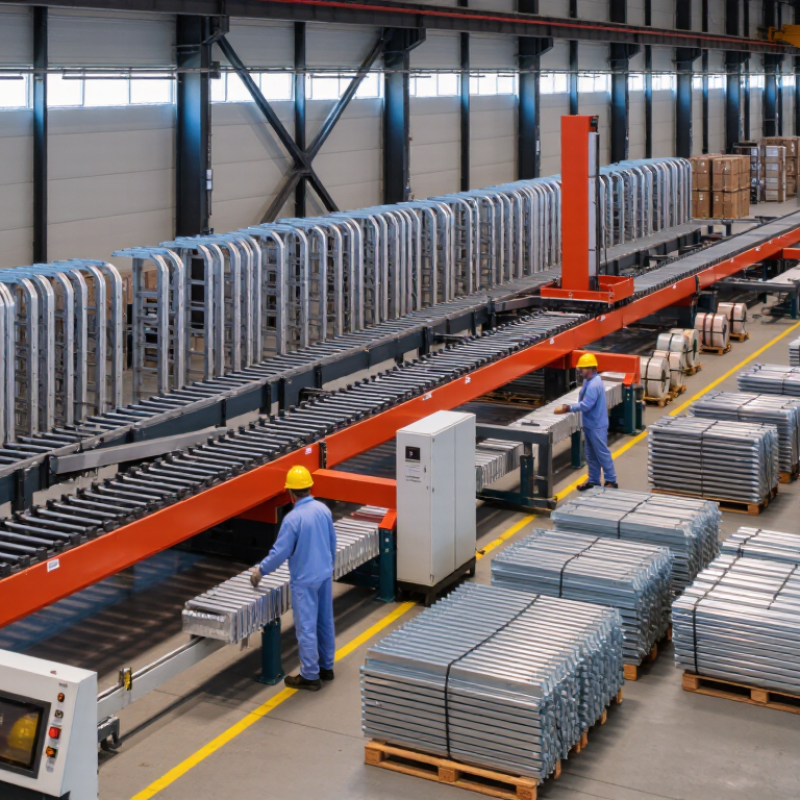
2026 Best Cable Ladder Manufacturers for Global Buyers

Cable Ladder Systems: Types, Applications, and Core Advantages

2026 Best Cable Ladder Manufacturers for Global Buyers

Cable ladder systems support power, control, and communication cables in demanding facilities. Ladder-type trays use two side rails and transverse rungs. They provide strong ventilation, easy cable access, and efficient heat dissipation. Perforated trays offer extra support for smaller cables. Solid-bottom trays protect sensitive wiring from falling dust. Wire-mesh trays suit short routes, instrument cables, and frequent changes.

MarketsandMarkets projects the global cable tray market to grow from about USD 8.6 billion in 2023 to USD 13.0 billion by 2028. This growth reflects expanding data centers, factories, transport networks, and renewable-energy projects. The IEA’s Electricity 2025 report estimates data-center electricity demand may rise from 415 TWh in 2024 to 945 TWh by 2030. That expansion increases the need for organized, accessible cable routes. It also exposes weak designs quickly.

For global buyers, compare load capacity, rung spacing, corrosion resistance, finish quality, and installation labor. Hot-dip galvanized steel suits many outdoor environments, while stainless steel performs better in aggressive atmospheres. Aluminum reduces weight but may require careful bonding decisions. Installers should verify dimensions and support spacing on site, not rely only on drawings. Cable ladders should align with IEC 61537 requirements and local electrical codes. No system is perfect. Poorly sealed joints, sharp edges, or overloaded spans can undermine excellent materials. A practical specification includes testing records, traceable steel, clear tolerances, and replacement availability across regions.

How to Evaluate Cable Ladder Manufacturers in 2026

In 2026, evaluating cable ladder manufacturers requires more than comparing prices. Buyers should examine production experience, engineering depth, and documented quality controls. Ask for evidence.

Review the manufacturer’s material options, rung spacing, load ratings, and corrosion protection. Specifications should match your environment, whether it is a coastal plant, warehouse, or data center. Request drawings, test reports, and installation guidance before approving samples. Details matter. A reliable supplier can explain how each design choice affects strength, weight, and maintenance. Vague answers deserve caution.

Factory experience becomes clearer through project records and customer references. Ask whether the manufacturer has handled large orders, unusual dimensions, and repeated production schedules. Inspect sample welds, edge finishing, hole alignment, and surface consistency. Small defects can create difficult installation delays. Do not guess. Confirm manufacturing capacity, inspection stages, packaging methods, and realistic lead times in writing. Traceable batch records also help resolve quality questions later.

Technical compliance should be supported by current certificates and independent test evidence, not copied documents. Verify that the stated standards fit your project location and application. A capable engineering team should review drawings and identify conflicts before fabrication. However, no supplier is perfect. Communication may slow during peak seasons, and custom work can expose hidden assumptions. Leave room for design review, sample approval, and corrective action. That practical flexibility often reveals whether a manufacturer is dependable beyond its sales presentation.

Key Manufacturing Standards, Materials, and Quality Controls

2026 Best Cable Ladder Manufacturers for Global Buyers

Reliable cable ladder manufacturing begins with the correct standard, not attractive brochures. IEC 61537 defines performance requirements for cable tray and ladder systems, including load capacity, electrical continuity, and mechanical strength. NEMA VE 1 also guides testing for load, deflection, and workmanship. Buyers should request test records for each ladder width and span. One general certificate is rarely enough.

Material selection must match the installation environment. Hot-dip galvanized steel suits many industrial projects, while stainless steel performs better in coastal or chemical areas. Aluminum reduces weight, but its lower stiffness may require closer supports. For severe corrosion, manufacturers should document coating thickness and surface preparation. ASTM B117 salt-spray results can help comparison, although they do not fully represent real outdoor exposure. That distinction matters.

Quality control should cover incoming steel, dimensional checks, weld inspection, and final load testing. ISO’s 2023 Survey recorded more than 1.2 million ISO 9001 certificates worldwide, showing broad adoption of quality systems. Yet certification alone does not prove consistent ladder performance. A factory may pass an audit and still miss a distorted rung. Small details matter. Buyers should review batch traceability, calibration records, rejected-product procedures, and independent inspection options. The uncomfortable point is that cheaper products often hide testing gaps, not just lower material costs.ccuntegn

Global Buyer Criteria: Certifications, Capacity, Pricing, and Support

For global buyers, the best cable ladder manufacturer proves reliability through evidence, not attractive brochures. Request current certificates for material quality, welding procedures, corrosion resistance, and electrical safety. Check whether an independent laboratory issued them. Factory audits also reveal practical details, such as clean cutting areas, labeled steel coils, and controlled storage. Experience matters when products must perform in coastal, industrial, or high-temperature environments.

Capacity should match your project schedule. Ask about monthly output, production lines, mold availability, and quality inspection points. A serious manufacturer can explain lead times for standard and customized ladders. Pricing deserves equal care. Compare the full cost, including surface treatment, packaging, tooling, freight preparation, and replacement parts. The lowest quotation may hide weak coatings or inconsistent dimensions. I have seen buyers focus on unit price and overlook rework costs. That mistake remains common.

Tips: Request samples before approving bulk production. Measure rung spacing, tray thickness, coating coverage, and connection fit. Ask for inspection records and a clear warranty process. Support should include technical drawings, installation guidance, spare components, and responsive communication across time zones. Test this service before signing. Send a detailed question and observe the reply speed. No response is useful evidence. Even strong suppliers can miss small requirements, so record every specification and review it with your engineering team.

Leading Cable Ladder Manufacturers for International Projects

2026 Best Cable Ladder Manufacturers for Global Buyers

International projects need more than a low quotation. Cable ladder manufacturers must prove load capacity, corrosion resistance, production consistency, and export experience. Fortune Business Insights valued the global cable management market at US$20.65 billion in 2023. It projects growth to US$31.63 billion by 2029, with infrastructure investment driving demand. This expansion increases supplier choices, but it also raises quality risks.

Reliable manufacturers should provide tested load tables, material certificates, and dimensional inspection records. Look for compliance with IEC 61537, especially for cable tray and ladder systems. Hot-dip galvanized steel suits outdoor substations and industrial roofs. Aluminum reduces weight on long bridge spans. Stainless steel performs better in coastal or chemical environments. The correct finish depends on exposure, not sales language.

Ask for samples before approving a global order. Check rung welds, splice plates, edge smoothness, and bolt alignment by hand. Small defects become expensive during installation. Manufacturers should also explain packaging, container loading, spare parts, and technical support across time zones. A shipment may pass factory inspection yet fail on site because drawings were unclear. That lesson is easy to overlook. The best international suppliers combine documented engineering with practical installation feedback, though no manufacturer should be treated as flawless.

2026 Cable Ladder Material Benchmark for Global Projects

This comparison uses standard engineering reference values at approximately 20°C. Material density is a practical consideration for transport, installation effort, structural support, and project logistics; final selection should also consider corrosion exposure, load capacity, coating system, and applicable standards.

Key insight: Aluminum cable ladders are typically much lighter than steel alternatives, while stainless steel provides strong corrosion resistance for demanding environments. Galvanized carbon steel remains widely used where mechanical strength and cost efficiency are priorities.

FAQS

What is a cable ladder system?

It uses two side rails connected by transverse rungs. The open structure supports power, control, and communication cables. Air moves freely around the cables.

Why choose a ladder-type tray?

Ladder systems provide strong ventilation and simple cable access. They also help heat escape from heavily loaded routes. Access is the real advantage.

Which tray type suits smaller or sensitive cables?

Perforated trays provide extra support for smaller cables. Solid-bottom trays shield wiring from falling dust. Wire-mesh trays suit short routes and frequent changes.

How should buyers compare cable ladder materials?

Compare load capacity, corrosion resistance, finish quality, and installation labor. Galvanized steel suits many outdoor areas. Stainless steel handles aggressive atmospheres better.

When is aluminum a practical choice?

Aluminum reduces weight on long spans and elevated routes. However, bonding and grounding details need careful review. Lightweight does not mean risk-free.

What documents should an international supplier provide?

Request load tables, material certificates, and dimensional inspection records. Testing records and traceable steel strengthen quality control. Missing paperwork should slow approval.

What should installers inspect before installation?

Verify dimensions and support spacing on site. Check rung welds, splice plates, sharp edges, and bolt alignment. Drawings can be wrong.

How can buyers reduce problems during global delivery?

Ask for samples before approving the full order. Confirm packaging, container loading, spare parts, and technical support. A factory inspection may miss site problems.

Which standards and design details matter most?

The system should align with IEC 61537 and local electrical codes. Check sealed joints, clear tolerances, and replacement availability. No system is perfect.

Conclusion

This guide to the 2026 best Cable Ladder manufacturers for global buyers explains how cable ladder systems support organized, safe, and accessible cable routing across industrial, commercial, infrastructure, energy, and data facility projects. It reviews common system types, configurations, applications, and core advantages, including strong load capacity, effective ventilation, flexible installation, and easier maintenance compared with enclosed pathways.

The article also presents a practical framework for evaluating manufacturers, covering production capability, engineering expertise, material selection, corrosion protection, dimensional accuracy, welding quality, testing procedures, and quality management. For international buyers, it highlights the importance of relevant certifications, consistent capacity, transparent pricing, delivery reliability, customization, technical documentation, and responsive after-sales support. By comparing these factors systematically, project owners and contractors can identify dependable manufacturing partners that meet performance requirements, project schedules, budget expectations, and regional compliance needs.

Madeline

Madeline

Madeline is a dedicated marketing professional with a wealth of expertise in our company's core offerings. With a keen understanding of the industry, she brings a unique perspective to her role, consistently delivering high-quality content that highlights the superior aspects of our products. As......