
Engineered Strut Channels, Framing Angles & Seismic Bracing
Precision-fabricated roll-formed structural components and high-integrity mounting brackets designed for continuous mechanical loading, seismic mitigation, and rapid MEP field deployment.
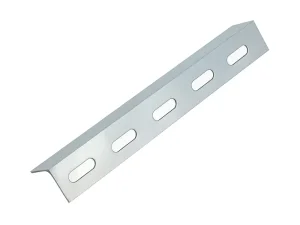
Wholesale Pre Galvanized Slotted Channel - Angle Iron
View Product Specs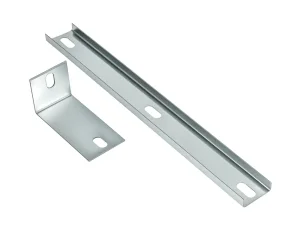
Wholesale Pre Galvanized L typed bracket and Bracket
View Product Specs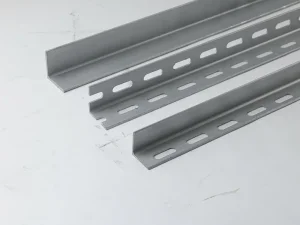
Wholesale Pre Galvanized non-perforated angle iron
View Product Specs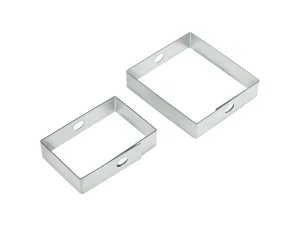
Wholesale Pre Galvanized Square Metal Profiles & Moldings
View Product Specs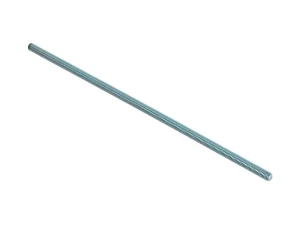
Buy Metal hanger rod Supplier, Continuous Threaded
View Product Specs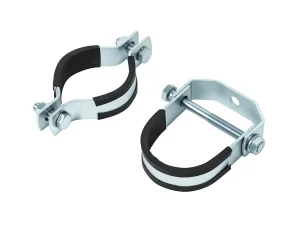
Buy Pipe Clamping & Strut Channel Conduit Clamps
View Product Specs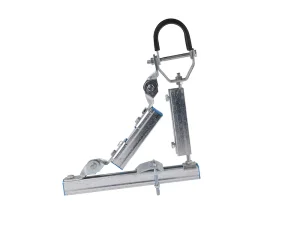
Buy Reliable heavy duty seismic resistant bracket
View Product Specs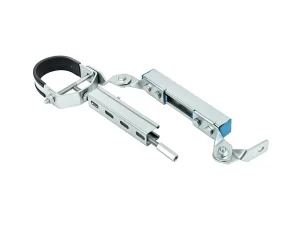
Buy Seismic Bracket System for MEP Overhead Framing
View Product SpecsMacro-Industry Engineering Solutions: Load Integrity & MEP Integration
Modern electrical containment infrastructure transcends rudimentary metal framing. It forms the skeletal backbone of industrial operations, where mechanical static loading, dynamic vibration, wind shear, and seismic displacement converge into rigorous engineering equations.
Dynamic Structural Mechanics & Trapeze Physics
Every cable tray support system is subject to combined mechanical stresses: static dead loads (tray tare weight and cable volume), live loads (technician maintenance forces), and environmental surge loads. Our modular C-strut channels (41×21mm, 41×41mm, 41×62mm, and 41×82mm) are cold roll-formed using high-yield structural carbon steel (Q235B / ASTM A1011). Trapeze hangers configured with continuous threaded hanger rods and back-to-back reinforced channels achieve optimal moment of inertia (Ix and Iy), eliminating lateral deflection and torsional twist under maximum beam spans.
Multi-Axis Seismic Bracing Architecture
Under seismic acceleration events (spectral response Ss and S1), unbraced overhead electrical trays transform into swinging pendulums, inducing catastrophic cable rupture or progressive collapse. Our engineered seismic resistant brackets and rigid diagonal bracing assemblies dissipate lateral and longitudinal kinetic vectors directly into structural concrete or steel superstructure. Fully verified against ASCE 7-16, IBC 2024, and GB 50981 seismic criteria, providing resilient protection up to Magnitude 9.0 design thresholds.
Thermal Expansion & Harmonic Damping
Continuous heavy-power circuits and utility feeders induce ambient and inductive thermal cycles. Steel containment channels expand and contract along the longitudinal axis. Our support systems incorporate slotted glide brackets, spring-loaded channel nuts, and low-friction vibration isolation pads that facilitate linear thermal movement while dampening harmonic resonance generated by heavy rotating machinery, transformers, and switchgear plants.
Worldwide Commercial, Energy & Industrial Infrastructure
The worldwide surge in AI data centers, industrial gigafactories, clean energy storage, and offshore energy infrastructure demands unprecedented reliability in modular containment mounting solutions.
Hyperscale AI Data Centers & Telecommunications
Global cloud hyperscalers require high-density overhead and underfloor fiber/power routing. Unistrut-type trapeze systems paired with electro-galvanized (EG) or powder-coated (RAL series) wire basket grids facilitate airflow optimization, prevent localized hotspots, and accommodate massive multi-terabit optical line bundles with zero cable bend-radius violations.
Renewable Utility-Scale Solar, Wind & BESS
From multi-megawatt PV installations across arid desert zones to battery energy storage systems (BESS), support hardware must withstand extreme diurnal thermal fluctuation, ultraviolet degradation, and outdoor moisture. Heavy-duty hot-dip galvanized (HDG) slotted channels with zinc coating thicknesses exceeding 85 microns (ISO 1461) prevent red rust for up to 30 years.
Offshore Marine, LNG Terminals & Heavy Chemical
Aggressive maritime atmospheres rich in airborne chlorides necessitate elite corrosion resistance. We supply specialized Marine-grade AISI 316L stainless steel and structural pultruded Fiberglass Reinforced Plastic (FRP) support frameworks configured for Qatar LNG terminals, Gulf petrochemical complexes, and Southeast Asian marine platforms.
Comprehensive Engineering Standards & Quality Assurances
International EPC contractors require absolute traceability, certified metallurgy, and strict compliance with worldwide testing bodies. Every batch from Shanghai Qiongkai undergoes non-destructive load tests, mill certification, and coating verification.
| Standard / Code | Jurisdiction | Technical Scope & Rigorous Parameters | Engineering Compliance Verification |
|---|---|---|---|
| NEMA VE 1 / CSA C22.2 | North America | Metal Cable Tray Systems: Safe working load (SWL), deflection limits (L/200), and destructive destructive testing. | Certified structural load curves; destruction margin factor 1.5×. |
| IEC 61537 / BS EN 61537 | International / Europe | Cable management systems: Electrical continuity, mechanical strength, safe loading capacity (SWC), and thermal aging. | Full CE compliance; electrical bonding resistance < 0.05 Ω/m. |
| ASCE 7-16 / IBC 2024 | Global / USA | Seismic design categories (A through F) for non-structural building components and MEP mechanical trapezes. | Finite element dynamic verification; certified lateral & longitudinal seismic brackets. |
| ISO 1461 / ASTM A123 | Global Standard | Hot dip galvanized coatings on fabricated iron and steel articles; coating thickness and adhesion metrics. | Magnetic gauge validation; minimum 65–85 μm mean coating thickness for C3–C5 corrosive zones. |
| AS/NZS 3013 | Australia / New Zealand | Electrical installations: Wiring systems for fire resistance up to 2 hours (WS52W classification). | Fire-tested reinforced C-channel framing with certified ceramic-insulated anchor rods. |
| GB 50981-2014 | China National Code | Code for seismic design of mechanical and electrical engineering facilities in building constructions. | Passed national authority physical shaking table tests with high safety factor. |
Specialized Deployment Across Demanding Terrains
From subterranean subway lines to food-grade biopharmaceutical cleanrooms, our support systems are customized for environmental stresses, atmospheric classifications, and installation constraints.
Subterranean Metro & Rail Tunnels
Underground railway networks endure cyclic air pressure pulses from passing high-speed rolling stock and damp ambient humidity. We engineer vibration-proof back-to-back strut channels with serrated flange locknuts and heavy hot-dip galvanization that eliminate fastener back-out.
Cleanroom Pharma & Food Processing
Subject to aggressive daily chemical washdowns (alkalis, sodium hypochlorite) and stringent zero-particle accumulation protocols. Electropolished AISI 304 or 316 wire mesh basket trays and non-perforated angle brackets ensure sanitary compliance and rapid drainage.
High-Density Hyperscale Tier IV Data Halls
Modern data centers rely on dual-tier ceiling suspension systems: overhead cable runways carry copper network wiring and fiber backbones, while isolated heavy-duty busway channels route multi-thousand ampere feeds with color-coded powder coats for rapid fault tracing.
Aviation & Civil Megastructures
Demonstrated in landmark projects including Shanghai Hongqiao International Airport, where extensive runs of continuous heavy-duty cable trunking and seismic-resistant cantilever brackets withstand continuous dynamic vibration without structural sag.
The Future of Cable Support: BIM Level 400, Pre-Fab Skids & Smart Sensors
As digital construction paradigms evolve, cable support systems are advancing from standard commodities into pre-engineered, modular building components with high precision.
Digital Twin & Full BIM Revit (LOD 400)
To eliminate costly spatial clashes on complex mechanical and electrical mezzanine floors, Qiongkai delivers comprehensive Revit BIM families. Engineers can simulate structural weight distribution, clash detection with HVAC ducts and fire piping, and automate bill-of-materials takeoff before on-site ground-breaking.
Prefabricated Off-Site Modular MEP Skids
Accelerating on-site construction timelines by up to 60%, our off-site pre-assembled trapeze modules arrive on site pre-cut, pre-bolted, and laser-aligned. Field technicians simply anchor the integrated strut frames to primary ceiling embeds, drastically reducing hot-work permits and elevated fall risks.
Zinc-Aluminum-Magnesium (ZAM) & Eco Steel
Next-generation anti-corrosion innovation: transitioning to high-performance ZAM alloy coatings offering self-healing cut-edge protection 3–5× superior to standard hot-dip galvanizing, combined with low-carbon certified green steel to satisfy international ESG and LEED construction mandates.
Reinforced Cable Trays, Fireproof Channels & Seismic Hardware
Industrial-grade molded and perforated cable trays, reinforcing rib profiles, and fire-resistant C-channels engineered for maximum continuous spans and harsh environment lifecycles.
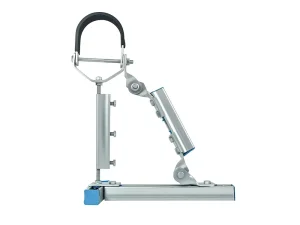
Buy Seismic Bracket for Struct Channel Manufacturer
View Product Specs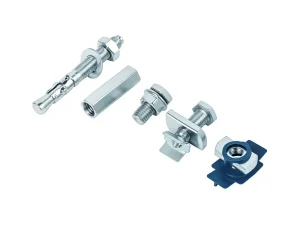
Buy Seismic Resistant Bracket accessories Supplier
View Product Specs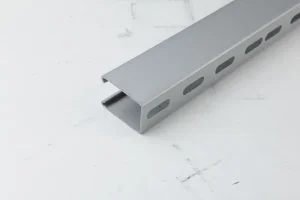
Wholesale Fireproof C slotted channel Factories
View Product Specs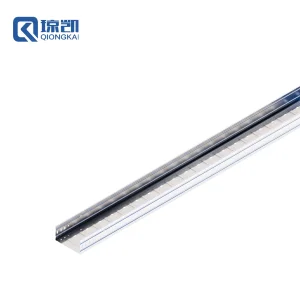
Wholesale Heavy Duty Molded Pre Galvanized Cable Tray 200*100
View Product Specs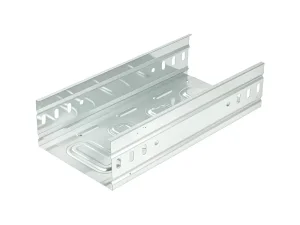
Buy Customizable Pre galvanized molded cable tray GI / HDG
View Product Specs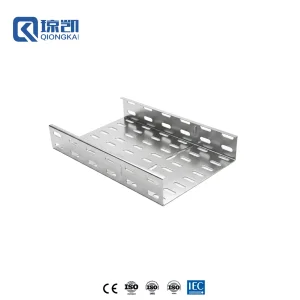
Carbon Steel Pre Galvanized PG / HDG Cable Tray 200*50
View Product Specs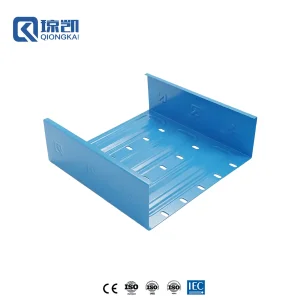
Powder Coated Cable Tray RAL5015 Blue 300*100
View Product Specs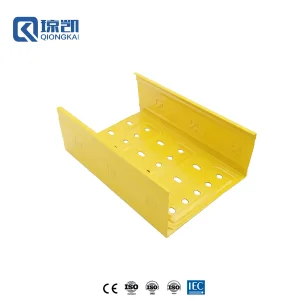
Powder Coated Cable Tray RAL1080 Yellow 200*100
View Product SpecsFrequently Asked Questions: Cable Tray Support Engineering
Direct answers to technical, mechanical, and logistical questions posed by consulting MEP engineers, project managers, and international procurement officers.
What specific profiles and thicknesses are manufactured for C-strut channels?
How do engineers determine span distance between cable tray support trapezes?
What criteria guide finish selection among Pre-Galvanized, HDG, Stainless Steel, and FRP?
• Pre-Galvanized (PG / GI): Category C1–C2 (clean, climate-controlled interiors like commercial towers and dry IT rooms).
• Hot-Dip Galvanized (HDG): Category C3–C4 (unconditioned industrial factories, outdoor rooftops, and multi-tier energy utility substations).
• Stainless Steel 304/316L: Category C5-M (food washdown areas, coastal infrastructure, desalinization, and offshore splash zones).
• Fiberglass Reinforced Plastic (FRP): High acid, chlorine gas, and severe petrochemical exposure where metal reacts electrochemically.
How do seismic bracing systems prevent overhead mechanical collapse?
Can Shanghai Qiongkai supply custom custom profiles and custom engineered bracket geometries?
What quality inspection and material test certificates accompany export shipments?
Need Engineering Support or BOQ Calculation?
Our structural and MEP engineering team is available to assist with load calculations, seismic bracket placement plans, and customized BOM quotation takeoffs tailored to your international project specifications.