
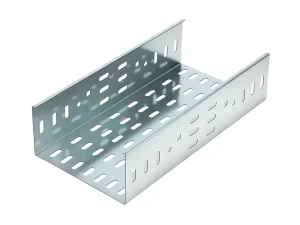
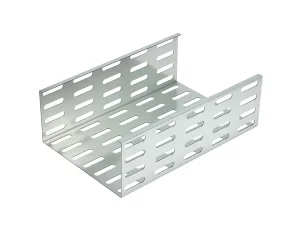
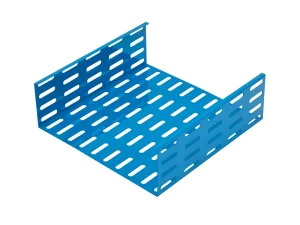
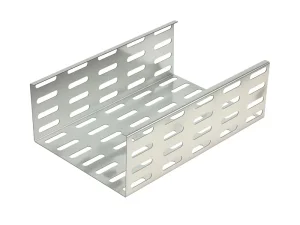
Pre-Galvanized & Perforated Industrial Cable Trays
Explore our high-precision perforated cable support line engineered for maximum airflow, structural stiffness, and rapid mechanical fastening across commercial and industrial infrastructure.
Global State of Industrial Cable Supporting Infrastructure
A macroeconomic analysis of modern cable containment markets, supply-chain resilience, and structural electrical standards governing critical enterprise operations.
The Infrastructure Electrification Surge
Global decarbonization initiatives, hyper-scale data centre buildouts driven by generative artificial intelligence, and deep industrial automation have accelerated the global cable containment market past USD 5.8 billion. Cable supporting systems are no longer treated as passive architectural elements; they represent critical load-bearing assets subjected to rigorous vibration calculations, thermal dissipation metrics, and electromagnetic interference shielding compliance.
Stringent International Harmonization
Global Tier-1 EPC contractors must navigate complex dual-standard environments. North American builds mandate NEMA VE-1 / VE-2 standards that emphasize strict deflection-to-span ratios under working load limits (WLL), whereas European and global IEC markets adhere strictly to IEC 61537 / BS EN 61537 protocols. Modern factories must prove compliance across both paradigms, executing load-deflection proof tests using calibrated automated hydraulic test rigs.
Supply Chain Integration & Direct Sourcing
Supply chain shocks across global logistics have rendered third-party trading intermediaries inefficient and cost-prohibitive. Global EPC engineering teams increasingly contract directly with integrated Chinese manufacturing centers capable of providing continuous roll-forming, in-house metallurgical hot-dip galvanizing, seismic calculations, and complete submittal packages containing parametric 3D BIM models.
Engineering Insight: Avoid Fatal Under-Specification
Underestimating dynamic cable pulling tensions, thermal expansion across long-run outdoor trays, or galvanic corrosion between carbon steel unistrut channels and stainless fasteners represents the primary cause of premature raceway failure. Specifying engineers must calculate combined dead loads (cable self-weight), environmental live loads (ice, wind), and safety margins according to ASTM standards before releasing project bills of quantities (BOQ).
Structural Taxonomy of Cable Supporting Systems
A comparative engineering evaluation of load profiles, thermal dissipation efficiencies, and mechanical cross-sections manufactured by Shanghai Qiongkai Industry.
Ladder Cable Trays
Engineered for maximum structural strength and high-amperage power distribution. Featuring longitudinal I-beam side rails connected via mechanically clinched or robotic TIG-welded rungs spaced at 150mm, 225mm, or 300mm. Offers the highest heat dissipation rating, preventing dielectric breakdown in high-voltage conductors while eliminating trapped moisture.
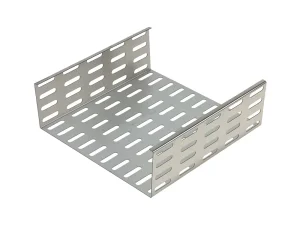
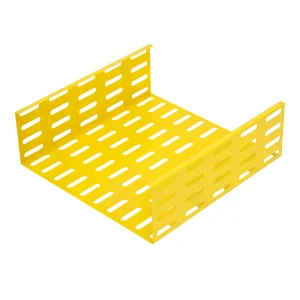
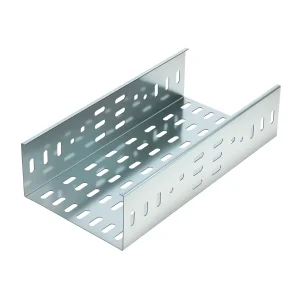
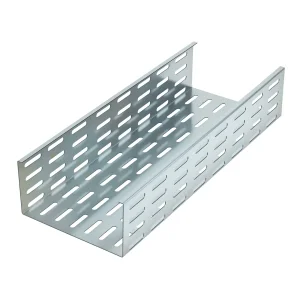
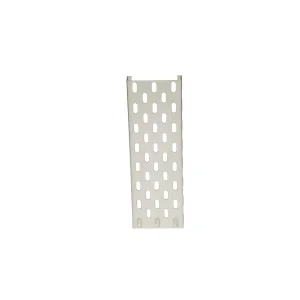
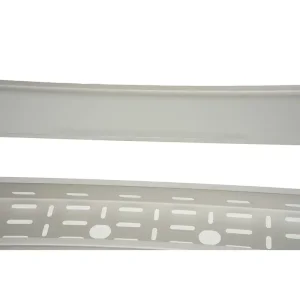
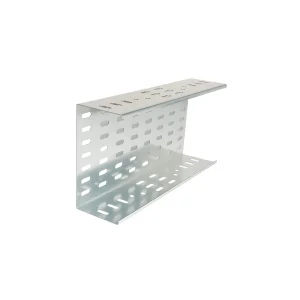
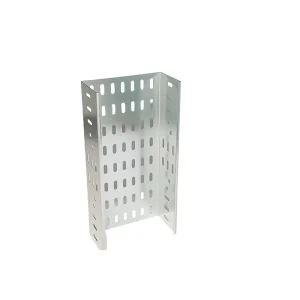
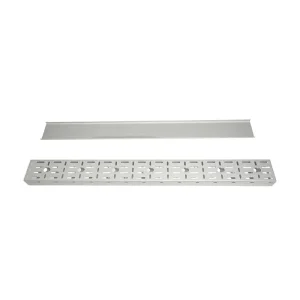
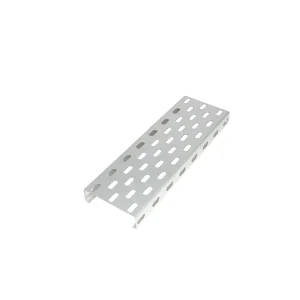
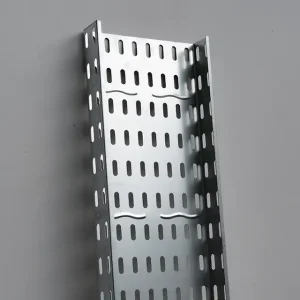
Perforated (Trough) Trays
Engineered with a continuous ventilated sheet metal base featuring slotted or punched patterns. Delivers a minimum 30% to 40% open ventilation area according to IEC specifications, offering an optimal compromise between continuous bottom physical support for sensitive small-diameter cables and adequate convective airflow for low-to-medium voltage signals.
Wire Mesh Basket Trays
Constructed from high-tensile resistance-welded carbon or stainless steel wire rods configured in a 50×100mm grid. The open-mesh design eliminates thermal entrapment, prevents debris accumulation, and minimizes cable skin-effect issues. Widely specified in high-density telecommunication and hyperscale server architectures.
Solid Trunking & Raceways
Total enclosed metallic enclosure with fitted snap-in or screw-down covers. Provides complete electromagnetic interference (EMI/RFI) screening, guarding control lines and fiber optic connections against RF noise, external mechanical impacts, water ingress, and airborne industrial particulate contamination.
Material Science, Finishes & Environmental Longevity
Comparative corrosion kinetics, coating thicknesses, and lifecycle degradation matrices mapped across ISO 12944 atmospheric corrosivity classifications.
| Material / Surface Finish | Reference Standards | Coating Mass / Thickness | ISO 12944 Category | Salt Spray Longevity (ASTM B117) | Target Industrial Application |
|---|---|---|---|---|---|
| Pre-Galvanized (Mill / Sendzimir) | ASTM A653 / EN 10346 | Z120–Z275 (15–20 µm) | C1–C2 Mild | 72 to 120 Hours | Indoor dry commercial buildings, false ceilings, IT corridors. |
| Electro-Galvanized (EG) | ASTM B633 / ISO 2081 | 8–15 µm electrolytic zinc | C1 Indoor | 48 to 96 Hours | Wire mesh trays in computer rooms, data halls, clean server facilities. |
| Hot-Dip Galvanized (HDG) | ASTM A123 / ISO 1461 | 65–85 µm (500–610 g/m²) | C3–C4 Industrial | 1,000 to 1,800 Hours | Petrochemical plants, solar fields, rooftop utility lines, substations. |
| Stainless Steel (AISI 304) | ASTM A240 / EN 10088 | Passive Chromium Oxide Layer | C4 Clean Hygienic | 1,500+ Hours | Food & beverage processing, pharmaceutical cleanrooms, dairy sites. |
| Stainless Steel (AISI 316 / 316L) | ASTM A240 / 2–3% Molybdenum | Self-healing Passivated Oxide | C5-M / CX Offshore | 3,000+ Hours | Offshore oil platforms, marine FPSO vessels, coastal desalination complexes. |
| FRP / GRP Pultruded Composite | ASTM D3917 / UL 94 V-0 | Isophthalic / Vinyl Ester Resin | Extreme Chemical | Immune to Cl- Oxidation | Fertilizer manufacturing, acid battery facilities, wastewater treatment. |
| Powder Coated over Pre-Galv | Dual Protection Epoxy/Polyester | 60–100 µm organic polymer | C2–C3 Specific | 500 to 800 Hours | Architectural color-coding, data rack circuits, retail fit-outs. |
Factory Infrastructure & Technical Capabilities
Integrated precision tooling, CNC cold roll-forming lines, and comprehensive mechanical quality assurance backed by Shanghai Qiongkai Industry Co., Ltd.
Automated Continuous Roll-Forming
Equipped with 12 state-of-the-art continuous cold roll-forming machines operating multi-station roller dies. This eliminates micro-fracturing along bend radii, ensuring precise dimensional tolerances (±0.3mm) across standard side heights (50mm, 75mm, 100mm, 150mm) and widths ranging from 50mm up to 1000mm.
In-Line CNC Punching & Notching
Our heavy-duty hydraulic press fleet features synchronized multi-ton CNC punching units capable of stamping intricate slot patterns, anti-vibration fastener notches, and custom bonding terminal cutouts at high cycle rates without compromising metallurgical integrity or edge passivation.
ISO 9001:2015 Quality Gate Control
Every fabrication batch undergoes strict testing: zinc coating mass verification using magnetic induction thickness gauges, weld joint shear strength testing, electrical continuity continuity tests (<0.05 Ω/meter), and full static destructive load-deflection verification up to failure.
Worldwide Engineering Deployments & Case Studies
Real-world installations showcasing customized cable containment, strut channeling, and structural support engineering under punishing ambient environments.
Shanghai Hongqiao International Airport
Supplied extensive corrosion-resistant CT series cable trunking systems across primary runway utility tunnels and passenger terminals, safeguarding safety-critical avionics control and high-voltage power feeds.
Ras Laffan Liquefied Natural Gas
Engineered customized 316L stainless steel cable ladder systems and custom-profiled structural sections designed to endure punishing saline marine atmospheric conditions and coastal thermal cycling exceeding 50°C.
Thailand Heavy Industrial Complex
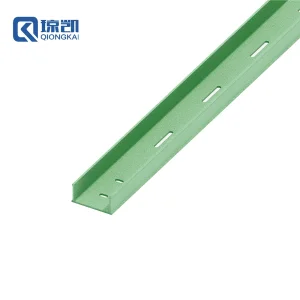
Supplied specialized high-load FRP-lined composite steel trays across an aggressive outdoor chemical processing facility subject to airborne acid droplets, extreme humidity, and intense ultraviolet exposure.
Intensive Livestock Production Mega-Complex
Delivered an economically optimized, heavy-duty pre-galvanized and powder-coated cable tray system resisting high concentrations of ammonia vapor and bio-gaseous moisture while managing constrained budget limits.
European Industrial Utility Corridor
Completed the fabrication and international maritime dispatch of hot-dip galvanized cable trays and matching accessories conforming to EN 61537 requirements for a major EU transport and energy expansion corridor.
Specialized Heavy-Duty & Marine-Grade Cable Trays
Engineered for extreme offshore conditions, chemical processing environments, and seismic mechanical installations requiring uncompromising structural durability.
Installation Engineering, Seismic Bracing & Span Physics
Mechanical design guidelines for structural engineers calculating allowable beam deflection, thermal expansion gaps, and seismic sway bracing under ASCE 7-22 specifications.
Deflection Limits (NEMA VE-1 vs IEC)
Under NEMA standards, structural load capacity is governed by allowable mid-span deflection, typically restricted to L/200 for aesthetic and mechanical safety. The deflection formula for a continuous beam under uniformly distributed load (w) over span length (L) is expressed as:
Δ = (5 × w × L⁴) / (384 × E × I)
Where E is the modulus of elasticity of the metal and I is the cross-sectional moment of inertia. Exceeding L/200 causes side-rail warping, dislodged covers, and high mechanical strain on internal conductors.
Seismic Sway Bracing (ASCE 7-22)
Non-structural electrical containment installed in earthquake-prone zones must be mechanically anchored using engineered strut channels and rigid 45-degree lateral and longitudinal sway brackets. Standard drop rods alone provide zero resistance against horizontal harmonic shear forces. Qiongkai supplies serrated 41×41 and 41×82 back-to-back anti-seismic unistrut channels engineered to lock channel nuts in place under violent vibration.
Thermal Expansion Joint Calculations
Continuous outdoor cable tray installations experience significant thermal elongation between winter and summer cycles. The total thermal expansion ΔL is calculated via:
ΔL = L × ΔT × α
Where α for carbon steel is 12 × 10⁻⁶ /°C and stainless steel is 16 × 10⁻⁶ /°C. Slotted expansion splice plates with pre-calculated gap gaps must be inserted at regular intervals (typically every 30 to 45 meters) to avoid buckle failures.
Technology Roadmap & Industry Trends (2025–2035)
Anticipating the technological disruptions transforming electrical raceway fabrication, digital engineering, and circular metallurgical sustainability.
BIM LOD 400 Digital Twins
Parametric Revit/IFC components with native stress-analysis metadata, clash-detection protocols, and exact manufacturer part-number attribution for direct import into digital twin facility models.
Near-Zero Carbon Green Steel
Transitioning primary coils to electric-arc furnace (EAF) steel produced with hydrogen direct-reduced iron (DRI), decreasing embodied carbon intensity by up to 70% to meet LEED v4.1 criteria.
Toolless Rapid-Snap Fastening
Next-generation spring-steel snap accessories and integral autolock couplers eliminating up to 60% of traditional nut-and-bolt installation time, drastically slashing total on-site contractor labor overhead.
IoT-Enabled Smart Trays
Embedding low-profile distributed fiber-optic temperature sensors (DTS) and load transducers within high-voltage cable runs to continuously report localized insulation hotspots and physical overloads.
Frequently Asked Questions by Industrial Project Engineers
Exhaustive answers addressing metallurgical specifications, certification testing, and custom manufacturing minimum order quantities (MOQ).
Need Project-Specific Engineering Calculations or BOQ Review?
Collaborate directly with Shanghai Qiongkai's structural engineering team. Submit your layout drawings, load schedule, or material requisitions for comprehensive optimization and rapid quote submittal.