
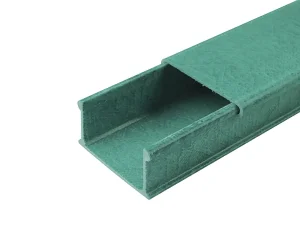
Primary Containment Systems
High-Performance Cable Trunking Lineup
Explore our core pre-galvanized, powder-coated, stainless steel, and fiberglass-reinforced polymer (FRP) channel trunking specifications directly supplied from our manufacturing workshops.
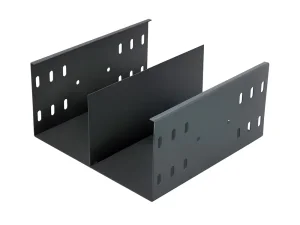
Buy Pre Galvanized Powder Coating Cable Trunking With Split Plate - Black Coating Manufacturers, Supplier
View Specifications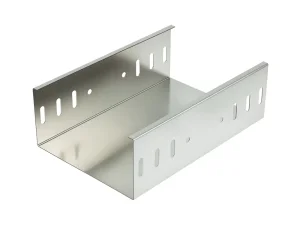
Buy Stainless Cable Tray With Perforation Supplier, Factories
View Specifications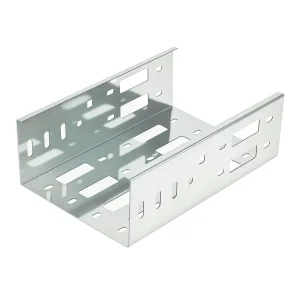
Wholesale Custom Size Pre Galvanized Perforated Cable Tray Factory, Price
View Specifications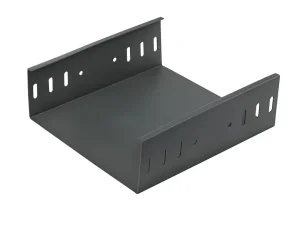
Wholesale Pre Galvanized Powder Coating Cable Tray Factory, Price
View Specifications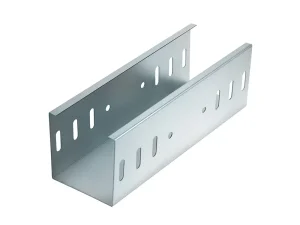
Wholesale Pre Galvanized Cable Trunking Manufacturer, Factories
View Specifications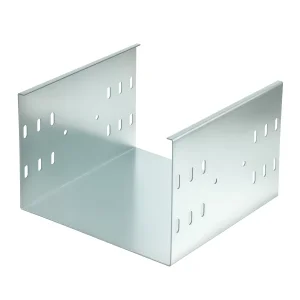
Wholesale QiongKai Pre Galvanized Cable Trunking Manufacturers, Price
View Specifications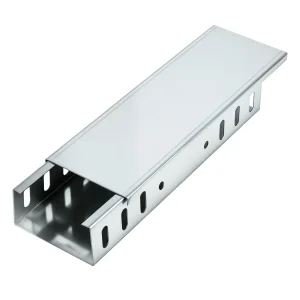
Wholesale Pre-Galvanized Cable Trunking 100*50 Manufacturer, Manufacturers
View Specifications
Technical Whitepaper Deep-Dive
Structural Integrity & Global Compliance Framework
Cable trunking serves as an enclosed electrical containment barrier protecting mission-critical conductor circuits from mechanical impact, particulate contamination, moisture, and electro-magnetic interference (EMI).
IEC 61537 & NEMA VE 1
Every cable trunking line engineered at Qiongkai undergoes rigorous physical loading and deflection verification. Compliant with IEC 61537 and NEMA VE 1 standards, our solid and ventilated channels maintain allowable deflection limits under maximal conductor load weight, eliminating long-term sagging and mechanical failure.
EMI/RFI Attenuation & Shielding
Continuous closed metal cable trunking, manufactured from cold-rolled steel or solid stainless profiles, functions as an attenuation conduit shielding sensitive control and signal conductors against Radio Frequency Interference (RFI) and Electro-Magnetic Interference (EMI) within dense automation floors.
Corrosion Classification (ISO 12944)
From internal C1/C2 architectural enclosures utilizing high-grade pre-galvanized strip steel (Z275 coating) to extreme C5-M marine exposure demanding Hot-Dip Galvanization (>85μm ISO 1461) or pultruded non-metallic FRP resin matrices, our materials ensure 30+ years of operational durability.
Tier-1 Manufacturing Infrastructure
China Factory Supply Chain Advantage & Capacity
Direct-from-manufacturer integration delivering unprecedented scalability, cost efficiency, and lead-time certainty for megaproject contractors worldwide.
Fully Integrated Shanghai Facilities
Spanning 30,000 square meters across three production hubs in Shanghai, Qiongkai houses 12 automatic continuous roll-forming lines, automated punching arrays, and over 60 heavy-duty hydraulic folding and profiling machines. Eliminating intermediary markups ensures maximum commercial efficiency.
Strategic Deep-Water Port Logistics
Situated directly adjacent to Shanghai Yangshan Deep-Water Port and Waigaoqiao Terminals, our logistics operation ensures optimized container stuffing, direct customs routing, and accelerated sea-freight transit times across North America, the European Union, the Middle East, and Southeast Asia.
Precision Quality Control & Traceability
Every batch of cable trunking is accompanied by mill test certificates (MTC), coating thickness spectrometer reports (Elcometer testing), and load-deflection test logs. From raw coil slit verification to multi-axis stamping and custom powder cure testing, total traceability is built-in.
20+
Years Engineering Cable Management Systems (Est. 2005)
30,000 m²
Consolidated Manufacturing & Fabrication Floor Area
12 Lines
Continuous Cold Roll-Forming & Pultrusion Operations
$50M+
Peak Annual Global Supply Capacity Delivered
Material Selection Matrix
Cable Trunking Metallurgy & Performance Comparison
Selecting the optimal trunking metallurgy and finish is critical to avoiding premature galvanic corrosion, structural fatigue, and insulation breakdown over project lifespans.
| Material / Treatment | Corrosion Tier | Standards Compliance | Thermal & Chemical Resistance | Primary Industrial Sector |
|---|---|---|---|---|
| Pre-Galvanized (PG) Carbon Steel | C1 - C2 Low Risk | EN 10346, GB/T 2518 | Moderate; indoors with controlled relative humidity | Commercial office towers, server rows, clean ceiling plenums |
| Hot-Dip Galvanized (HDG) Steel | C3 - C4 High Durability | ISO 1461, ASTM A123 | High resistance to atmospheric precipitation and UV exposure | Outdoor substations, bridges, transit corridors, mining sites |
| Stainless Steel (SS304 / SS316L) | C5-I / C5-M Extreme | ASTM A240, EN 10088 | Resistant to high chlorides, caustic cleanings, and washdowns | Offshore oil & gas rigs, marine terminals, food & pharmaceutical plants |
| FRP / GRP (Fiberglass Pultruded) | Non-Metallic Dielectric | ASTM D3917, UL 94 V-0 | 100% immune to rust; acid/alkali vapors; zero electrical conductivity | Chemical refining plants, wastewater treatment, coastal LNG storage |
| Powder-Coated Pre-Galvanized | Architectural Color Code | Qualicoat, ISO 12944 | Enhanced dielectric insulation and designated color segregation | Hyperscale data centers, multi-tenant telecom pathways |
Market Intelligence & Evolution
Emerging Trends in Global Cable Containment Procurement
How hyper-scale cloud facilities, renewable energy integration, and building lifecycle management are fundamentally reshaping procurement specifications.
Hyperscale Data Center Acceleration
The global surge in artificial intelligence compute nodes requires high-volume overhead and underfloor cable trunking systems featuring built-in internal compartment dividers (split plates). This design isolates high-amperage busway power feeders from sensitive fiber-optic cabling, avoiding electromagnetic crosstalk while allowing swift pathway additions.
Prefabricated & Modular MEP Construction
Global EPC contractors are shifting away from on-site cutting and field drilling. Qiongkai supplies pre-engineered, factory-punched trunking assemblies with snap-on covers, precision 90-degree internal/external elbows, flat bends, and tees that lower installation hours by up to 35% across commercial mega-developments.
Corrosion Elimination in Clean Energy Infrastructure
In offshore wind substations, maritime battery storage facilities, and solar inverter stations, metallic containment often degrades rapidly under severe salt spray. Qiongkai's proprietary fiberglass reinforced polymer (FRP) pultruded trunking delivers zero corrosion, high flame retardancy (UL 94 V-0), and a lightweight footprint that reduces dead-load stresses.
International Compliance & Engineering Support
Global Project Engineering & Localized Technical Support
Bridging Chinese factory manufacturing excellence with the stringent code requirements of international consultants, testing bodies, and site inspectors.
Localized Code Compliance
Whether navigating BS EN 50085 across the UK/Middle East, NEC/NEMA guidelines in the Americas, or AS/NZS 3013 fire-rated requirements in Australasia, our bilingual engineering team reviews your project specifications to guarantee that trunking thickness, grounding continuity, and hardware ratings align directly with local municipal and electrical codes.
Full Submittal Packages & BIM Models
We eliminate consultant approval bottlenecks by supplying exhaustive technical submittal dossiers within 48 hours. These packages contain 3D BIM/Revit families, Finite Element load simulations, third-party SGS/TUV testing certifications, grounding resistance verification data, and raw material mill certificates.
Comprehensive Proven Project References
Our containment solutions have been trusted in demanding aviation hubs like Shanghai Hongqiao International Airport, extreme-heat LNG export facilities in Qatar, extensive agricultural containment facilities in Paraguay, and heavy-load industrial infrastructure delivered across Italy and greater Europe.
Industrial & Chemical Enclosures
Heavy-Duty Trunking & Non-Metallic Systems
Explore heavy-duty pre-galvanized profiles, customized cable ducts, and chemical-resistant fiberglass pultruded containment solutions configured for high-stress industrial applications.
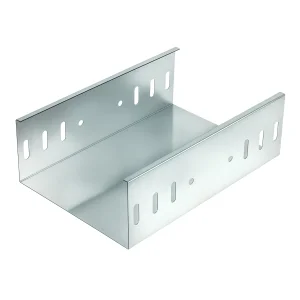
Buy Custom Size Pre Galvanized Cable Trunking Manufacturer, Factories
View Specifications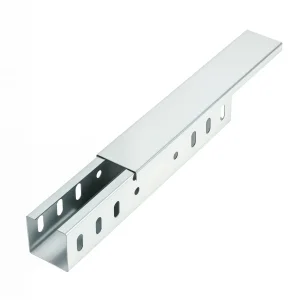
Wholesale Pre Galvanized Cable Trunking Series Manufacturer, Supplier
View Specifications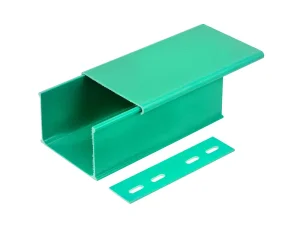
Wholesale FRP Cable Tray 100mm Manufacturers, Supplier
View Specifications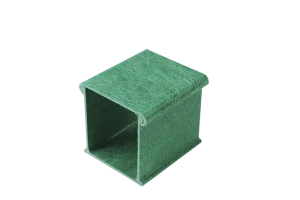
Wholesale FRP Through cable tray 50mm Supplier, Suppliers
View Specifications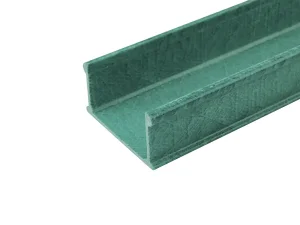
Buy FRP Cable Trunking 200*100 mm Manufacturer, Factories
View Specifications
Wholesale High Quality FRP Cable Tray With Cover Suppliers, Factory
View Specifications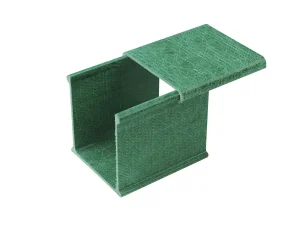
Buy Fiberglass Reinforced Plastic Cable Tray Manufacturers, Factories
View Specifications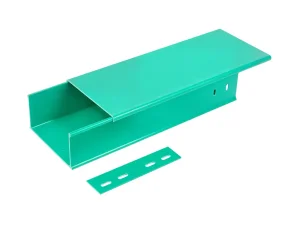
Wholesale High Strength FRP Cable Tray Suppliers, Price
View Specifications
Direct Engineering FAQ
Frequently Answered Technical & Procurement Questions
Authoritative answers addressing engineering criteria, installation practices, raw material certifications, and custom fabrication possibilities.
What is the primary operational difference between cable trunking and cable tray?
Cable trunking features an enclosed, solid-bottom or slotted chassis covered by a removable lid, delivering total physical and environmental encapsulation alongside continuous electromagnetic shielding (EMI protection). Cable trays (such as ladder or wire mesh) are largely open frameworks designed for maximal heat dissipation and natural airflow around high-voltage power feeders.
How does Qiongkai ensure cover retention in vertical riser installations?
For high-rise risers, we manufacture precision heavy-duty screw-fix trunking covers or incorporate heavy-gauge spring retention turn-buckles. These systems prevent lid dislodgement under air pressure surges inside vertical MEP shafts and eliminate cover vibration caused by building movement.
Can internal splitters or multi-compartment dividers be pre-installed at the factory?
Yes. We engineer twin, triple, and four-compartment cable trunking with continuously welded or lock-seamed interior dividing fillets. This architecture enables the simultaneous routing of 400V power conductors, building automation signaling, and Cat6A/fiber data cabling inside a single run without electromagnetic cross-talk.
What is the standard manufacturing lead time for custom dimensions and high-volume orders?
Standard profile sizes (e.g., 50×50mm, 100×50mm, 150×100mm, 200×100mm) are held in regular coil inventory with dispatch possible within 7 to 10 days. Tailored custom widths, bespoke punch profiles, or non-standard side heights are completed in 15 to 20 working days across our automated profiling cells.
How does FRP trunking perform in fire exposure conditions compared to steel?
Our pultruded FRP cable trunking is formulated with brominated fire-retardant vinyl ester or isophthalic polyester resins, achieving UL 94 V-0 flame ratings and low-smoke zero-halogen (LSZH) performance. While metal trunking transmits high heat inward, FRP preserves a lower internal cavity temperature for a longer period during initial blaze exposure.
What documentation and inspection protocols are available for export shipments?
Every shipment is supported by Mill Test Certificates (MTC) conforming to EN 10204 3.1, coating thickness measurement protocols (ISO 2178), and load deflection test sheets. We routinely facilitate third-party pre-shipment inspections via SGS, Bureau Veritas, or Intertek at our Shanghai manufacturing facilities.