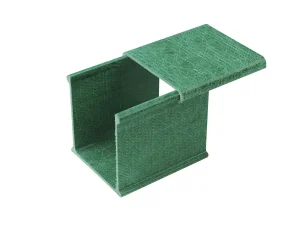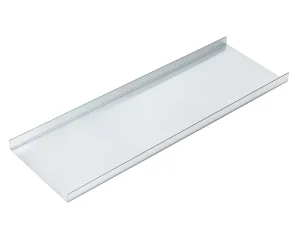
Standard Inventory & Components
Pre-Galvanized Fittings & Critical Hardware
Certified modular accessories engineered to maintain electrical grounding continuity, structural deflection thresholds, and environmental shielding.
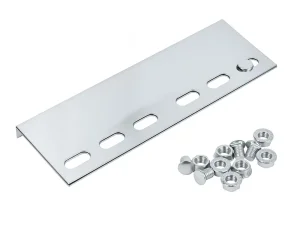
Pre-Galvanized Cable Tray Connections & Spare Parts
Explore Specification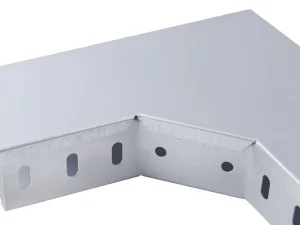
Pre-Galvanized Elbow / Tee / Cross Modular System
Explore Specification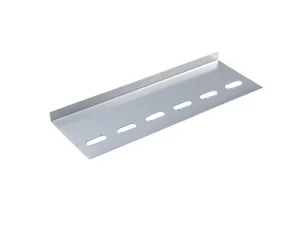
Heavy Duty Connection Plates & Couplers
Explore Specification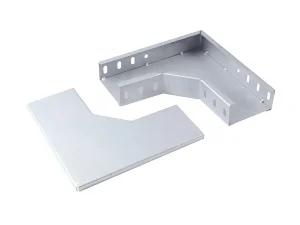
Precision Formed Pre-Galvanized 90° Elbows
Explore Specification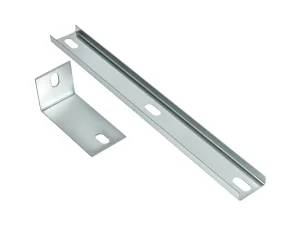
Pre-Galvanized Structural L-Shaped Brackets
Explore Specification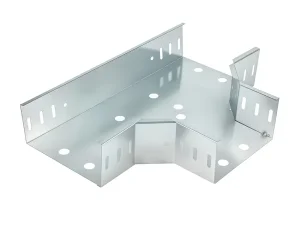
Horizontal Tee Transitions for Cable Tray Systems
Explore Specification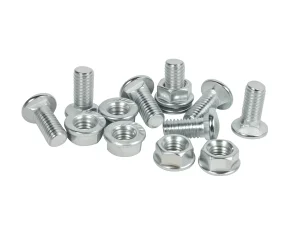
High-Tensile Fasteners & Bridge Frame Screws
Explore Specification
Global Market Architecture
The Strategic Engineering Role of Cable Tray Accessories
In modern industrial facilities, mega data centers, and offshore energy plants, cable tray accessories are not mere secondary fasteners—they define the integrity, thermal safety, and seismic performance of entire cabling layouts.
Structural Joint Integrity
Accessories such as fishplates, straight splice plates, and angle couplers carry critical shear and bending forces across spans. Poorly manufactured fittings cause sag and excessive deflection (exceeding L/200 under NEMA VE-1 standards), exposing high-voltage cables to strain and sheath damage.
Electrical Bonding & Safety
Proper electrical grounding continuity depends completely on the fit-up of coupler components and bridge frame screws. Under international standards (IEC 61537), tray accessories must deliver maximum resistance thresholds beneath 50 mΩ across splice joints to prevent arc hazards during ground faults.
Bending Radii Compliance
Transition components including horizontal bends, vertical inside/outside risers, and crosses dictate the allowable bending radius of heavy copper or fiber-optic cores. Precision factory stamping guarantees standard 300mm to 900mm radii, preventing micro-fractures in transmission cables.
Advanced Manufacturing Ecosystem
China's Manufacturing Efficiency & Global Price Dynamics
Combining heavy-duty automated stamping, vertical raw-material integration, and deep port logistics to produce high-tolerance cable tray fittings at unmatched scale.
12+
Fully Automated Cold-Roll & Stamping Lines
60+
Heavy-Duty Punch & Deep-Drawing Machines
30Km²
Floor Space Dedicated to Forming & Finishing
48hr
Rapid Tooling & Prototype Turnaround
Vertical Upstream Integration
By sourcing high-grade cold-rolled coils (SPCC, Q235B) directly from regional mills, raw material yields are maximized. Coupled with localized zinc galv baths, internal processing removes 18-25% in auxiliary broker surcharges seen in Western supply chains.
Multi-Cavity Progressive Dies
Accessories such as seismic strut channel nuts, L-brackets, and splice plates are stamped using automated progressive dies operating at 60 strokes per minute. This yields micrometer precision for bolt hole matching while slashing marginal labor cost per unit.
Logistical Proximity to Ports
Located in Shanghai's industrial corridor, factories enjoy immediate access to Yangshan and Waigaoqiao shipping terminals. FCL (Full Container Load) packing schemes consolidate nested elbows, covers, and hardware to minimize dimensional freight waste.
Engineering Economics
Material Finishes, Metallurgy & Price Comparison
Evaluating total lifecycle expenditures against environmental corrosion categories (ISO 12944 C1 to CX). Sourcing the wrong finish accelerates premature failure and expensive retrofit costs.
| Material / Treatment | Corrosion Class (ISO 12944) | Protective Layer / Grade | Relative Cost Factor | Key Project Environments |
|---|---|---|---|---|
| Pre-Galvanized (PG / GI) | C1 – C2 (Low) | Continuous zinc sheet (15–20 µm) | 1.0x (Baseline) | Commercial office towers, server rooms, dry indoor ceiling plenums. |
| Electro-Galvanized (EG) | C1 (Very Low) | Electrolytic zinc coat (5–12 µm) | 0.9x – 1.05x | Wire mesh baskets for interior IT distribution racks and clean rooms. |
| Hot-Dip Galvanized (HDG) | C3 – C4 (High) | Batch dip molten zinc (65–85 µm) | 1.35x – 1.55x | Outdoor substations, bridges, heavy industrial yards, wastewater plants. |
| Stainless Steel 304 | C3 – C4 (Hygienic) | Passivated austenitic alloy (18/8 Cr-Ni) | 2.8x – 3.2x | Food processing lines, pharmaceutical labs, clean utilities. |
| Stainless Steel 316 / 316L | C5 – CX (Extreme Marine) | Mo-enhanced alloy (2-3% Molybdenum) | 3.8x – 4.5x | Offshore oil & gas rigs, coastal LNG terminals, chemical wash areas. |
| Fiberglass (FRP / GRP) | Corrosive Chemical | Pultruded isophthalic / vinyl ester | 2.2x – 3.0x | Fertilizer production, battery manufacturing, acidic vapor plants. |
Field Deployment Scenarios
Engineered Realities: Global Specification Demands
How varying regional climates and project categories mandate specialized cable tray accessories, strut hardware, and anti-vibration framing.
Hyperscale Data Centers (US / EU)
Requires lightweight pre-galvanized covers, powder-coated cable drop-outs, and quick-connect splice bolts. System operators require zero zinc-whiskers (avoiding electro-galvanized finishes near open server tiles) and smooth edge radii to prevent data line signal loss.
Middle East LNG & Desert Oilfields (Qatar / UAE)
Sites demand thick hot-dip galvanizing (>85 µm) or specialized non-metallic FRP/GRP ladder tray clamps. Accessories must withstand ambient UV radiation exceeding 50°C and frequent airborne abrasive sandstorms without losing clamping torque.
Seismic Infrastructure (Japan / LATAM / SE Asia)
Rigid installations fail during seismic displacement. Projects mandate specialized hinged splice plates, serrated flange nuts, and channel seismic bracing brackets capable of withstanding dynamic lateral loading according to IBC and GB50981 standards.
Technology Evolution
Emerging Trends Reshaping Cable Support Engineering
The convergence of intelligent building models (BIM), rapid on-site assembly, and green steel standards across international construction markets.
Toolless & Snap-In Couplers
Labor overhead constitutes up to 60% of total electrical installation expenses. The industry is migrating rapidly toward boltless snap-fit connectors, toolless retaining clips, and push-in covers that eliminate manual wrenching and reduce field installation hours by 40%.
BIM Integration & Digital Fabrication
Architects and EPC planners increasingly mandate millimeter-accurate 3D Revit models for cable pathways. Manufacturing accessories directly from IFC/BIM data ensures zero clashes between structural beams, HVAC piping, and cable tray bends.
Low-Carbon Recycled Metallurgy
EU CBAM (Carbon Border Adjustment Mechanism) and ESG imperatives require quantified embodied carbon figures. Manufacturers are adopting recycled scrap steel, green electricity stamping operations, and zinc-aluminum-magnesium (ZAM) alloy coatings that replace heavy hot-dip bath emissions.
Procurement Strategy
Enterprise Sourcing Checklist: Avoiding Costly Pitfalls
A rigorous five-point procurement protocol designed for project directors, quantity surveyors, and electrical supply heads sourcing from overseas manufacturers.
01
Gauge Thickness Verification
Beware of nominal vs. actual steel thickness. Some low-cost vendors use sub-gauge steel (e.g., claiming 1.5mm but supplying 1.2mm post-galv). Always demand micrometer mill test reports (MTR) according to ASTM A653 or EN 10346.
02
Salt Spray & Coating Adhesion
Verify corrosion resistance via ISO 9227 or ASTM B117 salt spray tests. HDG brackets must achieve a minimum of 480 hours without red rust, while ZAM or marine grade coatings must exceed 1,000 to 2,000 hours.
03
Fastener Grade Compatibility
Never match standard carbon steel screws with stainless steel trays—galvanic corrosion will destroy the joint. Require DACROMET coated, 304, or 316 bridge frame screws engineered for the target carrier medium.
04
Pre-Assembly Trial & Jigs
Insist on factory pre-assembly checks for bends, reducers, and tee joints. Misaligned bolt holes lead to costly delays on job sites where hot-drilling on site voids structural warranties and protective coatings.
05
Packing & Container Stacking
Cable tray covers and brackets are vulnerable to edge deformation during sea transit. Ensure accessories are shrink-wrapped in palletized crates with reinforced steel banding and moisture-absorbing desiccant packs.
Technical Clarifications
Frequently Asked Questions on Accessories & Procurement
Direct engineering answers addressing pricing structures, structural performance, and standards compliance.
How do accessory quantities typically ratio against straight cable tray lengths?
For standard 3-meter straight lengths, a solid estimation rule is 1 pair of straight splice couplers, 8 sets of M6/M8 bridge frame screws and flange nuts per section, plus 1 support bracket every 1.5 to 2 meters. Complex plant rooms with frequent directional shifts typically require an accessory allocation equal to 20-30% of total tray project value.
Why is Pre-Galvanized (PG) steel cheaper than Hot-Dip Galvanized (HDG)?
Pre-galvanized coils are zinc-coated continuously at high speeds in steel rolling mills before stamping. Hot-dip galvanizing requires individual manual racking, acid pickling, fluxing, and immersion in a molten zinc bath at 450°C post-fabrication. HDG involves high energy costs and manual labor, resulting in a 35% to 50% premium over PG.
What is the standard price variance between SS304 and SS316 accessories?
SS316 typically commands a 25% to 40% price premium over SS304. This difference is driven by the addition of 2-3% Molybdenum in SS316 alloy, which provides superior resistance against chloride pitting and crevice corrosion in marine and chemical environments.
Can seismic brackets be retrofitted to existing strut channel runs?
Yes. Seismic brackets utilizing 41x41 or 41x82 strut channels can be attached to existing trapeze hangers using channel spring nuts, heavy-duty gusset plates, and diagonal bracing cables/rods, provided the building's anchor substrate (concrete slabs or steel I-beams) has verified pull-out capacity.
Heavy-Duty Infrastructure Systems
Channel Profiles, Ladders & Specialty Support Trays
Heavy-duty structural supports, pultruded non-metallic trunking, and seismic framing components for extreme commercial and industrial projects.
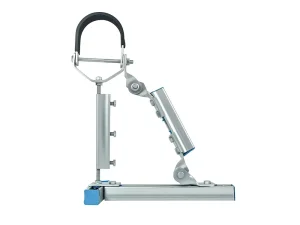
Seismic Brackets for Structural Strut Channels
Explore Specification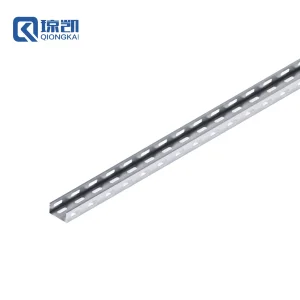
Perforated PG / HDG Cable Tray 50×25mm
Explore Specification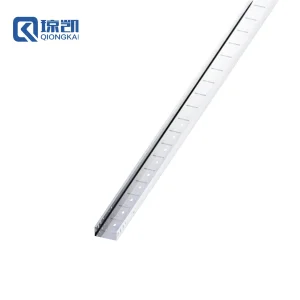
Reinforced Pre-Galvanized Cable Tray 100×50mm
Explore Specification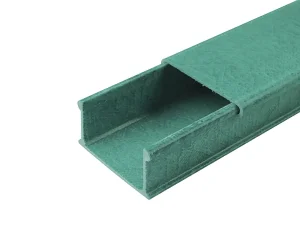
Customizable FRP / GRP Anti-Corrosion Cable Trunking
Explore Specification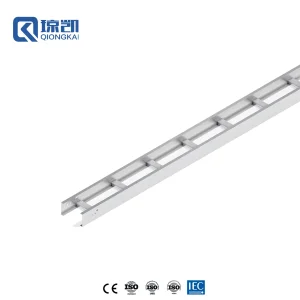
Galvanized Heavy-Duty Cable Ladder 200×100mm
Explore Specification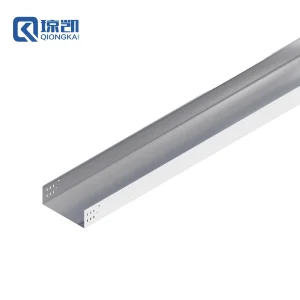
PG / HDG / SS Trough Type Channel Trunking 400×150mm
Explore Specification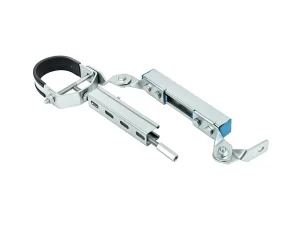
Multi-Angle Seismic Support Hinge Brackets
Explore Specification