
What Is a Wire Mesh Cable Tray and How Is It Used?

Time:2026-10-23 Author:Oliver
0%

A Wire Mesh Cable Tray is an open cable-support system made from welded steel wires. It carries power, control, data, and communication cables above ceilings, floors, and industrial work areas. Its mesh structure improves airflow and allows installers to see cable routes clearly.

“Good cable support should guide cables, not trap them,” says Marc Dufour, a cable-management engineer with extensive installation experience. This principle explains the tray’s practical value. Cables can enter from the top, side, or bottom without drilling large openings. Installers can also cut sections on site, although careless cutting may leave sharp edges. That small detail matters.

Unlike solid-bottom trays, a Wire Mesh Cable Tray usually drains dust and moisture more effectively. Its open design also helps reduce heat buildup around bundled cables. However, it is not automatically suitable for every project. Engineers must check cable weight, span distance, corrosion exposure, grounding continuity, and local electrical requirements. Stainless steel may suit washdown areas, while galvanized steel often fits ordinary indoor installations.

A tray can look simple.

Real installations are not.

Crowded junctions, uneven walls, and late cable changes can complicate the layout. I have found that the most reliable systems leave room for future circuits. Overloading the tray may restrict airflow and increase maintenance work. Therefore, this guide examines what a Wire Mesh Cable Tray is, how it is assembled, where it performs best, and which installation decisions deserve closer attention. Its advantages are clear, but careful design still determines the final result.
What Is a Wire Mesh Cable Tray and How Is It Used?

What Is a Wire Mesh Cable Tray?

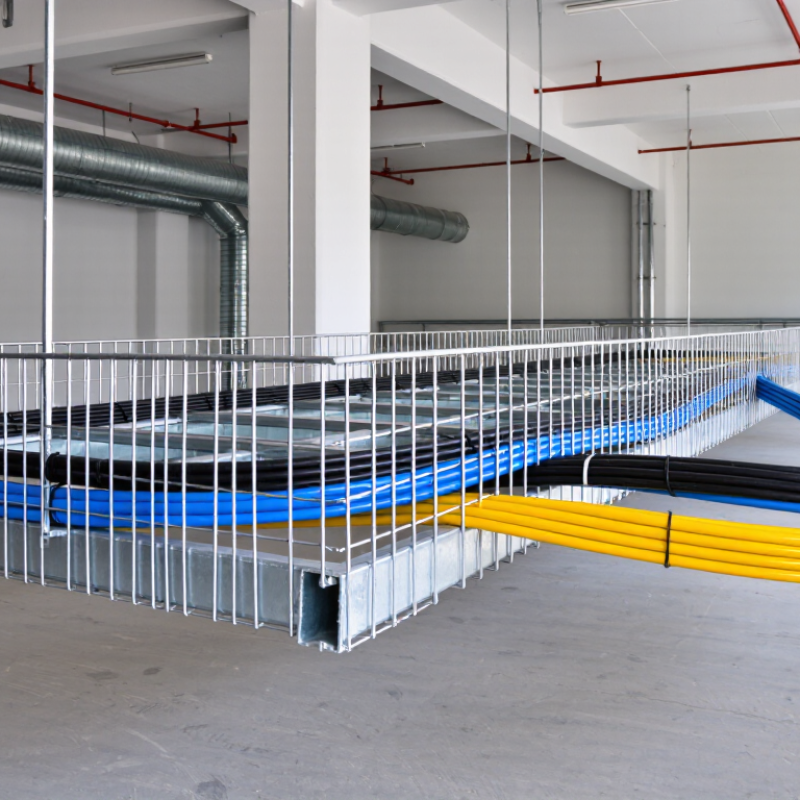
A wire mesh cable tray is a support system made from welded steel wires. Its grid-like base holds cables above floors, ceilings, and equipment areas. The open structure allows air to circulate around cables. It also makes cable routes easy to inspect.

Unlike solid-bottom trays, mesh trays usually need fewer tools during installation. Technicians can cut sections, add bends, and secure cables with simple ties. This flexibility helps in data rooms, control panels, factories, and commercial buildings. The International Energy Agency’s Electricity 2024 report estimates that data-centre electricity use may grow from about 460 TWh in 2022 to over 1,000 TWh by 2026. More digital equipment means denser cable routes. Heat management becomes less optional.

A suitable tray must match cable weight, span length, environment, and required separation. IEC 61537 covers mechanical and electrical performance for cable tray systems. NEMA VE 1 also provides installation and load guidance. Open mesh is useful, but it is not a universal answer. Small cables may sag through wide openings. Outdoor installations also require suitable corrosion protection. I have seen designs focus on tray width while overlooking support spacing. That mistake can create uneven loading and difficult maintenance later. Check clearances, bonding, and future capacity before fixing the first section.

What Is a Wire Mesh Cable Tray and How Is It Used?

A wire mesh cable tray is an open, welded-wire support system used to route and organize power, control, and signal cables. Its open structure improves ventilation, simplifies cable access, and helps installers manage cable capacity.

The chart shows maximum cable-fill percentages commonly specified for cable tray installations under NFPA 70 (National Electrical Code), Article 392.22. Actual tray selection must also consider cable weight, support spacing, temperature, and local requirements.

How Is a Wire Mesh Cable Tray Designed and Constructed?

A wire mesh cable tray uses welded steel wires to form a lightweight, open framework for electrical cables. Its grid pattern improves airflow and lets installers inspect cables from above. The tray usually includes longitudinal wires, cross wires, side rails, and shaped fittings for bends or changes in elevation. Wire diameter and spacing depend on cable weight, span length, and expected mechanical stress.

Manufacturers normally cut and weld the wires into straight sections before applying a corrosion-resistant finish. Galvanized steel suits many indoor and moderately damp areas, while stainless steel performs better in aggressive environments. Edges should be smooth. Sharp welds can damage insulation or injure installers.

Tray dimensions require careful planning. Engineers check cable fill, working load, support spacing, and thermal conditions. A crowded tray may restrict cooling, even when its total weight remains acceptable. That detail is easy to miss.

During installation, supports must align with the tray’s structural points. Couplers should maintain electrical continuity where bonding is required by local codes. Grounding paths need verification with suitable test equipment. Field inspections often find loose fittings, excessive spans, or cables forced around tight bends. These problems may not appear on a clean drawing.

A practical design also leaves room for future cables, although spare capacity is often underestimated. Rechecking actual cable sizes before fabrication can prevent costly changes. The design is not perfect by default. It depends on accurate loads, careful workmanship, and realistic site conditions.

What Types of Cables Can It Support?

A wire mesh cable tray supports many cable types, but its open steel structure suits communication and power systems differently. In data centers, it commonly carries copper Ethernet cables, fiber-optic lines, coaxial cables, control wiring, and low-voltage security circuits. Fiber benefits from the tray’s smooth, accessible path. Technicians can add or remove bundles without opening a solid cover.

Power cables also use mesh trays. These include multicore feeders, single-core conductors, battery cables, and motor-control cables. However, heavy cables need careful spacing and load checks. The IEA’s Electricity 2024 report estimates that data centers used about 460 TWh of electricity in 2022. Demand could exceed 1,000 TWh by 2026. That growth increases the need for organized power-cable routes, not just more tray length.

Separation matters. Shielded control cables, variable-frequency-drive cables, and sensitive data cables may require distance from high-current conductors. TIA-942-B and NFPA 70 guidance support planned routing, grounding, bonding, and fill limits. A tray can carry mixed services, but careless grouping may increase electromagnetic interference or heat buildup. Keep it practical.

In the field, installers often use wider trays for fiber and data bundles, then reserve stronger sections for power. This approach is not perfect. Actual cable diameters, bend radius, tray corrosion protection, and local inspection rules can change the design. Uptime Institute’s 2024 Global Data Center Survey also shows that power-related failures remain a major outage concern, reinforcing the value of disciplined cable separation and inspection.

How Is a Wire Mesh Cable Tray Installed?

A wire mesh cable tray is installed as an open support path for power, control, and data cables. Installation starts with a route survey. Check ceiling height, equipment access, fire barriers, and possible water exposure. NEMA VE 2-2018 recommends selecting support spacing from the tray’s load rating, cable weight, and site conditions. Do not assume standard spacing works everywhere.

Mark support points before cutting the tray. Install threaded rods, brackets, or channel supports on a rigid structure. Keep the tray level, with enough clearance for pulling cables and future inspection.

Cut sections with suitable tools, then remove sharp edges and fit approved couplers. A careless cut can damage insulation later. It happens more often than expected. Bond metallic sections across joints when required by the design and local electrical rules.

Place the tray away from hot pipes and sharp structural edges. Maintain the manufacturer’s minimum bend radius for every cable. NFPA 70:2023, Article 392, uses cable type and size to determine allowable tray fill; many multiconductor cable arrangements use a 40% or 50% limit. Verify the exact rule with the adopted code edition and authority having jurisdiction.

IEC 61537:2023 also addresses cable tray mechanical performance and electrical continuity. Before energizing, inspect fasteners, grounding connections, support deflection, and cable separation. A tidy tray is not automatically a safe tray. Photo records and measured clearances make later maintenance more reliable.

What Are Its Main Benefits and Limitations?

A wire mesh cable tray is an open support system made from welded metal wires. It carries power, control, and communication cables above ceilings, floors, or equipment rooms. Installers can see every cable without removing a solid cover. That visibility makes tracing and inspection quicker.

Its main benefit is ventilation. Air moves around the cables, which can help limit heat buildup in crowded routes. The open structure also drains water and dust more easily than enclosed channels.

Cut sections are simple to shape around columns and corners. Small accessories can secure cables neatly, even in a narrow service corridor. It is lightweight, so one technician may handle short sections during installation.

There are limitations. Small cables can slip through the mesh openings unless installers add ties, liners, or a smaller basket. The tray may deform under excessive loads or long spans. Load capacity depends on wire size, support spacing, and installation direction. Never guess it. Check tested load tables and applicable electrical standards. In damp or chemically aggressive areas, unprotected metal may corrode; the finish must match the environment. Sharp cut ends can also damage insulation or hands. That detail is easy to overlook. A mesh tray usually offers little electromagnetic shielding, so sensitive circuits may need separation or additional protection. It is useful, but not universal.

FAQS

What is a wire mesh cable tray?

It is an open support system made from welded metal wires. Its grid base holds cables above floors, ceilings, and equipment areas. The open design improves airflow and visibility. You can inspect cables without removing a solid cover.

Where are wire mesh cable trays commonly used?

They suit data rooms, control panels, factories, and commercial buildings. They can carry power, control, and communication cables. Short sections are often light enough for one technician to handle. Small spaces benefit from their flexible routing.

What are the main benefits of this tray design?

Good airflow can reduce heat buildup around crowded cables. The open structure also helps water and dust drain away. Installers can cut sections around columns and corners. Cable routes remain visible. That saves inspection time.

What are the main limitations?

Wide openings may allow small cables to sag or slip through. Use ties, liners, or a smaller mesh when needed. Long spans and excessive loads can deform the tray. Unprotected metal may corrode in damp or chemical environments. It is useful, not universal.

How should the installation route be planned?

Survey ceiling height, equipment access, fire barriers, and water exposure. Mark support points before cutting the tray. Allow space for cable pulling and future inspection. Keep the route away from hot pipes and sharp edges. Do not plan only for today’s cables.

How are tray sections cut and connected?

Cut sections with suitable tools. Remove sharp edges immediately. Sharp metal can damage insulation or hands. Use approved couplers for connections. Bond metallic sections when the design and local rules require it.

How should tray load and support spacing be checked?

Match support spacing to cable weight, span length, and site conditions. Check tested load tables before fixing the first section. Do not assume common spacing works everywhere. Inspect deflection after installation. I would recheck this point.

How can cable safety and maintenance be improved?

Maintain the required bend radius for every cable. Keep different cable types properly separated. Check tray fill against the applicable electrical rules. Inspect fasteners, bonding, clearances, and cable support before energizing. Take photos and record measured clearances. A tidy tray is not automatically safe.

Conclusion

A Wire Mesh Cable Tray is an open, lightweight support system designed to organize, route, and protect electrical and communication cables. It is typically formed from welded steel or other durable metal wires, creating a mesh structure that provides strength while allowing air to circulate around the cables. Its flexible design can accommodate bends, junctions, and changes in direction, making it suitable for industrial, commercial, and infrastructure installations. It can support power cables, control wires, data lines, and telecommunications cables when the tray is correctly sized for the load.

Installation generally involves securing the tray to walls, ceilings, floors, or support frames with suitable brackets and fittings. Sections are connected to create a continuous pathway, while cables are placed inside and arranged to avoid excessive crowding or sharp bends. Key benefits include easy access, good ventilation, reduced cable weight, and straightforward inspection or expansion. However, it may offer less physical protection than enclosed systems and requires careful planning in areas exposed to impact, moisture, corrosion, or heavy cable loads.

Oliver

Oliver

Oliver is a seasoned marketing professional with a wealth of expertise in driving brand awareness and engagement. With a deep understanding of our company's product offerings, he consistently delivers high-quality content that enriches our professional blog. His insights not only shed light on......