
Precision Cable Management Systems & Associated Fittings
Engineered in our 3 Shanghai manufacturing plants across 12 high-speed continuous roll-forming lines. Compatible with full-radius 100mm 90° elbow splice systems.
-
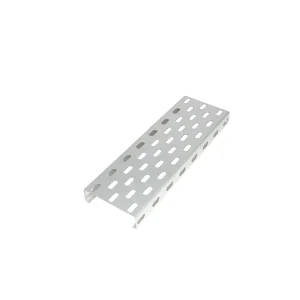
Stainless Steel Marine Use Cable Tray
View Specifications -
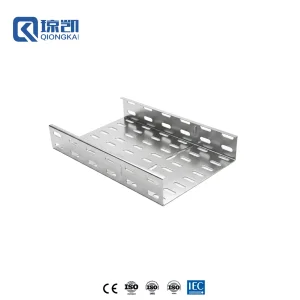
Carbon Steel Pre-Galvanized PG / HDG Cable Tray with Ribs 200×50
View Specifications -
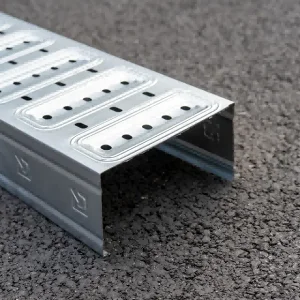
Pre-Galvanized Perforated Energy Saving Cable Tray 200×100
View Specifications -
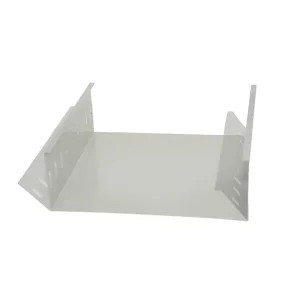
Wholesale Non-Perforated Powder Coated Cable Tray
View Specifications -
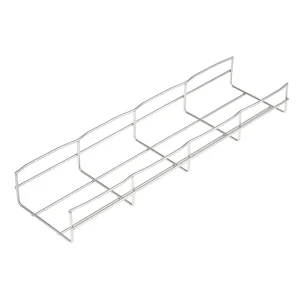
Stainless Steel Grid Wire Mesh Cable Tray Solutions
View Specifications -
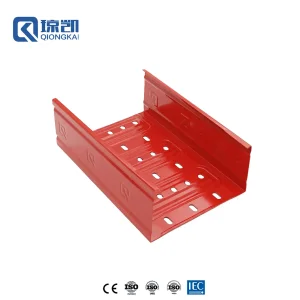
Reinforced Molded PG Cable Tray - RAL3020 Red 200×100
View Specifications -
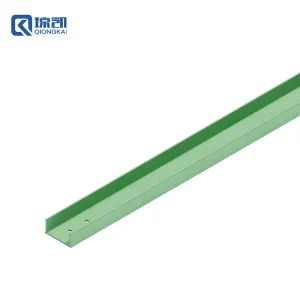
Corrosion-Resistant FRP Cable Trunking Trough 100×50
View Specifications -
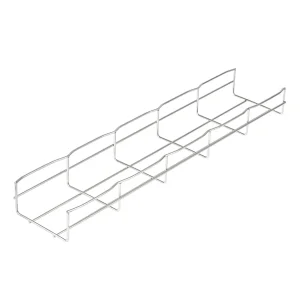
Stainless Steel Wire Grid Cable Tray 100mm Profile
View Specifications
The Engineering Architecture of 100mm Cable Tray 90° Bends
Analyzing pathway aerodynamics, bend radius integrity, and dynamic cable stress in high-density secondary routing networks.
In modern industrial facilities, hyperscale data processing halls, and cleanroom semiconductor plants, the 100mm cable tray 90 bend represents far more than a passive steel fitting. It functions as the critical topological pivot point in branch cable routing. When power, control, or optical signals transition 90 degrees horizontally or vertically within a 100mm width envelope, physical mechanics dictate substantial stress distribution along cable jackets, insulation layers, and core conductors. Selecting an inadequately engineered fitting risks violation of the Minimum Cable Bend Radius (MCBR), localized heat accumulation from constricted ventilation, insulation sheath degradation, and electromagnetic interference (EMI) crosstalk spikes.
Global procurement dynamics are undergoing rapid evolution. While field fabrication of bends from straight tray channels was historically common practice for low-cost commercial fit-outs, international EPC contractors and critical infrastructure operators now strictly specify factory-formed, certified 90-degree elbows. Pre-engineered factory bends deliver guaranteed structural load performance, smooth burr-free internal radii, continuous integrated bonding, and standardized tangent extensions that align with automated BIM Level of Development (LOD) 400 models.
Bend Radius Mechanics & Signal Integrity Preservation
The standard 100mm cable tray fitting is deployed primarily in two structural variants: the Horizontal 90° Bend (Flat Elbow) and the Vertical 90° Bend (Inside / Outside Risers). For high-bandwidth copper structured cabling (Cat 6A, Cat 7, Cat 8) and single-mode bend-insensitive optical fibers (ITU-T G.657.A2/B3), maintaining an exact smooth radius ($R = 100\text{mm}$, $R = 150\text{mm}$, or $R = 300\text{mm}$) prevents localized attenuation jumps. In power cables carrying currents up to 0.6/1kV or 35kV medium voltage, improper radius angles generate compressive mechanical stresses, damaging cross-linked polyethylene (XLPE) dielectric layers and leading to partial electrical discharge.
Continuous Radius Arc vs. Segmented Miter
Continuous die-pressed or precision sweep bends eliminate micro-notches, sharp welding seams, and abrasive internal edges, guaranteeing zero jacket friction during mechanical cable pulling operations.
Integrated Flange Tangents
Factory-engineered 100mm 90° bends feature minimum 50mm straight tangent extensions on both connection ports. This ensures seamless coupling with standard fishplates, wrap-around couplers, and expansion joints.
Electrical Continuity & Earth Bonding
Under IEC 61537 clause 11.1, connection joints must provide electrical continuity with resistance not exceeding 50 mΩ across joints, ensuring a reliable fault current path without supplementary earth wire bonding.
100mm Cable Tray 90° Bend Technical Matrix
Comprehensive metallurgical grades, mechanical properties, standard radii, and protective finish certifications.
| Material Classification | Reference Standards | Available Radii (R) | Side Rail Heights | Corrosion Resistance Class | Typical Industrial Target |
|---|---|---|---|---|---|
| Pre-Galvanized Steel (PG) | EN 10346, ASTM A653 (Z275 Coating) | 100mm / 150mm / 300mm | 50mm / 75mm / 100mm | Class 3 (Indoor Dry) | Commercial office complexes, plenum ceilings, IT rooms |
| Hot-Dip Galvanized (HDG) | ISO 1461, ASTM A123 (≥65μm - 85μm) | 100mm / 150mm / 300mm / 600mm | 50mm / 75mm / 100mm | Class 7-8 (C3/C4/C5) | Petrochemical refineries, power utility yards, outdoor solar |
| Stainless Steel 304 (V2A) | AISI 304 / EN 1.4301 Passivated | 100mm / 150mm / 300mm | 50mm / 75mm / 100mm | Class 9A (Hygienic) | Food processing, dairy, beverage washdown, pharmaceutical |
| Stainless Steel 316L (V4A) | AISI 316L / EN 1.4404 Marine Grade | 100mm / 150mm / 300mm / 600mm | 50mm / 75mm / 100mm | Class 9B (Extreme Marine) | Offshore oil & gas platforms, coastal desalination, shipboard |
| Fiberglass Composite (FRP/GRP) | ASTM E84 Class 1 Fire Retardant Vinyl | 150mm / 300mm / 450mm | 50mm / 100mm | Non-Metallic Dielectric | Chlorine electrolysis plants, acid pickling lines, high salinity |
| Architectural Powder Coated | Electrostatic Polyester Resin (RAL Colors) | 100mm / 150mm / 300mm | 50mm / 75mm / 100mm | Color Coded System | Hyperscale data halls, distinct circuit zoning, architectural |
Perforated vs. Solid Bottom vs. Wire Mesh Bend Engineering
100mm pathway geometries require differentiated engineering depending on bottom containment architecture. Perforated (ventilated) sheet steel bends incorporate slotted stamping patterns with smooth return flanges, permitting regular nylon cable tie fastening and natural heat dissipation while preventing cables from contacting raw cut metal edges. Solid-bottom trough 90 bends provide absolute physical shielding against dropped tools, liquid drips, dust buildup, and high-frequency EMI when fitted with form-fitting snap-on covers. For wire mesh basket systems, factory-welded 100mm 90° bends eliminate the labor-intensive practice of manual wire snipping and bending, preserving anti-corrosion zinc protection at the cross-wire welds.
Strategic Supply Chain & Total Cost of Ownership (TCO)
Overcoming cross-border logistics friction, port handling risks, and field installation labor costs.
International electrical procurement teams face multi-dimensional risk profiles when purchasing 100mm cable tray fittings across borders. An improperly manufactured 90-degree bend creates significant downstream installation bottlenecks: misaligned connection bolt holes require expensive field reaming; irregular curvature forces electrical contractors to deform tray walls manually; and non-compliant galvanizing leads to premature rust streaks within months of commercial energization.
Operating from our primary manufacturing base in Songjiang District, Shanghai, Shanghai Qiongkai Industry Co., Ltd. provides direct containerized export access through Yangshan Deepwater Port and Waigaoqiao Terminals. By dealing directly with a high-capacity OEM factory rather than commercial trading intermediaries, global EPC buyers achieve up to 28% to 35% total procurement savings, guaranteed raw material traceability through EN 10204 Type 3.1 Mill Test Certificates, and customized pallet packaging engineered to prevent transit deformation.
Volume-Optimized Nesting Packages
Fittings consume massive maritime container cubage if shipped loose. Qiongkai designs interlocking nested pallet modules, reducing dead freight volume by up to 40% in standard 40ft High Cube containers.
Full Traceability & Testing Reports
Every production batch is accompanied by comprehensive quality dossiers: spectrometer chemical composition assays, magnetic eddy-current zinc coating thickness checks, and ASTM B117 salt spray reports.
Rapid Tooling & Custom Geometry
Our in-house die tool shop fabricates non-standard radii (e.g., R=200mm, R=450mm, or variable mitered transitions) within 7 business days, meeting stringent architectural spatial constraints.
Mission-Critical Applications Across Global Sectors
Demonstrated performance in harsh marine atmospheres, automated manufacturing lines, and ultra-dense data centers.
Hyperscale Cloud & AI Data Halls
Overhead basket and ladder 100mm 90° bends finished in smooth electrostatic powder coating. Protects high-density MPO/MTP ribbon fiber trunks from micro-bending signal loss and thermal entrapment.
Offshore LNG & Petrochemical
Heavy-duty AISI 316L and pultruded FRP 100mm 90° bends engineered for extreme cyclic humidity, hydrogen sulfide vapor, and marine chloride salts. As deployed in our benchmark Qatar offshore LNG installations.
Cleanroom Semiconductor & Pharma
Continuously welded, chemically passivated Stainless Steel 304/316 100mm 90 elbows with zero crevices. Withstands daily aggressive pressurized chemical washdown without particle shed.
Rail, Tunnels & Airport Infrastructure
High-load Hot-Dip Galvanized CT series 100mm trunking bends installed across transport hubs, such as Shanghai Hongqiao International Airport, featuring fire-rated electrical integrity.
Strict Standards, Testing & Quality Verification
Ensuring complete compatibility with international electrical codes, structural norms, and fire-resistance ratings.
Compliance failure on an international job site leads to immediate stop-work orders, costly dismantling, and dispute arbitrations. Every 100mm cable tray 90 bend manufactured by Shanghai Qiongkai Industry Co., Ltd. is fabricated under an ISO 9001:2015 certified quality management system and verified against global electrical pathway benchmarks:
- IEC 61537:2021: Cable management — Cable tray systems and cable ladder systems (Clauses 10 for Safe Working Load, 11 for electrical continuity, and 13 for fire resistance).
- NEMA VE 1 / CSA C22.2 No. 126.1: Metal Cable Tray Systems — Structural design load capacity, fitting deflection criteria, and bonding conductor certifications.
- UL Classified (E-File Standards): Suitable as Equipment Grounding Conductors (EGC) in accordance with the National Electrical Code (NEC) Article 392.
- ISO 1461 & ASTM A123: Standard specification for zinc coatings applied via post-fabrication hot-dip immersion to guarantee total coverage on internal weld roots.
- DIN 4102-12 / EN 50200: Circuit integrity under open-flame conditions (E30 / E60 / E90) for emergency ventilation, life-safety lighting, and fire pump circuits.
Structural Trapeze & Seismic Bracing Integration
A 90-degree bend represents a critical discontinuous point in beam deflection mechanics. Structural engineers must ensure support spacing is strictly calculated according to NEMA VE 2 guidelines. Supports (such as 41×41 or 41×82 strut channel trapezes) should be positioned within 600mm (24 inches) of each fitting connection port. In seismic zones (Zone 3 and Zone 4), lateral and longitudinal seismic bracing brackets must be fastened directly adjacent to the bend to resist dynamic dynamic shear forces and prevent tray jump during tremor events.
Next-Generation Pathway Innovations (2026–2035)
Pioneering automated robotic fabrication, smart IoT condition sensors, and carbon-neutral green metallurgy.
Automated Laser Blanking & Robotic Welding
By transitioning from manual MIG welding to 6-axis robotic fiber laser cells, Qiongkai achieves absolute weld penetration with minimal heat-affected zones (HAZ), preventing zinc oxidation embrittlement.
BIM LOD 500 & Digital Twin Integration
We provide parametric Revit and IFC families for all 100mm 90° bend configurations. Exact center-line bend radii allow spatial clash detection before prefabricated shipments leave our factory.
Smart Sensor Clamping & Thermal Telemetry
Next-gen bend profiles integrate pre-stamped mounting tabs for passive RFID asset tracking and wireless thermal-imaging sensors, monitoring conductor heat rise in real time.
Complementary Structural Systems & Channel Framing
Heavy-duty seismic strut systems, molded pre-galvanized profiles, and chemical-resistant pultruded components.
-
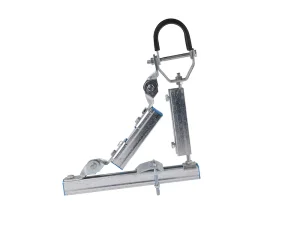
Heavy-Duty Seismic Resistant Brackets for Cable Runs
View Specifications -
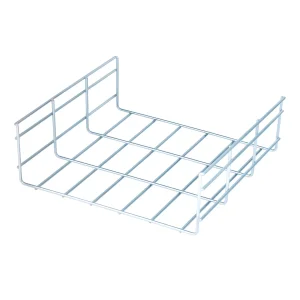
Pre-Galvanized Grid Cable Tray 300mm Architecture
View Specifications -
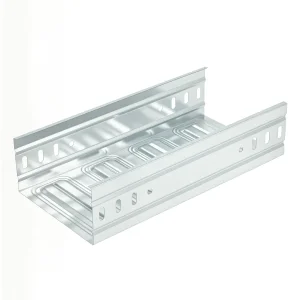
Molded Pre-Galvanized Cable Tray 200mm Profile
View Specifications -
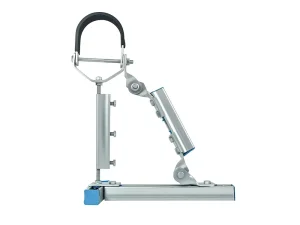
Heavy-Duty Seismic Bracket for 41-Series Strut Channel
View Specifications -
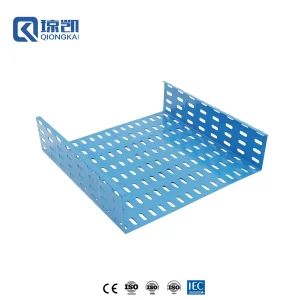
Powder Coated PG / HDG Ribbed Cable Tray - RAL5015 Blue 400×100
View Specifications -
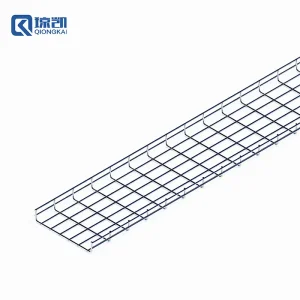
Wholesale Pre-Galvanized Grid Wire Tray 300×50
View Specifications -
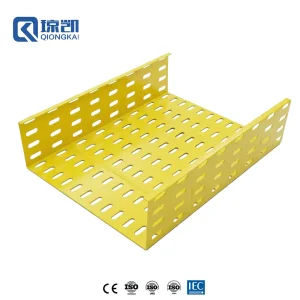
Powder Coated PG / HDG Cable Tray - RAL1080 Yellow 300×100
View Specifications -
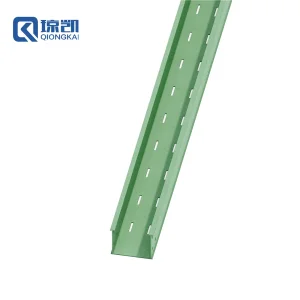
Heavy-Duty FRP Perforated Cable Tray 200×100
View Specifications
Frequently Asked Questions (FAQ)
Detailed engineering, manufacturing, and supply chain answers for EPC contractors and procurement managers.