
Engineered Heavy-Duty Containment & Cable Trunking Systems
Explore factory-fabricated ladder, solid trough, perforated channel, and composite systems manufactured in precision automated rolling and extrusion lines to satisfy global contractor specifications.
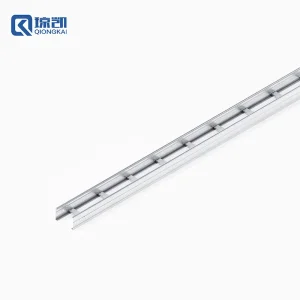
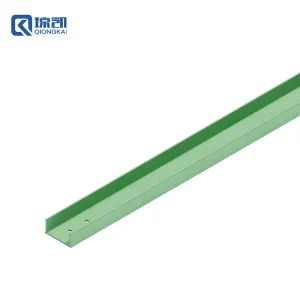
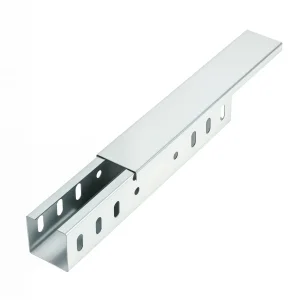
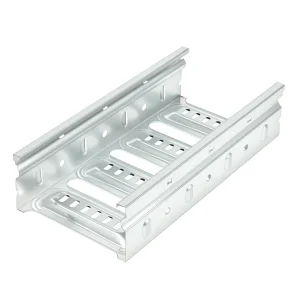
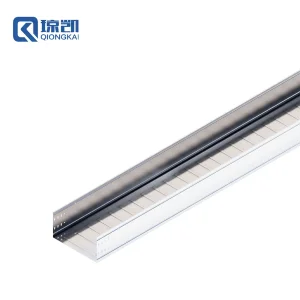
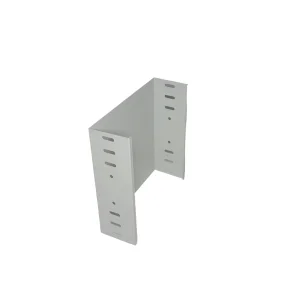
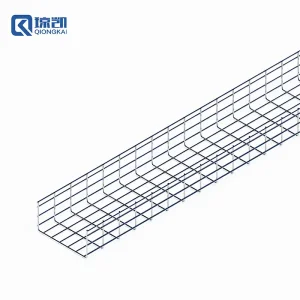
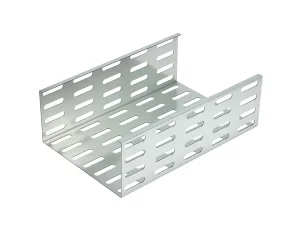
Why Buy Aluminium Cable Trays: Structural Metallurgy & Weight-to-Strength Dynamics
In major electrical infrastructure, aluminum cable containment systems have disrupted traditional heavy-gauge hot-dip galvanized (HDG) mild steel, providing superior life-cycle performance and reduced structural building loads.
Corrosion Passivation Layer
Unlike carbon steel which requires synthetic zinc barrier sacrificial protection, 6063-T6 aluminum naturally forms an immediate, self-healing, adherent microscopic aluminum oxide (Al₂O₃) film. In coastal atmosphere exposures (ISO 12944 category C4/C5), this passivation shield delivers over 40+ years of operational lifecycle without zinc creep, flaking, or rust stains.
55% Dead-Load Reduction
Weighing only 2.7 g/cm³ compared to steel's 7.85 g/cm³, extruded structural aluminum trays decrease dead load on overhead building trusses, unistrut channels, and ceiling hangers by up to 60%. This yields significant seismic bracing cost savings (ASCE 7-22 compliance) while slashing logistics freight costs across international oceanic shipping.
Superior Electrical Grounding
Aluminum offers 61% of the electrical conductivity of pure copper (IACS standard), acting as an integral Equipment Grounding Conductor (EGC) per NEC 392.60. By eliminating external copper earth ground wire runs across massive cable spans, EPC engineering contractors cut copper procurement expenses by tens of thousands of dollars per facility.
Semantic Procurement Insight: Extrusion vs. Roll-Formed Profiles
Purchasing agents must distinguish between thin roll-formed aluminum sheet channel and heavy-gauge die-extruded I-beam side rails. Leading Chinese manufacturers utilize 3,500-ton hydraulic extrusion presses to craft customized 6063-T6 structural I-beam and C-channel profiles with integrated screw-lock slots, delivering NEMA 20C load ratings (100 lbs/ft over 20-foot spans) without structural buckling.
Strategic Competitive Advantages of Sourcing from Chinese OEM Factories
Direct factory procurement from Tier-1 industrial clusters in the Shanghai manufacturing corridor delivers unbeatable technical precision, rapid custom toolings, and comprehensive cost structures.
Upstream Billet Integration
Proximity to virgin aluminum ingot refining and extrusion clusters minimizes raw material logistics surcharges. Tier-1 manufacturers secure daily LME/SMM pricing transparency, providing fixed-rate index protection across long delivery cycles.
Robotic CMT Rung Welding
Utilizing high-speed Cold Metal Transfer (CMT) robotic welding arms, Chinese factories execute continuous fillet welds between rungs and extruded side rails. This ensures spatter-free joints, eliminating micro-burrs that damage cable insulation jackets.
Custom Die Tooling in 7 Days
With fully equipped CNC die-sinking and wire-EDM workshops, new profile geometries, bespoke perforation matrices, and special rung spacings transition from AutoCAD / SolidWorks drafting to physical test extrusions in under 168 hours.
Deep-Water Port Proximity
Situated in Shanghai Songjiang, production facilities enjoy direct multi-lane highway connectivity to Yangshan and Waigaoqiao deep-water terminal docks, slashing intermodal drayage costs and guaranteeing rapid vessel boarding schedules.
| Containment Parameter | Extruded 6063-T6 Aluminum | Hot-Dip Galvanized Steel (HDG) | Stainless Steel (SS316L) | Fiberglass Reinforced (FRP) |
|---|---|---|---|---|
| Density & Specific Weight | 2.70 g/cm³ Ultralight | 7.85 g/cm³ (Heavy) | 8.00 g/cm³ (Very Heavy) | 1.80 g/cm³ (Light) |
| Atmospheric Corrosion Rate | Self-healing Passivated Al₂O₃ | Sacrificial Zn Loss (1.5-4 μm/yr) | Austenitic Passive Film | Chemically Inert Resin |
| Electrical Grounding (NEC 392) | Certified EGC Cross-Section | Requires Dedicated Ground Cable | Poor Conductor (High Resistance) | Non-Conductive (Requires Cable) |
| Thermal Dissipation Velocity | 205 W/(m·K) Fastest | 50 W/(m·K) | 16 W/(m·K) (Poor) | 0.3 W/(m·K) (Thermal Insulator) |
| Field Fabrication & Cutting | Carbide Blade (Fast, Cold, No Rust) | Cold Galvanizing Spray Required | Work-Hardens (Extremely Slow) | Hazardous Silica Dust Hazard |
Comprehensive Solutions Across Demanding Industrial Environments
Whether routing high-density fiber runs in next-generation cloud server architectures or carrying 500 kcmil power cables across marine docks, our custom cable support platforms perform flawlessly.
Hyperscale AI Data Centers
High-density GPU server clusters demand exceptional overhead cable pathway cooling. Aluminum ladder trays provide 100% free-air circulation, preventing heat traps and reducing HVAC chilling power consumption. Clean, non-flaking surfaces eliminate zinc whisker contamination risks that short-circuit sensitive server mainboards.
Offshore LNG & Petrochemical Plants
For LNG receiving terminals and coastal processing complexes exposed to high salt spray and volatile chemical emissions (proven in Qatar and Southeast Asian projects), 5052/6063 marine-grade anodized containment resists chloride ion penetration and sulfur dioxide degradation with zero maintenance downtime.
Commercial Metros & Clean Facilities
Modern airport terminals, like Shanghai Hongqiao International Airport, and municipal mass transit substations utilize modular aluminum trunking and unistrut brackets. Their lightweight profile streamlines overhead ceiling installations in confined spaces, while smooth finishes match architectural aesthetic standards.
Structural Deflection Compliance: NEMA VE 1 & IEC 61537 Standards
All load-bearing calculations conform to NEMA VE 1 Section 5.2 load testing protocols and IEC 61537 deflection standards. Using finite element analysis (FEA), the maximum mid-span deflection ratio under rated continuous cable load is constrained within L/200 (or L/360 for high-rigidity specs), preventing stress deformation at connecting splice plates.
Comprehensive Procurement Framework for International EPC Contractors
Navigating global supply chain complexities demands clear contract protocols, full metallurgical traceability, and advanced container packing configurations.
Traceable MTR Certification
Every production lot ships with complete EN 10204 3.1 Mill Test Reports (MTR). Documentation certifies spectrometer chemical assay percentages (Si, Fe, Cu, Mn, Mg, Cr, Zn, Ti) and mechanical tensile testing (yield strength ≥ 170 MPa, ultimate tensile strength ≥ 205 MPa, elongation ≥ 8%).
BIM Level 3 Revit Models
We supply parametric Autodesk Revit BIM families and STEP files for all straight sections, horizontal elbows, tee branches, cross reducers, and cantilever strut channel assemblies. Electrical designers can readily run automated collision checks across spatial MEP coordinates.
Optimized Container Nesting
Ladder side-rails and perforated troughs are engineered with progressive nesting dimensions. By interleaving tray widths inside 40ft High Cube containers, we maximize cubic capacity utilization up to 94%, significantly lowering ocean freight expense per linear meter.
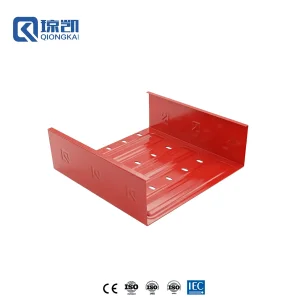
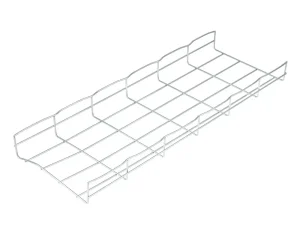
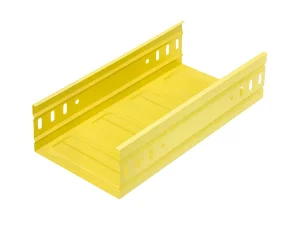
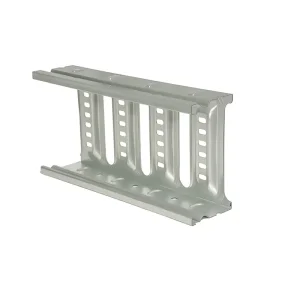
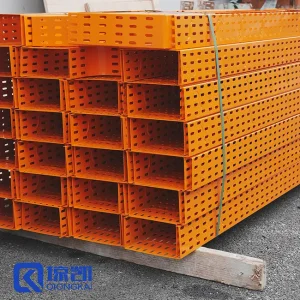
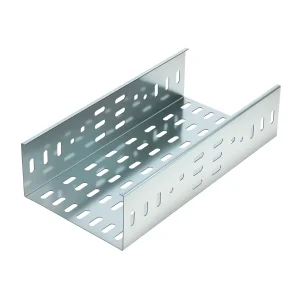
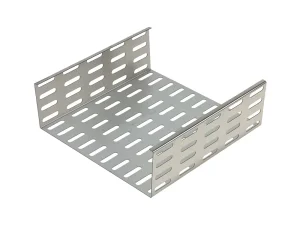
Corrosion-Resistant, Fire-Rated & Perforated Cable Runways
Explore powder-coated, stainless steel, and specialty wire mesh cable tray systems built to exact customer drawings and international safety standards.
Frequently Asked Questions: Engineering & Sourcing Aluminium Cable Trays
Comprehensive answers to core specification, metallurgical, and compliance questions faced by project electrical engineers and procurement directors.
How does 6063-T6 aluminum compare to HDG steel in coastal marine environments?
Hot-Dip Galvanized (HDG) steel relies on a sacrificial zinc layer which depletes at 2 to 5 μm annually in coastal marine zones (ISO 12944 C5M). When zinc depletes, iron rust rapidly expands, threatening structural integrity. In contrast, 6063-T6 aluminum passivates naturally by creating an impervious surface oxide barrier that resists chloride salt degradation indefinitely without progressive material loss.
Can an aluminum cable tray serve as an Equipment Grounding Conductor (EGC)?
Yes. Under NEC 392.60(A) and (B), certified aluminum cable trays with adequate cross-sectional rail areas can serve as the equipment grounding conductor. Because aluminum has significantly higher electrical conductivity than steel, it safely conducts ground-fault currents without requiring a supplemental bare copper grounding conductor along the tray run.
How do you resolve galvanic corrosion between aluminum trays and steel supports?
Direct contact between aluminum and mild steel or damp concrete creates galvanic corrosion cells. We engineer isolation solutions, including non-conductive Santoprene/EPDM isolator pads, heavy nylon washers, and hot-dip galvanized or 316 stainless steel fasteners equipped with insulating sleeve bushings to break electrical contact between dissimilar metals.
What load classifications and span capabilities do your aluminum systems support?
Our extrusions comply with NEMA VE 1 Class 12C, 20B, and 20C ratings. An extruded I-beam side rail profile with a 6-inch (150 mm) side height comfortably carries 100 lbs/linear foot over a 20-foot (6.1 meter) support span while maintaining mid-span deflection well within the L/200 structural threshold.
What are the minimum order quantities (MOQ) and production lead times?
Standard catalog ladder profiles (100–600 mm width) have a low baseline MOQ of 300 meters per production run. Standard container batches (1x40HQ) ship within 14–20 business days. Custom extrusion die fabrication and sample sign-off typically require an additional 7–10 days prior to rolling production.
How does the thermal expansion of aluminum affect long tray installation runs?
Aluminum has a thermal expansion coefficient of approximately 23 × 10⁻⁶ /°C, roughly double that of carbon steel. For continuous outdoor runs exceeding 30 meters, we provide slotted expansion splice plates and engineered sliding hold-down clamps that accommodate cyclic expansion and contraction without buckling tray joints.