
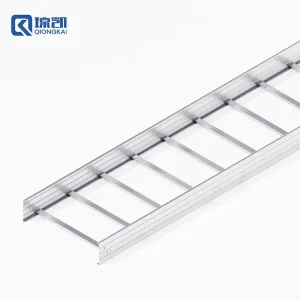
Factory Direct Catalog
Engineered Cable Tray Systems & Modular Fittings
Explore our primary manufacturing runs of heavy-duty ladder runs, perforated trays, and mounting structural brackets compatible with precision-formed 45° bends.
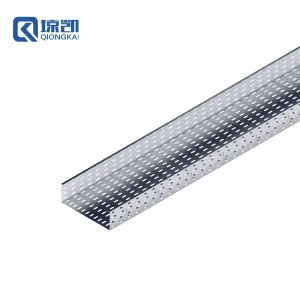
Wholesale Reinforced Medium duty Pre-galvanized Hot-dip-galvanized Perforated Cable Tray 300*100 Manufacturer, Factories
View Product Details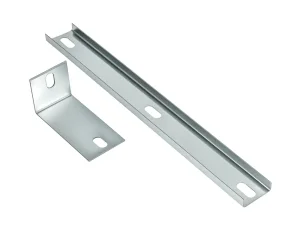
Wholesale Pre Galvanized L typed bracket and Bracket Manufacturer, Supplier
View Product Details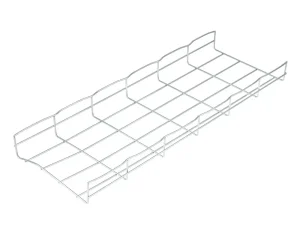
Wholesale Pre Galvanized grid and wire mesh type cable tray Manufacturers, Factories
View Product Details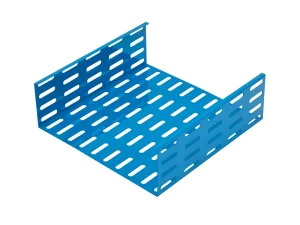
Buy Pre Galvanized Perforated Cable Tray Series With Powder Coating Suppliers, Factories
View Product Details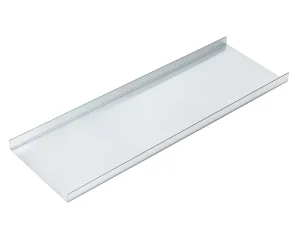
Buy Pre-Galvanized Cable Tray Cover Cable Protection Manufacturers, Supplier
View Product Details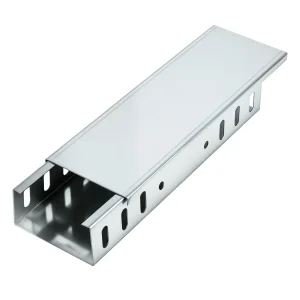
Wholesale Pre-Galvanized Cable Trunking 100*50 Manufacturer, Manufacturers
View Product Details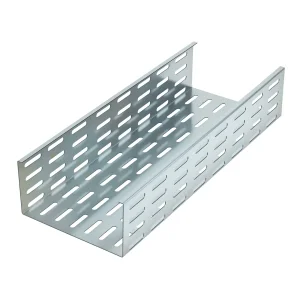
Buy Pre Galvanized Perforated Cable Tray 200mm Manufacturers, Supplier
View Product Details
Engineering White Paper Analysis
Structural Mechanics & Physics of Cable Tray 45-Degree Bends
In high-density industrial cabling, direction changes present significant electrical, mechanical, and thermodynamic vulnerabilities. Specifying factory-formed 45-degree bends over sharp 90-degree elbows or segmented field miters mitigates pulling friction, sidewall bearing pressure, and sheath degradation.
Sidewall Bearing Pressure (SWBP) Mitigation
When pulling high-voltage or armored multicore cables around a bend, radial tension creates a compressive force pressing cables against the tray rail. By utilizing two 45° bends separated by a tangent section instead of a sharp 90° elbow, pulling forces are redistributed. The mathematical relationship $P_{sw} = \frac{T}{R}$ dictates that reducing cumulative angle of wrap drastically lowers peak radial tension, protecting cross-linked polyethylene (XLPE) and EPR insulation from micro-fractures.
Dynamic Bend Radius Compliance (NEC & IEC)
National Electrical Code (NEC Article 392) and IEC 61537 prescribe minimum bending radii based on outside cable diameter ($R_{min} \ge 8\times$ to $12\times OD$ for heavy shielded cables). Qiongkai factory-formed 45° elbows are cold-formed or precision-welded with standard inner radii of 300mm, 450mm, 600mm, and 900mm. This geometric consistency ensures cables naturally maintain bend radius without resting against sharp structural sheet edges.
BIM LOD 400 Parametric Co-Design
Complex MEP routing requires clash avoidance with ducting, fire lines, and structural columns. Factory 45° bends (Horizontal, Inside Vertical, and Outside Vertical) provide standardized tangent lengths and centerline offset data. This predictability enables accurate Clash Detection inside Autodesk Revit and Navisworks, preventing field adjustments that jeopardize hot-dip galvanized barrier layers.
| Fitting Configuration | Radius (mm) | Width Range (mm) | Side Height (mm) | Sheet Gauge (mm) | Applicable Standards | Corrosion Class |
|---|---|---|---|---|---|---|
| Horizontal 45° Bend (Ladder / Perforated) | 300, 450, 600, 900 | 100 – 1000 | 50, 75, 100, 150, 200 | 1.5 – 3.0 | NEMA VE 1 / IEC 61537 | C1 - C5-M |
| Vertical Inside 45° Bend (Riser Transition) | 300, 450, 600 | 100 – 800 | 50, 100, 150 | 1.5 – 2.5 | NEMA VE 2 / UL Classified | Indoor/Outdoor |
| Vertical Outside 45° Bend (Drop Down) | 300, 450, 600 | 100 – 800 | 50, 100, 150 | 1.5 – 2.5 | NEMA VE 2 / UL Classified | Indoor/Outdoor |
| Wire Mesh Basket 45° Offset | 150, 300, 450 | 50 – 600 | 35, 50, 100 | 4.0 – 6.0 (Wire Dia) | IEC 61537 / CE | Data Center / IT |
| FRP Pultruded 45° Elbow (Chemical Grade) | 300, 450, 600 | 150 – 900 | 100, 150, 200 | 3.2 – 5.0 (Composite) | ASTM D635 / UL94 V-0 | Severe Marine / Acid |
Localized Field Implementations
Specialized Deployment Scenarios for 45-Degree Fittings
Different facilities face distinct physical, chemical, and thermal constraints. Explore how 45-degree bends address specific field challenges across mission-critical installations.
Hyperscale Data Center White Space
Modern data centers route thousands of high-bandwidth OM4/OM5 fiber assemblies and Cat6A network lines over overhead wire mesh and perforated trays. Abrupt 90-degree transitions cause micro-bends that lead to signal attenuation and packet loss. Installing smooth factory 45° bends preserves signal integrity while maintaining CFD-optimized cooling airflow above hot/cold aisle containment corridors.
Offshore Oil Platforms & LNG Regasification
Exposed to severe marine spray and sulfurous compounds, offshore facilities require Stainless Steel 316L or pultruded Fiberglass Reinforced Plastic (FRP) cable trays. Vertical 45° bends allow cable systems to step around structural bulkheads, escape decks, and piping without forming debris-trapping pockets that accelerate chloride-induced stress corrosion cracking (SCC).
EV Gigafactories & Battery Assembly
Automated automotive plants route large medium-voltage bus cables and robotic feed lines across mezzanine floors. High magnetic fields and heavy vibrational harmonics from stamping presses demand reinforced rung spacing. Heavy-duty HDG ladder 45° elbows with structural splice plates maintain grounding continuity and resist cyclic fatigue over 25+ years of continuous operation.
Cleanroom Pharma & Food Processing
Hygiene standards like FDA 21 CFR and EHEDG forbid crevices where washdown water or sanitizers can pool and culture bacteria. Electro-polished SS304/SS316 perforated and basket 45° bends feature continuous seamless welds, edge deburring, and passivation to withstand daily chemical clean-in-place (CIP) regimens.
Subway Tunnels & Rail Transit Infrastructure
Underground traction power cabling must endure air piston pulses, brake dust accumulation, and stringent fire behavior (DIN 4102-12 E90 functional integrity). Molded and reinforced 45-degree elbows provide continuous physical cable support during thermal expansion excursions, ensuring essential life-safety emergency power feeds remain energized during fire events.
Commercial Risers & Seismic Utility Shafts
High-rise building electrical shafts transition from vertical riser shafts to horizontal floor distribution via 45° vertical inside/outside elbows. When installed alongside engineered strut channels and seismic sway braces (ASCE 7-16), these fittings dissipate lateral inter-story drift without transferring torsional shear stress to cable clamping saddles.
Supply Chain Resilience & Capacity
Why Source From Our Shanghai Manufacturing Base?
Shanghai Qiongkai Industry Co., Ltd. operates three specialized fabrication facilities spanning 30,000 m² in the Songjiang Science and Technology City. Direct proximity to the Yangshan Deepwater and Waigaoqiao shipping terminals ensures predictable lead times, reduced inland transit, and high cost efficiency for worldwide export.
20+
Years Manufacturing (Since 2005)
12
Automated Production Lines
60+
Heavy-Duty Stamping & Roll-Formers
50,000
Tons Annual Steel Processing
Automated Multi-Axis CNC Stamping & Bending
Our tooling workshop houses 2000-ton hydraulic press brakes and automated multi-axis roll-forming centers. Rather than manually shearing and welding fittings, our 45-degree bends feature single-piece stamped side rails and robotically welded cross rungs, ensuring dimensional repeatability across thousands of units.
In-House Controlled Surface Metallurgy
Galvanizing consistency is vital to fitting longevity. Our integrated hot-dip galvanizing lines maintain molten zinc chemistry with trace nickel and aluminum additives to prevent brittle zinc-iron alloy growth. Coating thicknesses comply with ASTM A123 and ISO 1461, achieving $\ge 65\,\mu\text{m}$ to $\ge 85\,\mu\text{m}$ zinc coatings.
Direct Mill Procurement & Lead-Time Control
Direct supply partnerships with tier-one domestic steel mills (such as Baosteel and Shagang) provide priority coil allocation, full raw material heat traceability, and EN 10204 3.1 certification. This raw material security protects project timelines against global commodity volatility.
R&D Roadmap & Metallurgy
Next-Generation Engineering & Material Science
Cable containment technology is advancing toward lighter, smarter, and self-healing structures. Our R&D engineering center continues to develop advanced materials and installation-reducing designs.
Zinc-Aluminum-Magnesium (ZAM) Coatings
Replacing traditional post-galvanizing with mill-applied Zn-Al-Mg coatings (3% Mg, 6% Al, balance Zn). ZAM chemistry provides active self-healing at sheared edges and perforated holes, delivering up to three times greater corrosion resistance than standard HDG in high-chloride marine environments while eliminating post-galvanizing distortion.
Tool-Less Quick-Click Fitting Assemblies
Traditional 45-degree elbow splices require 8 to 16 bolt-and-nut assemblies, creating high labor expense and potential dropped-object hazards. Our patented snap-fit splice systems utilize engineered spring-steel lock clips with integrated bonding serrations, cutting per-bend field connection times by up to 65%.
Structural Health & Load Sensing Brackets
As power cable bundles experience load surges, conductors warm and undergo cyclic thermal expansion. Our emerging smart sensor lines incorporate strain-gauge micro-sensors into support brackets adjacent to 45° vertical elbows, reporting real-time deflection data and structural load warnings directly to industrial SCADA systems.
Testing & Quality Certification
International Compliance & Destructive Testing
Every production lot of Qiongkai cable trays and fittings undergoes stringent in-house and third-party laboratory verification before packing and container loading.
Load Deflection (NEMA VE 1)
Testing fittings under maximum rated working load with an integrated 1.5 safety factor. Verifies structural integrity without weld detachment or plastic flange deformation.
Salt Spray Test (ASTM B117)
HDG samples exceed 1,500 continuous hours of exposure; Stainless 316L exceeds 3,000 hours with zero red-rust blister formation along weld heat-affected zones.
Electrical Bonding Continuity
Electrical resistance across spliced 45° bends measures less than $0.00033\,\Omega$, complying with UL 568 and IEC 61537 requirements for equipotential earthing paths.
Fire Integrity (DIN 4102-12)
Selected tray assemblies maintain load-bearing stability under temperatures reaching 1000°C for up to 90 minutes (E90), protecting safety-critical circuits.
Expanded Component Showcase
Factory-Engineered Trays, Channels & Fittings
Explore wire mesh baskets, fire-rated modular sections, composite FRP fabrications, and factory-made elbows for your end-to-end cable containment infrastructure.
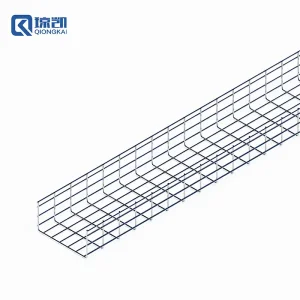
Buy GI Galvanized Wire Mesh Tray 300*150 Factory, Factories
View Product Details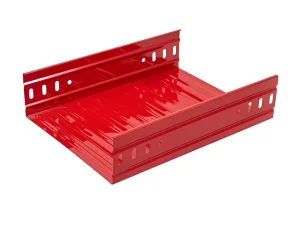
Buy Fireproof Red Pre Galvanized Powder coated molded cable tray Supplier, Price
View Product Details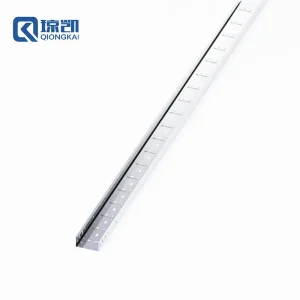
Buy Cost Saving Heavy Duty Reinforced Molded Pre Galvanized Cable Tray 100*50 Suppliers, Price
View Product Details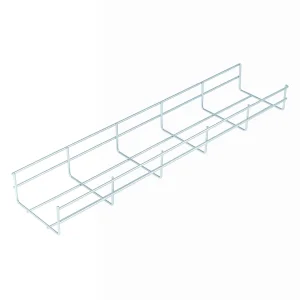
Wholesale Pre Galvanized grid Cable tray100mm50mm Suppliers, Factory
View Product Details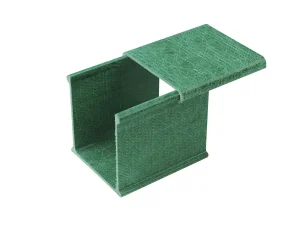
Buy Fiberglass Reinforced Plastic Cable Tray Manufacturers, Factories
View Product Details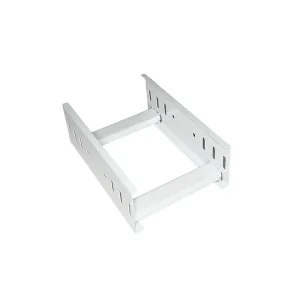
Buy Powder Coated Cable Ladder Manufacturers, Price
View Product Details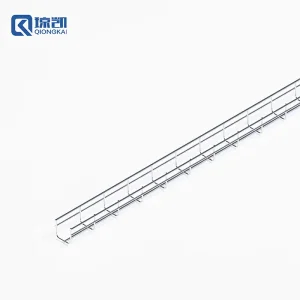
Buy GI Galvanized Wire Mesh Cable Tray 50*50 Manufacturer, Factories
View Product Details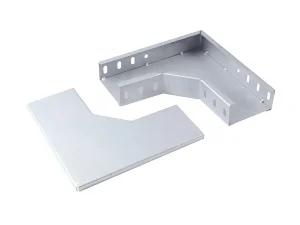
Buy Pre Galvanized Elbow cable tray Factories, Price
View Product Details
Procurement & Engineering FAQ
Frequently Asked Technical Questions
Detailed answers addressing engineering design, installation mechanics, corrosion selection, and factory manufacturing options for 45-degree cable tray bends.
Why choose two 45° bends over a single 90° bend in heavy cable management?
Opting for two 45° elbows with an intermediate straight segment significantly reduces Sidewall Bearing Pressure (SWBP) and total pulling tension. According to Coon's tension equations, cable pulling tension increases exponentially with the angle of wrap ($T_2 = T_1 e^{\mu \theta}$). Splitting a sharp 90-degree turn into two gentler 45° deviations reduces localized mechanical drag, eliminates sheath burn-through risk during heavy pulls, and accommodates the strict minimum bend radius requirements of large-diameter high-voltage and fiber-optic cables.
What is the difference between a Horizontal 45° Bend and a Vertical Inside/Outside 45° Bend?
A Horizontal 45° Bend routes the tray left or right on the same horizontal plane. In contrast, Vertical 45° Bends transition cable trays between different elevations. A Vertical Inside Bend is used when routing a horizontal tray upward into a vertical riser, placing rungs or bottom plates on the inner arc of the angle. A Vertical Outside Bend is configured for downward transitions, placing rungs or bottom plates along the outer contour. Choosing the correct factory-formed configuration ensures seamless fitting alignment without field cutting.
How should supports be placed near 45° fittings according to NEMA VE 2 guidelines?
Per NEMA VE 2 (Cable Tray Installation Guidelines), fittings introduce localized torsional and shear loads and should not hang unsupported. Best engineering practice requires installing independent structural supports (such as trapeze hangers or strut brackets) within 600 mm (24 inches) of each fitting end connection. For heavy-duty runs ($\ge 600$ mm width), placing a dedicated support directly beneath the fitting's center of curvature provides optimal load distribution.
How do pre-galvanized (PG) and hot-dip galvanized (HDG) finishes compare for 45° fittings?
Pre-galvanized (PG) sheet is continuously coated at the steel mill with a zinc layer typically between 15–20 $\mu\text{m}$. It is ideal for climate-controlled commercial buildings, IT server rooms, and dry architectural ceiling spaces. Hot-dip galvanized after fabrication (HDG / ISO 1461) involves dipping the welded fitting into a bath of molten zinc, producing an alloyed protective layer of 65–85 $\mu\text{m}$. HDG provides sacrificial galvanic protection that covers cut edges, perforations, and weld zones, making it suitable for outdoor power plants, refineries, and exposed rooftop installations.
Can Qiongkai manufacture custom bend radii, non-standard angles, and profiled sections?
Yes. With over 60 heavy-duty production machines and our dedicated tooling workshop, we manufacture custom sweep radii up to 1200 mm, specialized angles (such as 30°, 60°, and asymmetric offsets), and non-standard side heights up to 200 mm. Our technical team has delivered customized containment systems for projects including the Shanghai Hongqiao International Airport and offshore LNG infrastructure in Qatar.