
Factory-Engineered Cable Trays: Priority 2025 List
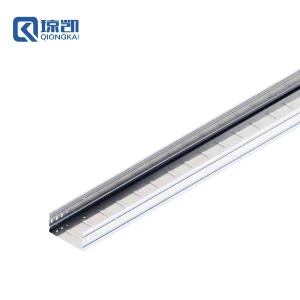
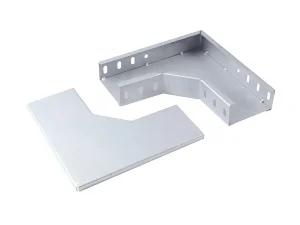
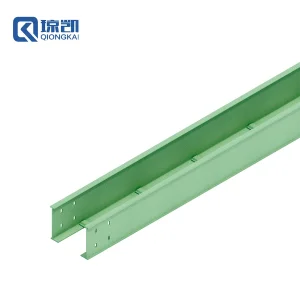
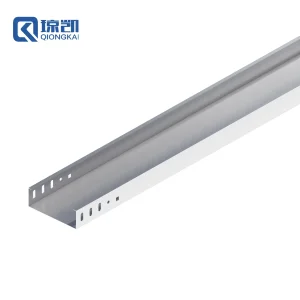
Precision-formed routing channels, reinforced covers, and molded profiles manufactured under ISO 9001 quality supervision. Engineered for maximum strength-to-weight performance across international utility and commercial facilities.
The 2025 Global Outlook on Electrical Containment Systems
Accelerating hyperscale cloud infrastructure, massive offshore renewable grids, and automated logistics centers have revolutionized industrial requirements for modular cable pathway systems.
As industrial power density benchmarks scale upward in 2025, commercial builders and electrical contractors face unprecedented structural challenges. Legacy cable trays designed solely for lightweight copper runs can no longer safely accommodate the massive weight, dynamic thermal dissipation, and short-circuit electrodynamic stresses induced by multi-megawatt industrial deployments. Shanghai Qiongkai Industry Co., Ltd. (operating since 2005 across three modern manufacturing centers spanning over 30,000 square meters) engineers integrated containment pathways engineered specifically for these modern infrastructure realignments.
Global material pricing volatility—spanning hot-rolled coils, zinc concentrates, nickel alloys, and specialty pultruded resins—requires procurement leaders to transition from speculative distributor sourcing to direct-tier factory partnerships. By utilizing automated, high-speed multi-station cold roll-forming lines coupled with in-line robotic stamping, factory-direct purchasing models secure dimensional uniformity, certified coating thicknesses, and verified load ratings while removing distributor markups.
Electrodynamic Withstand Capacity
Structural cross-sections are engineered to resist high short-circuit electromagnetic repulsion forces, preventing structural buckling in high-voltage utility junctions.
Thermal Dissipation Geometry
Optimized bottom perforation profiles provide up to 38% more open ventilation area, dropping conductor core operating temperatures and maximizing current ampacity.
Direct Port Logistics Advantage
Situated within Shanghai's manufacturing corridor, factory consignments ship directly via Yangshan and Waigaoqiao deepwater ports, drastically shortening global transit times.
Engineering Metallurgy & Finish Selection Guide
Mismatched environmental finishes are the single primary cause of early infrastructure degradation. Compare performance profiles across core alloys and industrial surface treatments.
| Material / Treatment | Reference Standards | Corrosion Class (ISO 12944) | Yield Strength (MPa) | Ideal Industrial Environments |
|---|---|---|---|---|
| Pre-Galvanized (PG) Carbon Steel | EN 10346, ASTM A653 | C1 - C2 Low | 235 – 275 | Climate-controlled commercial buildings, data center raised floors, dry interiors. |
| Hot-Dip Galvanized After Fabrication (HDG) | ISO 1461, ASTM A123 | C3 - C4 High | 250 – 355 | Outdoor switchyards, power generation stations, mining facilities, highway infrastructure. |
| Austenitic Stainless Steel (SS304 / SS316L) | AISI, ASTM A240 | C5-M Extreme | 290 – 520 | Marine platforms, coastal desalination hubs, food & pharma clean environments. |
| Fiberglass Reinforced Polymer (FRP / GRP) | ASTM D3917, UL 94 V-0 | Chemical Immunity | N/A (Composite) | Petrochemical refining, chlor-alkali plants, battery manufacturing gigafactories. |
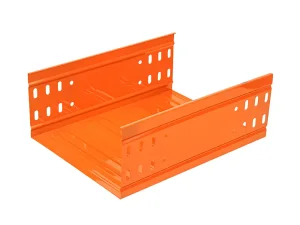
| Thermo-Set Epoxy / Polyester Powder Coated | GB/T 18593, Qualicoat | C2 - C3 Specialized | Base Metal Dep. | Color-coded circuit segregations (HV/LV), architectural visible installations. |
Galvanic Isolation and Electrolytic Mitigation
Direct contact between dissimilar metals (e.g., carbon steel brackets and stainless steel ladder side-rails) in humid or saline atmospheres sets up an electrochemical battery cell that rapidly sacrifices the less noble metal. Qiongkai supplies dielectric nylon insulation pads, rubber channel inserts, and passivated non-conductive fasteners engineered specifically to isolate dissimilar surfaces and guarantee calculated system lifespans exceeding 30 years.
International Compliance, NEMA & IEC Engineering Protocols
Structural safety demands uncompromised testing under peak dead, live, and dynamic wind/seismic load conditions.
IEC 61537 Cable Management Standard
Trays are independently certified for electrical continuity, mechanical load capacity (Safe Working Load), and non-propagation of flame, ensuring safe deployment throughout Europe, the Middle East, and Asia.
NEMA VE 1 / VE 2 Load Classification
Side-rail design and rung attachments are verified against standard NEMA load class classes (e.g., Class 12C, 20B, 20C), ensuring continuous multi-cable spans without localized buckling.
Seismic Restraint & ASCE 7 Engineering
Integrated rigid and cable bracing packages coordinate directly with 41-series strut channels to counter tri-axial earthquake vibrations in critical emergency power lines.
Deflection Ratios and Structural Span Dynamics
Under engineering best practices, maximum deflection along any structural span must strictly stay within L/200 (1/200th of the support span length) to maintain cover fitment and prevent localized strain on high-voltage terminations. Shanghai Qiongkai conducts routine deflection loading bench tests where every production batch is loaded past 1.5 times the rated SWL (Safe Working Load) without exhibiting residual plastic deformation.
Mission-Critical Projects: Tested on Site
Discover how Qiongkai's custom fabrication and precision coatings resolve acute industrial hurdles worldwide.
Shanghai Hongqiao International Airport
Challenge: Heavy mechanical routing under low-clearance transit tunnels.
Solution: Custom corrosion-resistant CT series pre-galvanized trunking with integrated snap-fit partition barriers for separated power and signals.
Offshore LNG Terminal, Qatar
Challenge: Extreme UV, saline air, and persistent ambient heat up to 52°C.
Solution: Pultruded halogen-free FRP cable ladders and custom 316L stainless steel profiled support struts with zero pitting corrosion over 5 years.
Agro-Industrial Complex, Paraguay
Challenge: Aggressive biological ammonia vapors within strict capital expenditure bounds.
Solution: Value-engineered heavy-duty cost-saving reinforced pre-galvanized containment systems delivering high structural spans without sagging.
Technology Roadmap: 2025 Through 2030
How automated fabrication, BIM digital twins, and reduced embodied carbon are defining next-generation containment infrastructure.
Robotic Forming & Stamping
Complete integration of closed-loop CNC roll-forming stations, yielding sub-millimeter tolerances on side-rail flanges and uniform coupling holes.
BIM Level 3 Digital Twins
Release of native Revit, IFC, and Tekla component libraries with embedded structural weight and thermal dissipation parameters for MEP clash modeling.
Eco-Passivated Zinc Finishes
Transitioning toward low-carbon green steel and trivalent chromium-free zinc baths, lowering the embodied carbon of containment systems by up to 34%.
Snap-Fit Modular Coupling
Patented tool-less splice plates and inter-locking bracket assemblies that reduce on-site assembly and fastening man-hours by up to 40%.
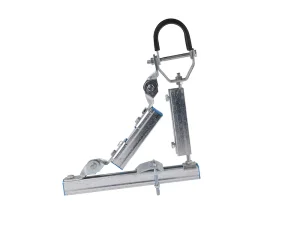
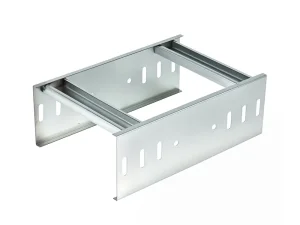
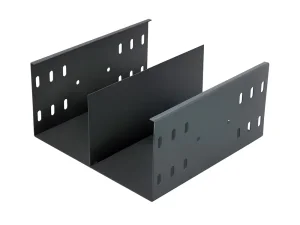
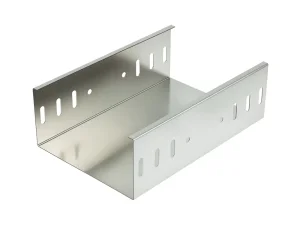
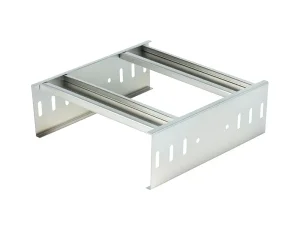
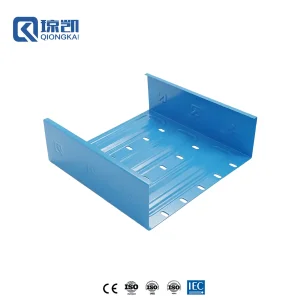
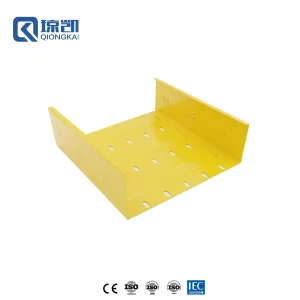
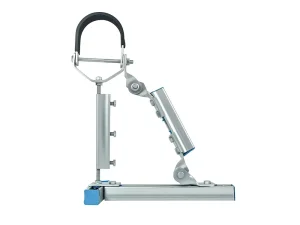
Seismic Brackets & Heavy Stainless Systems: List 2025
Precision-stamped anti-vibration framing brackets, split-plate powder coated ducts, and marine-grade perforated channels ready for large-scale container export.
Frequently Asked Questions: Factory Direct Sourcing
Direct engineering and commercial answers to help procurement managers, estimators, and electrical EPC contractors verify specifications prior to order placement.
What parameters determine whether I should specify Cable Ladder vs. Perforated Cable Tray?
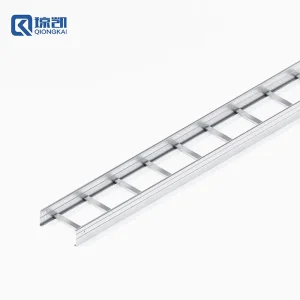
The choice depends heavily on conductor heat dissipation, physical cable diameter, and mechanical support intervals. Cable Ladders provide the greatest airflow and heat dissipation, making them essential for high-voltage single-core cables operating under elevated current loads where thermal de-rating must be avoided. Ladders also offer high structural strength across large structural support spans (3 to 6 meters).
Perforated Cable Trays (sheet bottom with precision ventilation stamping) are preferred for smaller power distribution and instrumentation cabling where uniform physical bottom support prevents cable sagging, while still allowing air movement and water drainage.
How does Hot-Dip Galvanizing (HDG) differ from Pre-Galvanized (PG) in service life?
Pre-Galvanized (PG) steel is roll-formed from steel coils that were already galvanized at the steel mill (typical coating thickness of 12 to 20 microns). Any punched holes, edges, or shear cuts rely purely on cathodic sacrificial action for protection. It is suited only for dry, conditioned interiors (ISO 12944 C1/C2).
Hot-Dip Galvanized After Fabrication (HDG) involves fabricating, welding, and punching the cable tray completely before immersing the entire unit into molten zinc at ~450°C. This creates metallurgical iron-zinc alloy layers with an external zinc thickness typically exceeding 65 to 85 microns (over 610 g/m²), protecting all cut edges, welds, and crevices for 25 to 50 years in outdoor, humid, and heavy industrial settings (C3/C4).
Can Qiongkai manufacture non-standard side-rail heights, profiles, or custom hole patterns?
Yes. Operating 12 multi-stage roll-forming assembly lines and over 60 high-tonnage stamping presses, we produce fully customized profiles. Whether your project requires side-rail heights of 50mm, 75mm, 100mm, 150mm, or 200mm, or specialized rung spacings for high-wind seismic zones, our tooling department fabricates to verified submittal drawings within days.
How do you ensure galvanic corrosion does not compromise stainless steel installations?
When stainless steel trays (AISI 304 or 316L) are fastened to structural carbon steel building columns or standard galvanized strut channels, direct metal-to-metal contact triggers rapid galvanic oxidation of the zinc and carbon steel. Qiongkai supplies complete containment packages with non-conductive polymeric isolation shims, EPDM-backed isolation washers, and A4-70 stainless steel mounting fasteners to eliminate electrolytic circuits.
What are your typical factory production leads and export sea-freight turnarounds?
Standard catalogue profiles and pre-galvanized systems typically complete manufacturing within 10 to 15 days for full container loads (20GP / 40HQ). Post-fabrication hot-dip galvanizing or dual powder-coat treatments average 15 to 22 business days. Situated close to Shanghai's major international container terminals, factory loading to vessel departure generally requires under 72 hours from final QA sign-off.
Contractor & Estimator RFP Evaluation Checklist
Ensure zero project delays by validating key specification attributes prior to finalizing commercial submittals.
1. Load & Deflection Sizing
Total anticipated conductor weight (kg/m) plus a 25% future growth margin. Confirm that deflection across expected span widths does not surpass L/200 under worst-case thermal loads.
2. Environmental Corrosion Class
Assess presence of airborne halides (saline sea-spray), sulphur dioxide emissions, washdown caustics, and relative humidity to select between PG, HDG, SS316, or FRP.
3. Dynamic Seismic Compliance
Verify whether the building code (such as IBC or Eurocode 8) calls for transverse and longitudinal seismic bracing along suspended ceiling runs.