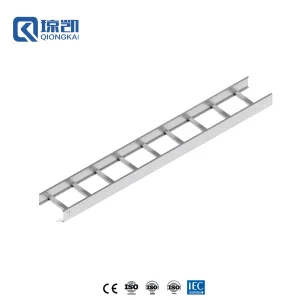
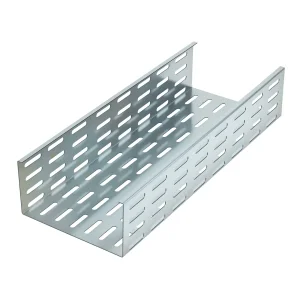
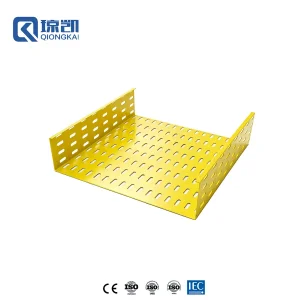
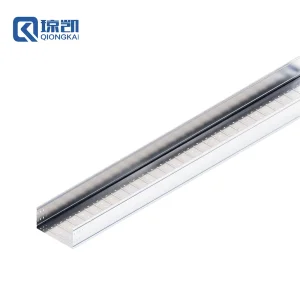
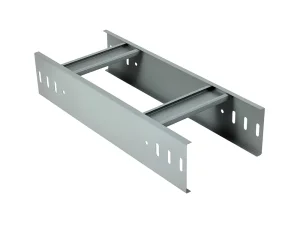
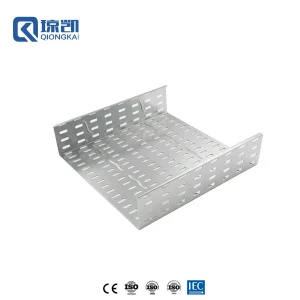
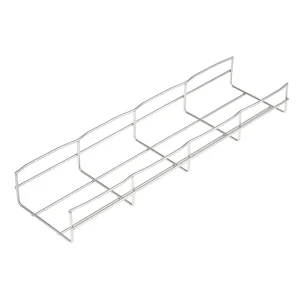
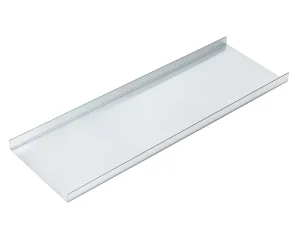
High-Performance Cable Trays & Support Brackets
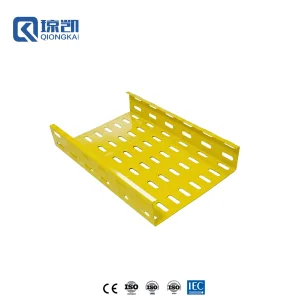
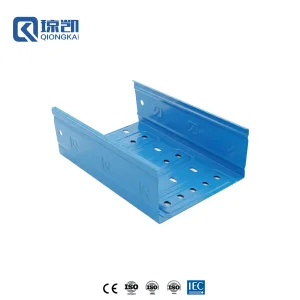
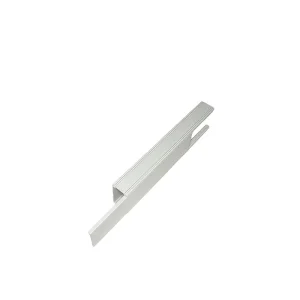
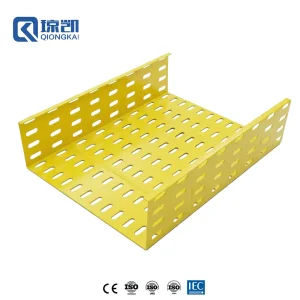
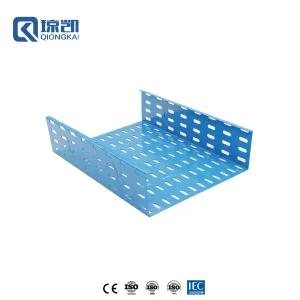
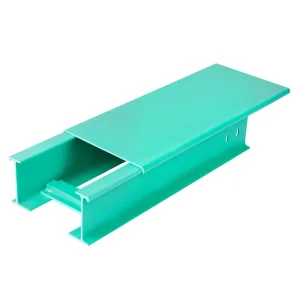
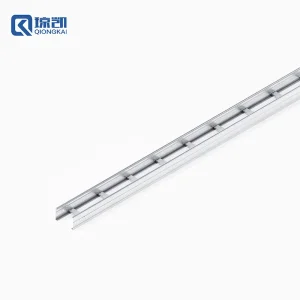
Global Macro Trends in Industrial Cable Routing & Structural Wall Mount Brackets
In modern mega-scale industrial architecture, the structural integrity of electrical containment is as crucial as the power grids themselves. As global infrastructure transitions toward hyper-automated manufacturing, gigawatt data center halls, offshore LNG liquefaction terminals, and high-speed rail networks, electrical engineers face an unprecedented challenge: managing denser, heavier high-voltage cable runs within confined vertical envelopes.
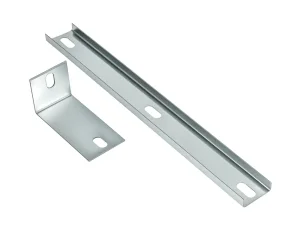
Cable tray wall brackets serve as the critical mechanical load-bearing link between rigid structural walls (concrete, masonry, or steel columns) and dynamic cable containment systems (ladder, wire mesh, perforated, or solid bottom trays). Selecting the right wall bracket configuration directly influences structural safety margins, installation throughput, thermal dissipation efficiency, and long-term corrosion endurance under environmental stress.
Historically, EPC contractors relied on field-fabricated structural steel drops or improvised angle-iron brackets. However, modern building standards—such as IEC 61537 and NEMA VE 1 / VE 2—have rendered field welding and manual drilling obsolete due to inconsistent structural load capacity, micro-fissuring of protective zinc coatings, and escalating site labor costs. Factory-engineered cable tray wall brackets engineered with reinforced ribbing, cold-formed structural channels, and pre-punched modular slotting profiles represent the gold standard for high-reliability containment systems worldwide.
Structural Mechanical Dynamics, Load Calibration & Metallurgical Formulations
When specifying a wall bracket manufacturer, engineering teams must evaluate structural mechanics under static, dynamic, and thermal expansion conditions. A cantilever wall bracket subjected to a uniformly distributed load (UDL) experiences a combination of bending moments ($M = \frac{w \cdot L^2}{2}$) and maximum shear forces ($V = w \cdot L$) at the wall fixture junction.
Cantilever Arm Brackets
Engineered from cold-rolled structural steel (Q235B / Q355B or SS316L) featuring press-formed stiffening ribs along the vertical and horizontal flanges. Designed for rapid side-loading of power cables in tight service risers.
Heavy-Duty Gusseted Brackets
Incorporates a welded or stamped 45-degree diagonal brace (gusset) extending from the outer cantilever tip to the lower wall mounting plate. Increases ultimate moment resistance by redistributing load vectors into direct axial compression.
Seismic Restraint Brackets
Reinforced wall mounts equipped with multi-axis anchor slots designed to interface with sway brace attachments (transverse and longitudinal cable/rod bracing) to withstand peak ground acceleration (PGA) events.
Material Metallurgy & Protective Finishes Comparison Matrix
Environmental corrosion is the primary root cause of premature containment bracket failure. Selecting an appropriate coating system depends directly on atmospheric humidity, chloride ions, sulfur dioxide concentrations, and micro-climatic exposure levels.
| Finish Grade / Material | Yield Strength ($R_e$) | Coating Thickness / Spec | Salt Spray Resistance (ISO 9227) | Optimal Exposure Zone |
|---|---|---|---|---|
| Pre-Galvanized Steel (PG / Sendzimir) | 235 - 275 MPa | 15 – 20 µm ($Z275$) | 120 - 200 Hours | Dry Indoor, Controlled Data Halls (C1-C2) |
| Hot-Dip Galvanized (HDG) | 235 - 355 MPa | 60 – 85 µm (ISO 1461) | 800 - 1,500 Hours | Heavy Industrial, Outdoor Petrochem (C3-C4) |
| Powder Coated over PG / HDG | 235 - 355 MPa | 60 – 100 µm Polyester/Epoxy | 1,000+ Hours | Color-Coded Circuit Identification, Aesthetics |
| Stainless Steel (SS304 / AISI 304) | ≥ 205 MPa | Passivated Surface Layer | 1,500+ Hours | Food & Beverage, Cleanroom Washdowns |
| Marine Stainless Steel (SS316 / 316L) | ≥ 220 MPa | Electropolished / Passivated | 3,000+ Hours | Offshore Platforms, Coastal Desalination (C5-M) |
| FRP / GRP Composites | ≥ 300 MPa (Flexural) | Vinyl Ester / Isophthalic Resin | Immune to Salt Corrosion | Acid Vapors, Chemical Processing Plants |
Structural Anatomy of High-Gain Wall Mount Brackets & Custom Production
As a leading OEM/ODM cable tray wall bracket manufacturer, Shanghai Qiongkai Industry integrates precision engineering with advanced automated fabrication. Every bracket profile undergoes Finite Element Analysis (FEA) modeling to eliminate stress concentration nodes along the base flange weld seams.
1. Cold-Stamped Reinforcing Ribs
By forming continuous longitudinal stiffening channels along the cantilever web, wall brackets achieve up to a 35% higher bending resistance without adding dead weight, preserving building structural margins.
2. Universal Slot Pattern Matrix
Base plates feature a combination of vertical and horizontal slotted fixing holes ($11 \times 20\text{ mm}$ or $14 \times 28\text{ mm}$) to accommodate standard wedge anchors, drop-in expansion bolts, or channel nut connections to embedded strut channels.
3. Automated Robotic Welding
All structural joints, gusset supports, and base plate junctions are welded using multi-axis CNC robotic MIG stations, guaranteeing 100% full-penetration weld beads with zero slag or porosity defects.
Our manufacturing facility operates over 12 high-speed cold-roll forming lines, 60 heavy-duty stamping presses, and automated powder coating chambers. Whether your project requires custom cantilever arm lengths ($100\text{ mm}$ to $1200\text{ mm}$), non-standard wall plate bolt hole patterns, or specialized RAL color coatings (e.g., RAL 1080 Yellow for high-voltage, RAL 5015 Blue for telecom data, or RAL 7035 Grey for general power distribution), our engineering team produces fully verified 3D BIM / Revit models (LOD 350 standard) for seamless site integration.
Localized Application Environments & International Code Compliance
Engineers must verify that installed cable tray support brackets fulfill both local building codes and rigorous global electrotechnical standards. Below are key field scenarios where tailored wall bracket design delivers decisive performance:
Subsea Tunnels & Transit Risers
Challenge: Piston-effect wind pressure, ambient moisture, dynamic vibration from passing trains.
Solution: Heavy-duty hot-dip galvanized or SS316L triangular gusset brackets equipped with vibration isolation neoprene pads and torque-controlled concrete expansion anchors.
Hyperscale Data Center White Space
Challenge: Rapid deployment schedules, high density fiber/copper weight, strict dust-free requirements.
Solution: Electro-galvanized or powder-coated (RAL 1080/5015) quick-connect cantilever arms with pre-punched grounding lug locations to facilitate rapid bonding and system color coding.
Petrochemical & LNG Refineries
Challenge: Atmospheric hydrocarbon exposure, extreme marine salt air, acid precipitation.
Solution: Hot-Dip Galvanized carbon steel (coating thickness $\ge 85\,\mu\text{m}$) or Vinyl Ester FRP ladder tray brackets providing 100% dielectric isolation and zero spark generation risks.
Global Regulatory Compliance Standards Framework
- IEC 61537: Cable management - Cable tray systems and cable ladder systems (Deflection, Safe Working Load testing under SWL).
- NEMA VE 1 / CSA C22.2 No. 126.1: Metal Cable Tray Systems (Deflection criteria, load class classifications 8A through 20C).
- ISO 1461 / ASTM A123: Hot-dip galvanized coatings on fabricated iron and steel articles.
- UL Listed (Underwriters Laboratories): Electrical grounding continuity and structural load verification.
- EN 1090-1 / CE Marking: Structural steel execution requirements for building components in the European Union.
Installation Protocol, Structural Anchor Calculations & Quality Control
Even the highest quality wall bracket will fail if anchored incorrectly. Correct installation requires evaluating base material compressive strength ($f'c$ for concrete), edge distance margins, spacing between adjacent anchors, and tightening torque specifications.
Best Practice Field Installation Checklist
- Substrate Drill Preparation: Rotary hammer drill to specified diameter and depth. Clean hole of concrete dust using compressed air and wire brush (minimum 3 blow-brush-blow cycles).
- Anchor Installation: Insert heavy-duty torque-controlled wedge anchors or chemical resin studs. Verify minimum embedment depth ($h_{ef}$) matches structural calculation sheets.
- Bracket Alignment & Levelling: Position bracket base plate over studs. Use laser levelling line to adjust vertical alignment before applying final torque. Use stainless or HDG shims if wall face is uneven.
- Torque Calibration: Tighten anchor nuts using a calibrated torque wrench to the anchor manufacturer's specified installation torque ($T_{inst}$). Never over-torque.
- Equipotential Bonding: Install serrated lock washers or dedicated copper bonding jumpers between cable tray and wall bracket base to preserve electrical continuity per NEC Article 392.
Factory Quality Assurance & Destructive Load Testing
In accordance with our strict ISO 9001 quality management system, every production batch of wall brackets undergoes rigorous testing prior to export dispatch:
1. Coating Thickness Verification: Digital magnetic induction gauges (Elcometer) verify zinc coating thickness across horizontal arms, vertical backplates, and inner weld fillets.
2. Spectrometric Material Analysis: Positive Material Identification (PMI) optical emission spectrometers confirm exact chemical alloy composition ($C, Mn, Si, P, S, Cr, Ni, Mo$) for raw steel coils.
3. Destructive Proof-Load Testing: Hydraulic load frames apply $1.5\times$ to $2.0\times$ Safe Working Load (SWL) to test brackets until permanent plastic deformation or weld yield occurs, ensuring zero catastrophic failures on site.
Technology Roadmap: Next-Gen Cable Support Innovations
As smart building technologies evolve, containment infrastructure is rapidly adapting to meet sustainability goals, automated prefabrication demands, and continuous structural health monitoring requirements.
Low-Carbon Green Steel
Transitioning raw material sourcing to Hydrogen-Reduced Direct Reduced Iron (DRI) steel, cutting embodied carbon footprint ($CO_2e/kg$) by up to 60% for LEED v4.1 green building compliance.
Snap-In Toolless Fastening
Developing patented quick-lock bracket arms with integrated spring-steel latching clips, reducing field assembly time by up to 70% compared to traditional nut-and-bolt fittings.
IoT Strain Sensing Integration
Embedding micro-fiber optic strain and temperature sensors into high-load cantilever brackets to provide real-time structural health monitoring for critical nuclear and data center facilities.
Frequently Asked Questions (FAQ)
Comprehensive technical answers provided by our senior structural engineering team.
Explore Additional Cable Tray & Ladder Systems