Primary Engineered Solutions
High-Integrity Product Systems (Part I)
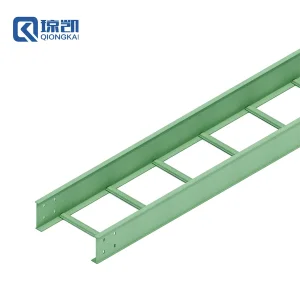
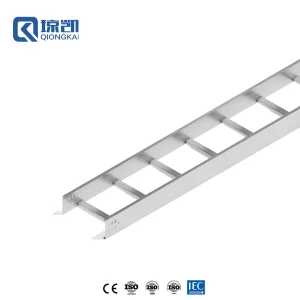
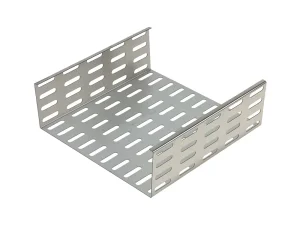
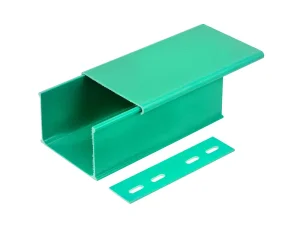
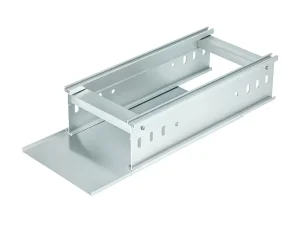
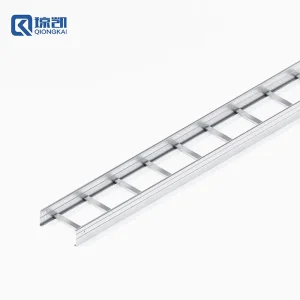
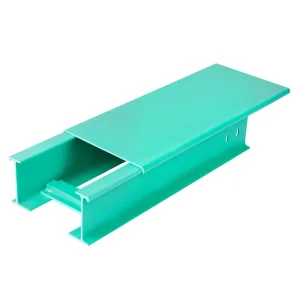
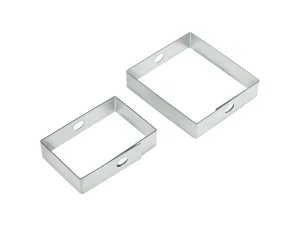
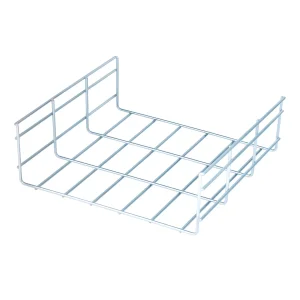
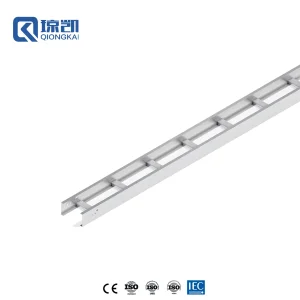
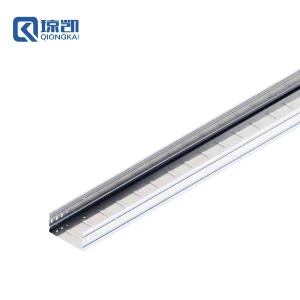
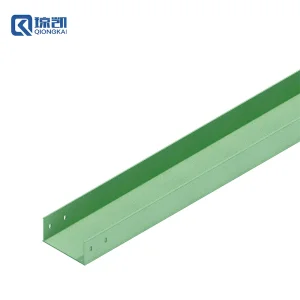
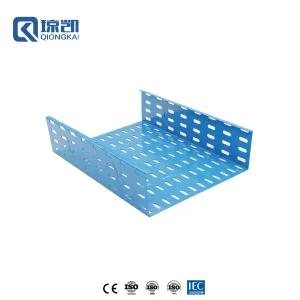
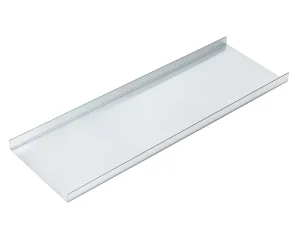
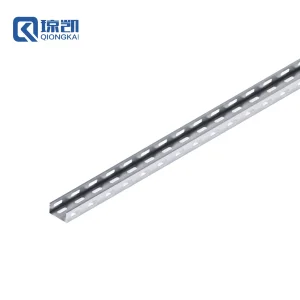
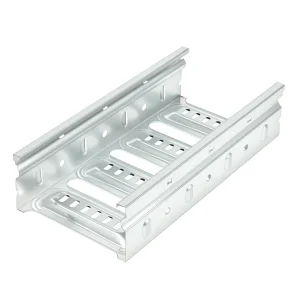
Direct manufacturer supply verified according to IEC 61537, NEMA VE 1, and ISO 1461. Review primary tray configurations, wire mesh grids, and heavy-duty reinforced channels.
Procurement Intelligence
Strategic Sourcing & Total Cost of Ownership (TCO)
In global industrial capital expenditures, electrical cable tray containment accounts for a vital structural sub-layer. Over-focusing purely on baseline unit price often yields catastrophic secondary commissioning costs.
CapEx vs. Lifecycle OpEx
Initial tray purchase price represents less than 28% of the lifetime cable management cost. Factors such as zinc bath coating uniformity, structural modulus of elasticity, and corrosion resistance dictate maintenance intervals. Selecting an incorrect finish (e.g., standard pre-galvanized instead of HDG or 316L) in coastal petrochemical zones induces galvanic failure within 24 to 36 months, compounding replacement expense exponentially.
Installation Speed & Field Labor
Modern EPC contractors prioritize intelligent engineering enhancements: pre-punched longitudinal slots, rapid snap-on covers, integrated splice plates, and modular reinforced ribbing. A system that saves 18% on assembly time significantly reduces expensive on-site mechanical and electrical subcontractor man-hours, shifting net installation expenditure favorably.
Structural Margin & Cable Safeguards
Cable jacket degradation caused by sharp interior burrs, rough weld splatter, or deflection-induced pinch points risks localized dielectric breakdown. Rigorous deburring, radiused side flanges, and documented continuous Safe Working Load (SWL) verifications ensure power distribution reliability under heavy phase faults and thermal surges.
Engineering Rule of Thumb: When budgeting cable tray containment across heavy industrial sectors, design with an intentional 20% to 25% reserve load capacity. Dynamic expansion—specifically instrumentation additions and higher power density cabling—often overwhelms minimally specified channels within 5 years of facility handover.
20+
Years Engineering Expertise
12
Automated Roll-Forming Lines
30,000m²
Total Manufacturing Floor
60+
Heavy Stamping & Bending Presses
Engineered Applications
Macro Industry Solutions & Environmental Tailoring
Cable support systems cannot follow a one-size-fits-all doctrine. Environmental exposure, thermal loading, chemical aggression, and strict building regulations necessitate custom containment architectures.
Hyperscale Data Centers
High-density structured cabling requires maximum thermal dissipation and absolute mitigation of zinc whiskers. Our wire mesh basket trays and powder-coated cable runways provide 360-degree open airflow, lowering cooling plant loads while maintaining strict dielectric spacing between high-voltage busways and sensitive fiber optics.
Offshore Marine & LNG
Atmospheric salinity (ISO 12944 CX categories) attacks conventional galvanized steel. As demonstrated on offshore LNG facilities in Qatar, custom heavy-duty FRP composite ladders and passivated SS316L cable ladders resist airborne halides, providing decades of structural integrity without maintenance recoating.
Civil Transit & Airports
Air terminals like Shanghai Hongqiao International Airport demand zero-halogen, smoke-safe, fully enclosed cable trunking (CT series). Engineered containment ensures emergency power line survival in catastrophic events, meeting DIN 4102-12 structural circuit integrity criteria.
Heavy Industrial & Agritech
From chemical processing plants in Southeast Asia to expansive agro-industrial farming complexes in Paraguay, exposure to organic ammonia and humid chemical washdowns demands heavy-gauge hot-dip galvanized (HDG) or pultruded FRP systems designed to prevent stress crack corrosion.
Engineering Metallurgy
Technical Benchmark & Material Selection Matrix
A rigorous metallurgical comparison of raw materials, corrosion prevention layers, and mechanical load performance under international test standards (IEC 61537, NEMA VE 1, ASTM A123).
| Material / Treatment | Specification Code | Layer Thickness / Grade | Corrosion Class (ISO 12944) | Recommended Industrial Context |
|---|---|---|---|---|
| Pre-Galvanized Steel (PG) | EN 10346 / JIS G3302 | Z120 – Z275 (12–20 µm) | C1 – C2 (Low/Indoor) | Commercial Dry Ceilings Data server room ceiling voids, office raceways. |
| Hot-Dip Galvanized (HDG) | ASTM A123 / ISO 1461 | 65 – 85 µm Average | C3 – C4 (Industrial/Wet) | Heavy Infrastructure Outdoor bridges, refineries, solar farms, industrial roofs. |
| Electro-Galvanized (EG) | ASTM B633 / BS 7371 | 8 – 12 µm Uniform | C1 (Controlled Air) | Wire Basket Grids Indoor clean communications rooms, precision patch cable runs. |
| Stainless Steel 304 (SS304) | AISI 304 / EN 1.4301 | Austenitic Alloy | C4 (Aggressive Indoor) | Food & Cleanrooms Food processing, pharmaceutical facilities, beverage packaging. |
| Stainless Steel 316L (SS316L) | AISI 316L / EN 1.4404 | Mo Alloy (2.0–2.5%) | C5-M / CX (Marine/Severe) | Marine & Chemical Desalination units, coastal platforms, offshore drilling rigs. |
| FRP / GRP Composite | ASTM D3917 / UL 94-V0 | Isophthalic / Vinyl Ester | Chemically Inert | Aggressive Acid/Alkali Battery rooms, paper mills, wastewater plants, thermal tropics. |
| Polyester Powder Coated | RAL Industrial Standard | 60 – 100 µm Dry Film | C2 – C3 Functional | System Identification Power line voltage phase identification, aesthetic architectural runs. |
Structural Deflection Mechanics
Under international standard IEC 61537, permissible mid-span deflection must not exceed $L/100$ under Safe Working Load (SWL). However, high-specification MEP consulting mandates stricter $L/200$ to $L/300$ criteria to safeguard optical fiber runs from macro-bending attenuation and to prevent joint decoupling during earthquake ground motion.
Anti-Seismic Bracing Integration
Combining heavy-duty cable trays with 41×41 or 41×82 back-to-back strut channels and serrated spring nuts forms a rigid seismic framing assembly. Engineered lateral and longitudinal brace angles prevent swing collisions with adjacent fire sprinkler loops and HVAC ducts during sudden seismic events.
Electrical Continuity & Bonding
Cable trays serve as supplementary equipment grounding conductors (EGC) when designed in accordance with NEC Article 392 and IEC 61537. Bonding jumper plates, zinc-piercing star washers, and low resistance across splice connections ensure that fault current trips upstream breakers before flashover occurs.
Financial Engineering
Cable Tray Supplier & Price Breakdown Factors
A transparent examination of the manufacturing, metallurgical, and supply chain cost variables that formulate true factory-direct commercial quotations.
1. Raw Steel & Zinc Commodities
Carbon steel coil (Q235B / SPCC) and London Metal Exchange (LME) refined zinc prices form roughly 60% of total product cost. Variations in thickness tolerance (e.g., true 1.5mm nominal vs. commercial 1.2mm minus-tolerance) dramatically impact steel weight per meter and overall load-bearing capacity.
2. Processing & Quality Treatments
Continuous automated roll forming delivers precision slot profiles at lower unit costs than manual punch-press operations. For hot-dip galvanizing, quality depends on thorough multi-stage acid pickling, fluxing, and molten zinc bath dwell times to produce iron-zinc alloy layers ($>500\text{ g/m}^2$).
3. Freight Volume & Nesting Efficiency
Cable trays are volumetric cargo. Un-nested trays ship predominantly as empty air, drastically inflating oceanic freight costs. Engineered dimensional stepping (e.g., 100mm, 105mm, 110mm widths or tapered ladder side rails) allows tight nesting, packing up to 40% more linear meters per 40ft HQ container.
| Profile Model | Dimensions (W × H mm) | Thickness Gauge | Standard Surface Finish | Indicative Price Range (USD/m)* |
|---|---|---|---|---|
| Perforated Channel / Trough | 100 × 50 mm | 1.0 mm – 1.2 mm | Pre-Galvanized (PG) | $3.20 – $4.80 |
| Perforated Channel / Trough | 300 × 100 mm | 1.5 mm – 2.0 mm | Hot-Dip Galvanized (HDG) | $9.80 – $14.50 |
| Industrial Cable Ladder | 400 × 150 mm | 2.0 mm Side / 1.5 mm Rung | Hot-Dip Galvanized (HDG) | $16.50 – $22.00 |
| Heavy-Duty Cable Ladder | 600 × 150 mm | 2.0 mm – 2.5 mm | HDG / Structural Grade | $24.00 – $33.50 |
| Wire Mesh Grid (Basket) | 300 × 50 mm | Ø 4.5 mm – 5.0 mm Wire | Electro-Galvanized / SS304 | $5.50 – $12.80 |
| Pultruded FRP Ladder/Trunking | 400 × 150 mm | 3.5 mm – 4.5 mm Wall | Vinyl Ester / Fire Retardant | $26.00 – $38.00 |
*Indicative benchmark pricing for baseline enterprise volume estimations (FOB Shanghai). Contact engineering sales for binding project quotes.
Technology Horizon
Technical Roadmap & Next-Gen Cable Infrastructure
How automation, advanced metallurgy, digital twin BIM modeling, and modular fast-assembly systems are reshaping industrial cable routing worldwide.
Phase 01: Intelligent Modularization
Boltless Click-Fit Mechanics
Replacing traditional nut-and-bolt splice plates with spring-loaded, tool-less snapping joints. Speeds field installations by up to 45%, preserves protective surface coatings from socket tool scratches, and lowers labor overhead on long straight runs.
Phase 02: Advanced Metallurgical Alloys
Zinc-Aluminum-Magnesium (ZAM)
Adoption of modern Zn-Al-Mg continuous coil coatings (e.g., SuperDyma / Magnelis equivalents). Offers 3 to 5 times the salt-spray resistance of standard pre-galvanized sheet, with self-healing cut edges that protect punched perforations without secondary hot dipping.
Phase 03: Digital Twin & BIM
LOD 400 BIM Integration
Providing native parametric 3D library files (Revit / IFC) that include weight indices, structural load vectors, and cable fill percentage warnings. Enables zero-clash coordination with HVAC ductwork, structural steel, and process pipe racks before site delivery.
Phase 04: Green Circular Metallurgy
Decarbonized Steel Certification
Transitioning toward electric arc furnace (EAF) low-carbon steel strip manufactured with circular scrap inputs. Supports EPC clients with Scope 3 emissions reporting and aligns with European CBAM carbon border compliance policies.