
Engineered Cable Routing Systems & Basket Modules
Explore our certified cable containment units engineered for high load deflection resistance, superior thermal dissipation, and rapid modular installation across global commercial and hyperscale data applications.
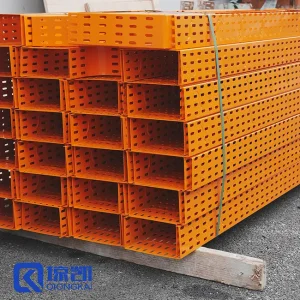
Wholesale Reinforced Medium duty Pre-galvanized Hot-dip-galvanized Powder Coated Perforated Cable Tray 200*100 - Orange Manufacturers, Factories
View Product Specs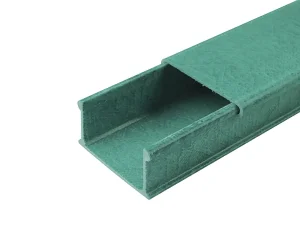
Wholesale High Quality FRP Cable Tray With Cover Suppliers, Factory
View Product Specs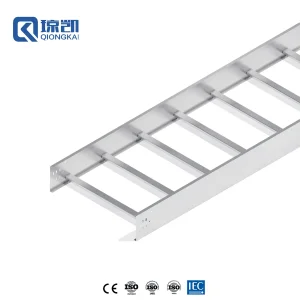
Buy PG Pre-galvanized Ladder Tray 800*200 Manufacturer, Factory
View Product Specs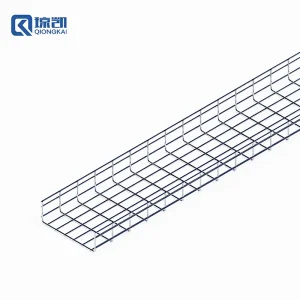
Wholesale Pre-galvanized Basket Cable Tray 300*100 Manufacturers, Price
View Product Specs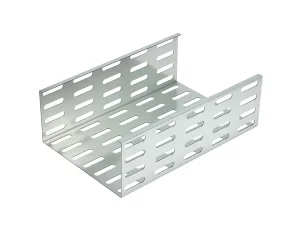
Wholesale Pre Galvanized Cable Tray With Perforation Manufacturers, Factories
View Product Specs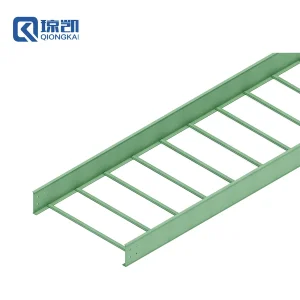
Wholesale FRP Ladder Type Cable Tray 1000*200 Manufacturer, Price
View Product Specs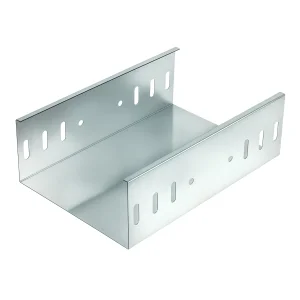
Buy Custom Size Pre Galvanized Cable Trunking Manufacturer, Factories
View Product Specs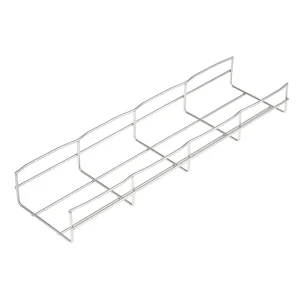
Wholesale Stainless Steel Grid wire mesh cable tray Manufacturers, Suppliers
View Product SpecsThe Global Evolution of Cablofil Wire Mesh Tray Engineering
Analyzing structural kinematics, 360-degree environmental heat dissipation, electromagnetic shielding, and how advanced welded steel wire tray systems redefine modern power and telecommunication pathways.
Thermal Dissipation & Ampacity Gains
Unlike fully enclosed solid-bottom trunking or traditional sheet metal channels that trap heat, wire mesh cable tray systems engineered according to the Cablofil topology feature an open grid design. This allows continuous 360-degree ambient convection, drastically reducing conductor operating temperatures. Electrical engineers can leverage lower cable derating factors, safely carrying higher currents with smaller conductor cross-sections, resulting in substantial copper savings across mega-projects.
Continuous EMC & Grounding Continuity
High-frequency interference from variable frequency drives (VFDs) and transient harmonics poses severe risks to mission-critical Ethernet and fiber optics. Standard wire mesh trays constructed with resistance-welded cold-drawn steel wire provide an inherently continuous Faraday cage-like attenuation zone. When bonded with certified grounding clamps, the mesh structure achieves low electrical transfer impedance (<5 mΩ per joint), shielding signal transmission from electromagnetic interference.
Mechanical Resilience & Safety Edge
Cutting-edge manufacturers employ a specialized safety T-weld edge design. Longitudinal wires are continuously welded on top of transverse wires, with wire ends deburred and curved inwards. This eliminates razor-sharp burrs that could lacerate installers' hands or compromise fragile cable insulation during high-tension pulling, ensuring strict adherence to global job-site HSE (Health, Safety & Environment) protocols.
Technical Clarification on Brand vs. Structural Topology
In global EPC engineering specifications, the term "Cablofil Cable Tray" is widely used by project specifiers and electrical contractors as a generic industry standard representing precision-welded steel wire mesh basket cable trays. As a top-tier Chinese industrial manufacturer, Shanghai Qiongkai Industry produces wire mesh cable trays that fully meet or exceed equivalent Cablofil dimensional parameters, load-bearing deflection curves, and international testing regimes, offering engineering teams a fully compliant, highly cost-effective direct-factory alternative.
Global Enterprise Procurement Demands: Compliance & Load Verification
Tier-1 contractors and engineering procurement firms mandate rigorous material traceability, certified loading deflection thresholds, and environmental longevity across every cable management component.
| Governing Standard | Test Parameters & Criteria | Technical Implication for Buyers | Manufacturer QA Verification |
|---|---|---|---|
| IEC 61537 / EN 61537 | Safe Working Load (SWL), deflection limits < L/100, electrical continuity resistance < 50 mΩ across couplers. | Prevents physical tray collapse and insulation damage under maximum conductor filling ratios. | Automated multi-point hydraulic load test rigs verifying load capacity across 1.5m to 3.0m support spans. |
| NEMA VE-1 / CSA C22.2 | Destructive ultimate load test with safety factor 1.5; rigorous rung-to-rail and wire weld shear testing. | Critical for North American and Middle Eastern heavy industrial, refinery, and power generation tenders. | Tensile weld shear testing ensuring minimum weld junction shear strength > 1100 N per intersection. |
| UL Classified (E-File) | Equipment Grounding Conductor (EGC) qualification without dedicated ground jumper wires. | Reduces copper grounding wire purchasing costs and eliminates thousands of hours of field crimping. | Surface resistance micro-ohm testing on pre-galvanized, electro-zinc, and stainless steel formulations. |
| DIN 4102-12 / EN 1366-4 | Circuit integrity in fire conditions (E30, E60, E90 functional capability under 1000°C furnace exposure). | Mandatory for public transportation, metro rail tunnels, airport terminals, and emergency egress routing. | Certified thermal load deflection testing utilizing fire-rated heavy threaded rod brackets and anchors. |
| ISO 9227 / ASTM B117 | Neutral salt spray (NSS) test evaluating zinc coating thickness and red rust corrosion onset. | Ensures 25+ years design life in severe marine, coastal, and high-humidity chemical environments. | X-ray fluorescence (XRF) coating thickness gauges measuring zinc layers from 12μm up to 85μm HDG. |
BIM / Revit Integration & Digital Twin Ready
Modern global EPC buyers require comprehensive 3D parametric BIM (Building Information Modeling) objects with accurate metadata. Our engineering department supplies native Revit families (.RFA) and IFC files containing precise bend radius limitations, actual physical mass, load-bearing capacities, and spatial connection nodes, eliminating clashes in complex MEP overhead corridors.
Export Packaging & Containerization Logistics
Standard wire mesh trays often incur excessive ocean freight costs due to nested volume. Qiongkai optimizes shipping economics through precision-engineered nesting geometries, customized fumigated timber pallets, edge-protective heavy-duty corrugated board, and waterproof polyethylene wrapping, maximizing 40HQ container cube utilization up to 98% with zero shipping deformation.
China Factory 4.0: Supply Chain Resilience & Direct OEM Advantage
Operating three specialized fabrication bases across the Shanghai industrial corridor, Shanghai Qiongkai Industry Co., Ltd. combines advanced robotics, vertical metallurgical control, and decades of engineering craftsmanship.
Automated Multi-Point Resistance Welding
Our production facilities utilize automated multi-head CNC mesh welding machines capable of executing up to 64 synchronized weld points per second. Each electrical resistance weld achieves deep molecular fusion between longitudinal and transversal steel rods without inducing thermal embrittlement, ensuring consistent tensile structural integrity throughout extreme mechanical stress cycles.
Integrated Surface Treatment Lines
From automated multi-stage ultrasonic degreasing and acid pickling to computer-controlled electro-zinc plating, hot-dip galvanizing kettles operating at 450°C, and electrostatic epoxy-polyester powder coating lines with RAL color matching, every surface treatment is executed in-house. This guarantees comprehensive quality control, zero chemical entrapment, and superior salt-spray endurance.
Unbeatable Total Cost of Ownership (TCO)
By eliminating multiple tiers of intermediary trading houses, regional wholesalers, and branded markups, global engineering contractors purchasing directly from our Shanghai manufacturing plants save between 25% to 45% in capital expenditure. Concurrently, our direct access to Baosteel prime raw steel feeds guarantees rapid response lead times and predictable project staging schedules.
Engineered for Critical Infrastructure Around the Globe
From high-density hyperscale data centers driving the artificial intelligence revolution to offshore energy facilities in extreme marine climates, our cable tray systems deliver uncompromising uptime.
Hyperscale AI & Cloud Data Center Facilities
Modern enterprise data halls deploy ultra-dense optical trunk cables and copper patch networks generating localized heat pockets. Wire mesh basket cable trays installed overhead or underneath raised access flooring optimize air flow from hot-aisle containment systems. Our specialized zinc-whisker-free powder coatings and stainless steel mesh trays completely mitigate the catastrophic threat of micro-shorting on high-density GPU server circuit boards.
Petrochemical, Offshore LNG & Desalination
Harsh offshore environments and LNG liquefaction trains subject electrical pathways to saline fog, airborne sulfur compounds, and constant thermal cyclings. We engineer specialized SS316L (UNS S31603) and marine-grade FRP (Fiber Reinforced Polymer) ladder and mesh cable trays engineered to resist chloride stress corrosion cracking (SCC), verified on landmark energy projects in Qatar and Thailand.
Food & Beverage, Cleanroom & Pharmaceutical Plants
Sanitary standards like FDA and EHEDG forbid dust accumulation and liquid pooling on horizontal equipment. The rounded, open wire structure of electro-polished AISI 304/316L wire mesh cable trays leaves 90% less surface area for airborne bacteriological pathogens to settle, allowing direct high-pressure CIP (clean-in-place) chemical washdowns with total liquid drainage.
Modern Commercial Hubs & Transit Terminals
Major international transportation infrastructure, including our landmark installation of corrosion-resistant CT series cable trunking for Shanghai Hongqiao International Airport, requires robust mechanical defense combined with aesthetic architectural finishes. Custom powder-coated cable trays adhering to RAL color palettes simplify circuit segregation for fire alarm, BMS, and high-voltage feeder channels.
Material Science: Corrosivity Classes (ISO 12944) & Selection
Specifying the wrong finish accelerates corrosion failures. Align your site requirements with metallurgical chemistry to maximize lifecycle ROI across C1 through CX corrosive categories.
| Material / Treatment | Corrosivity Category (ISO 12944) | Protective Coating Thickness | Salt Spray Life (Hours to Red Rust) | Recommended Deployment Context |
|---|---|---|---|---|
| Electro-Zinc (EZ / EG) | C1 (Very Low) / C2 (Low) | 12 – 18 μm (EN ISO 2081) | 96 – 160 Hours | Indoor air-conditioned switchgear rooms, commercial office false ceilings, telecom closets. |
| Pre-Galvanized (PG / HDG Strip) | C2 (Low) | 15 – 22 μm (EN 10346) | 190 – 280 Hours | Dry commercial interiors, general warehousing, light industrial overhead dry runs. |
| Hot-Dip Galvanized (HDG) | C3 (Medium) / C4 (High) | 60 – 85 μm (ISO 1461 / ASTM A123) | 720 – 1,200+ Hours | Outdoor rooftop runs, solar fields, power plants, manufacturing plants, damp parking garages. |
| Stainless Steel AISI 304 | C3 – C4 (Industrial Washdown) | Passivated Natural Chromium Oxide | 1,500+ Hours | Breweries, dairies, food packaging cleanrooms, pharmaceutical synthesis halls. |
| Stainless Steel AISI 316 / 316L | C5 (Very High) / CX (Extreme Marine) | Molybdenum Passivated Self-Healing Layer | 3,000+ Hours | Offshore oil & gas rigs, coastal desalination plants, chlor-alkali chemical processing. |
| FRP / GRP Composite | C5 / CX (Aggressive Chemical) | Thermoset Isophthalic / Vinyl Ester Resin | Non-Metallic (Immune to Rust) | Electrochemical refineries, wastewater treatment basins, fertilizer handling plants. |
Critical Insight: Zinc Whisker Phenomenon in Server Rooms
In pressurized raised floors of data centers, standard electro-plated zinc finishes can undergo internal lattice stress relaxation, releasing microscopic conductive zinc filaments known as "zinc whiskers." Circulated by high-velocity CRAC air fans, these whiskers deposit across motherboard pins causing catastrophic short circuits. For all mission-critical IT facilities, Qiongkai strongly advises specifying Stainless Steel (SS304/SS316) wire mesh trays or high-adhesion architectural thermoset powder coating over zinc, eliminating zinc whisker growth at the source.
Site-Level Efficiency: Fast-Coupling & Seismic Bracing Solutions
Labor constitutes upwards of 55% of the total installation cost for commercial containment pathways. Our coordinated system of trays, 41-series strut channels, and tool-free quick couplers delivers unmatched site velocity.
Boltless Rapid-Snap Couplers
Traditional splice plates require tightening four to eight nut-and-bolt sets per connection. Our proprietary snap-in stainless spring clips and toolless push-fit splices click into place in less than 15 seconds. This eliminates hardware dropping hazards, ensures uniform contact pressure for electrical grounding continuity, and drastically accelerates straight runs across massive logistics warehouses.
Flexible In-Field Junction Fabrication
Navigating structural columns, ductwork, and plumbing bends on congested jobsites is effortless with wire mesh basket systems. Using our heavy-duty angled wire cutters, electrical fitters can trim side wires to hand-form horizontal 90-degree ells, tee intersections, cross intersections, and elevation changes on-site, totally bypassing the multi-week lead times associated with prefabricated sheet-metal elbows.
Integrated Anti-Seismic Trapeze Bracing
Critical public structures situated in seismic-risk zones (IBC / ASCE 7 seismic design categories C through F) demand rigid lateral and longitudinal restraint. We manufacture specialized 41x41 and 41x82 back-to-back strut channels equipped with anti-seismic serrated flanges and pivoting brace brackets, safeguarding electrical cable pathways against high-magnitude lateral harmonic acceleration.
Heavy-Duty Trays, Trunking & Engineered Ladders
Complete your project sourcing package with our comprehensive range of high-capacity galvanized ladder racks, perforated energy-efficient profiles, and industrial trunking components manufactured to precision ISO standards.
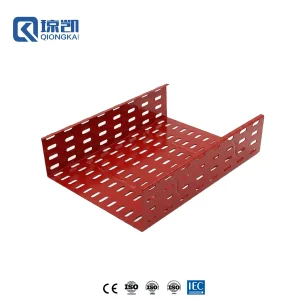
Buy Powder Coated Carbon Steel Pre Galvanized PG Cable Tray with Reinforce Ribs - RAL3020 Red 300*100 Suppliers, Price
View Product Specs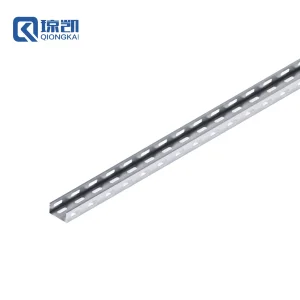
Wholesale PG HDG Perforated Cable Tray 50*25 Supplier, Price
View Product Specs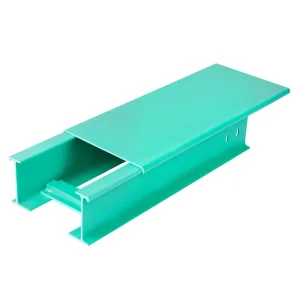
Buy Light Weight FRP Ladder type Cable Tray Manufacturers, Supplier
View Product Specs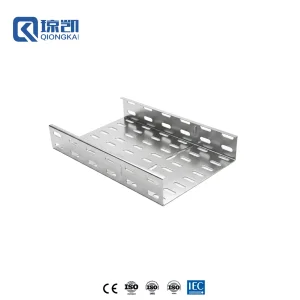
Wholesale Carbon Steel Pre Galvanized PG Hot Dip[ Galvanized HDG Cable Tray with Reinforce Ribs 200*50 Manufacturers, Suppliers
View Product Specs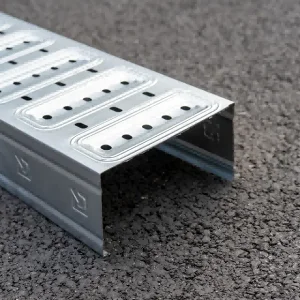
Buy Pre-Galvanized Perforated Energy saving cable tray 200*100 Manufacturers, Suppliers
View Product Specs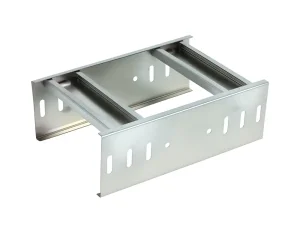
Wholesale 304 and 316 Stainless Cable ladder Factory, Factories
View Product Specs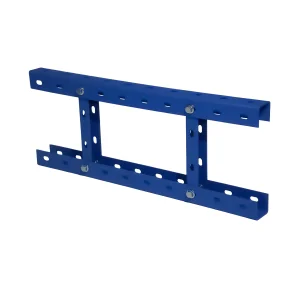
Wholesale Durable Blue Powder Coated Ladder Cable Rack Manufacturer, Suppliers
View Product Specs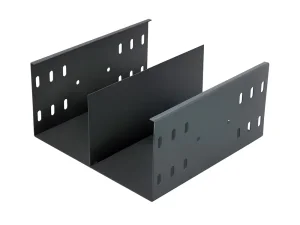
Buy Pre Galvanized Powder Coating Cable Trunking With Split Plate - Black Coating Manufacturers, Supplier
View Product SpecsFrequently Asked Questions: Direct Sourcing & Engineering
Comprehensive engineering insights for procurement directors, MEP leads, and consulting engineers specifying wire mesh basket tray systems.
What is the exact technical difference between Cablofil and Qiongkai wire mesh cable trays?
Cablofil is a registered brand of the Legrand Group that popularized the open wire mesh basket cable tray concept worldwide. Shanghai Qiongkai Industry Co., Ltd. is an established Chinese heavy-duty manufacturer operating 3 advanced factories with 12 assembly lines. We engineer equivalent wire mesh cable trays adhering strictly to international standards (IEC 61537, NEMA VE-1, and UL). Our products match Cablofil in dimensional mesh grid pitches (typically 50x100mm), rod diameters (3.5mm to 6.0mm), structural load capacity, and safety T-welded rounded edges, delivering 100% interoperability at significant direct factory cost savings.
How do wire mesh cable trays perform under severe fire conditions compared to sheet metal trays?
Under international standards such as DIN 4102-12 and EN 50200, wire mesh trays exhibit exceptional circuit integrity (rated E30 to E90). Because wire mesh trays have minimal thermal mass compared to thick solid-bottom steel trunking, heat does not accumulate as rapidly in localized air pockets. Concurrently, the steel wire grid expands uniformly under fire conditions without severe asymmetrical warping or sharp buckling, maintaining electrical continuity and vital communication links for emergency ventilation and fire evacuation systems.
Why is zinc whisker risk critical in data centers and how does Qiongkai mitigate it?
Zinc whiskers are tiny crystalline conductive filaments that grow spontaneously from electro-galvanized (EZ) steel surfaces due to internal compressive stress. In computer rooms and hyperscale data centers, air currents dislodge these conductive micro-filaments, which then settle across server logic boards, causing unexplainable short circuits. Qiongkai solves this problem by offering passivated Stainless Steel 304/316L wire mesh trays or applying high-temperature architectural thermoset epoxy-polyester powder coating directly over carbon steel, physically sealing the zinc layer and eliminating whisker formation.
Can Qiongkai wire mesh cable trays be used as an Equipment Grounding Conductor (EGC)?
Yes. Our wire mesh cable trays are manufactured from high-conductivity carbon steel and stainless steel with continuous automated resistance welding. When coupled using our UL-certified splice plates and mechanical bonding couplers, the continuous pathway satisfies low-impedance requirements stipulated by NFPA 70 (National Electrical Code) Article 392 and IEC 61537. This eliminates the requirement to pull separate, costly bare copper grounding conductor lines along straight tray runs.
What support spans and load deflection limits should be factored into structural calculations?
Standard design practice for wire mesh cable trays involves support intervals spaced between 1.5 meters and 2.0 meters, with heavy-duty profiles supporting up to 3.0 meters. Under IEC 61537, maximum allowable mid-span deflection must remain below 1/100th of the span distance (e.g., maximum 20mm deflection over a 2000mm span) under full safe working load (SWL). Our structural engineering team provides verified load deflection curves and third-party certified test reports for every order.
What are your custom fabrication capabilities and minimum order quantities (MOQ)?
With more than 60 heavy-duty production machines across three manufacturing facilities, we support extensive customization: non-standard widths (50mm up to 1000mm), sidewall heights (30mm, 50mm, 100mm, 150mm), wire gauges (3.0mm to 6.0mm), and hybrid multi-compartment dividers. As a true manufacturer, we offer high supply chain agility for bulk container shipments as well as phased EPC deliveries, with flexible MOQs tailored to overall project bill-of-materials (BOQ).
Accelerate Your Project with Direct Factory Manufacturing
Send us your project drawings, BOQ, or Cablofil specification codes. Our application engineers provide comprehensive load calculations, material finish validation, and a competitive commercial quotation within 24 hours.