Featured Inside Riser Systems & Heavy-Duty Trays
Direct manufacturer supply for vertical shafts, commercial inside risers, and industrial cable drops.
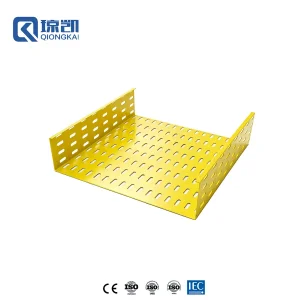
Wholesale Powder Coated Carbon Steel Pre Galvanized Hot Dip Galvanized PG HDG Cable Tray with Reinforce Ribs - RAL1080 Yellow 400*100 Manufacturers, Factory
View Technical Specs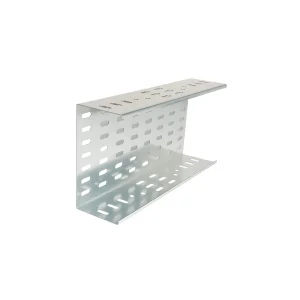
Buy Customized Dense Pre Galvanized Perforated Cable Tray Factory, Price
View Technical Specs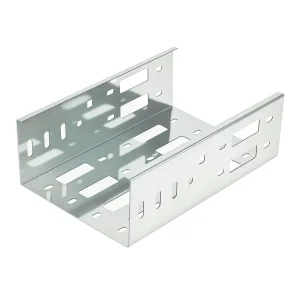
Wholesale Custom Size Pre Galvanized Perforated Cable Tray Factory, Price
View Technical Specs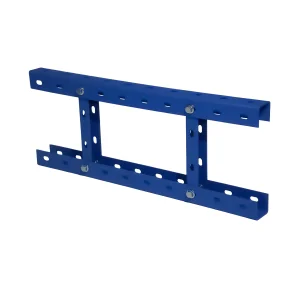
Wholesale Durable Blue Powder Coated Ladder Cable Rack Manufacturer, Suppliers
View Technical Specs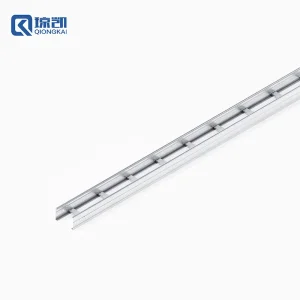
Buy Reinforced Pre Galvanized or HDG Ladder Type Cable Tray 200*100 Manufacturers, Price
View Technical Specs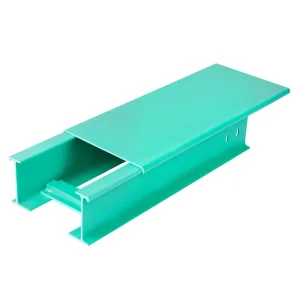
Buy Light Weight FRP Ladder type Cable Tray Manufacturers, Supplier
View Technical Specs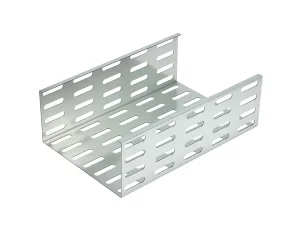
Wholesale Pre Galvanized Cable Tray With Perforation Manufacturers, Factories
View Technical Specs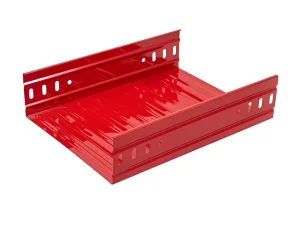
Buy Fireproof Red Pre Galvanized Powder coated molded cable tray Supplier, Price
View Technical SpecsTechnical White Paper: Modern Inside Riser Cable Tray Dynamics
A comprehensive engineering analysis of structural load limits, vertical cable drop physics, thermal management, and safety regulations.
When electrical engineers, mechanical MEP contractors, and EPC project managers specify an inside riser cable tray (also known as an inside vertical riser or internal vertical bend cable tray system), they address one of the most mechanically demanding segments of electrical infrastructure. Unlike horizontal tray runs supported at frequent intervals, vertical risers inside enclosed shafts and multi-story utility cores bear immense cumulative tensile and gravitational loads. The transition fitting—the inside riser—must smoothly route heavy feeder cables, high-voltage armored conduits, or dense fiber bundles from horizontal corridors into vertical building risers without violating minimum cable bend radius limits or generating excessive localized mechanical stresses.
Gravitational Stress & Cable Creep
Vertical runs subject cable sheathing and internal conductors to continuous downward tensile forces. Without specialized rungs, heavy-duty cleat slots, and precision inside riser fittings, cables suffer from longitudinal jacket creep, conductor stretching, and insulation rupture at transition points.
Thermal Stratification & Chimney Effect
Vertical riser shafts act as natural convection chimneys. Heat generated by densely packed power feeders rises, accelerating ambient temperatures at upper building floors. Our perforated inside riser profiles and open-ladder architectures ensure optimal heat dissipation to prevent cable de-rating.
Seismic Lateral Restraint Integrity
During seismic acceleration, vertical riser shafts endure inter-story drift and harmonic oscillation. Qiongkai integrates anti-seismic flange channels, reinforced gusset plates, and heavy-gauge side rails to prevent structural bucking and sustain operational circuit continuity.
Macro Industry Solutions & Global Procurement Requirements
Tailored structural configurations designed for international contractors, high-stakes infrastructure, and aggressive operating environments.
High-Rise Commercial Towers
Multi-floor commercial centers demand dense pre-galvanized (PG) perforated inside risers and ladder trays. Our systems feature high load-to-weight ratios, tight bend radii (300mm to 900mm), and fire-stop penetration collars that interface cleanly with floor slab intumescent seals.
Hyperscale AI Data Centers
High-density server halls require organized vertical busway drops and fiber optic riser cascades. Powder-coated and wire-mesh inside risers eliminate micro-abrasions, control bend angles to prevent optical signal degradation, and support high-volume category cable ties.
Offshore Platforms & LNG Terminals
Marine coastal facilities and gas treatment facilities suffer severe chloride and sulfide corrosion. Qiongkai supplies 316L stainless steel and structural pultruded FRP inside riser assemblies engineered to withstand marine salt atmospheres without electrochemical degradation.
Heavy Industrial & Mining Plants
Vibration-prone mineral processing, pulp & paper, and chemical plants require hot-dip galvanized (HDG) or heavy-duty reinforced molded channel systems capable of spanning 6-meter vertical intervals while carrying armored MV/HV feeders without rail deflection.
| Material / Specification | Yield Strength (MPa) | Protective Finish Standard | Recommended Riser Application | Standard Radius Options |
|---|---|---|---|---|
| Pre-Galvanized Carbon Steel (PG) | 235 - 355 MPa | EN 10346 / ASTM A653 (Z180 - Z275) | Dry indoor HVAC shafts, commercial towers | 300 mm, 450 mm, 600 mm |
| Hot-Dip Galvanized Steel (HDG) | 250 - 400 MPa | ISO 1461 / ASTM A123 (≥ 65-85 μm) | Industrial plants, outdoor risers, infrastructure | 300 mm, 600 mm, 900 mm |
| Stainless Steel (SS304 / SS316L) | 205 - 520 MPa | Passivated / Pickled (AISI 304 / 316L) | Chemical processing, coastal marine, offshore oil/gas | 300 mm, 600 mm, 900 mm |
| Fiberglass Reinforced Polymer (FRP) | ≥ 280 MPa (Flexural) | UV-Inhibited Isophthalic / Vinyl Ester | Highly corrosive acidic/alkaline environments, LNG | 300 mm, 450 mm, 600 mm |
| Powder Coated Carbon Steel | 235 - 355 MPa | Electrostatic Polyester / Epoxy (RAL 1080 / 5015) | Architectural raceways, mission-critical data centers | 300 mm, 600 mm |
Localized Support, Code Compliance & Engineering Assurance
Comprehensive alignment with global electrical standards, verified structural safety factors, and dedicated EPC procurement assistance.
NEMA VE 1 / VE 2 & IEC 61537 Rigor
Every inside riser fitting and ladder section is designed and tested in strict conformance with NEMA VE 1 (Metal Cable Tray Systems) and IEC 61537. Load-bearing rungs are engineered with uniform safety factor ratings (≥ 1.5) to withstand working wire loads without permanent plastic deformation.
Precision CNC Roll-Forming & Robotics
Operating across 3 dedicated production facilities with 12 assembly lines and over 60 heavy-duty forming machines in Shanghai, Qiongkai utilizes continuous roll-forming lines, automated laser-guided perforation dies, and robotic welding rigs that maintain tight profile tolerances across large export consignments.
1-on-1 Dedicated Engineering Desk
Global contractors work directly with our senior application engineers rather than intermediary sales brokers. From initial BOQ takeoffs and CAD/BIM drawing verification to custom structural calculations and third-party laboratory inspection coordination, our team guarantees zero-defect site installation.
Technical Roadmap & Next-Gen Riser Engineering
Continuous innovation in high-strength lightweight metallurgies, modular prefabrication, and lifecycle asset tracking.
High-Strength Low-Alloy & Zn-Al-Mg Coatings
Implementing Zinc-Aluminum-Magnesium (ZAM) alloy coatings that deliver up to 3x higher corrosion barrier performance than standard hot-dip galvanizing, offering superior self-healing edge protection inside damp riser shafts without added tare weight.
Tool-Free Rapid Riser Clamping & Splices
Development of snap-lock inside riser fittings, pre-punched slotted rung brackets, and integrated seismic restraint connectors that slash MEP field installation labor by up to 40% while preserving high electrical continuity grounding bonds.
BIM Library Integration & Thermal Monitoring
Providing native Autodesk Revit BIM models with accurate physical weight, deflection vectors, and thermal conductivity coefficients, paired with bracket mounting options for fiber-optic distributed temperature sensing (DTS) inside vertical power shafts.
Frequently Asked Questions on Inside Riser Cable Trays
Authoritative answers addressing engineering design, installation mechanics, and international procurement logistics.
What is the structural difference between an inside riser and an outside riser?
An inside riser is a vertical fitting designed to change the elevation of a cable tray run upward from a horizontal plane, causing the open tray bottom or rungs to face upward/inward along the concave curve of the bend. An outside riser alters the path downward, with the rungs positioned outward along the convex face. Inside risers are specifically utilized at the bottom of utility shafts or when routing cables overhead into ascending vertical channels.
How are heavy vertical cables secured to prevent slippage in an inside riser?
In accordance with NEC Article 392 and standard NEMA VE 2 installation practices, vertical cables must be secured using specialized cable cleats or heavy-duty cushioned saddle clamps attached to ladder rungs. Qiongkai manufacturers rungs featuring built-in slotting designed to accept standard strut-channel clamps, allowing secure tie-off intervals typically specified every 300 mm to 600 mm based on conductor weight.
What bend radius is mandatory for inside riser vertical transitions?
Standard radius options range from 300 mm (12 in), 450 mm (18 in), 600 mm (24 in), up to 900 mm (36 in). The required radius is dictated by the maximum outer diameter (OD) and permissible minimum bending radius of the largest power cable installed. Exceeding minimum bend radius prevents conductor insulation crushing and minimizes phase impedance unbalance.
Can Qiongkai manufacture customized non-standard angles for inside risers?
Yes. Beyond standard 90-degree and 45-degree inside vertical elbows, our 60+ heavy-duty press lines fabricate 30-degree, 60-degree, or custom site-specific sweep angles. We also supply variable-angle adjustable vertical splice plates to accommodate uneven building offsets and architectural ceiling slopes during site fit-outs.
Which surface coating is recommended for coastal or high-humidity vertical shafts?
For indoor climate-controlled shafts, pre-galvanized (PG) steel is standard. For shafts exposed to maritime moisture, unconditioned ambient air, or chemical vapors, Hot-Dip Galvanizing (HDG with ≥ 65-85 μm zinc layer), Stainless Steel (SS304/SS316), or pultruded Fiberglass (FRP) must be specified to prevent galvanic rust and ensure a 30+ year maintenance-free service lifespan.
How does Qiongkai manage export packaging and international shipping logistics?
Located in Songjiang, Shanghai, near Yangshan and Waigaoqiao maritime container terminals, Qiongkai nests inside risers, straight tray lengths, and accessories into steel-banded, waterproof plastic-wrapped pallets reinforced with edge protectors. Full container load (FCL) and less-than-container load (LCL) consignments are engineered to prevent transit deformation.
Complete Riser Accessories, Channels & Heavy-Duty Profiles
Comprehensive fittings, channel systems, wire mesh, and molded trough channels for end-to-end cable containment.
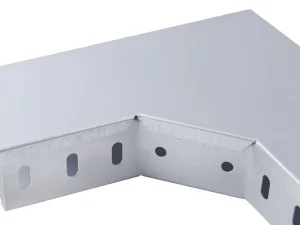
Buy Pre Galvanized Elbow / Tee / X for cable tray with cover product Manufacturer, Supplier
View Technical Specs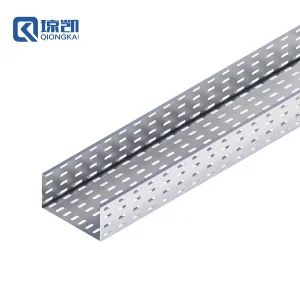
Wholesale Pre-galvanized Hot-dip-galvanized Perforated Cable Tray 200*100 Manufacturer, Factories
View Technical Specs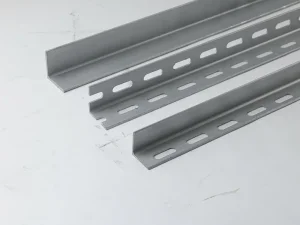
Wholesale Pre Galvanized non-perforated angle iron Manufacturer, Factories
View Technical Specs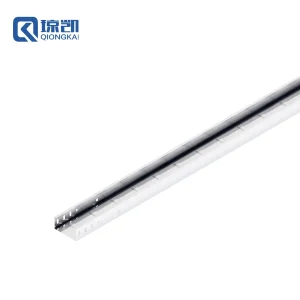
Wholesale Heavy Duty Cost Saving Reinforced Molded Pre Galvanized Cable Trunking Trough Type Channel 100*50 Manufacturer, Price
View Technical Specs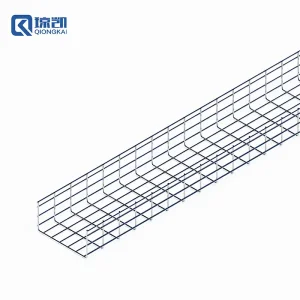
Buy GI Galvanized Wire Mesh Tray 300*150 Factory, Factories
View Technical Specs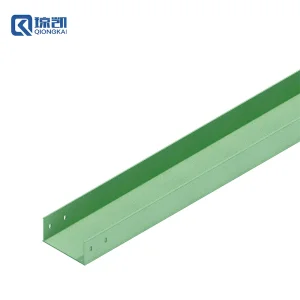
Buy FRP Cable Trunking Trough Type Channel 400*200 Supplier, Factory
View Technical Specs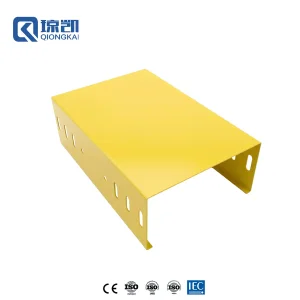
Buy Powder Coated Carbon Steel PG Pre Galvanized Cable Trunking Trough Type Channel - RAL1080 Yellow 200*100 Manufacturer, Factories
View Technical Specs