
Featured Cable Trays & Structural Components (Series I)
Standard and reinforced structural cable management profiles engineered for harsh marine, heavy industrial, and commercial electrical infrastructure.
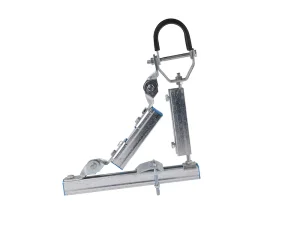
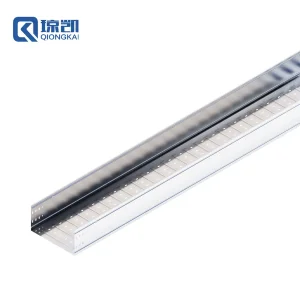
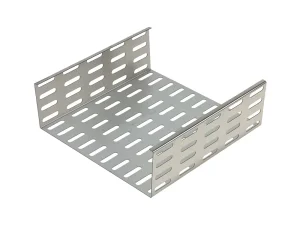
Buy Cost Saving Heavy Duty Reinforced Molded Pre Galvanized Cable Tray with less perforation 400*200 Manufacturers, Factory
Inquire Factory Pricing
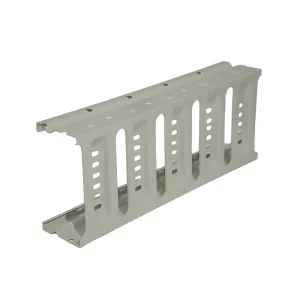
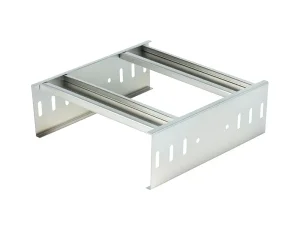
Buy Powder Coated Customizable Ladder Perforated Cable Tray Manufacturer, Factory
Inquire Factory Pricing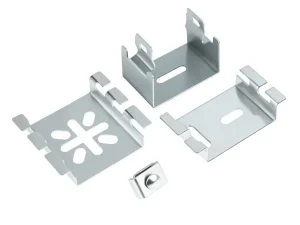
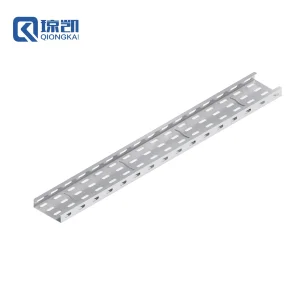
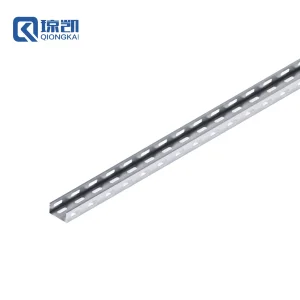
Wholesale Reinforced Medium duty Pre-galvanized Hot-dip-galvanized Perforated Cable Tray 100*25 Factory, Price
Inquire Factory PricingPerforated Cable Tray Architecture: Engineering Dynamics & Structural Load
Perforated type cable trays (ventilated trough trays) represent the optimal median between solid bottom cable trunking and open ladder designs, delivering crucial mechanical protection alongside high-efficiency heat dissipation.
Thermodynamic Ampacity Retention
Standard punch patterns yield a 28% to 38% open-air ventilation ratio. This continuous airflow mitigates conductor resistance buildup, allowing power cables to maintain up to 15% higher current-carrying capacity (ampacity) compared to fully enclosed non-ventilated trunking systems.
Electromagnetic Screening & Attenuation
For mixed-voltage raceways carrying instrumentation and control circuits, perforated carbon steel and stainless steel trays provide superior electromagnetic interference (EMI) shielding over open wire mesh or non-metallic conduits, preserving signal integrity.
Deflection Rigidity & Safe Working Load
Fabricated in compliance with IEC 61537 and NEMA VE 1 standards. Reinforced bottom longitudinal profiling corrugations increase section modulus, preventing mid-span deflection exceeding L/200 even under severe industrial multi-conductor dead loads.
Critical Installation Metric: The L/200 Deflection Criterion
Under NEMA VE 1 / CSA C22.2 No. 126.1 standards, cable tray systems subjected to maximum rated mechanical loading must not experience a structural deflection exceeding span length divided by 200. Our molded and reinforced perforated designs incorporate integrated bottom flanging that dramatically reduces side-rail buckling under transverse wind and seismic vibration.
Why Global EPCs Source Perforated Trays from China Manufacturers
China's Yangtze River Delta industrial belt combines deep steel supply chain integration, automated high-throughput CNC stamping, and proprietary surface finishing facilities to create substantial procurement advantages.
Direct Raw Material Scale
Direct rolling partnerships with primary mills (Baosteel, Shagang) give domestic manufacturers raw carbon steel (Q235B) and stainless coil (AISI 304/316) pricing insulated from spot-market broker markups.
Automated Continuous Stamping
12 automated production lines utilize multi-station progressive stamping dies. Punching patterns, edge curling, and return flanging occur synchronously at 18 meters per minute, lowering marginal unit labor costs.
Integrated Hot-Dip Galvanizing
Direct access to modern closed-loop hot-dip galvanizing kettles adhering strictly to ISO 1461 and ASTM A123. Heavy zinc coatings from 65µm to >85µm are applied with complete uniformity and zero drip pooling.
Deep-Water Export Logistics
Located directly within the Shanghai manufacturing corridor adjacent to Yangshan Deep-Water Port and Waigaoqiao terminals, shaving days off ocean freight departures to Europe, the Middle East, and the Americas.
Perforated Cable Tray Pricing Determinants & Cost Matrix
Factory-direct quotation structures depend on steel thickness (gauge), metallurgical finish, slot pattern complexity, and total metric tonnage. Below is an engineering baseline matrix based on international wholesale contracts.
| Profile Spec (W × H mm) | Thickness (mm) | Material & Finish | Standard Length | Load Class (IEC 61537) | Wholesale Est. (USD / Meter) |
|---|---|---|---|---|---|
| 50 × 25 mm (Light Telecomm) | 1.0 – 1.2 mm | Pre-Galvanized (PG, Z180) | 2.0m / 3.0m | Light (0.5 kN/m) | $3.10 – $4.60 |
| 100 × 50 mm (Commercial Power) | 1.2 – 1.5 mm | Pre-Galvanized (PG) | 2.44m / 3.0m | Medium (1.0 kN/m) | $5.20 – $7.80 |
| 200 × 50 mm (Reinforced Rib) | 1.5 – 2.0 mm | Hot-Dip Galvanized (HDG >65µm) | 3.0m | Heavy (1.5 kN/m) | $9.40 – $13.60 |
| 300 × 100 mm (Heavy Feeder) | 1.5 – 2.0 mm | HDG / Powder Coated (RAL) | 3.0m | Heavy (2.0 kN/m) | $14.20 – $19.80 |
| 400 × 100 mm (Industrial Main) | 2.0 – 2.5 mm | Hot-Dip Galvanized (ASTM A123) | 3.0m / 6.0m | Extra-Heavy (>2.5 kN/m) | $21.50 – $28.90 |
| 300 × 100 mm (Corrosive Clean) | 1.5 – 2.0 mm | Stainless Steel AISI 304 | 2.0m / 3.0m | Heavy (2.0 kN/m) | $32.00 – $44.50 |
| 400 × 150 mm (Offshore Marine) | 2.0 – 2.5 mm | Stainless Steel AISI 316L | 3.0m | Extra-Heavy (>3.0 kN/m) | $58.00 – $76.00 |
1. Metallurgical Base Cost
Carbon steel hot-rolled coils fluctuate with global iron ore indexes. In contrast, 304 and 316L grades are heavily tied to LME nickel and molybdenum surcharges. Specifying 316L in place of HDG typically yields a 2.5× to 3.5× material cost multiplier.
2. Finish Deposition Weight
Pre-galvanized coils provide 120–275 g/m² zinc. True batch hot-dip galvanizing post-fabrication deposits 450–650 g/m² (>65–85 µm). The acid pickling, fluxing, and zinc immersion process adds roughly 22%–35% to bare fabrication costs.
3. Tooling & Molded Flanges
Molded cable trays that feature integrated return flanges eliminate the need for separate splice joiner plates on one side, reducing contractor installation hours while using high-tonnage precision dies to maximize load-to-weight structural ratios.
Macro-Industry Engineering Solutions & Global Trends
As power distribution expands across hyperscale computing, hydrogen production, and semiconductor fabrication, perforated cable tray design is pivoting toward higher modularity, seismic bracing, and aggressive atmospheric durability.
Hyperscale AI Data Centers
Accelerated AI clusters demand ultra-dense low-voltage DC busbars and optical fiber bundles. Perforated trays equipped with smooth CNC-punched cable exits, rounded return flanges, and antistatic powder coats prevent micro-abrasion while facilitating overhead rack air exchange.
Solar PV & BESS Grid Facilities
Utility-scale battery energy storage systems (BESS) require corrosion-resistant containment exposed to high ultraviolet radiation and wide thermal fluctuations. Heavy-duty HDG and zinc-nickel continuous coatings deliver 30+ year maintenance-free design lifespans.
Integrated Seismic Bracing (ASCE 7-16)
Modern infrastructure mandates cable containment capable of surviving seismic ground acceleration. Rigid strut-channel trapeze assemblies combined with 4-way diagonal seismic cable sway braces ensure electrical circuit continuity during tectonic events.
Localized Application Scenarios
Aviation & Transit Hubs
Reference: Shanghai Hongqiao International Airport. Demanded flame-resistant, low-smoke zero-halogen powder-coated perforated cable trunking systems to guarantee non-toxic containment along underground terminal corridors.
Offshore LNG & Desalination
Reference: Offshore Marine Operations in Qatar. Utilized custom AISI 316L pickled and passivated perforated trays engineered to resist continuous C5-M marine saline atmospheres and extreme high-ambient humidity.
Large-Scale Agricultural Agrotech
Reference: Heavy-Duty Agro Facility in Paraguay. Deployed customized high-load hot-dip galvanized perforated trays with reinforced side-wall ribs designed for severe organic ammonia exposure within stringent budgets.
Global Procurement Checklist: Verification & Quality Audits
International EPC buyers must enforce stringent mill test verifications and mechanical compliance audits before dispatching container shipments. Below is our engineering-recommended verification framework.
1. Raw Material MTC
Verification of Mill Test Certificates according to EN 10204 Type 3.1. Chemical composition analysis confirming yield strength (>235 MPa for Q235B) and metallurgical limits (carbon, phosphorus, sulfur contents).
2. Coating Thickness Testing
Non-destructive electromagnetic magnetic induction coating thickness testing per ISO 2178 / ASTM B499. Verifying 5-point spot checks exceed guaranteed minimum hot-dip zinc micron thresholds.
3. Structural Load Proving
Destructive multi-span deflection testing compliant with IEC 61537 Type II. Simulating cable mass distribution plus 90 kg emergency point loads to confirm structural safety factors of 1.7×.
4. Packaging & Seaworthy Stacking
Export packaging using nesting methods, protective foam interlays, corner angle guards, and steel strapped, fumigated ISPM-15 timber bearers to maximize 40ft HQ container cubic utilization without surface chafing.
Frequently Asked Engineering & Procurement Questions
Key answers addressing design standards, electrical grounding, fire survivability, and lead times for project engineers and supply chain directors.
What are the key technical differences between perforated cable trays and cable trunking?
How does grounding bonding resistance comply with IEC 61537 requirements?
Can perforated cable tray assemblies meet DIN 4102-12 / E90 fire resistance standards?
How is cable fill capacity calculated under NEC Article 392?
What are typical production lead times for a full 40ft container from Shanghai?
What international customs HS code applies to perforated cable tray shipments?
Precision Engineered Raceways & Fittings (Series II)
Standard factory stock profiles, custom architectural powder coats, and heavy-duty prefabricated directional bends ready for rapid containerized export.
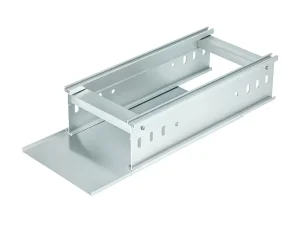
Buy Pre Galvanized ladder type cable tray Gi and HDG customizable reinforcing Manufacturers, Suppliers
Inquire Factory Pricing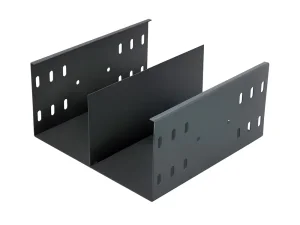
Buy Pre Galvanized Powder Coating Cable Trunking With Split Plate - Black Coating Manufacturers, Supplier
Inquire Factory Pricing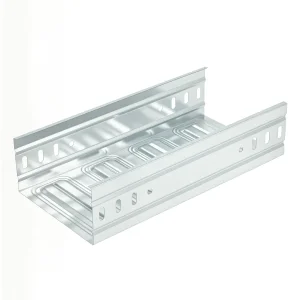
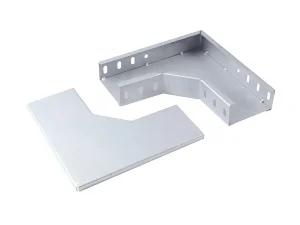
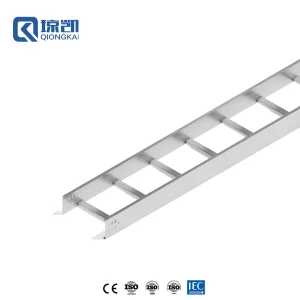
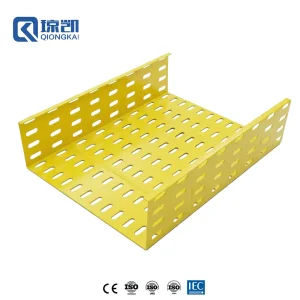
Wholesale Powder Coated Carbon Steel Pre Galvanized Hot Dip Galvanized PG HDG Cable Tray with Reinforce Ribs - RAL1080 Yellow 300*100 Manufacturers, Price
Inquire Factory Pricing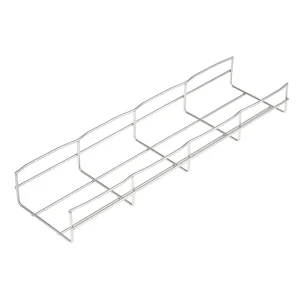
Request Detailed Bill of Quantities (BOQ) Analysis & Pricing
Submit your project drawings, routing layouts, and load schedule. Our technical team delivers complete cable tray takeoffs, structural span recommendations, and containerized pricing within 24 business hours.