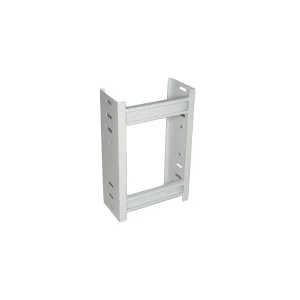
Wholesale Powder Coated Ladder Tray Factory, Price
Request Factory Direct Quote
Explore our heavy-duty channel routing systems manufactured under strict ISO 9001 and NEMA standards for optimal mechanical load endurance.
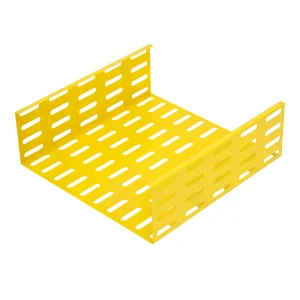
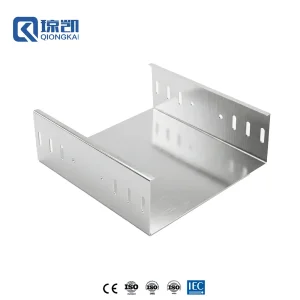
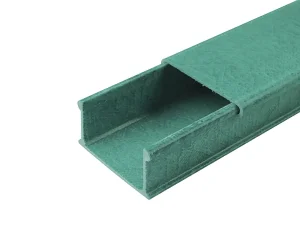
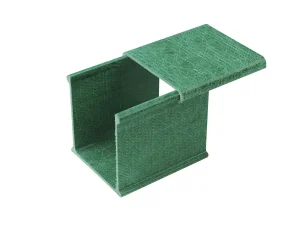
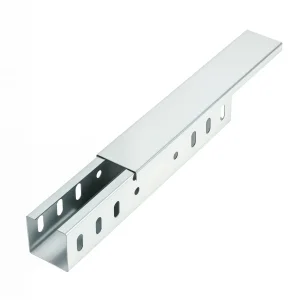
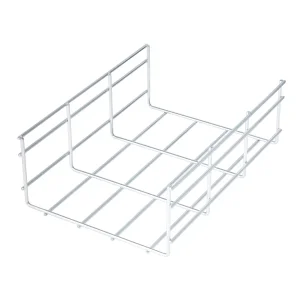
Comprehensive containment analysis for sensitive telecommunication lines, power transmission, and hazardous industrial operational zones.
Modern automated facilities with heavy VFDs, robotic cells, and high-frequency communication protocols demand continuous metallic shielding. Solid bottom type cable trays act as continuous conductive ground planes, drastically mitigating electromagnetic interference and signal degradation across sensitive fiber and copper infrastructures.
Unlike open-rung ladder trays, fully enclosed solid bottom troughs shield delicate cable insulation from airborne contaminants, oil mist, metal shavings, and chemical vapors. In cleanrooms, petrochemical units, and metallurgical casting plants, physical separation preserves sheath integrity against premature thermal and chemical degradation.
Small-diameter signal cables, instrumentation leads, and multi-core fiber lines suffer point-load strain when supported intermittently by rungs. The uniform flat bed of solid trays completely eliminates deflection sag, micro-bending optical losses, and unintentional insulation cold-flow under concentrated thermal stress.
How Tier-1 EPC contractors, electrical engineers, and global procurement teams de-risk long-lifecycle containment assets.
Global procurement requires complete heat-number batch traceability, mill test certificates (MTC 3.1), and precise structural adherence to IEC 61537 and UL 568 to ensure unyielding site safety pass rates.
Engineers evaluate working load capacity (Class 12C, 20A, 20C) under heavy multi-conductor bundling, demanding zero permanent plastic deformation over spans ranging from 3.0 to 6.0 meters.
High overseas site labor costs favor pre-punched connector hubs, toolless cover snap-latches, and integral reinforced flanging to slash field rigging time by more than 35% across massive plants.
Procurement looks past initial FOB pricing. They calculate replacement friction, corrosion degradation rates across 25+ years, and fire barrier performance during emergency system shutdown phases.
Harnessing automated CNC cold roll-forming, robotic laser profiling, and multi-tier quality assurance across 30,000 m² of smart facilities.
With 12 advanced production lines and over 60 specialized heavy-duty processing machines, our facilities produce solid bottom channels with high dimensional accuracy (tolerances within ±0.3 mm). Side rail heights from 50mm to 200mm are engineered seamlessly without structural stress lines.
Integrated automated hot-dip galvanizing baths strictly regulate zinc layer density (exceeding 85 microns / 610 g/m² under ASTM A123/EN ISO 1461). High-voltage electrostatic powder coating delivers custom RAL coatings with zero orange-peel defect for rapid visual system routing.
Located in Shanghai's Songjiang Port Science and Technology City, our direct access to Yangshan Deep-Water Port and Waigaoqiao Terminals guarantees swift container staging, reduced drayage overhead, and secure maritime freight dispatch schedules globally.
| Base Material & Treatment | Standard Yield (MPa) | Environmental Class (ISO 12944) | Target Industry & Life Expectancy |
|---|---|---|---|
| Pre-Galvanized Mild Steel (Q235B) | ≥ 235 MPa | C1 - C2 (Dry Interior) | Commercial buildings, clean server rooms (15-20 yrs) |
| Hot-Dip Galvanized After Fabrication (HDG) | ≥ 235 - 355 MPa | C3 - C4 (Industrial & Coastal) | Power generation, petrochemical refineries (30-50 yrs) |
| Austenitic Stainless Steel 304 / 316L | ≥ 205 - 220 MPa | C5-M (Marine & Extreme Offshore) | Marine vessels, LNG export units, pharma (50+ yrs) |
| Fiberglass Reinforced Plastic (FRP/GRP) | Flexural ≥ 140 MPa | Severe Chemical Acid Corrosive | Chlor-alkali, pickling plants, wastewater treatment (40+ yrs) |
Direct field performance from major airports, hyperscale data farms, and offshore hydrocarbons.
Supplied specialized corrosion-resistant CT series cable trunking and solid bottom channels carrying critical avionics, ground navigation circuits, and emergency terminal power without signal crossover or field distortion.
Engineered custom heavy-gauge 316L solid bottom sections and structural supports designed to withstand continuous saline sea-spray, solar UV degradation, and ambient desert temperatures exceeding 50°C.
Developed an optimized solid trough and heavy-duty cable tray installation for high-ammonia agro-industrial conditions, combining high structural strength with a competitive lifecycle cost structure.
Comprehensive answers regarding solid bottom containment systems, standards compliance, and custom fabrication.
Complete structural channel profiles, fittings, and coated channels engineered for fast modular installation.