
High-Performance Cable Routing & Channel Catalog
Review engineering configurations, surface treatments, and factory-direct supply models for heavy-load electrical, instrumentation, and infrastructure installations.
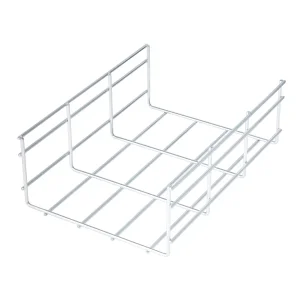
Wholesale Pre Galvanized grid Cable tray 200mm Manufacturer, Manufacturers
View Product Specs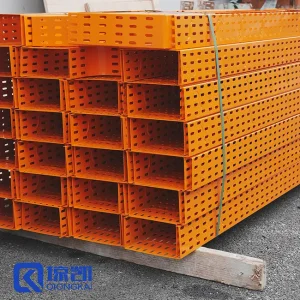
Wholesale Reinforced Medium duty Pre-galvanized Hot-dip-galvanized Powder Coated Perforated Cable Tray 200*100 - Orange Manufacturers, Factories
View Product Specs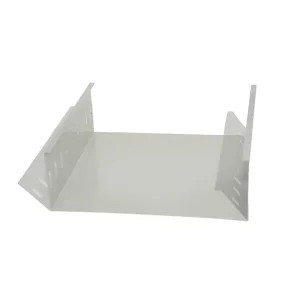
Wholesale Non-perforated Powder Coated Cable Tray_ Suppliers, Factories
View Product Specs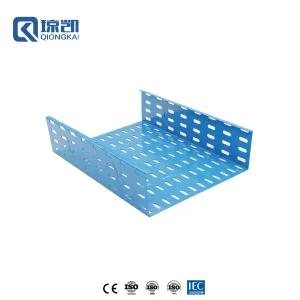
Buy Powder Coated Carbon Steel Pre Galvanized Hot Dip Galvanized PG HDG Cable Tray with Reinforce Ribs - RAL5015 Blue 300*100 Manufacturer, Price
View Product Specs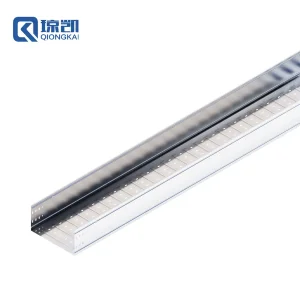
Buy Cost Saving Heavy Duty Reinforced Molded Pre Galvanized Cable Tray with less perforation 400*200 Manufacturers, Factory
View Product Specs
Wholesale UPVC Cable Trunking Thermal Insulated Anti-corrosion Resistance_ Manufacturers, Price
View Product Specs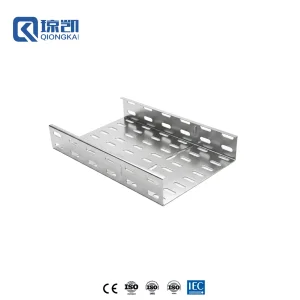
Wholesale Carbon Steel Pre Galvanized PG Hot Dip[ Galvanized HDG Cable Tray with Reinforce Ribs 200*50 Manufacturers, Suppliers
View Product Specs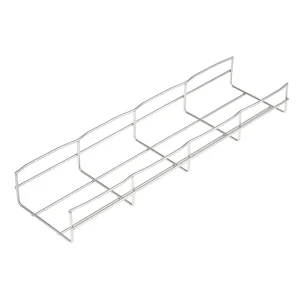
Wholesale Stainless cable tray50mm Manufacturers, Factories
View Product SpecsThe Global Strut Channel & Support Framing Landscape
Analyzing global supply chain movements, regulatory shifts from MFMA-4 to BS 6946, and how tier-1 EPC contractors optimize balance-of-plant procurement.
In modern industrial design, cold-formed strut channels—commonly referred to by the genericized moniker Unistrut channels—form the mechanical backbone of building services. From data center white space containment ceilings and multi-tiered cable bus racks to onshore petrochemical process plant piping, these modular structural profiles eliminate on-site welding, reduce hot-work permit requirements, and accelerate commercial construction cycles. The global commercial market for metal framing systems and cable management solutions is experiencing structural expansion, driven directly by investments in cloud computing hubs, clean-energy gigafactories, cleanroom semiconductor fabs, and metro transit expansion.
Historically governed by North American standards (MFMA-4 guidelines established by the Metal Framing Manufacturers Association) and corresponding European frameworks (BS 6946 / EN 10162), modern strut engineering has shifted from standard commoditized steel channels to engineered high-yield, corrosion-resilient modular systems. Specifiers can no longer afford arbitrary selections; mechanical loads, seismic bracing requirements (ASCE 7-22), wind-uplift vectors in rooftop solar platforms, and chemical atmospheric classifications (ISO 12944 C1 through CX) directly govern catalog selection and pricing profiles.
Supply Chain Realignment
Global procurement has transitioned away from fractured local distributors toward direct integrated manufacturing partnerships. Direct mill-run manufacturing under strict ISO 9001:2015 frameworks allows contractors to lock in batch pricing and guarantee metallurgy mill test reports (MTRs) from source.
Corrosion Classification (ISO 12944)
Specifiers increasingly demand precise C3-C5 environment coatings. Pre-galvanized (PG) steel suffices only for climate-controlled data halls; coastal petrochemical plants mandate Hot-Dip Galvanization (HDG >85μm), marine Grade 316 Stainless Steel, or chemical-proof Pultruded FRP systems.
Standardization vs. Custom Geometry
While the 41×41mm and 41×21mm dimensions remain international benchmarks, complex projects require non-standard gauge variations (1.5mm to 3.0mm), 41×62mm, 41×82mm, and back-to-back slotted profiles with internal serrated flange channels to achieve higher moment capacities.
Channel Profiles, Section Modulus & Load Capacities
A rigorous engineering comparison of cross-sectional geometries, material yield strengths, beam deflection limits, and design considerations.
| Profile Designation | Dimensions (W × H) | Standard Gauges (Thickness) | Moment of Inertia (Ix) | Section Modulus (Sx) | Max Allowable Uniform Beam Load (2.0m Span) | Primary Industrial Applications |
|---|---|---|---|---|---|---|
| QK-4121 (Shallow) | 41 × 21 mm (1-5/8" × 13/16") | 1.5 mm, 2.0 mm, 2.5 mm | 0.86 cm⁴ | 0.71 cm³ | 1.38 kN | Light Commercial Wire basket supports, light fixtures, false ceilings |
| QK-4141 (Standard) | 41 × 41 mm (1-5/8" × 1-5/8") | 1.5 mm, 2.0 mm, 2.5 mm, 2.75 mm | 4.12 cm⁴ | 1.88 cm³ | 3.62 kN | Universal MEP Trapeze hangers, medium cable trays, conduit banks |
| QK-4162 (Deep Profile) | 41 × 62 mm (1-5/8" × 2-7/16") | 2.0 mm, 2.5 mm | 10.45 cm⁴ | 3.21 cm³ | 6.15 kN | Heavy Industrial High-volume cable ladder racks, HVAC chiller pipe runs |
| QK-4182 (Ultra-Deep) | 41 × 82 mm (1-5/8" × 3-1/4") | 2.0 mm, 2.5 mm, 2.75 mm | 20.88 cm⁴ | 4.95 cm³ | 9.80 kN | Critical Infrastructure Power substation bus ducts, long-span bridge runs |
| QK-4182-BTB (Back-to-Back) | 41 × 82 mm (Welded/Riveted) | 2.5 mm (Dual 12-Gauge) | 38.20 cm⁴ | 9.31 cm³ | 18.40 kN | Seismic Grade Seismic sway bracing, heavy transformer room overhead supports |
Engineering Load Calculation Note (Deflection Criteria)
All structural beam load values published above are calculated based on cold-formed carbon steel conforming to ASTM A1011 SS Grade 33 or EN 10025 S250GD, with a maximum allowable fiber stress of 170 MPa (25,000 PSI) and an allowable deflection threshold of L/200. For vibration-sensitive instrumentation runs or optical fiber tray trapezes, deflection should be re-rated against an L/360 or L/500 safety factor. Anti-slip inturned lips are cold-rolled with continuous CNC serrations to interface directly with hardened channel spring nuts (Grade 8.8 tensile capacity).
Macro-Industry Solutions & Localized Case Applications
Demonstrating how Shanghai Qiongkai’s manufacturing precision provides verified performance across specialized, high-consequence operating environments globally.
Hyperscale Data Center White Space
Challenge: Ultra-dense fiber routing requiring strict electrical isolation, rapid reconfiguration, zero particulate shedding, and high aesthetic cohesion.
Solution: Custom RAL 9005 black and RAL 5015 blue powder-coated pre-galvanized wire basket cable trays anchored to 41×41mm modular trapeze framing grids.
Offshore LNG Terminal (Ras Laffan, Qatar)
Challenge: Extreme marine coastal exposure combined with ambient operating temperatures exceeding 50°C and airborne sulfur gases.
Solution: Custom pultruded fire-retardant FRP (Fiberglass Reinforced Polymer) cable trays with stainless steel 316L slotted strut channels and molybdenum-alloyed hardware.
Aviation Hub (Shanghai Hongqiao International Airport)
Challenge: Continuous terminal passenger terminal utility distribution demanding 4-hour fire integrity and rigorous electromagnetic interference shielding.
Solution: Corrosion-resistant CT series enclosed cable trunking with integrated grounding lugs and hot-dip galvanized structural drop rods.
High-Humidity Agro-Industrial (Paraguay Project)
Challenge: Severe organic ammonia vapor, daily pressurized caustic wash-downs, and aggressive budgeting constraints.
Solution: Cost-optimized heavy-duty reinforced molded pre-galvanized cable trays engineered with optimized side ribs, minimizing steel mass without sacrificing bending strength.
Advanced Metallurgy, BIM Integration & Industry 4.0
Examining next-generation surface technologies, prefabricated modular MEP cassettes, and digital twin compatibility in commercial construction.
Zinc-Aluminum-Magnesium (ZAM) Coatings
While traditional hot-dip galvanizing (ISO 1461) remains an industry workhorse, third-generation Zn-Al-Mg coatings offer up to 4× the salt spray resistance (over 3,000 hours without red rust). Crucially, ZAM exhibits autonomous self-healing properties over cut edges and sheared slot apertures through cathodic zinc hydroxide migration.
BIM & Offsite Prefabricated MEP Modules
Construction productivity bottlenecks are moving channel cutting and framing assembly from messy jobsites into controlled factory environments. Qiongkai provides REVIT/IFC families of all strut profiles, enabling EPC contractors to procure pre-cut, pre-assembled, tagged multi-tier trapeze frames ready for immediate ceiling hoisting.
Seismic Bracing & Dynamic Damping
Modern building codes across seismic zones 3 and 4 enforce strict lateral and longitudinal non-structural component restraint (ASCE 7 / IBC). Qiongkai’s anti-seismic channels feature patented serrated return flanges and paired heavy-duty hinge pivot brackets that withstand cyclic dynamic loads without nut slippage.
Unistrut Channel Pricing Factors & Supplier Evaluation
A transparent breakdown of how raw steel indices, zinc metal coating weights, and precision roll-forming automation influence commercial proposals.
When procurement teams issue requests for quotations (RFQs) for strut channels, cable trays, and trapeze hardware, unit prices can exhibit variance between bidding suppliers. Understanding the underlying cost formulation ensures engineering compliance without paying inflated intermediary margins:
1. Steel Coil Base Indices
Raw hot-rolled coil (HRC) and cold-rolled coil (CRC) constitute 65–75% of the finished product's weight cost. Price volatility is linked directly to primary commodity exchanges (Shanghai Metal Exchange, LME). Tier-1 manufacturers like Qiongkai maintain bulk raw inventory reserves to provide fixed-price stability for 6-to-12-month delivery schedules.
2. Zinc Plating & Coating Mass
Zinc mass fundamentally determines service life. Pre-galvanized coils typically offer Z120–Z275 (120 to 275 g/m² combined total), suitable for dry interiors. In contrast, post-fabrication Batch Hot-Dip Galvanization (HDG per ASTM A123 / ISO 1461) deposits an average coating thickness of 65 to 85 microns (>500 g/m²), commanding a coating premium that repays itself over a 30-year exterior lifecycle.
3. Gauge Tolerance & Slotted Integrity
Low-cost suppliers often cut corners with "minus tolerances" (supplying a 1.75mm wall thickness when a 2.0mm specification is contracted). High-speed CNC punching also introduces edge stress concentrations. Qiongkai executes cold roll-forming with calibrated continuous tooling, ensuring structural wall thickness integrity across every meter.
Frequently Asked Questions (Unistrut Channel & Tray Catalog)
Direct answers from senior structural engineers and international supply directors to expedite your specification sign-off.
- Pre-Galvanized (PG / Mill-Galv): Best for controlled indoor environments (ISO 12944 C1/C2), such as commercial office plenum spaces, retail ceilings, and standard server rooms.
- Hot-Dip Galvanized (HDG): Required for exterior industrial zones, rooftop utility corridors, unconditioned warehouses, and chemical infrastructure (C3/C4).
- Stainless Steel (SS304 / SS316): Indispensable for food and beverage sanitary washdown zones, pharmaceutical production facilities, cleanrooms, and coastal salt-spray zones.
- Fiberglass (FRP / GRP): Chosen for hyper-corrosive chemical fumes, wastewater processing, offshore splash zones, and electrical installations requiring zero metallic conductivity.
Structural Brackets, Heavy-Duty Trays & Specialized Profiles
Explore heavy-gauge galvanized framing, seismic containment accessories, and industrial-scale cable management systems engineered for extreme duty.
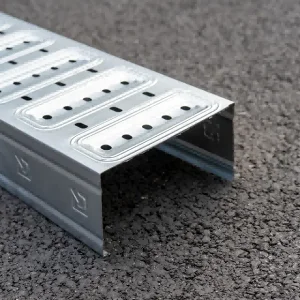
Buy Pre-Galvanized Perforated Energy saving cable tray 200*100 Manufacturers, Suppliers
View Product Specs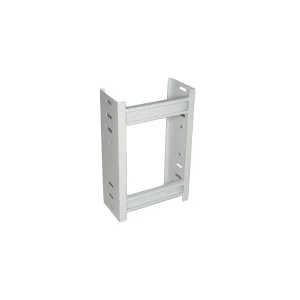
Wholesale Powder Coated Ladder Tray Factory, Price
View Product Specs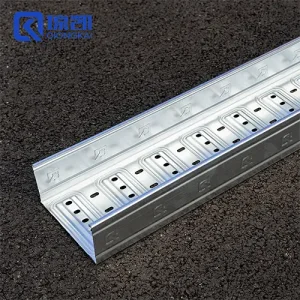
Wholesale Cost Saving Heavy Duty Reinforced Molded Pre Galvanized Cable Tray Factories, Price
View Product Specs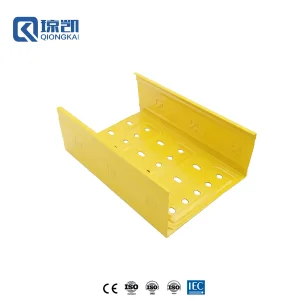
Buy Powder Coated Carbon Steel Cost Saving Heavy Duty Reinforced Molded Pre Galvanized Cable Tray - RAL1080 Yellow 200*100 Supplier, Price
View Product Specs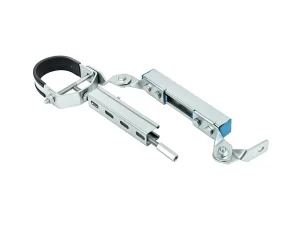
Buy Seismic Bracket Factory, Price
View Product Specs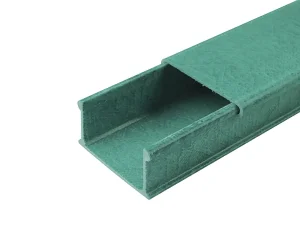
Wholesale High Quality FRP Cable Tray With Cover Suppliers, Factory
View Product Specs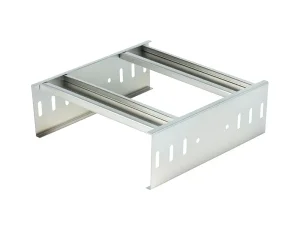
Buy Stainless Cable ladder Factories, Price
View Product Specs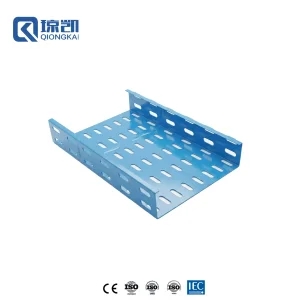
Wholesale Powder Coated Carbon Steel Pre Galvanized PG Cable Tray with Reinforce Ribs - RAL5015 Blue 200*50 Manufacturers, Factories
View Product SpecsRequest Complete Engineering Catalog & Project Price Schedule
Partner directly with an ISO-certified manufacturer. Shanghai Qiongkai Industry Co., Ltd. provides direct container shipment pricing, structural load engineering sign-off, CAD/BIM revit submittals, and tailored surface coatings for global commercial contractors and distributors.