Engineered Cable Routing & Support Systems (Phase I Selection)
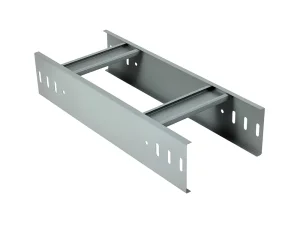
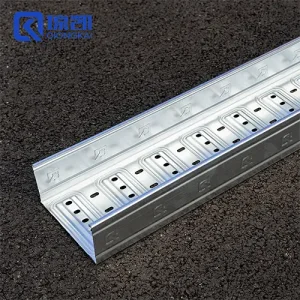
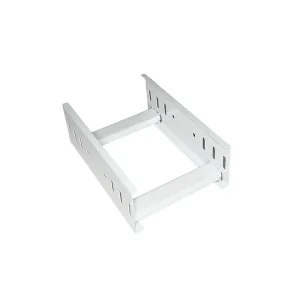
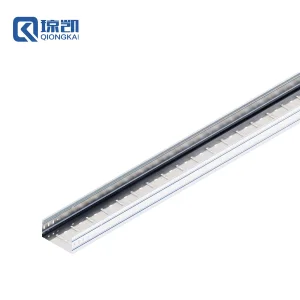
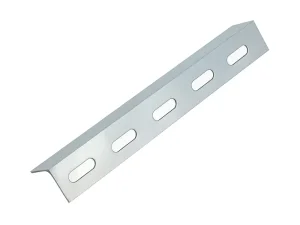
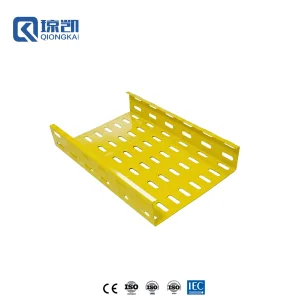
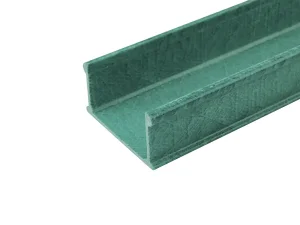
Explore high-capacity pre-galvanized, powder-coated, and fiberglass cable tray assemblies precision-machined across our automated production lines for robust heavy-duty cable management.
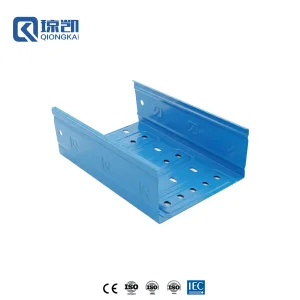
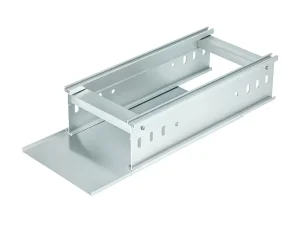
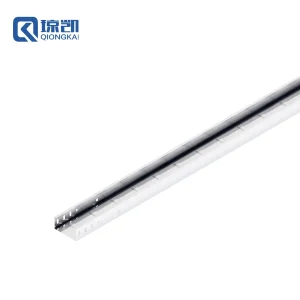
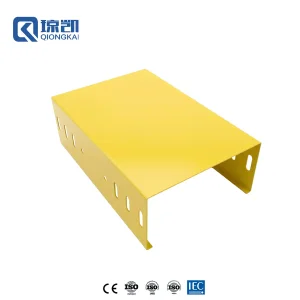
The Global Industrial Landscape for Wireways & Cable Tray Systems
The international pathway infrastructure market has fundamentally shifted from traditional electrical conduit towards modular, ventilated, and structurally reinforced cable trays and wireway troughs. Accelerated by industrial electrification, renewables, and AI computing facilities, direct-from-factory procurement has become mission-critical for engineering procurement contractors (EPCs).
Hyperscale Computing & Power Density
Next-generation data centers require elevated power distribution handling over 40kW to 100kW per rack. Traditional enclosed conduits create thermal bottlenecks. Modern engineered wire mesh and ladder cable trays facilitate unhindered atmospheric convection cooling, reducing auxiliary HVAC parasitic loads by up to 18%.
EPC Supply Chain De-risking
Procuring directly from integrated manufacturing plants eliminates multiple tiers of distribution markups (averaging 25% to 42% in logistical and middleman margins). Direct factory engagement ensures strict adherence to mill test certifications, unified galvanization lot control, and coordinated project batch deliveries.
Harsh Environment Metallurgical Demands
Offshore floating production, chemical refining, and coastal solar substations encounter intense atmospheric salinity and acidic vapors. Global demand has surged for high-micron Hot-Dip Galvanizing (≥86μm), Marine-Grade SS316L, and pultruded Fiber-Reinforced Polymer (FRP/GRP) structural channels.
Engineering Differentiation: Wireways vs. Cable Tray Architectures
Specifying the correct cable containment system requires understanding the fundamental mechanical, regulatory, and thermal boundaries between enclosed sheet-metal wireways (raceways) and open/ventilated cable tray structures under NEC, NEMA, and IEC standards.
| Containment Class | Structural Profile | Standard Compliance | Thermal Dissipation | Primary Industrial Use Case |
|---|---|---|---|---|
| Enclosed Wireways (Raceways) | Solid sheet-metal trough with hinged or screw-on covers (NEMA 1, 3R, 12, 4X) | NEC Article 376 / 378, UL 870 | Enclosed; subject to conductor derating factors (≤20% fill ratio for power) | Industrial control panels, machine tool wiring, short electrical runs needing mechanical protection |
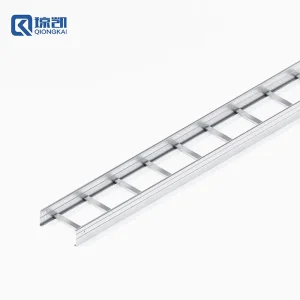
| Cable Ladder Systems | Dual longitudinal side rails connected by welded or swaged cross rungs | NEMA VE-1 / VE-2, IEC 61537 | Maximum free-air ventilation (100% continuous ampacity allowance) | Heavy power cables, high-voltage substations, industrial plants, open outdoor racks |
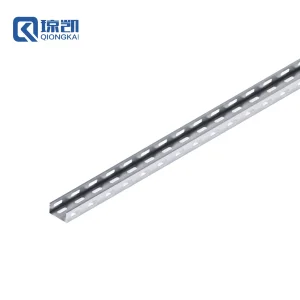
| Perforated & Trough Trays | Formed metal channel with bottom ventilation slots and solid side rails | IEC 61537, NEMA VE-1 | Moderate ventilation with enhanced physical baseline cable support | Commercial buildings, instrumentation lines, process control, mixed signal routes |
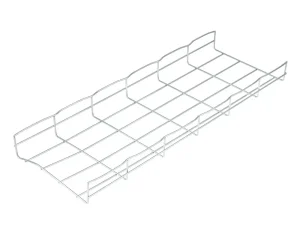
| Wire Mesh Basket Trays | High-tensile welded steel wire grid (50x100mm pattern) with smooth edges | NEMA VE-1, IEC 61537 | Superior open-air airflow, zero dust entrapment, rapid point-to-point dropouts | Hyperscale data centers, telecommunications, food & beverage processing halls |
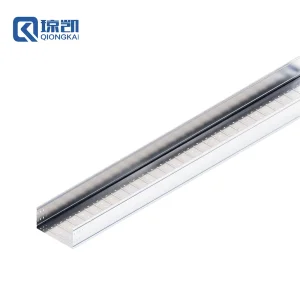
| Solid-Bottom Trunking | Continuous formed metal trough with tight-fitting gasketed slip-on lids | NEMA VE-1, BS EN 50085 | Low convective dissipation; excellent EMI/RFI screening isolation | Sensitive instrumentation, fiber optic backbone runs, airport terminal subfloors |
NEMA Load Class Ratings & Deflection Criteria
Under NEMA VE-1 standards, cable trays are classified by design working load (50 lbs/ft, 75 lbs/ft, 100 lbs/ft) across spans of 8, 12, 16, or 20 feet (e.g., Class 12C, 20C). The structural beam deflection must not exceed the engineering limit of $L/200$ to ensure structural integrity and prevent stress failure at splice joint assemblies during peak dynamic load events.
Seismic Bracing & Anti-Vibration Design
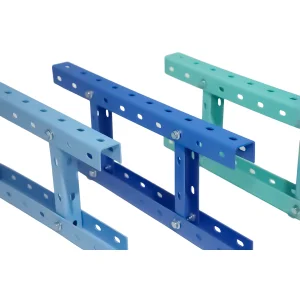
Critical facilities situated in seismic design categories C through F mandate rigid lateral and longitudinal 41-series strut channel bracing. Compliant with ASCE 7 and IBC requirements, our reinforced back-to-back strut channels ($41\times82\text{ mm}$) and serrated channel nuts prevent fastener shear and lateral drift under heavy cyclic seismic acceleration.
Comprehensive Metallurgical Selection Guide
The operational lifespan of a cable support system is strictly governed by the thermodynamic interaction between the base alloy, protective coating metallurgy, and ambient atmospheric corrosivity categories (C1 through CX as defined in ISO 12944-2).
| Substrate / Treatment | Coating Thickness / Standard | Corrosivity Category (ISO 12944) | Expected Design Life | Ideal Industrial Environments |
|---|---|---|---|---|
| Pre-Galvanized Steel (PG / Mill Galv) | $15 - 20\,\mu\text{m}$ (ASTM A653 / G90) | C1 - C2 (Very Low to Low) | 15 - 25 Years (Controlled) | Dry interior commercial buildings, office HVAC plenums, clean server rooms |
| Electro-Galvanized (EG) | $8 - 12\,\mu\text{m}$ (ASTM B633) | C1 (Very Low Indoor) | 10 - 15 Years (Controlled) | IT enterprise wiring, overhead telecommunication drop grids, clean dry spaces |
| Hot-Dip Galvanized (HDG) | $\ge 65 - 86\,\mu\text{m}$ (ASTM A123 / ISO 1461) | C3 - C4 (Medium to High) | 35 - 50+ Years (Open Air) | Outdoor switchyards, oil refineries, processing plants, highway bridges |
| Austenitic Stainless Steel 304 | Passivated base alloy ($18\%\text{ Cr}, 8\%\text{ Ni}$) | C3 - C4 (Industrial Washdown) | 50+ Years | Breweries, dairy and meat processing, pharmaceutical synthesis suites |
| Marine Stainless Steel 316 / 316L | Passivated ($16\%\text{ Cr}, 10\%\text{ Ni}, 2-3\%\text{ Mo}$) | C5 - CX (Marine Extreme) | 60+ Years | Offshore drilling platforms, desalination plants, coastal splash zones |
| Fiberglass Reinforced Polymer (FRP) | Vinyl ester or isophtalic resin matrix | CX / Acid Vapor Extreme | Immune to Galv/Electrolytic Decay | Battery manufacturing plants, chlorine dosing rooms, mining leach facilities |
| Thermoset Epoxy Powder Coated | $60 - 100\,\mu\text{m}$ electrostatic polymer | C2 - C3 + Color Coding | 20 - 30 Years | Security compartmentalization, color-coded voltage identification (RAL systems) |
Custom Engineering Solutions Across Worldwide Projects
From sub-zero cryogenic liquefaction trains to high-salinity coastal civil transport hubs, our factory technical teams deliver full-scale structural calculations, load-tested fittings, and site-tailored fabrication.
Shanghai Hongqiao International Airport (Civil Aviation Hub)
Deployment: Corrosion-resistant CT-series cable trunking and seismic strut channels spanning over 45,000 meters of subterranean baggage handling and technical tunnels. Engineered to withstand continuous dynamic vibration from jet operations while providing stringent Class-A fire isolation and high-capacity EMI shielding for navigational telemetry cables.
Qatar Offshore LNG Expansion (Extreme Marine / Thermal)
Deployment: Engineered custom profiled heavy-duty pultruded FRP cable trays and high-molybdenum SS316L mounting brackets. Designed for ambient temperatures exceeding 50°C coupled with intense Arabian Gulf maritime humidity, extreme UV degradation, and corrosive H2S sour gas environments without structural embrittlement.
Italian High-Speed Rail & Energy Distribution (EU Infrastructure)
Deployment: Continuous supply of batch-certified Hot-Dip Galvanized (HDG) cable ladders and accessories compliant with EN ISO 1461. High zinc coating thickness (≥85μm) verified via magnetic gauge batch testing, delivering maintenance-free outdoor service life across mountainous electrified rail lines.
Thailand Heavy Industrial Chemical Corridor (High Humidity Tropics)
Deployment: High-load FRP-lined hybrid steel cable tray systems engineered specifically to combat continuous high tropical relative humidity (95%+) and chemical process vapors. Provided zero maintenance over prolonged operations while eliminating thermal sagging across extended 6-meter outdoor support spans.
Paraguay Mega Agro-Industrial Processing Facility (Budget & Durability)
Deployment: Value-engineered heavy-duty pre-galvanized molded cable trays with patented reinforcement ribs. The structural rib geometry boosted transverse deflection resistance by 32%, allowing reduced steel sheet gauge thickness to lower freight and material procurement costs by 23% without sacrificing allowable load capacity.
The Next Era of Cable Management: Automation & Smart Pathways
Cable tray manufacturing is undergoing a technological revolution driven by robotic automation, automated roll-forming lines, green circular metallurgy, and integrated digital monitoring systems.
Continuous CNC Roll-Forming
Advanced high-speed 16-station automated roll-forming lines execute simultaneous in-line progressive punching, stamping, and profile bending. This guarantees dimensional tolerances within ±0.3mm across 3000mm standard lengths, ensuring perfect alignment at site splice joints.
Intelligent Thermal & Fiber Sensing
Future-ready pathways integrate embedded fiber-optic distributed temperature sensing (DTS) conduits. Facilities can track thermal build-up in real time, detecting micro-arcing and localized high-resistance hot spots along mission-critical busway and medium-voltage feeders.
Green Low-Carbon Steel Supply
To align with global Scope 3 decarbonization mandates, our factories utilize scrap-recycled Electric Arc Furnace (EAF) carbon steel coils. This reduces the embodied carbon footprint by up to 58% compared to traditional blast furnace routes, qualifying facilities for LEED and BREEAM certifications.
Robotic 3D Fiber Laser Cutting
Eliminating manual cutting torches on site, our precision robotic laser fabrication units generate customized junction radius sweeps (300mm, 600mm, 900mm), tee intersections, and offset cross reducers straight from client Building Information Modeling (BIM) files.
Factory Verification Protocols & Direct Factory Advantages
Working with an authentic direct manufacturer provides structural certitude and supply chain transparency that trading companies and regional distributors simply cannot reproduce.
Destructive Load Testing Rig
Every production batch undergoes destructive testing in accordance with NEMA VE-1 / IEC 61537 Section 6.4. Cable tray assemblies are loaded to ultimate collapse point using calibrated iron ingots or hydraulic rams to prove an absolute safety factor equal to or exceeding 1.5.
Neutral Salt Spray (ASTM B117)
Our metallurgical quality assurance labs conduct accelerated neutral salt spray (NSS) testing on electro-galvanized, pre-galvanized, and powder-coated specimens to verify zero red rust occurrence over mandatory 500-hour to 2,000-hour exposure cycles.
Comprehensive Mill Certifications
Direct supply includes EN 10204 Type 3.1 material test certificates specifying exact chemical composition (carbon, manganese, phosphorus, sulfur) and mechanical properties (yield point, tensile strength, elongation), fully traceable to the mother steel coil heat numbers.
Frequently Asked Questions for Project Engineers & Buyers
Clear, definitive technical answers addressing the critical specification, load calculation, and logistical considerations involved in sourcing wireways and cable tray systems directly from factory floors.
Engineered Cable Routing & Support Systems (Phase II Selection)
Review our heavy-duty ladder runs, perforated cable channels, wire mesh baskets, and fireproof powder-coated tray series manufactured under rigorous ISO 9001 factory production control.