
Engineered Heavy-Duty Raceways & Trunking Series
Precision cold-formed and extruded containment assemblies designed to Eaton B-Line dimensional specs, manufactured with premium finishes for harsh atmospheric environments.
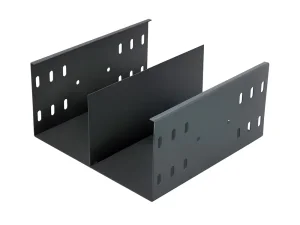
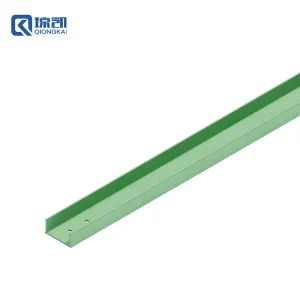
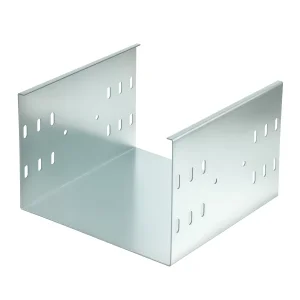
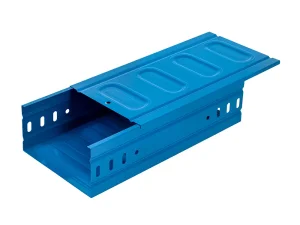
Evolutionary Dynamics of B-Line Aluminum Tray Architecture
Evaluating structural metallurgical transitions, life-cycle carbon metrics, and why extruded 6063-T6 aluminum has emerged as the definitive benchmark for global industrial infrastructure.
Structural Strength-to-Weight Ratio
Traditional structural hot-dip galvanized (HDG) carbon steel creates massive dead-load penalties on building superstructures and offshore topside decks. Eaton B-Line compatible aluminum cable tray systems, utilizing extruded structural grade 6063-T6 or 6041-T6 aluminum alloys, provide an exceptional strength-to-weight profile. Aluminum weighs roughly one-third (approximately 2.7 g/cm³) of structural steel (7.85 g/cm³), significantly diminishing installation labor overhead, eliminating the necessity for heavy structural support cranes, and minimizing seismic base reactions in accordance with ASCE 7-22 structural load criteria.
Furthermore, the cold-work hardening and natural artificial aging (T6 temper) deliver a yield strength exceeding 215 MPa (31,000 psi). This enables span clearances extending past 6 to 9 meters without plastic deformation, making it ideal for large-scale bridge crossings and long-span utility piperacks.
Inherent Passive Passivation & Corrosion Defense
Unlike carbon steel, which relies entirely on barrier coatings such as zinc galvanizing or epoxy painting that can chip during pull-in or transit, aluminum exhibits immediate, spontaneous passivation. Upon atmospheric exposure to oxygen, an amorphous microscopic film of aluminum oxide (Al₂O₃) instantaneously forms across the surface. This inert layer is chemically bonded and self-healing if scratched during pulling of high-voltage feeder conductors.
In high-salinity marine environments (ISO 12944 Category C4 to C5-M/CX), our proprietary anodized or heavy-wall copper-free architectural grade aluminum alloys withstand hundreds of hours of salt spray exposure without pitting. This makes the B-Line catalog standard universally preferred for coastal LNG terminals, marine platforms, and chemical refining facilities.
Total Life-Cycle Cost (LCC) & Zero Zinc Whiskers
Advanced electronics and high-density computing server halls face devastating electrical short-circuits caused by "zinc whiskers"—microscopic conductive zinc filaments that peel off electro-galvanized steel over time and enter the airflow of server racks. Non-ferrous B-Line aluminum cable trays eliminate zinc whisker contamination completely.
Additionally, while the upfront material cost per foot of aluminum may sit marginally above uncoated carbon steel, the life-cycle cost assessment proves dramatically superior: zero field touch-up painting, 50% faster field modification using standard tungsten-carbide saw blades, significantly reduced field drilling resistance, and a 100% recyclable end-of-life residual scrap value.
B-Line Geometry, NEMA VE 1 Classes & Load Mechanics
Precision engineering parameters conforming to NEMA VE 1-2017, CSA C22.2 No. 126.1-17, and IEC 61537:2021 code compliances for heavy structural electrical infrastructure.
Extruded I-Beam vs. C-Channel Side Rails
The structural backbone of genuine B-Line style aluminum trays lies in the side rail profile. The proprietary extruded I-beam configuration places maximum cross-sectional area at the extreme structural fibers (top and bottom flanges), dramatically optimizing the moment of inertia (Ix) and section modulus (Sx) while minimizing total aluminum mass.
For installations requiring ultra-high continuous cable load capacities, the I-beam side rail features continuous interior slots to facilitate clamp connections without external drilling. Conversely, standard C-channel flanges are optimized for compact runs and overhead clearances where space envelopes are heavily constrained.
Welded vs. Mechanically Swaged Rungs
Ladder trays rely on cross-rungs spaced at 6", 9", 12", or 18" on-center. In our Shanghai manufacturing plants, rungs are joined using two precision methods:
1. Robotic Swaged Locking: Rungs are hydraulically expanded inside the extruded rail cavity under high tonnage, creating an ultra-clean mechanical cold-fusion joint free of heat-affected zones (HAZ). This ensures zero reduction in tensile strength.
2. Full TIG/MIG Robotic Welding: For offshore dynamic environments, rungs are continuously welded on both the inside and outside of the rail, resisting rotational twisting caused by massive single-conductor short-circuit magnetic forces.
Deflection Calculation & NEMA Classes
Cable tray structural integrity is governed by simple-beam bending formulas where maximum center deflection (Δ) is limited by:
Δ = (5 × w × L⁴) / (384 × E × I)
Our standard B-Line aluminum catalog encompasses NEMA classes 8C, 12C, 16C, 20B, and 20C. A 20C rating signifies the assembly safely supports 100 lbs per linear foot (149 kg/m) across an unsupported 20-foot (6.1 meter) span with a safety factor of 1.5, holding deflection tightly under the L/200 standard limit.
| Material Class | Yield Strength (MPa) | Density (g/cm³) | Corrosion Rating (ISO 12944) | Electrical Conductivity | Installation Speed Multiplier |
|---|---|---|---|---|---|
| B-Line 6063-T6 Extruded Aluminum | 215 - 240 | 2.70 | C4 / C5-M Marine | ~53% IACS (Excellent EGC Grounding) | 1.0x (Baseline - Fastest) |
| Hot-Dip Galvanized Carbon Steel (HDG) | 235 - 355 | 7.85 | C3 / C4 Industrial | ~12% IACS (Requires Dedicated Jumper) | 2.2x (Heavier, Crane Required) |
| Stainless Steel (AISI 316 / 316L) | 290 - 310 | 8.00 | CX Extreme Offshore | ~2.5% IACS (Poor Grounding Conductor) | 2.8x (Difficult Field Drilling/Cutting) |
| FRP / GRP Pultruded Fiberglass | 140 - 200 | 1.85 | Extreme Acid / Chemical | Non-conductive (Zero Grounding) | 1.5x (Hazardous Silica Dust Cutting) |
EPC Procurement Dynamics & Freight Optimization
Solving container cube efficiency, mill certification tracking, and localized compliance for major multinational general contractors and distributors.
Bill of Quantities (BOQ) Takeoff
Navigating large-scale EPC tenders demands precision itemization. Our dedicated engineering desk parses complex AutoCAD, Revit, and BIM models to extract exact linear raceway quantities, transition reducers, horizontal 90°/60°/45° elbows, vertical inside/outside risers, and structural expansion guide fittings, eliminating over-purchasing waste.
High-Density Nesting Packaging
Ocean freight costs can cripple project margins if cable trays are shipped pre-assembled with empty air volume. Shanghai Qiongkai utilizes high-density "nested" bundle packaging for straight sections or dis-assembled "knock-down" (KD) kits. This increases 40-foot High Cube (40HQ) container utilization by up to 320% compared to traditional loose-loading practices.
EN 10204 3.1 Traceability
Every metric ton of aluminum billets and coiled strip fed into our roll-forming and extrusion presses is traceable via EN 10204 Type 3.1 Inspection Certificates. We document chemical composition (Si, Fe, Cu, Mn, Mg, Cr, Zn, Ti) and mechanical properties (tensile, yield, elongation) for rigorous client verification and project sign-off.
Port Proximity & Speed-to-Site
Situated in the Songjiang industrial corridor of Shanghai, our facilities sit within direct arterial proximity to both Shanghai Port (Yangshan Deepwater Port) and Waigaoqiao Terminals. This logistical advantage ensures container dispatch within hours of factory final acceptance testing (FAT), reducing lead times by 7 to 14 days.
Macro-Sector Containment Solutions
Engineered performance across mission-critical facilities, extreme chemical exposure, and global commercial transit hubs.
Hyperscale AI Data Centers
Modern artificial intelligence computing clusters require thousands of high-capacity fiber and copper runs operating under severe heat densities. Our open-ladder B-Line aluminum configuration provides 100% natural free-air cable ventilation, drastically slashing HVAC chiller power loads. Aluminum’s natural electromagnetic neutrality prevents eddy-current induction heating around high-current bus drops and eliminates zinc whisker short-circuit hazards entirely.
Offshore Oil & Gas / LNG Facilities
Proven in mega-developments like the Qatar offshore LNG expansion, marine-grade aluminum raceways withstand constant offshore salt fog, high humidity, and intense ultraviolet exposure. Designed with stainless steel 316 hardware and dielectric isolation pads, our systems prevent galvanic corrosion when mounting directly to structural carbon steel bulkheads.
Transit Hubs & Clean Architecture
From the corrosion-resistant cable trunking installations at Shanghai Hongqiao International Airport to international rail terminals, our precision extruded aluminum systems deliver modern architectural aesthetics. Trays can remain exposed with a natural satin bead-blasted finish or receive custom architectural powder coatings matched to any international RAL standard.
Seismic Bracing & Electrical Grounding Assurance
Meeting International Building Code (IBC) seismic restraint criteria and National Electrical Code (NEC) equipment grounding standards.
Equipment Grounding Conductor (EGC) Compliance
According to NEC Article 392 and NFPA 70, aluminum cable trays may be utilized as the Equipment Grounding Conductor (EGC) provided they are UL classified and feature sufficient cross-sectional area. The high electrical conductivity of our 6063-T6 aluminum side rails (over four times that of equivalent steel) provides an exceptionally low-impedance ground path during high-magnitude ground-fault events. High-conductivity tin-plated copper bonding jumpers are supplied with pre-punched serrated bonding washers to ensure permanent bonding across expansion splice plates.
Seismic Trapeze Strut Support Systems
Under seismic events (IBC Seismic Design Categories C through F), raceway systems experience extreme lateral and longitudinal shear acceleration. Shanghai Qiongkai fabricates complete matching strut channel systems (41×21, 41×41, and 41×82 back-to-back channels) engineered with serrated flanged channel nuts. Combined with 45° rigid or cable sway-brace brackets, our certified trapeze systems prevent sway damage and protect emergency power circuits during seismic oscillations.
Thermal Expansion Joint Engineering
Aluminum has a thermal expansion coefficient of approximately 23 × 10⁻⁶ m/(m·°C)—roughly double that of carbon steel. On extensive outdoor piperacks experiencing seasonal temperature swings of 50°C (122°F), an aluminum cable tray will expand approximately 23 mm per 20-meter run. We engineer slotted expansion splice plates and step-bolted teflon glide pads that absorb thermal movement without buckling side rails or fatiguing hold-down clamps.
Technology Roadmap: Smarter, Greener Containment
Pioneering hydro-powered low-carbon aluminum smelting, robotic high-speed swaging lines, and native BIM Level 400 digital twin integration.
Low-Carbon Primary Ingot Smelting
In alignment with global ESG decarbonization mandates and the EU Carbon Border Adjustment Mechanism (CBAM), Shanghai Qiongkai is shifting primary aluminum sourcing toward renewable hydro-electric and solar-powered smelters. This low-carbon green aluminum limits embedded cradle-to-gate carbon emissions to below 4.0 kg CO₂e per kg of finished aluminum, enabling our clients to achieve coveted LEED Platinum and BREEAM Outstanding green building certifications.
BIM LOD 400 Digital Component Libraries
Modern mega-projects are fully constructed digitally before site ground is broken. We provide comprehensive Autodesk Revit and IFC parametric component libraries built to Level of Development (LOD) 400. Engineers can directly incorporate accurate side-rail I-beam profiles, minimum bend radii, weight matrices, and thermal expansion offsets directly into MEP coordination software, eliminating field collision clashes between cable trays, HVAC ducting, and process piping.
Automated High-Speed Swaging Robotics
Our continuous factory upgrades incorporate automated multi-axis robotic cold-swaging and punching systems. Automated optical laser sensors inspect rung alignment, hole punch tolerance (±0.2 mm), and wall thickness consistency across every 6-meter length in real time. Defective components are automatically flagged and rejected prior to packaging, ensuring 100% plug-and-play fitment on site without costly contractor re-drilling.
Frequently Asked Engineering & Procurement Questions
Critical technical considerations answered directly by our senior structural containment engineering team.
What are the key structural distinctions between B-Line aluminum cable trays and generic market trays?
Can extruded aluminum cable trays be installed in direct contact with hot-dip galvanized steel structural beams?
How does Shanghai Qiongkai support custom profiling, rung pitch variations, and international project certifications?
What are the ampacity derating advantages of open-ladder aluminum cable trays over enclosed solid-bottom trunking?
What packaging protocols are implemented to guarantee zero freight surface abrasion during multi-week ocean transit?
Specialized Modular Framing, Fittings & Accessories
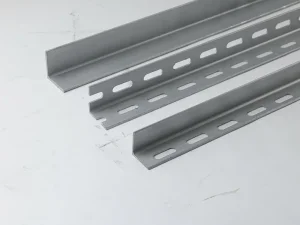
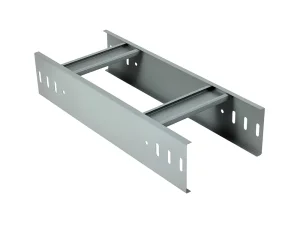
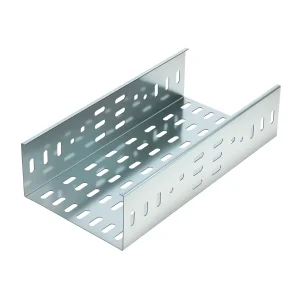
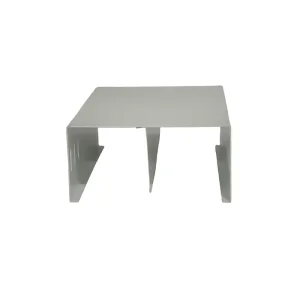
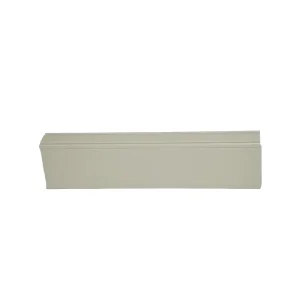
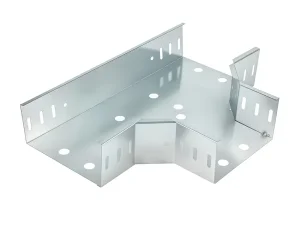
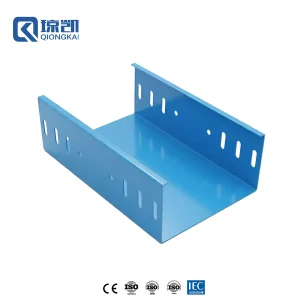
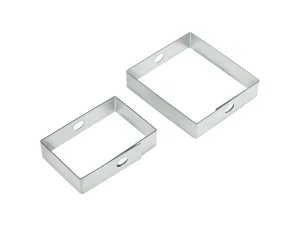
Complete structural coordination items: pre-galvanized framing angles, partitioned trunking channels, split plates, and precision molded accessories.
Request the Complete B-Line Aluminum Cable Tray Engineering Catalog
Access our comprehensive 280-page technical catalog containing NEMA load graphs, structural moment of inertia matrices, Revit BIM families, and factory-direct volume pricing for global infrastructure tenders.