
High-Performance Cable Tray & Strut Channel Assemblies
Explore precision-rolled structural cable trays and channels configured for continuous electrical runs, telecommunication trunking, and hazardous area cabling.
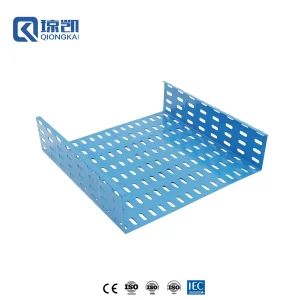
Powder Coated Carbon Steel PG/HDG Cable Tray with Ribs - RAL5015
View Product Specs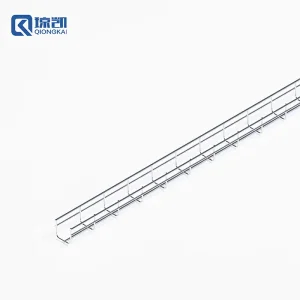
GI Galvanized Wire Mesh Cable Basket Tray 50*50 System
View Product Specs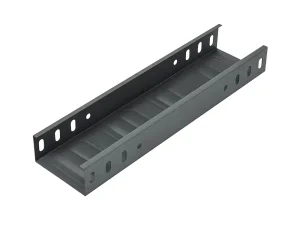
Wholesale Grey Pre-Galvanized Powder Coated Molded Cable Tray
View Product Specs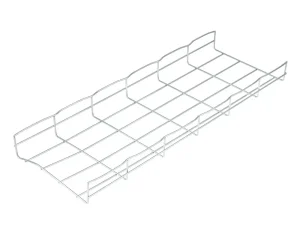
Pre-Galvanized Grid & Wire Mesh Type Industrial Cable Tray
View Product Specs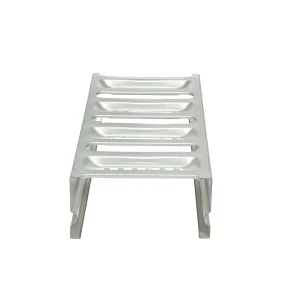
PG 200*100 Heavy-Duty Cost-Optimized Structural Cable Tray
View Product Specs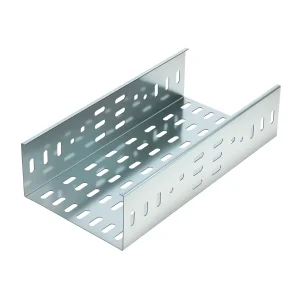
Pre-Galvanized Perforated Ventilation Cable Tray 200*100mm
View Product Specs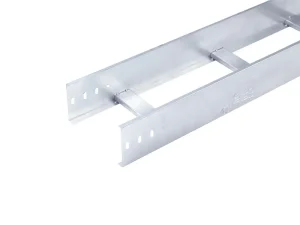
Heavy Industrial Pre-Galvanized Ladder Type Cable Tray
View Product Specs
High-Capacity PG Industrial Ladder Tray 800*200 Structural Run
View Product SpecsEngineering Architecture of C Channel (Strut Profile) Cable Trapeze Systems
A comprehensive analysis of cold-roll profiling, section modulus mechanics, dynamic load sharing, and seismic anchoring configurations for modern industrial construction.
Continuous Inward Return Lips
The distinctive inward-curling lips of the C channel (commonly 41x41mm or 41x21mm series) are cold-formed with micron-grade serrations. These teeth mechanically interlock with the grooves of channel spring nuts (strut nuts), converting longitudinal clamping forces into shear resistance that completely prevents slip under thermal expansion and high-amplitude vibration.
Section Modulus & Bending Rigidity
Fabricated predominantly from structural carbon steel grades (such as Q235B, Q355B, or ASTM A1011 SS Grade 33), C-channels yield an exceptional strength-to-weight ratio. The engineered geometry distributes bending moments evenly across horizontal trapeze spans, preventing mid-span deflection exceeding L/200 under intense cable filling loads mandated by NEMA VE 2 standards.
Tri-Axial Seismic Bracing Integration
Modern electrical infrastructure demands seismic resilience under building code standards like IBC, ASCE 7, and GB 50981. C-channels act as rigid struts in 3D diagonal cross-braces. By integrating seismic hinge connectors, back-to-back 41x82mm C-channels absorb lateral shear forces and longitudinal seismic shocks during critical ground accelerations.
Critical Information Gain: Slotted vs. Plain C-Channel Performance Trade-offs
While slotted C channels (featuring standard 14x28mm or 11x25mm elongated punch holes spaced at 50mm centers) dramatically cut installation time by enabling fast insertion of threaded rod drop hangers and cable tray hold-down clamps without on-site cutting or welding, punch patterns reduce cross-sectional area by roughly 18% to 22%. Structural engineers must factor this reduction into their Euler buckling formulas and allowable uniform load capacity tables.
Why Tier-1 EPC Contractors Source C Channels Directly from Chinese Factories
Unmatched raw material upstream integration, advanced automated multi-stage roll-forming lines, and comprehensive export logistics consolidate China's dominance in structural cable management manufacturing.
Direct Mill Procurement & Continuous Steel Coil Quality
Chinese hub manufacturers establish direct volume contracts with state-tier steel mills (such as Baosteel and Shougang). This vertical supply integration secures hot-rolled and cold-rolled continuous steel strip coils with verified tensile consistency (yield strength minimum 235-355 MPa) and pristine chemical composition (strict sulfur and phosphorus thresholds), preventing micro-fractures along cold-bent channel edges.
Automated CNC Cold Roll-Forming Lines
Leading factories in Shanghai and Zhejiang deploy 14-to-18 station automated tandem roll forming machines. Hydraulic uncoilers, continuous high-speed servo punch dies, and optical laser tracking systems maintain continuous dimensional tolerances within ±0.15mm across the entire 6000mm extrusion length. This level of precision eliminates costly alignment bottlenecks on international job sites.
Eco-Compliant High-Capacity Galvanizing & Surface Treatment
China's environmental modernizations have transformed industrial surface finishing. Automated, closed-loop hot-dip galvanizing kettles equipped with pulse bag-filter dust collectors deliver uniform zinc deposition conforming strictly to ASTM A123, BS EN ISO 1461, and AS/NZS 4680. Modern pre-treatment pickling lines ensure zero acid residue beneath powder-coated polyester layers.
Export Packaging, Container Nesting & Port Proximity
Situated within 50 kilometers of Shanghai Port (Yangshan and Waigaoqiao), advanced packaging methodologies maximize container volume utilization. C-channels are systematically grouped into nested bundles with customized wooden dunnage, anti-scratch PE film wrapping, rust-inhibiting VCI desiccants, and high-tensile steel strapping, lowering global sea freight costs per metric ton by up to 28%.
Corrosion Protection Matrix: Selecting the Right C Channel Finish
Environmental failure in electrical cable support systems is overwhelmingly driven by premature galvanic and atmospheric corrosion. Map your project's ISO 12944 classification to the correct metallurgical treatment.
| Corrosion Category | Typical Atmospheric Conditions | Recommended Strut / Channel Finish | Nominal Coating Thickness | Expected Design Life |
|---|---|---|---|---|
| C1 (Very Low) | Heated indoor environments, dry cleanrooms, offices | Electro-Galvanized (EG) / Zinc Plated | 8 – 15 μm | 25+ Years |
| C2 (Low) | Unheated storage, indoor sports halls, low pollution | Pre-Galvanized (PG) Mill Galvanized Steel | 15 – 20 μm (Z180 - Z275) | 15 – 20 Years |
| C3 (Medium) | Urban and industrial atmospheres, moderate SO2, food plants | High-Build Thermoset Powder Coated over PG | 60 – 100 μm (Powder) | 15 – 25 Years |
| C4 (High) | Chemical manufacturing, coastal regions, outdoor infrastructure | Hot-Dip Galvanized (HDG) Post-Fabrication | 55 – 85 μm (≥ 500 g/m²) | 20 – 40 Years |
| C5 / CX (Extreme) | Offshore oil & gas rigs, marine splash zones, high salinity | Austenitic Stainless Steel (SS316 / SS316L) | Passivated Bare Metal (Native Cr2O3) | 50+ Years |
Mission-Critical Application Environments
From cryogenic liquefied natural gas handling facilities to hyperscale data center overhead grids, engineered C-channel struts deliver non-negotiable structural reliability.
Hyperscale Cloud Data Halls
Overhead ceiling grids in modern data centers demand high-capacity wire basket and solid trunking routing. Slotted white powder-coated C-channels suspend dense optical fiber and copper cable bundles over server racks. The high-durability finish prevents zinc whisker formation—a microscopic conductive hazard notorious for causing short circuits on sensitive compute PCBs.
LNG Plants & Marine Platforms
Marine environments feature airborne sea salt, extreme thermal fluctuations, and chemical fumes. Stainless steel 316L C-channels paired with heavy-duty FRP or hot-dip galvanized ladder trays provide unmatched chloride pitting resistance. Custom-stamped slotted channels absorb continuous wind-shear vibrations without loosening torque-tightened spring nut interfaces.
Solar PV Balance of System (BOS)
Utility-scale solar farms deploy thousands of kilometers of exterior DC and AC string cabling. Cold-formed C-channels act as foundational mounting purlins and under-tracker tray supports. Using pre-galvanized or hot-dip coated channels speeds up installation across irregular terrain while resisting continuous UV exposure and soil-level dampness.
Underground Metro & Rail Systems
Subway tunnels generate persistent piston air pressure waves from high-speed trains, alongside damp subterranean humidity. Specialized back-to-back 41x82mm heavy-gauge HDG C-channels mounted to concrete tunnel arches absorb cyclic fatigue loads, ensuring zero sag in critical fire-survival emergency signal and high-voltage power conduits.
Emerging Technological Trends in Structural Cable Supports
The global strut channel and cable management industry is rapidly moving toward digitized building information modeling, automated modularity, and green manufacturing.
BIM 3D Integration & Digital Twin Libraries
Global architectural design firms require precise Revit, AutoCAD MEP, and IFC BIM families for all structural supports. Modern factories provide digitized parametric libraries with verified weight, section properties, and thermal expansion coefficients. This level of modeling prevents clashes during design phases, well before materials arrive on the construction site.
Modular Bolt-Free Fastening Mechanisms
As field labor costs rise across North America, Europe, and Australia, traditional spring-nut and hex-bolt connections are making way for quick-locking push-turn brackets. These snap-in structural connectors reduce installation labor hours by up to 45%, while maintaining the dynamic pull-out and slip resistance ratings of conventional systems.
Low-Carbon Recycled Steel & Eco-Galvanizing
International environmental targets require verified product carbon footprints. Forward-thinking manufacturers are adopting Electric Arc Furnace (EAF) steel coils made with high ratios of scrap steel, alongside trivalent chrome passivation systems. These production shifts deliver verified Environmental Product Declarations (EPDs) required for LEED and BREEAM building certifications.
International Procurement Framework: Mitigating Risks in High-Volume Sourcing
Purchasing wholesale C-channels requires rigorous QA verification beyond baseline invoice pricing. Implement these core checkpoints to ensure total site compliance.
Mill Test Reports (MTR) & EN 10204 3.1 Certification
Require complete EN 10204 Type 3.1 inspection certificates tied directly to steel master heats. These reports confirm precise yield strength, tensile limits, elongation percentages, and spectroscopic carbon analysis, ensuring the structural steel delivers the exact physical performance promised in engineer-stamped design submittals.
Magnetic Induction Coating Thickness Verification
Field thickness testing on hot-dip galvanized profiles via electromagnetic induction gauges (such as Elcometer tools per ASTM B499) must be conducted across all sides: outer webs, inside walls, and return lips. Incomplete fluxing or insufficient zinc immersion can create thin spots around return corners, leading to accelerated rust streaks.
Tolerances, Camber & Flare Geometric Inspection
Strut channels with excessive camber (longitudinal bow) or flared outer edges jam sliding channel nuts and misalign threaded drop rods. Factory inspection protocol requires checking straightness against strict thresholds (under 1.5mm per linear meter) and verifying that internal opening dimensions hold tightly to 22.2mm (±0.3mm).
Total Cost of Ownership (TCO) vs. Landed Unit Rate
Experienced EPC buyers calculate TCO by balancing landed component pricing with installation labor. Sourcing bundled kits—channels cut to project lengths with de-burred edges, pre-fitted end caps, and custom bracketry—drastically cuts on-site cutting, field grinding, zinc spray touch-ups, and waste disposal fees.
Engineering & Procurement Inquiries: Expert Answers
Direct technical responses to the practical specification and purchasing questions commonly raised by consulting engineers, estimators, and project site managers.
What are the dimensional differences between standard 41x41mm and 41x21mm C channels?
How do hot-dip galvanized and pre-galvanized C channels compare in service life?
What torque values should be applied to channel nuts in C channel assemblies?
• M8 (5/16") Hardware: 25 Nm (19 ft-lbs)
• M10 (3/8") Hardware: 45 Nm (33 ft-lbs)
• M12 (1/2") Hardware: 70 Nm (52 ft-lbs)
Under-torquing leads to channel nut slip under dynamic load, while over-torquing can deform the inward return lips of the channel, weakening the joint.
Can C-channel strut systems safely support stainless steel or aluminum cable trays?
What are the maximum recommended support spans for C-channel trapeze systems under NEMA VE 2?
How do factory punch slot configurations impact installation efficiency?
What container packaging methods prevent damage during ocean transit?
Heavy-Duty Trunking, Management Racks & Specialized Profiles
Complete your balance of plant with telecom routing trays, reinforced perforated trays, and corrosion-resistant composite FRP profiles.
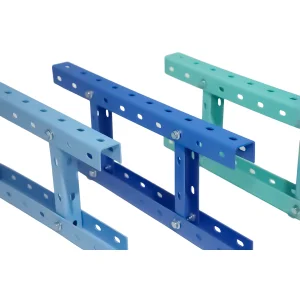
Durable Powder-Coated Telecom Cable Management Runway Rack
View Product Specs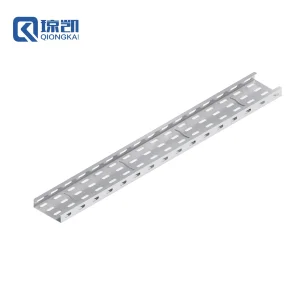
Reinforced Medium-Duty PG/HDG Perforated Cable Tray 100*25
View Product Specs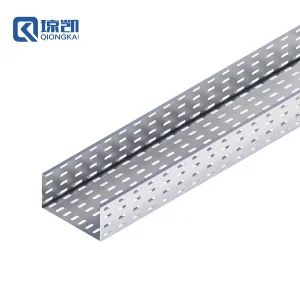
Heavy Commercial PG/HDG Perforated Cable Tray 200*100
View Product Specs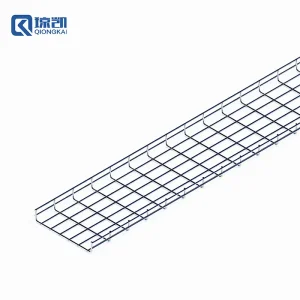
Precision Pre-Galvanized Wire Grid Cable Tray 300*50
View Product Specs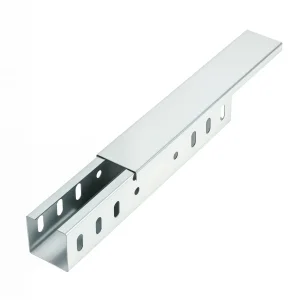
Fully Enclosed Pre-Galvanized Cable Trunking Series
View Product Specs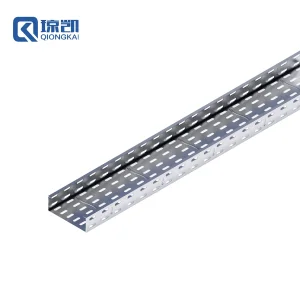
Reinforced Medium-Duty PG/HDG Perforated Cable Tray 150*50
View Product Specs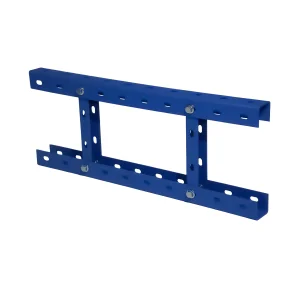
Industrial Blue Powder-Coated Ladder Cable Rack System
View Product Specs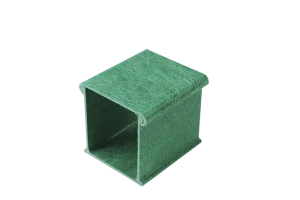
Non-Conductive Anti-Corrosive FRP Trough Cable Tray 50mm
View Product SpecsLooking for Custom Roll-Formed Profiles or Wholesale Project Pricing?
Our structural application engineers can review your project's Bill of Quantities (BOQ), calculate deflection and seismic brace requirements, and supply customized CAD shop drawings. Receive direct factory-gate pricing with guaranteed mill lead times.