
Factory Direct Catalog
Engineered Cable Routing Solutions (Part I)
Precision-manufactured structural trays and support components matching wholesale export configurations.
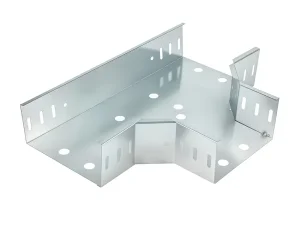
Buy Pre Galvanized TEE for cable tray Manufacturers, Price
Inquire Specification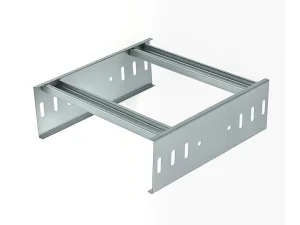
Wholesale Pre Galvanized light weight cable ladder Manufacturer, Price
Inquire Specification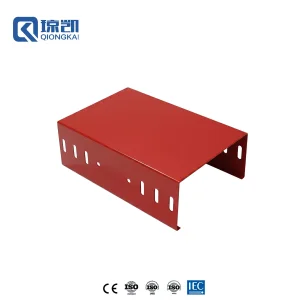
Wholesale Powder Coated Carbon Steel PG Pre Galvanized Cable Trunking Trough Type Channel - RAL3020 Red 200*100 Suppliers, Factory
Inquire Specification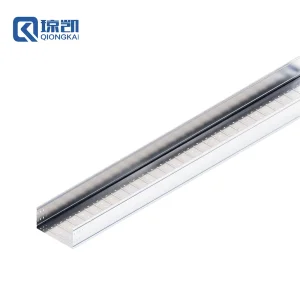
Buy Cost Saving Heavy Duty Reinforced Molded Pre Galvanized Cable Tray 400*200 Manufacturers, Factory
Inquire Specification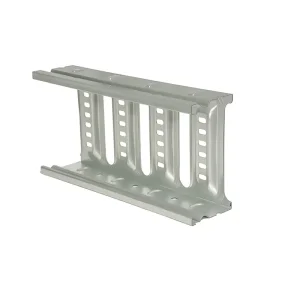
Wholesale Pre Galvanized Customizable Ladder Heavy Duty Cable Tray Manufacturers, Price
Inquire Specification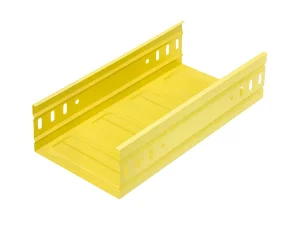
Wholesale Fireproof yellow Pre Galvanized Powder coated molded cable tray Manufacturer, Suppliers
Inquire Specification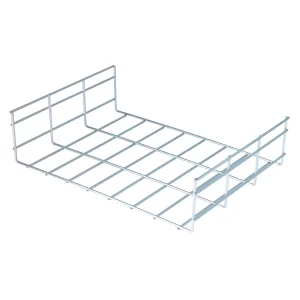
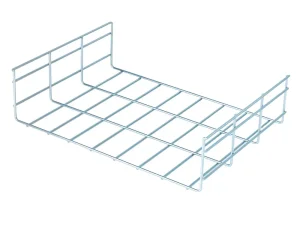
Wholesale Pre Galvanized grid Cable tray 500mm Manufacturers, Supplier
Inquire Specification
Technical Engineering Specification
Executive Overview: The Critical Role of 300mm x 50mm Cable Trays
In modern industrial electrification and hyperscale digital infrastructure, containment systems are no longer treated as passive mechanical brackets. A 300mm width by 50mm side-rail height (depth) cable tray represents one of the most critical dimensional profiles across engineering, procurement, and construction (EPC) projects worldwide.
This specific 6:1 width-to-depth geometric ratio is engineered specifically for dense horizontal signal, data distribution, and single-tier medium voltage (MV) power runs. By preserving a low 50mm side profile, engineering designs minimize ceiling plenum obstruction while delivering an expansive 300mm bed surface. This layout maximizes thermodynamic heat dissipation, completely eliminating destructive current-derating penalties governed by standards such as IEC 60364-5-52 and NEC Article 392.
Structural Mechanics & Load Deflection Dynamics
The engineering validation of a 300x50mm profile relies heavily on Section Modulus (Z) and Moment of Inertia (I) calculated along the transverse and longitudinal axes. When evaluating cable tray structural capability under NEMA VE 1 / CSA C22.2 No. 126.1 guidelines, a tray span must safely withstand its intended cable load (plus wind or seismic parameters) with a guaranteed safety factor of 1.5, restricting mid-span deflection to less than L/200.
| Nominal Size | Material Thickness | Support Span (m) | Working Load Capacity (kg/m) | Max Deflection @ Full Load |
|---|---|---|---|---|
| 300mm x 50mm (Solid Bottom) | 1.5 mm | 1.5 m | 85 kg/m | 3.2 mm |
| 300mm x 50mm (Perforated PG) | 1.5 mm | 2.0 m | 62 kg/m | 5.1 mm |
| 300mm x 50mm (Rib-Reinforced) | 2.0 mm | 2.0 m | 110 kg/m | 4.3 mm |
| 300mm x 50mm (HDG Heavy-Duty) | 2.0 mm | 3.0 m | 58 kg/m | 7.8 mm |
Reinforcing ribs along the 300mm bottom pan prevent localized "oil-canning" and transverse buckling under high concentrated loads. By incorporating a continuous outward-flanged edge (return lip design), the 50mm side-walls act as unified load-bearing beams while eliminating rough edges that could compromise outer cable sheaths during multi-conductor pull operations.
Metallurgical Metallurgy & Environmental Finish Profiles
Material specification dictates the lifecycle cost (LCC) and operational survivability of containment corridors. Below is an analytical breakdown of metallurgies standardly manufactured for the 300x50mm profile:
Pre-Galvanized Steel (PG / GI)
Fabricated from mill-galvanized continuous sheet steel (EN 10346 / ASTM A653) featuring a zinc coating mass ranging from Z140 to Z275 (10-20µm). Optimized for dry commercial building interiors, HVAC plenums, and climate-controlled data halls.
Hot-Dip Galvanized (HDG)
Post-fabrication total batch immersion into molten zinc baths conforming to ISO 1461 / ASTM A123. Yields an alloyed protective coating exceeding 65–85µm thickness, self-healing sheared perforations for outdoor and coastal deployment.
Austenitic Stainless (304 / 316L)
Engineered for high-salinity marine or chemical exposure. SS316 with 2-3% Molybdenum exhibits exceptional pitting resistance equivalent numbers (PREN ≥ 23-25), essential for offshore LNG processing installations and chemical sanitization zones.
Macro Industry Solutions
Mission-Critical Sector Deployments
Tailored 300x50mm containment architectures optimized for rigorous international standard frameworks.
AI Data Centers & Hyperscale Telecom
High-density Cat6A, Cat8, and optical MPO multi-fiber trunking demands low-depth 50mm containment to fit above containment aisles. Powder-coated 300mm wire mesh and slotted trays provide superior thermal cooling to eliminate transmission packet drops.
Clean Energy & Utility Solar Corridors
Photovoltaic combiner output runs utilize 300mm HDG and aluminum perforated profiles mounted along rooftop racking. The shallow 50mm depth reduces wind aerodynamic drag profiles while providing sufficient area for unbunched solar strings.
Heavy Industrial, Mining & Marine
In harsh oil refineries, paper mills, and marine dry docks, 300x50mm fiberglass-reinforced polymer (FRP) and 316L trays isolate control and instrument instrumentation from toxic gases, H2S environments, and harsh saltwater sprays.
Manufacturing Excellence
China Factory 4.0: Supply Chain Agility & Scalability
Inside advanced automated manufacturing operations engineered for ultra-low scrap rates and global volume supply.
Roll Forming Automation
Integrated continuous cold-roll forming lines produce 300x50mm trays in variable custom lengths (2.44m to 6.0m) with zero tooling-change downtime.
CNC Punch Matrixing
High-speed hydraulic CNC servo punching creates patented cooling perforation matrix patterns without forming edge burrs or internal stresses.
Automated QA & Optical Scans
Laser thickness inspection and digital zinc-coating gauges continuously scan production streams to guarantee compliance with ASTM/BS standards.
Integrated Export Logistics
Precision nesting of 300x50 profiles maximizes container cube capacity by 35%, cutting ocean shipping freight costs per running meter.
Global Procurement Strategies: Minimizing TCO for Wholesale Buyers
Tier-1 EPC purchasers managing multi-million-dollar infrastructure deployments evaluate suppliers beyond baseline ex-factory pricing. Minimizing Total Cost of Ownership (TCO) across international shipments requires strict verification across four operational pillars:
- Nesting & Cube Optimization: Inter-stacking of 300x50mm trays inside wider 400mm or 500mm profiles during containerization sharply reduces oceanic freight charges.
- Accessory Ecosystem Integration: Ensuring rapid coupling systems, snap-on covers, quick-splice plates, and standard 41x41 strut mounting brackets are sourced alongside the main tray runs, preventing field modification costs.
- Mill Traceability: Mandatory delivery of certified Material Test Reports (MTR / EN 10204 Type 3.1) detailing yield strengths, elongation limits, and specific metallurgical alloy chemistry for every coil batch.
Future Horizon
Technology Roadmap: Intelligent Cable Containment
Anticipating structural engineering trends, material innovations, and digital compliance for 2026–2030.
BIM & Digital Twin Native Integration
Parametric Revit families and digital BIM library blocks for 300x50mm tray systems with pre-calculated clash-detection boundary boxes and structural dead-weight loading models.
Eco-Zinc Magnesium Alloys (ZM)
Transitioning toward Zinc-Aluminum-Magnesium (Zn-Al-Mg) bath treatments offering up to 300% greater self-healing corrosion resistance than traditional HDG, reducing raw zinc consumption and life-cycle carbon footprints.
IoT Thermal & Vibration Telemetry
Integration points for distributed fiber-optic temperature sensors (DTS) and load cell monitors along 300mm tray channels to diagnose hot-spots and seismic displacement in real time.
Factory Direct Catalog
Engineered Cable Routing Solutions (Part II)
Precision-manufactured structural trays and support components matching wholesale export configurations.
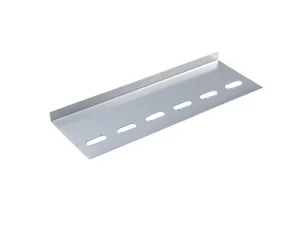
Wholesale Pre-Galvanized Connections spare parts Manufacturers, Factory
Inquire Specification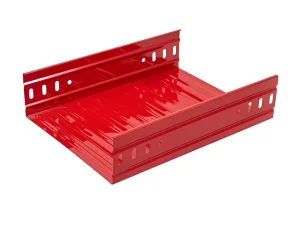
Buy Fireproof Red Pre Galvanized Powder coated molded cable tray Supplier, Price
Inquire Specification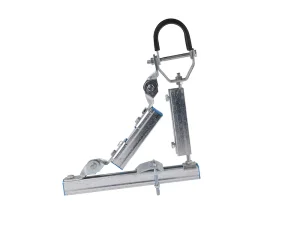
Buy Reliable heavy duty seismic resistant bracket Factories, Price
Inquire Specification
Wholesale Cost Saving Heavy Duty Reinforced Molded Pre Galvanized Cable Tray 200*100 Supplier, Price
Inquire Specification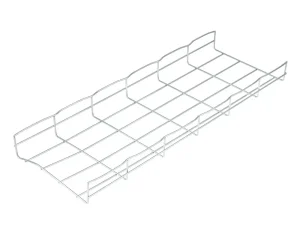
Wholesale Pre Galvanized grid cable tray 100mm Supplier, Factories
Inquire Specification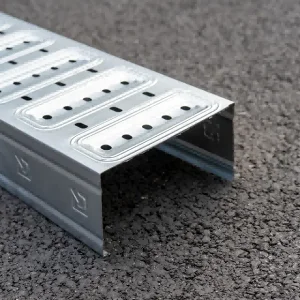
Buy Pre-Galvanized Perforated Energy saving cable tray 200*100 Manufacturers, Suppliers
Inquire Specification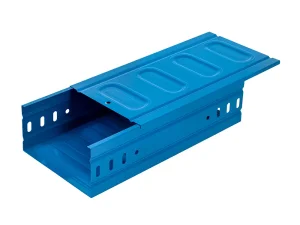
Wholesale Blue Pre Galvanized Powder coated molded cable tray Manufacturer, Supplier
Inquire Specification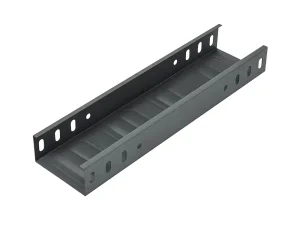
Wholesale Grey Pre Galvanized Powder coated molded cable tray Factory, Price
Inquire Specification
Engineering Knowledge Base
Frequently Asked Technical & Procurement Questions
Critical insights for project engineers, specifiers, and global procurement managers.
The 300x50mm profile presents an optimal 6:1 width-to-depth geometric ratio. This broad bed configuration allows single-layer conductor laying, which dramatically improves ampacity ratings by limiting thermal grouping derating under IEC 60364-5-52. Its 50mm low clearance profile makes it specifically ideal for compact ceiling plenums, data hall overhead layouts, and underfloor access channels where vertical space is tightly constrained.
Automated continuous cold-roll forming progressively shapes steel coils through high-precision roller stations. This prevents internal residual stress buildup, maintains microstructural grain uniformity along corners, and yields tight dimensional tolerances (±0.3mm). In contrast, manual press-braking induces localized bend stress, leading to longitudinal camber and micro-cracking across zinc finishes.
Pre-galvanized (PG) systems (with zinc mass of Z140-Z275, 12-20µm) are engineered strictly for indoor, dry, climate-controlled installations classified as C1/C2 corrosion categories under ISO 12944. Hot-Dip Galvanized (HDG) trays undergo post-fabrication immersion, achieving an alloyed zinc coating of 65-85µm (C3 to C5-I environments), providing decades of cathodic protection for outdoor plants, humid tunnels, and heavy industrial facilities.
Under standard NEMA VE 1 / IEC 61537 testing with a 1.5mm to 2.0mm material thickness, support span spacing is typically engineered at 1.5m to 2.0m using 41x41 strut trapeze brackets or wall cantilevers. While the tray can span 3.0 meters without structural failure, deflection can exceed the standard L/200 criterion unless reinforced side-rail lips or rib-formed bottom bases are specifically integrated.
Operating 3 specialized factories and 12 production lines across the Shanghai manufacturing hub, Qiongkai delivers custom lengths, bespoke perforation configurations, specialized RAL powder coating, and pre-packaged container nesting. All orders are backed by factory quality control, EN 10204 3.1 material test certificates, and complete coordination with international export ports (Yangshan and Waigaoqiao).