
Featured Cable Containment & Return Flange Systems
Explore high-precision roll-formed return flange trays, reinforced perforated channel systems, and heavy-duty industrial ladders engineered for maximum span stiffness and complete cable sheath protection.
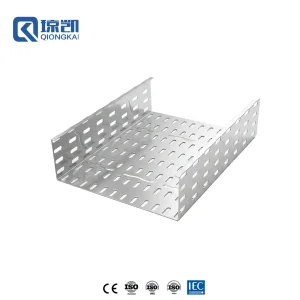
Buy Carbon Steel Pre Galvanized PG Hot Dip[ Galvanized HDG Cable Tray with Reinforce Ribs 300*100 Supplier, Suppliers
Request Factory Quote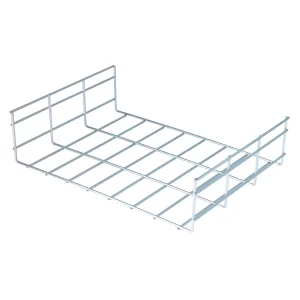
Wholesale Pre Galvanized grid Cable tray 500mm Manufacturers, Supplier
Request Factory Quote
Wholesale PG HDG Perforated Cable Tray 50*25 Supplier, Price
Request Factory Quote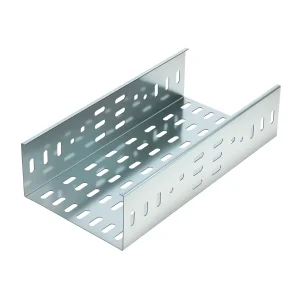
Buy Pre Galvanized Perforated Cable Tray 200 100mm Manufacturers, Supplier
Request Factory Quote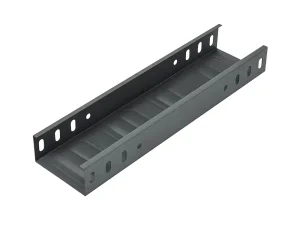
Wholesale Grey Pre Galvanized Powder coated molded cable tray Factory, Price
Request Factory Quote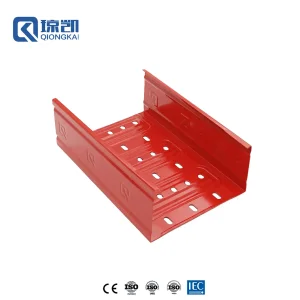
Buy Powder Coated Carbon Steel Cost Saving Heavy Duty Reinforced Molded Pre Galvanized Cable Tray - RAL3020 Red 200*100 Supplier, Factory
Request Factory Quote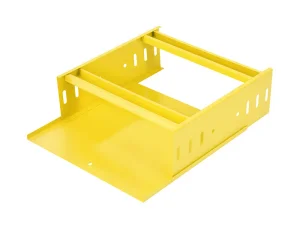
Buy Pre Galvanized Powder coated cable ladder Yellow Manufacturers, Factory
Request Factory Quote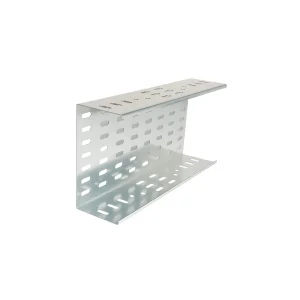
Buy Customized Dense Pre Galvanized Perforated Cable Tray Factory, Price
Request Factory QuoteThe Physics of Return Flange: Deflection Control & Moment of Inertia
Why leading international EPCs are migrating from conventional inward/outward single-flange trays to engineered double-folded return flange profiles.
Section Modulus & Lateral Buckling Suppression
In electrical raceway mechanics, structural integrity is governed by the second moment of area (Moment of Inertia, I) and Section Modulus (Z). A standard flat-sheet channel subjected to heavy dynamic loads suffers from local plate crippling and torsional buckling at the unstiffened upper boundary.
The continuous return flange profile introduces an engineered, cold-formed inward and downward 180° hemmed lip or 90° return lip. This continuous geometry moves material away from the neutral axis, creating a closed-loop stiffening rail along the tray’s top longitudinal edges. Under IEC 61537 Safe Working Load (SWL) protocols, this structural fold increases the longitudinal stiffness by up to 42% compared to simple edge-folded trays, permitting extended support spans of up to 3.0 to 4.0 meters without exceeding the permissible L/200 deflection ceiling.
Furthermore, the return flange acts as a mechanical guardrail. Traditional slit steel edges leave microscopic shearing burrs that slice high-voltage cross-linked polyethylene (XLPE) cable sheaths during winching. The seamless radius of a return flange guarantees complete dielectric sheath protection.
Elimination of Cable Sheath Abrasion
During heavy power cable pulling, sideway friction creates excessive tangential stress. The smooth, radius-rolled lip of the return flange removes sharp raw burrs, guaranteeing dielectric integrity and zero abrasion damage to critical medium-to-high voltage conductors.
Screwless Snap-Lock Cover Assembly
The return flange contour functions as an integrated clamping rail. Specially formed snap-on covers lock directly over the return profile without self-tapping screws or mechanical drilling, cutting installation time by 60% while preserving ingress protection ratings (IP40/IP44).
| Profile Specification | Material Thickness | Load Span Interval | IEC 61537 Safe Working Load | Max Deflection @ 100% Load | Engineering Assessment |
|---|---|---|---|---|---|
| Standard Perforated (Plain Edge) | 1.5 mm Q235B Steel | 1.5 Meters | 110 kg/m | 7.4 mm (Exceeds L/200 limit) | Prone to Buckling |
| Inward Simple Lip (Single 90°) | 1.5 mm Q235B Steel | 2.0 Meters | 165 kg/m | 6.1 mm (Near threshold) | Moderate Industrial |
| Qiongkai Return Flange (Heavy Duty) | 1.5 mm Q235B Steel | 2.5 Meters | 245 kg/m | 4.2 mm (Superior stiffness) | Optimal Specification |
| Qiongkai Reinforced Ribbed Return Flange | 2.0 mm Q355B / HDG | 3.0 Meters | 380 kg/m | 5.1 mm (Well below limit) | Extreme Heavy-Duty |
Global Industrial Landscape: The Demand Drivers for High-Performance Trays
From hyperscale cloud data halls to offshore floating LNG units, structural containment specifications have tightened across Europe, North America, the Middle East, and Latin America.
Tier IV Hyperscale Data Centers
The global surge in artificial intelligence compute nodes mandates extreme cable density. Underfloor and overhead ladder systems must carry up to 300 kg/m of copper busbars and high-fiber trunking without intermediate sag, ensuring uninterrupted airflow dynamics.
Offshore Energy & Marine LNG Terminals
Extreme exposure to saline spray, atmospheric chlorides, and high wind-induced dynamic vibration necessitates rigid side-rail return profiles fabricated in 316L austenitic stainless steel or heavy batch hot-dip galvanizing with 85µm+ coating depth.
Renewable Energy & EV Gigafactories
Gigawatt-scale photovoltaic fields, hydrogen electrolysis plants, and battery cell manufacturing demand standardized raceways capable of long hanging spans (up to 4 meters), directly reducing heavy steel structure fabrication costs.
China Supply Chain Resilience: Direct Mill Velocity & Shanghai Port Synergies
How Shanghai Qiongkai Industry Co., Ltd. delivers unmatched economies of scale, strict metallurgical tracking, and compressed production cycles for global multi-thousand ton infrastructure packages.
Vertical Production Integration in Songjiang, Shanghai
Operating across 3 modern manufacturing bases encompassing over 30,000 square meters of workshop space, Qiongkai eliminates the multi-tiered trading markup. Our Songjiang Port Science and Technology City location sits less than 60 minutes from Shanghai’s deep-water terminals (Yangshan and Waigaoqiao), granting immediate sea-freight vessel container stuffing and zero inland haulage bottlenecks.
With 12 continuous automated roll-forming lines and more than 60 heavy-duty precision CNC presses, our plant converts prime structural coils (sourced directly from domestic giants Baosteel and Shougang) into finished, certified return flange cable trays at a rated capacity exceeding 3,500 metric tons per month.
In-line progressive punching dies execute complex ventilation hole patterns and pre-punched connector slots simultaneously, ensuring 100% axial alignment across successive 3-meter and 6-meter sections.
Compressed Fabrication Lead Times
Direct mill master coils in thicknesses from 1.0mm to 3.0mm remain permanently staged in our raw material reserve. Standard return flange orders clear fabrication, automated hot-dip galvanizing, and crating in 7 to 12 business days.
High-Density Export Nesting Protocols
Our engineered return flange geometry is calibrated with precision drafting angles, allowing high-density nested palletization. A single 40ft High Cube container accommodates up to 28 metric tons of return flange tray systems, saving international buyers up to 35% in ocean shipping freight per meter.
Years Manufacturing Heritage (Since 2005)
Total Manufacturing Workshop Area
Automated High-Speed Roll-Forming Trains
Peak Annual Production Turnover
Technical Roadmap: The Next-Generation Evolution of Cable Containment
Pioneering self-healing alloy substrates, integrated intelligent load monitoring, and full digital twin interoperability for BIM Level 3 project execution.
Zinc-Aluminum-Magnesium (ZAM)
Replacing standard batch galvanizing with continuous Zn-Al-Mg coatings (6% Al, 3% Mg). The self-passivating chemistry flows over exposed cut edges, offering over 30 years of C5 corrosion resistance without post-dip thermal warping.
Parametric BIM Level 3 Digital Twins
Comprehensive Revit and IFC family libraries with embedded structural deflection coefficients and thermal dissipation constants, enabling clash-detection algorithms to verify raceways dynamically before steel cutting.
Automated Integrated Splice Joints
Next-generation roll-forming tooling incorporates swaged male/female ends with integrated locking flanges. Field technicians simply slide sections into place and snap-lock, eliminating the cost and weight of separate splice plates.
Low-Carbon Recycled Steel Substrates
Certified low-embodied-carbon steel sourcing conforming to Scope 3 decarbonization benchmarks, guaranteeing that major EPC contractors meet stringent LEED Platinum and BREEAM sustainability targets.
Wholesale Cable Tray Pricing Dynamics & TCO Optimization
Understanding the transparent cost breakdown behind direct factory quotations: raw steel indexing, zinc metal premiums, and the dramatic labor savings of return flange geometries.
Cost Formulation Matrix
Wholesale cable tray prices from high-tier manufacturers are strictly indexed against raw material inputs. Typically, hot-rolled coil (HRC) steel accounts for 55% to 65% of the base price, while zinc ingot spot pricing (LME / SMM) accounts for 15% to 25% in hot-dip galvanized specifications. The remaining 15% comprises precision roll-forming labor, overhead, tooling depreciation, and sea-freight packing.
While a return flange tray carries a nominal 3% to 5% manufacturing premium over flat-edge trays due to complex multi-station tooling passes, its Total Cost of Ownership (TCO) delivers substantial savings. By expanding the span from 1.5m to 2.5m or 3.0m, contractors reduce total strut channel supports, threaded rods, seismic brackets, and field anchor drilling by up to 35%.
Estimated Factory Benchmark Price Matrix (Indicative FOB Shanghai)
*Prices are indicative per standard 3-meter section based on steel indices. Contact our engineering desk for locked project-specific BOQ tenders.
- PG Return Flange 100×50×1.2mm: $3.80 – $4.60 / m
- PG Return Flange 300×100×1.5mm: $8.90 – $10.40 / m
- HDG (ISO 1461) Return Flange 300×100×1.5mm: $12.50 – $14.20 / m
- HDG Heavy Return Flange 600×150×2.0mm: $23.00 – $27.50 / m
- SS316 Marine Return Flange 300×100×1.5mm: $32.00 – $38.00 / m
Global Project References: Validated Under Demanding Real-World Operating Conditions
From international aviation hubs to harsh coastal chemical processing terminals, Qiongkai containment systems are specified where failure is not an option.
Shanghai Hongqiao International Airport
Application: Aviation infrastructure & concourse trunking.
Solution: Custom anti-corrosion CT series perforated cable trunking with integrated return flanges for ultra-clean wire routing across high-vibration concourses.
Offshore LNG Terminal Expansion, Qatar
Application: Extreme heat, desert dust, and marine chloride exposure.
Solution: Custom-profiled heavy-duty return flange trays and strut supports with specialized FRP-lined and 316L stainless alloy combinations.
High-Humidity Industrial Plant, Thailand
Application: Tropical chemical & outdoor processing corridors.
Solution: High-load FRP-lined hot-dip galvanized composite cable containment preventing corrosive chemical attack while maintaining physical span stiffness.
Commercial Mega Agro-Complex, Paraguay
Application: Cost-constrained high-span agricultural infrastructure.
Solution: Value-engineered reinforced molded pre-galvanized return flange trays maximizing load capacity at the lowest total metric ton freight expenditure.
Quality Control, Mill Traceability & Global Compliance Framework
Every production heat conforms to international mechanical and coating standards, verified by comprehensive factory acceptance testing (FAT) before port delivery.
IEC 61537 & NEMA VE 1 Type Testing
Routine load testing verifies Safe Working Loads and electrical earth continuity (<5 mΩ electrical bonding resistance across splice connections). Full deflection and destructive collapse curves are certified per order batch.
ISO 1461 & ASTM A123 Galvanizing Inspection
Magnetic thickness gauges verify zinc mass (minimum 85 µm / 600 g/m² for outdoor industrial grades). Adhesion, uniformity, and salt-spray chamber endurance testing (ASTM B117) guarantee complete corrosion defense.
EN 10204 Type 3.1 Mill Certifications
100% metallurgical traceability from raw coil melt heat to final tray strapping. Mill test reports verify chemical yield, tensile strength, elongation, and coating composition for third-party auditing (SGS / BV / TÜV).
Frequently Asked Technical & Commercial Questions
Clear, definitive answers to questions raised by project engineers, procurement managers, and EPC estimators during raceway specification.
What distinguishes an engineered return flange cable tray from a conventional inward lip tray?
How does the return flange geometry enable wider support spans without deflection failure?
What is the price variance between Pre-Galvanized (PG) and Hot-Dip Galvanized (HDG) return flange trays?
Can Qiongkai manufacture custom width, side height, and hole ventilation patterns?
How does the return flange profile improve ocean freight container loading capacity?
How are cable tray systems certified for seismic zone installations?
Engineered Channel, Ladder & Seismic Support Accessories
Complete your project raceway with compatible connection splice accessories, heavy-gauge strut channels, seismic brackets, and specialized stainless or powder-coated assemblies.
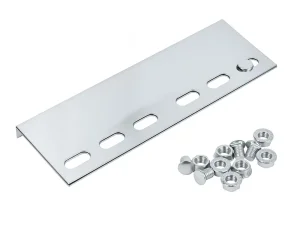
Wholesale Pre-Galvanized Cable Tray Connections spare parts Supplier, Price
Request Factory Quote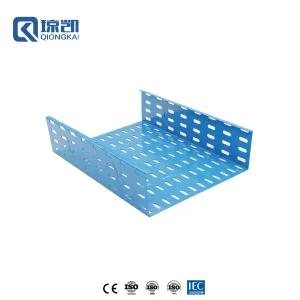
Buy Powder Coated Carbon Steel Pre Galvanized Hot Dip Galvanized PG HDG Cable Tray with Reinforce Ribs - RAL5015 Blue 300*100 Manufacturer, Price
Request Factory Quote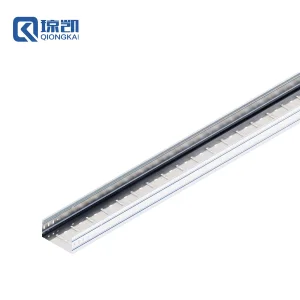
Wholesale Cost Saving Heavy Duty Reinforced Molded Pre Galvanized Cable Tray 200*100 Supplier, Price
Request Factory Quote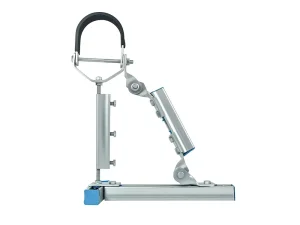
Buy Seismic Bracket for Struct Channel Manufacturer, Suppliers
Request Factory Quote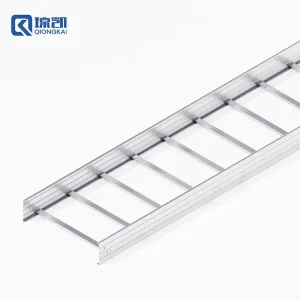
Wholesale Heavy Duty Pre GI HDG Ladder Type Cable Tray 800*200 Suppliers, Price
Request Factory Quote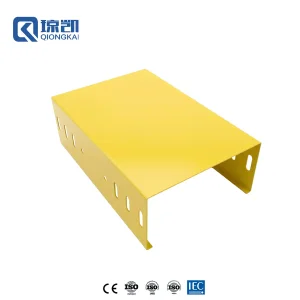
Buy Powder Coated Carbon Steel PG Pre Galvanized Cable Trunking Trough Type Channel - RAL1080 Yellow 200*100 Manufacturer, Factories
Request Factory Quote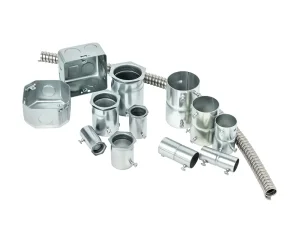
Buy Conduit Accessories & Junction Box & Box Connector Suppliers, Factory
Request Factory Quote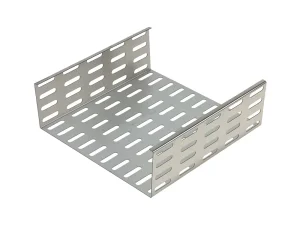
Wholesale Stainless Perforated Cable Tray 300mm - SS304 Suppliers, Factory
Request Factory QuoteLock In Direct Factory Pricing on Return Flange Containment
Submit your Bill of Quantities (BOQ), CAD drawings, or project specification requirements directly to Shanghai Qiongkai’s technical engineering department. Our application engineers provide span-deflection calculations, finish recommendations, and ex-factory quotations within 24 hours.