
Engineered Perforated Trays & Heavy-Duty Raceway Systems
Precision-stamped bottom patterns engineered for optimal thermal convection, electromagnetic protection, and high-load structural capacity in data centers and industrial infrastructure.
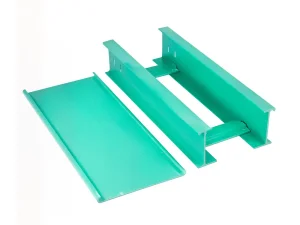
Buy FRP Ladder type Cable Tray Supplier, Factory
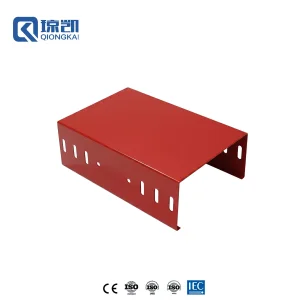
Wholesale Powder Coated Carbon Steel PG Pre Galvanized Cable Trunking Trough Type Channel - RAL3020 Red 200*100 Suppliers, Factory
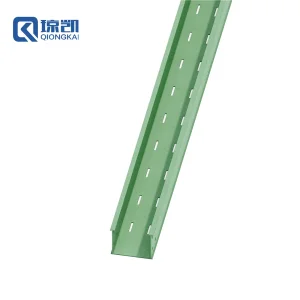
Wholesale FRP Perforated Cable Tray 200*100 Manufacturer, Factory
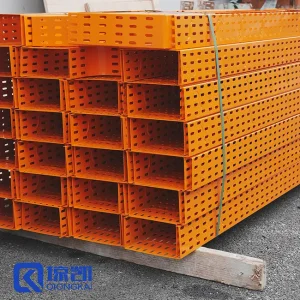
Wholesale Reinforced Medium duty Pre-galvanized Hot-dip-galvanized Powder Coated Perforated Cable Tray 200*100 - Orange Manufacturers, Factories
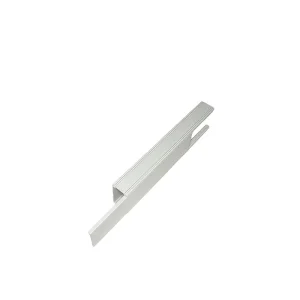
Wholesale UPVC Cable Trunking Thermal Insulated Anti-corrosion Resistance_ Manufacturers, Price
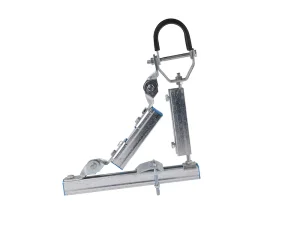
Buy Reliable heavy duty seismic resistant bracket Factories, Price
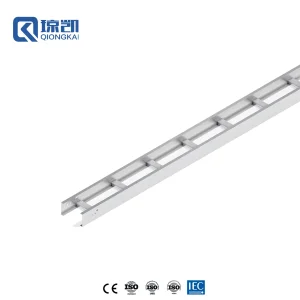
Buy GI Galvanized Cable Ladder 200*100 Supplier, Suppliers
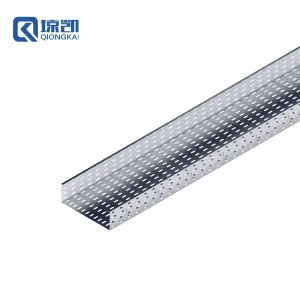
Wholesale Reinforced Medium duty Pre-galvanized Hot-dip-galvanized Perforated Cable Tray 300*100 Manufacturer, Factories
Executive Industry Overview: The Role of Perforated Cable Trays in Modern MEP
Bridging the gap between fully enclosed cable trunking and open ladder racks, ventilated perforated cable trays represent the globally preferred engineering standard for mission-critical power distribution and automation signal cabling.
Thermodynamic Efficiency & Current Ampacity
Perforated trays feature uniform CNC slot patterns providing 28% to 42% bottom ventilation. Under IEC 60364-5-52 installation method E/F, this airflow significantly reduces internal thermal resistance, lowering conductor temperature and eliminating current derating penalties associated with non-ventilated troughs.
Electromagnetic Shielding & Cable Retention
Unlike open ladder trays where bare control cables can sag between rungs under mechanical stress, perforated trays provide continuous flat-plane support. When constructed from continuous pre-galvanized carbon steel or aluminum, they attenuate high-frequency EMI/RFI noise, protecting instrumentation lines.
Structural Deflection Rigidity (NEMA VE 1)
Through longitudinal bottom reinforcing ribs and return-flange side walls, modern cold roll-formed perforated trays exhibit high section modulus. They maintain L/200 and L/360 deflection compliance across support spans up to 4.5 meters without catastrophic weld joint fatigue.
Years of Engineering Manufacturing Heritage (Est. 2005)
Total Workshop Floor Area across 3 Integrated Hubs
Continuous Roll-Forming & High-Speed Punching Lines
Heavy-Duty CNC Punch Presses & Hydraulic Brakes
Why Global Tier-1 EPC Contractors Procure from Chinese Manufacturing Hubs
Analyzing the strategic metallurgical advantages, automated coil handling, and direct deepwater maritime logistics of Shanghai Qiongkai Industry Co., Ltd. in Songjiang Science & Technology City.
Direct Upstream Mill Integration
Direct supply agreements with primary domestic blast mills (Baosteel, Shougang) ensure Q235B, Q355B, and DX51D hot-rolled steel strip procurement at fundamental cost indexes. Chemical composition is certified via EN 10204 3.1 inspection certificates, ensuring minimal silicon impurities during subsequent hot-dip galvanizing.
Integrated 12-Line Continuous Automation
Our Shanghai facilities deploy automated Decoiling-Leveling-Punching-Roll-Forming production lines. Unlike manual guillotine shears and manual press brake bending, continuous roller lines produce 3-meter to 6-meter perforated trays with dimensional tolerances under ±0.5mm, maximizing site splice alignment.
Maritime Logistics from Shanghai Ports
Headquartered in Songjiang Port Science and Technology City, Qiongkai offers direct highway transit to Yangshan Deepwater Terminal and Waigaoqiao Port. Export packaging is optimized for 40ft High Cube containers, utilizing automated nesting techniques that increase container volumetric fill rates by 35%.
Wholesale Price Architecture & Engineering Cost Drivers
Transparent pricing algorithms based on raw coil metallurgy, stamping yield rates, zinc coating micron thickness, and containerized export freight dynamics.
| Material / Specification Profile | Wall Thickness Range | Standard Dimension (W × H) | Anti-Corrosion Standard | Typical FOB Shanghai Indicative Range | Best Suited Environment |
|---|---|---|---|---|---|
| Pre-Galvanized (PG) Carbon Steel | 1.0 mm – 2.0 mm | 100×50 mm to 600×100 mm | ASTM A653 (Z120–Z275 g/m²) | $4.20 – $14.50 / meter | Indoor commercial, clean plenum spaces, low humidity |
| Hot-Dip Galvanized (HDG) Post-Fabrication | 1.5 mm – 3.0 mm | 150×50 mm to 800×150 mm | ISO 1461 / ASTM A123 (65–85 μm) | $8.50 – $32.00 / meter | Outdoor industrial plants, solar farms, infrastructure |
| Stainless Steel 304 (V2A) | 1.2 mm – 2.5 mm | 100×50 mm to 600×100 mm | EN 10088-2 / AISI 304 Pickled | $18.00 – $58.00 / meter | Food processing, pharmaceutical, beverage facilities |
| Marine Stainless Steel 316 / 316L | 1.5 mm – 3.0 mm | 150×75 mm to 800×150 mm | AISI 316L Passivated / Electropolished | $28.00 – $92.00 / meter | Offshore oil & gas, coastal ports, LNG terminals |
| Pultruded Fiber-Reinforced Polymer (FRP) | 3.0 mm – 5.0 mm | 200×100 mm to 600×150 mm | ASTM E84 Class 1 Fire Retardant | $16.50 – $48.00 / meter | Chlor-alkali plants, marine platforms, mining leach tanks |
| Powder-Coated over Galvanized (Duplex) | 1.2 mm – 2.0 mm | 100×50 mm to 600×100 mm | Epoxy / Polyester 60–90 μm (RAL System) | $6.80 – $22.50 / meter | Hyperscale data halls, automated logistics sorting hubs |
1. The Zinc Spelter Coating Index
Hot-dip galvanizing costs track the London Metal Exchange (LME) SHG zinc prices. A tray coated to 85μm (approx. 610g/m²) carries significantly more zinc mass per linear meter than standard 45μm commercial dipping, heavily influencing longevity in ISO 9223 C4/C5 marine environments.
2. Gauge Tolerance & Sheet Weight
Factory quotes that seem suspiciously low often hide negative strip tolerances (-0.2mm thinner than specified). Shanghai Qiongkai guarantees true nominal thickness under ASTM A568 standards, ensuring specified safe working load (SWL) safety factors of 1.5 to 2.0 are upheld.
3. Nesting & Packaging Efficiency
By stamping perforated patterns that allow taper-side stacking or employing modular knocked-down splice joints, Qiongkai increases container load density up to 26 metric tons per 40ft HC, effectively lowering international maritime freight cost per linear meter by 18% to 24%.
Technological Trajectories: The Future of Cable Tray Engineering
How AI computing density, low-carbon green steel, and automated digital manufacturing are reshaping commercial cable support specifications.
Hyperscale AI Data Center Demands
Modern GPU computing clusters draw unprecedented electrical currents, leading to excessive Joule heating inside heavy copper busbars and high-amperage cables. Perforated trays designed with 38% open area bottom matrices accelerate natural convective cooling, eliminating hotspots and extending data center cabling lifecycle.
High-Strength Cold-Formed Rib Architecture
Through finite element analysis (FEA), our engineering department has introduced continuous cold-rolled longitudinal ribs along the tray base and side walls. This profile geometry enhances stiffness by 30%, allowing reduction of metal gauge without compromising structural load-carrying integrity.
Decarbonized Galvanizing & Duplex Systems
Driven by global carbon neutral benchmarks, Qiongkai utilizes low-lead, energy-efficient induction furnace galvanizing alongside eco-friendly zinc-aluminum-magnesium (ZM) alloy coatings. ZM coatings offer self-healing edge corrosion protection that outperforms conventional HDG in acidic atmospheres.
Field-Tested Across Global Mega Infrastructure
From extreme sub-tropical marine zones to cryogenic gas plants and high-traffic aviation hubs, explore how Qiongkai cable management systems perform under rigorous site stresses.
Shanghai Hongqiao International Airport
Supplied specialized corrosion-resistant CT series cable trunking and perforated cable raceways for passenger terminal sub-levels, baggage conveyor power hubs, and automated people mover (APM) electrical routing. Met stringent UL and Chinese national fire-resistance test standards.
Offshore LNG Terminal Expansion, Qatar
Engineered and supplied custom heavy-duty profiled support sections and AISI 316L passivated perforated trays. Designed specifically to withstand high ambient desert UV combined with saline Arabian Gulf marine mist, preventing stress corrosion cracking (SCC).
Industrial Process Facility, Thailand
Supplied high-load FRP-lined composite steel trays and heavy-duty FRP ladder racks. Solved recurring galvanic pitting caused by continuous 90%+ relative humidity and harsh chemical washdowns in an industrial coastal processing plant.
Commercial Livestock Complex, Paraguay
Delivered a value-engineered, high-volume heavy-duty galvanized cable support system across extensive farm facilities. The hot-dip galvanized finish resists biological ammonia vapors and high humidity while adhering to a tightly controlled infrastructure budget.
Macro-Engineering Cable Tray Specification Protocol
A systematic methodology for MEP consultants and procurement directors to evaluate load classifications, perforation geometries, and finish lifecycles.
Step 1: Load Classification (NEMA vs IEC)
Under NEMA VE 1, trays are categorized by working load (50, 75, 100 lbs/ft) and span (8, 12, 16, 20 ft). Under IEC 61537, Safe Working Load (SWL) curves evaluate deflection under continuous uniform loads. Our technical team provides validated deflection charts ensuring your project never exceeds the L/200 structural ceiling.
Step 2: Thermal Heat & Cable Fill Ratio
According to NEC 392, total cross-sectional area of multi-conductor cables in perforated trays must not exceed 40% to 50% of the internal usable area. Proper spacing allows perforated tray slot vents to establish vertical chimney convection currents, preventing insulation breakdown.
Step 3: Anti-Seismic Dynamic Bracing
In seismic zones (UBC Zones 3 & 4 / IBC Category D-F), perforated cable trays must be mechanically anchored using lateral and longitudinal strut channel bracing. Qiongkai supplies 41×41 and 41×82 back-to-back serrated channel systems engineered to damp earthquake oscillations.
Frequently Asked Questions: Global Sourcing & Technical Queries
Clear, expert responses to the core commercial, quality control, and metallurgical questions raised by project engineers before finalizing purchase agreements.
What are the key differences between perforated cable trays and solid cable trunking?
How does Shanghai Qiongkai ensure hot-dip galvanized coating quality meets ISO 1461?
Can Qiongkai manufacture customized perforation hole patterns and non-standard profiles?
What is the minimum order quantity (MOQ) and production lead time for export containers?
How do you prevent galvanic corrosion when mounting stainless steel trays on galvanized brackets?
What third-party test certificates and compliance documents accompany shipments?
How are perforated trays packaged to prevent transit damage during transoceanic shipping?
Can you supply complete support accessories, seismic brackets, and strut channels with the trays?
Specialized Channels, Heavy Support & Structural Profiles
Complete your cable pathway installation with our structural stainless steel series, insulated polymer trunking, hanger rods, and seismic bracing channels.
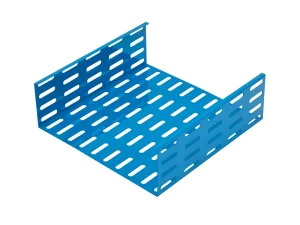
Buy Pre Galvanized Perforated Cable Tray Series With Powder Coating Suppliers, Factories
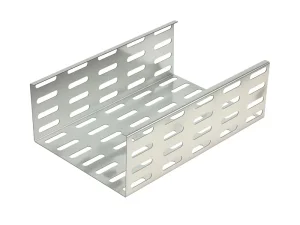
Buy Stainless Steel Perforated Cable Tray 200mm width Suppliers, Factory
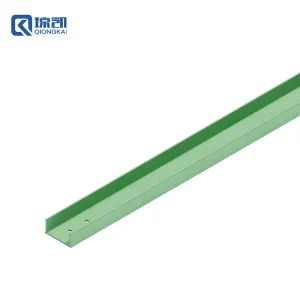
Wholesale FRP Cable Trunking Trough Type Channel 100*50 Manufacturer, Factories
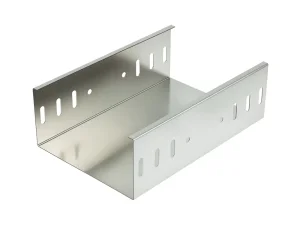
Buy Stainless Cable Tray With Perforation Supplier, Factories
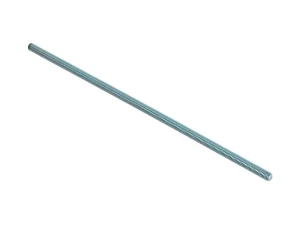
Buy Metal hanger rod Supplier, Price
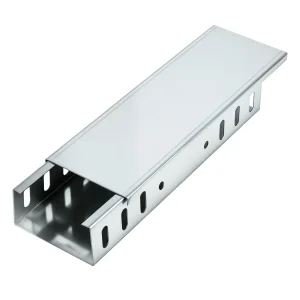
Wholesale Pre-Galvanized Cable Trunking 100*50 Manufacturer, Manufacturers
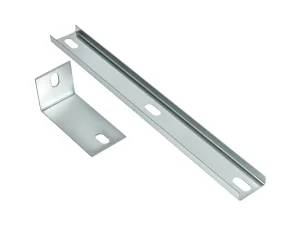
Wholesale Pre Galvanized L-shapedbracket Factories, Price
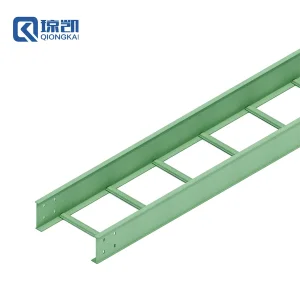
Buy FRP Ladder Type Cable Tray 400*150 Supplier, Factory
Plan Your Project Bill of Quantities (BOQ) with Qiongkai
Send your project blueprints, span requirements, and corrosion classification data directly to our Shanghai engineering office. Receive a comprehensive CAD take-off, deflection validation report, and firm containerized FOB/CIF quotation within 24 hours.