
Wholesale Steel Perforated Cable Tray Supplier & Factory
Precision-engineered NEMA VE-1 and IEC 61537 compliant perforated steel cable tray systems, strut channels, and framing modules. Built with automated continuous stamping, continuous cold roll forming, and heavy-duty corrosion resistant finishes for mission-critical infrastructure worldwide.
Featured Industrial Solutions: Batch 1
Explore high-strength cable management profiles engineered for rapid jobsite assembly, optimal heat dissipation, and structural longevity.
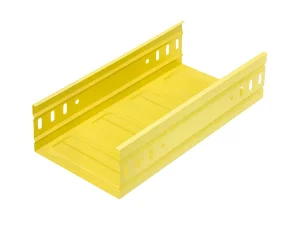
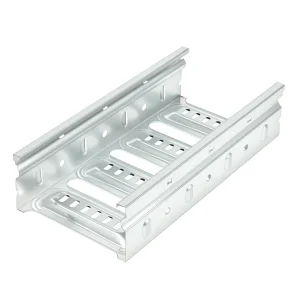
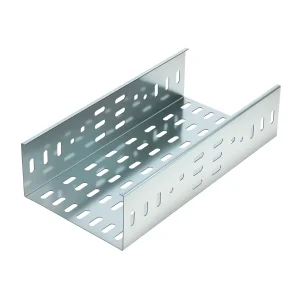
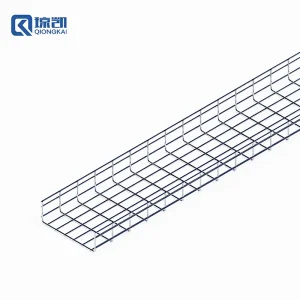
Engineering Depth: Steel Perforated Cable Tray Technical Architecture
Analyzing structural loading calculations, thermal convection mechanics, continuous roll forming standards, and lifecycle anti-corrosion dynamics.
Optimized Perforation & Heat Dissipation
Steel perforated cable trays bridge the mechanical protection of solid-bottom troughs and the ventilation efficiency of open ladder racks. With a standardized open hole area ranging between 28% and 38%, our perforation dies incorporate outward deburred edge flanging. This profile mitigates localized heat trapping, lowering the ambient conductor temperature across densely bundled power cables and minimizing thermal ampacity derating penalties according to IEEE 835 / IEC 60287 parameters.
- Eliminates edge fraying on LV/HV jackets during pulls
- Enables flexible, equidistant zip-tie and cleat binding
- Prevents airborne moisture and combustible vapor pooling
Structural Moment of Inertia & Load Spans
Through automated multi-stage cold roll forming lines, our perforated side rails integrate double-folded hems and continuous longitudinal stiffening ribs. This engineering profile elevates the tray's section modulus (Z-axis) without adding superfluous sheet deadweight. Verified through deflection criteria under NEMA VE-1 testing, our trays maintain a span safety margin exceeding 1.5x at typical support distances of 2.0m to 6.0m under maximum static and dynamic cable loading configurations.
- High modulus roll-formed steel alloy composition
- Reinforced ribbing for resistance against torsional buckling
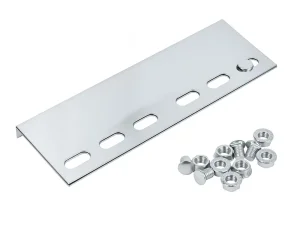
- Pre-punched splice plate patterns for zero field drilling
Electromagnetic Shielding & Earthing
Fabricated from high-conductivity low-carbon cold-rolled sheet or structural stainless steel, our metallic perforated trays form a semi-enclosed Faraday-style attenuator. High-frequency electromagnetic interference (EMI) originating from variable frequency drives (VFD), power transformers, and heavy switchgear is drastically reduced, safeguarding sensitive industrial IoT sensor networks, cat6A structured cabling, and fiber backbone pathways against signal crosstalk.
- Integrated bonding screw threads and copper jumper clips
- Fully compliant electrical continuity under IEC 61537
- Reliable zero-potential equipotential grounding channel
Localized Engineering Use Cases & Environments
From hyper-scale cloud data centers to offshore energy hubs, discover how our perforated cable management platforms adapt to regional engineering realities.
Hyper-Scale Cloud Data Centers
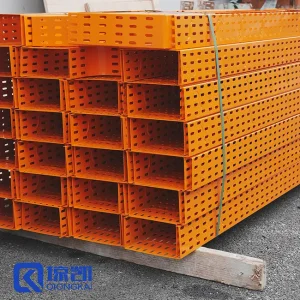
North American and European colocation data centers demand high-density fiber routing overhead. Our pre-galvanized and custom powder-coated perforated cable trays (available in white, orange, and charcoal gray) facilitate smooth pathway demarcation, laminar airflow dissipation above server racks, and direct drops into cabinets via toolless waterfall drop-out plates.
Offshore Oil, Gas & LNG Facilities
Marine environments characterized by high salinity, continuous UV exposure, and ambient hydrogen sulfide require robust metallurgy. Deployed in projects across Qatar and Southeast Asia, our marine-grade 316/316L stainless steel and heavy-gauge hot-dip galvanized (HDG >85μm) perforated trays resist aggressive pitting and chloride stress cracking over multi-decade cycles.
Clean-Room Pharma & Food Processing
Hygienic manufacturing environments mandate frequent caustic wash-downs and total zero-particle buildup. Our mirror-electropolished SS304/SS316 perforated cable pathways prevent bacterial harboring, withstand chemical spray sterilizations, and simplify automated clean-in-place inspection routines.
Commercial Hubs & International Transit
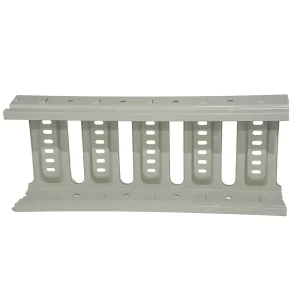
Large municipal transit terminals—such as our flagship deployment at Shanghai Hongqiao International Airport—require seismic resilience and fire-retardant cable trunking. We engineer customized molded and slotted pathways that integrate effortlessly into drop ceilings, seismic strut bracings, and building management services.
China Factory Direct: Supply Chain Scale, Precision & Cost Efficiency
Positioned in Songjiang, Shanghai, Qiongkai transforms raw structural coil into sea-freight-ready containment systems with zero intermediary inflation.
Coordinated Raw Material Procurement
By leveraging direct steel mill supply agreements with leading tier-1 domestic steel producers (Baosteel, Shougang), we lock in competitive cold-rolled carbon steel, pre-galvanized coils, and virgin stainless alloys. This eliminates raw material cost volatility for multi-phase EPC contracts spanning 12–24 months, providing unshakeable pricing stability and predictable bill-of-materials expenditures.
Advanced Continuous Automated Tooling
Our 3 modern plants house 12 dedicated high-speed roll forming and synchronized punching lines. Fully computerized hydraulic decoilers, progressive stamping dies, and roll forming carriages run continuously, holding side-rail linear tolerances within ±0.5mm. This extreme precision ensures hole alignment across adjacent tray lengths and reduces site fit-up labor by up to 35%.
Direct Deep-Water Port Logistics Advantage
Situated in Shanghai Songjiang Port Science and Technology City, our operations reside within rapid drayage distance of Yangshan Deep-Water Port and Waigaoqiao Container Terminals. Factory-managed nestable packaging, heavy-gauge wood crating, and rust-inhibitive VCI moisture barriers prevent sea-transit distortion and transit oxidation, dispatching containerized loads smoothly to Europe, the Middle East, Southeast Asia, and the Americas.
Engineering Metallurgy & Environmental Specification Table
Align project environmental corrosivity categories (ISO 12944 C1 through CX) with the correct tray base metal and protective treatment.
| Material / Treatment | Applicable Standards | Protective Layer Thickness | Corrosivity Category (ISO 12944) | Recommended Deployment Context |
|---|---|---|---|---|
| Pre-Galvanized Steel (PG / GI) | EN 10346, ASTM A653 | Z120 - Z275 (12–20 μm) | C1 – C2 (Low) | Dry commercial interiors, plenums, IT server closets, retail fit-outs. |
| Hot-Dip Galvanized After Fabrication (HDG) | ISO 1461, ASTM A123 | 65 – 85+ μm (Local standard dependent) | C3 – C4 (Medium / High) | Outdoor industrial substations, petrochemical refineries, coastal civil bridges. |
| Thermoset Epoxy / Polyester Powder Coated | GB/T 18593, ASTM D3359 | 60 – 110 μm over PG steel | C2 – C3 (Aesthetic / Acidic) | Color-coded data centers, automated logistics warehouses, indoor architectural routing. |
| Austenitic Stainless Steel (SS304 / SS316L) | ASTM A240, EN 10088 | Passive Chromium Oxide Film (>16-18% Cr) | C4 – C5 / CX (Extreme Marine) | Marine platforms, offshore topsides, food processing, pharmaceutical clean rooms. |
| Fiberglass Reinforced Polymer (FRP / GRP) | ASTM D3917, NEMA FG-1 | Pultruded Isophthalic / Vinylester Resin | Non-Metallic Chemical / Acidic | Severe chemical exposure plants, fertilizer works, wastewater aeration facilities. |
Technology Roadmap: Smart Support Infrastructure & Modular Framing
Discover how modern manufacturing innovation is driving next-generation cable pathway developments through 2026 and beyond.
Parametric BIM Design & Digital Fabrication
We are transitioning structural cable containment engineering into full Building Information Modeling (BIM) interoperability. Providing Revit and IFC parametric families with embedded weight-per-meter, allowable load deflection curves, and bend radii calculations enables MEP engineering contractors to conduct comprehensive digital clash detection before steel ever hits the shop floor.
Eco-Optimized Metallurgy & Decarbonization
Aligning with multinational ESG targets and Scope 3 carbon mandates, Qiongkai is introducing scrap-recycled EAF (Electric Arc Furnace) structural steel profiles along with trivalent chromium passivation coatings. These processes eliminate toxic hexavalent chromium and slash the embedded carbon footprint of our perforated trays by up to 28% compared to legacy blast-furnace operations.
Snap-In Fastener-Free Quick-Lock Systems
Jobsite labor constitutes upwards of 60% of total electrical pathway installation expenses. Our ongoing mechanical design roadmap emphasizes integrated push-fit joint couplings, toolless click-in dividers, and pre-stamped interlocking tabs that drastically decrease the quantity of required nuts, bolts, and splice plates—accelerating field assembly timelines.
Featured Industrial Solutions: Batch 2
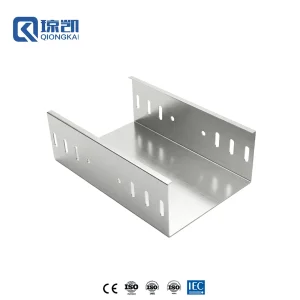
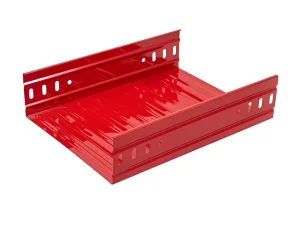
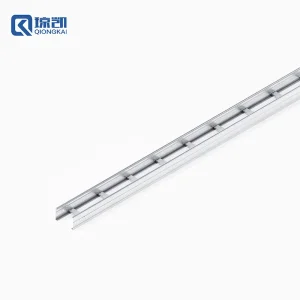
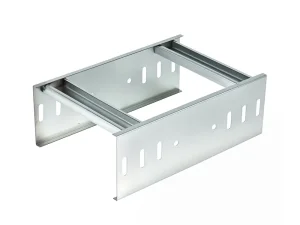
Comprehensive cable trunking, ladder systems, and specialized structural assemblies manufactured for global projects.
Engineering Support, Standards & Quality Governance
Every shipment undergoes rigorous mechanical verification, material trace certification, and compliance checks to satisfy global contractor audits.
Material Test Certificates (EN 10204 3.1)
Transparency is foundational to our engineering integrity. Every delivery lot is paired with official 3.1 Material Test Reports stating exact chemical compositions (Carbon, Manganese, Silicon, Phosphorus, Chromium, Nickel) and mechanical tensile yield data. In-house ultrasonic thickness testers and magnetic induction coating gauges ensure strict adherence to ordered specifications.
Dedicated Engineering Project Support
We do not treat cable containment as simple commodity bulk iron. Our bilingual technical team provides 1-on-1 support for Bill of Quantities (BOQ) take-offs, cable fill percentage evaluations, thermal derating checks, and custom fitting layout designs (horizontal bends, tees, crosses, reducers, and risers) to eliminate costly field modifications.
Third-Party International Testing & Auditing
Our quality management frameworks are routinely audited by internationally recognized independent testing agencies, including SGS, BV, and TÜV Rheinland. Testing protocols encompass continuous salt spray exposure (ASTM B117 >720 hours for HDG), safe working load deflection validations (IEC 61537 Section 10.3), and electrical continuity impedance testing.
Frequently Asked Technical & Procurement Questions
In-depth responses covering mechanical specifications, material selections, and international procurement processes.
What are the key technical distinctions between perforated trays and ladder racks?
While cable ladder racks offer maximum airflow for extremely large diameter HV feeder conductors, perforated cable trays provide a superior continuous resting plane that prevents smaller instrumentation and power cables from sagging over time. Additionally, the semi-enclosed perforated structure provides valuable physical barrier protection against accidental impact, stray tools, and partial electromagnetic interference while still offering ample ventilation.
How does Qiongkai prevent edge burrs and sharp surfaces around perforations?
We utilize precision progressive punch dies ground to micro-tolerances. Each perforation stroke incorporates a slight downward deburring radius. This ensures that when field crews pull low-voltage or sensitive communication cables across the bed, the jackets are protected from gouging, stripping, or micro-abrasions, maintaining full insulation integrity.
Can you provide custom dimensions, side rail heights, and custom hole patterns?
Yes. Our automated CNC punching machines and modular roll forming stations allow for complete dimensional customization. We manufacture widths from 50mm up to 1000mm, side-rail heights from 25mm to 200mm, and material thicknesses from 0.8mm to 3.0mm. We regularly produce custom slot layouts tailored to specific cable tie-down designs or architectural specifications.
What is the standard lead time for high-volume overseas container shipments?
For standard pre-galvanized profiles, our continuous stamping lines can fulfill 40ft high-cube (HQ) container volumes within 10 to 15 business days. For hot-dip galvanized (HDG) or custom powder-coated finishes requiring post-fabrication bath treatments, standard production cycles typically range from 18 to 25 days, supported by direct port routing from Shanghai.
Engineered Cable Containment Built for Structural Longevity
Contact our engineering desk today for Bill of Quantities (BOQ) optimizations, full CAD/BIM drawing packs, or direct factory wholesale quotations tailored to your regional project specifications.