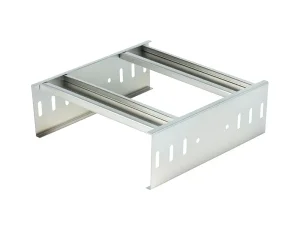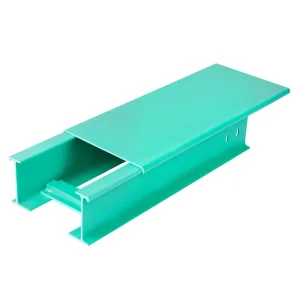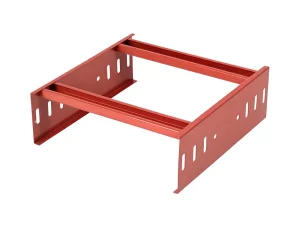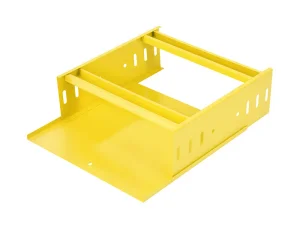
Direct Factory Integration · India Industrial Corridors

Buy Ladder Tray Manufacturer & Factory Serving the India Market

Heavy-Duty Cable Ladder Management Systems Engineered for High Thermal Expansion, Monsoon Humidity, and Saline Environments across Mumbai, Gujarat, Chennai, and National Mega-Infrastructure Projects.

Market Dynamics & Context

The Commercial & Industrial Landscape of India

Navigating the intersection of rapid infrastructure expansion, extreme monsoon climates, and stringent technical mandates across the Indian subcontinent.

Mega Corridors & GatiShakti

Under the PM GatiShakti National Master Plan and the National Infrastructure Pipeline (NIP), India is deploying vast electrical corridors. High-capacity power transmission, dedicated freight corridors (DFC), and smart city grids require structural cable ladders capable of supporting multi-core armored HV/MV cables without mid-span sagging or mechanical failure over decades of continuous operation.

Subcontinental Climatic Rigors

India’s diverse geography demands custom metallurgical selection. In coastal hubs like Mumbai, Chennai, and Kochi, atmospheric corrosion reaches ISO 9223 Category C4/C5. Combined with tropical monsoons exceeding 95% relative humidity and summer surface steel temperatures reaching 65°C, standard light-gauge trays quickly suffer galvanic breakdown. Our heavy-coat HDG and composite FRP trays prevent premature structural failure.

Hyperscale Cloud & Tech Parks

With India emerging as a global cloud hub, major data center clusters across Navi Mumbai, Hyderabad, and Noida demand zero-halogen fire safety, optimal natural heat dissipation, and modular vertical risers. Ladder-type cable trays provide up to 250% better air circulation than solid-bottom trunking, actively preventing heat retention in high-density power cables feeding AI and computing clusters.

Macro Sector Engineering

Turnkey Solutions for Core Indian Industries

Precision-engineered cable tray infrastructure adapted to the operational requirements of heavy industry, transportation, petrochemicals, and renewable energy.

Refining & Petrochemicals

Serving major refining centers such as Jamnagar, Dahej, and Paradip. Our SS316L and pultruded vinyl ester FRP ladder trays withstand continuous exposure to hydrogen sulfide (H2S), ammonia fumes, and sulfurous gases. The open rung structure prevents combustible gas build-up and ensures easy visual inspection during plant maintenance turnarounds.

Ultra-Mega Solar & Wind

Utility-scale renewable projects, like the Khavda and Bhadla solar parks, face abrasive desert winds, UV degradation, and seasonal flash floods. We provide specialized Pre-Galvanized Zinc-Aluminum-Magnesium (ZAM) and heavy HDG ladder systems that prevent red rust for up to 30 years without regular recoating.

Metro & High-Speed Rail

Rapid transit projects in Delhi, Mumbai, Bengaluru, and Chennai require strict seismic stability, vibration dampening, and smoke toxicity compliance. Our automated cold-roll formed side rails feature reinforced return flanges that resist cyclic track vibration, keeping signaling and traction power cables secure.

Specification & Engineering Matrix

Engineering Matrix: Material & Coating Standards

Compare our technical manufacturing configurations built to satisfy both Bureau of Indian Standards (BIS) norms and international standards (IEC 61537 / NEMA VE 1).

Material / Treatment Applicable Standards Coating / Thickness Corrosion Class Optimal Indian Applications
Hot-Dip Galvanized Steel (HDG) IS 1079 / IS 2062 / IS 2629 / IS 4759 85 µm – 120 µm Zinc Bath ISO C3 – C5 Industrial Outdoor switchyards, thermal power plants, highways, bridges
Pre-Galvanized Steel (GI) IS 277 / ASTM A653 / IEC 61537 Z120 – Z275 Coating Mass ISO C1 – C2 Controlled Indoor HVAC, commercial basements, IT parks, enclosed warehouses
Stainless Steel 304 / 316L AISI 304 / 316L / EN 10088-2 Passivated Natural Surface ISO C5-M Severe Marine Offshore platforms, chemical process plants, coastal port terminals
Epoxy / Polyester Powder-Coated IS 101 / IS 13871 / ASTM D3451 60 µm – 90 µm Dry Film (DFT) Aesthetic / Dual Layer Color-coded hyperscale data halls, metro passenger platforms
Fiberglass Reinforced Polymer (FRP) ASTM D3917 / UL 94 V-0 / IS 6746 Pultruded Vinyl / Isophthalic Immunity to Chlorides Desalination facilities, fertilizer units, acidic processing tanks
Factory 4.0 Infrastructure

Advanced Factory 4.0: Supply Chain Resilience

High-precision cold-roll forming, robotic rung welding, and direct maritime shipping pipelines give Indian EPC contractors predictable timelines and cost-efficient procurement.

Continuous Robotic Forming

Our manufacturing complex uses 12 fully automated continuous cold-roll forming lines. In-line CNC hydraulic punching stamps splice and rung-mount perforations with ±0.15mm center-to-center accuracy. Dual-station robotic welding cells weld each rung to the side rails continuously on both sides, ensuring high mechanical strength under heavy short-circuit dynamic loads.

Integrated Metallurgy & Galvanizing

Equipped with an integrated 13.5-meter hot-dip galvanizing bath, our facility maintains temperature-controlled molten zinc at 450°C (±2°C), following IS 2629 requirements. Automated pre-treatment degreasing, multi-stage acid pickling, and fluxing ensure clean, durable zinc-iron alloy bonding free of flux inclusions, blisters, or bare spots.

Optimized Indian Port Logistics

Located near primary container terminals, our facility uses nested stacking and modular bracing to increase shipping container volume utilization by up to 38%. We maintain direct liner connections to key Indian ports, including Nhava Sheva (JNPT Mumbai), Mundra Port (Gujarat), Chennai Port, and Cochin Port, with typical sailing transit times of 14 to 20 days.

Compliance & Quality Engineering

Indian Standards Alignment & Compliance Assurance

Every production lot is fully certified to withstand mechanical, electrical, and thermal stress in accordance with Indian tender mandates and global engineering benchmarks.

IS 2062 & IS 1079 Structural Steel

We source prime steel coils with traceable chemical analysis to conform to IS 2062 Grade E250/E350 and IS 1079. We inspect for tensile strength, elongation, yield stress, and silicon content balance (Sandelin curve control) to prevent excessive embrittlement during hot-dip galvanizing.

IEC 61537 & NEMA VE 1 Safe Load Testing

Our quality lab performs full-scale load testing across multi-span setups using hydraulic rams and distributed iron weight bars. Trays are tested to safe working load (SWL) limits with a 1.5 safety factor, confirming that maximum mid-span deflection stays under L/200, complying with global EPC standards.

Electrical Continuity & Earthing

System bonding is critical in high-fault electrical networks. Our ladders, splice plates, and bonding jumpers undergo continuity testing to verify resistance below 0.05 ohms per joint under IEC 61537, allowing the tray structure to safely serve as an equipment grounding conductor (EGC).

Future Engineering Roadmap

Technical Roadmap: Next-Generation Systems

Designing future-ready cable pathways that support BIM design integration, seismic safety, and smart industrial maintenance.

BIM LOD 400 Library Integration

We provide full Building Information Modeling (BIM) components in Revit, IFC, and STEP formats for MEP designers in India. Parametric dimensions, weight, load limits, and bend clearance envelopes simplify collision detection in complex metro substations and industrial facilities.

Seismic Bracing for Zone IV & V

Parts of India, including the NCR region, Uttarakhand, Gujarat (Kutch), and the Northeast, sit within high-risk Seismic Zones IV and V. Our channel-strut seismic sway bracing systems secure ladder tray runs against lateral and longitudinal earthquake forces, complying with IS 1893.

Smart Tray Sensor Readiness

Supporting predictive maintenance, our upcoming ladder trays feature dedicated clamping raceways for fiber-optic Distributed Temperature Sensing (DTS). This gives plant operators continuous real-time temperature monitoring along the cable run to identify insulation hotspots before failures occur.

Procurement & Sizing Blueprint

Engineering Sizing & BOQ Procurement Guide

Follow this structured sizing methodology to calculate cable tray capacity, verify deflection limits, and prepare accurate tender specifications.

Step 1: Cable Area & Fill Factor

Calculate the total cross-sectional area of all planned power and control cables: Total Area = Σ (π × D² / 4). Under Indian electrical code (IS 732) and NEC 392, ladder tray cross-sectional cable fill should not exceed 40% to 50%, leaving space for heat dissipation and future circuit additions.

Step 2: Load Rating & Support Span

Estimate total cable weight per linear meter, adding dynamic factors for high wind (outdoor) and short-circuit faults: W_total = W_cables + W_ice/wind + W_safety. Check span-to-deflection ratios using NEMA VE 1 load classes (Class 8C, 12C, 20C) to select support spacing (typically 2.0m to 3.5m).

Step 3: Fitting & Hardware BOQ

Include required fittings in your bill of quantities: horizontal bends, inside/outside vertical risers, tees, and cross-junctions matching side-rail profiles. Factor in expansion splice plates every 30 to 45 meters to accommodate thermal expansion, particularly on open Indian rooftops.

Full Product Portfolio

Comprehensive Cable Ladder Inventory

Explore our complete range of certified ladder trays, accessories, and protective finishes engineered for industrial and commercial projects across India.

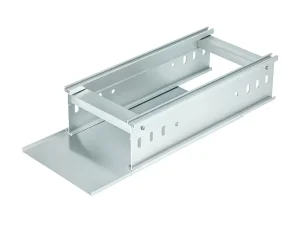
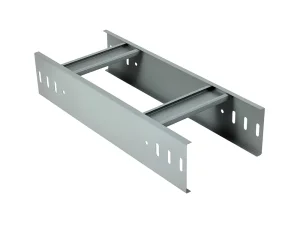
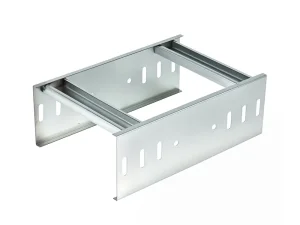
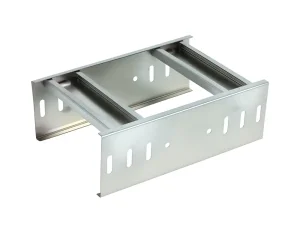
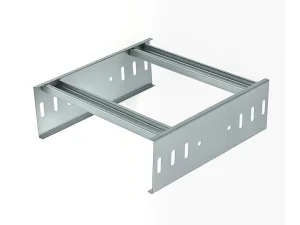
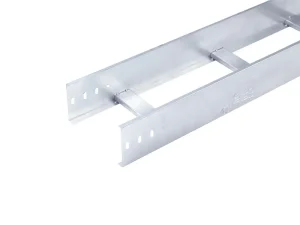
Direct Factory Supply Stainless Cable Ladder for Severe Marine Environments
Industrial Stainless Steel

Factory-Direct Stainless Ladder for Severe Marine Sites

Precision passivated side-rail ladder sections engineered for port cranes, shipyards, and coastal fuel terminals in India.

Buy Stainless Cable ladder Factories, Price
Technical & Procurement FAQ

Frequently Asked Engineering Questions

Common technical and commercial questions raised by engineering consultants, project managers, and procurement leads in India.

How do your ladder trays comply with Indian Standard specifications (IS 2062 and IS 2629)?

Our steel ladder trays are cold-roll formed from certified structural steel that meets IS 2062 Grade E250/E350 and IS 1079 standards for yield strength, elongation, and chemical composition. For hot-dip galvanizing, our facility adheres to IS 2629 (surface preparation and hot-dip process) and IS 4759 (coating requirements). Zinc coating thickness is maintained at 85 to 120 µm (610 to 850 g/m²), verified via electromagnetic thickness gauges with batch-specific Mill Test Certificates (MTC) conforming to EN 10204 3.1.

What are the typical sea freight lead times and port clearance procedures for India?

Shipments depart directly from Shanghai port via direct ocean container lines to major Indian container ports: Nhava Sheva (JNPT, Mumbai) and Mundra (Gujarat) typically take 14 to 17 days sailing time; Chennai and Cochin ports take 16 to 21 days. We supply full export documentation, including certified commercial invoices, packing lists with heat numbers, bills of lading, and preferential certificates of origin to support smooth customs clearance through Indian ICEGATE.

Why should we choose ladder-type cable trays over perforated or solid trunking for Indian plants?

Ladder-type cable trays provide superior natural airflow and heat dissipation compared to solid-bottom trunking. In regions where ambient summer temperatures reach 45°C to 48°C, enclosed trunking can cause significant heat build-up, requiring cables to be derated per IS 732 / IEC 60364-5-52. The open rung structure allows cables to run cooler, minimizes derating penalties, and prevents the accumulation of moisture and dust during the monsoon season.

Can your factory supply custom ladder tray widths, side rail heights, and rung spacings?

Yes. Our automated CNC forming lines allow flexible fabrication across a wide range of custom dimensions. We manufacture widths from 100mm up to 1200mm, side-rail depths from 50mm up to 200mm, and rung spacings of 150mm, 225mm, or 300mm. We also produce custom gauge thicknesses from 1.5mm to 3.0mm, and can adjust rung perforations and return flanges to match specific Indian site requirements.

How do you verify ladder tray load ratings under IEC 61537 and NEMA VE 1?

Every structural profile design undergoes prototype load testing following IEC 61537 Clause 10.2 and NEMA VE 1 Type tests. Test assemblies are set up across multiple spans (2.0m to 6.0m) with intermediate splice joints and loaded with uniform test weights. The system must support the Safe Working Load (SWL) with a safety factor of 1.5 without joint failure or structural buckling, keeping mid-span deflection safely within the L/200 design limit.

Which finish is recommended for coastal facilities in Gujarat, Maharashtra, or Tamil Nadu?

For outdoor coastal environments within 10 km of the sea (ISO 12944 Category C4/C5), standard pre-galvanized sheet will corrode quickly. We recommend either heavy hot-dip galvanizing with a minimum 85 µm zinc coat (IS 4759), marine-grade stainless steel (SS316L), or pultruded vinyl ester FRP ladder trays. In areas exposed to both chemical fumes and marine salt spray, FRP or dual-coated (HDG + powder coating) systems provide the longest operational service life.

Are expansion splice plates necessary for long ladder tray runs in India?

Yes. With typical outdoor seasonal temperatures ranging from 10°C in winter to 45°C in summer, a 35°C temperature differential creates measurable expansion in steel structures (ΔL = L × α × ΔT). Over a 100-meter straight run, thermal expansion can cause up to 42mm of movement. We recommend installing slotted expansion splice plates every 30 to 45 meters, alongside slide-mount hold-down clamps, to prevent structural buckling.

How do you package ladder tray systems to avoid damage during ocean transport?

Ladder trays are nested together to save space and minimize freight costs. Bundles are protected with heavy-gauge corrugated edge-guards, wrapped in water-resistant plastic stretch film, and bound with high-tensile polyester strapping. Heavy structural timber dunnage keeps bundles elevated inside shipping containers to prevent damage from condensation during ocean transit.

Plan Your Indian Project Cable Infrastructure with Us

Share your single-line diagram, cable schedules, or BOQ requirements. Our engineering team will review your specifications, verify load spans, and provide a competitive direct-factory proposal.