
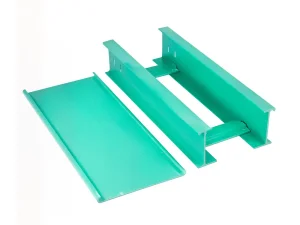
150kN
Max Beam Load Verification
Tested across continuous 3m to 6m spans (NEMA 20C/20B)
85μm
Hot-Dip Galvanized Zinc Layer
Compliant with ISO 1461 & ASTM A123 heavy anti-corrosion
12Lines
Continuous Roll-Forming Lines
Automated CNC rung welding & punching for fast delivery
100%
Djibouti Corridor Traceability
Containerized intermodal shipping directly to Modjo Dry Port
Engineered Heavy Duty Systems
Primary Ladder Tray Configurations for Ethiopian Mega Infrastructure
Precision-manufactured structural containment units configured for high ampere power conductors, heavy mechanical resistance, and specialized chemical exposure in African environmental regimes.
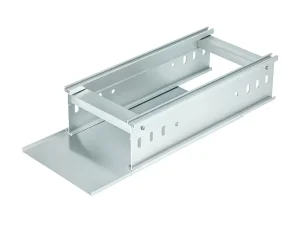
Buy Pre Galvanized Ladder Type Cable Tray GI & HDG Customizable Reinforcing
Technical Specifications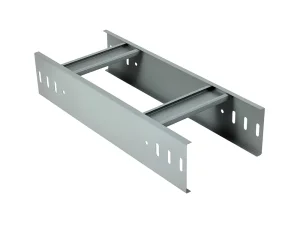
Buy Fireproof Powder Coated Pre Galvanized Ladder Cable Tray Manufacturer
Technical Specifications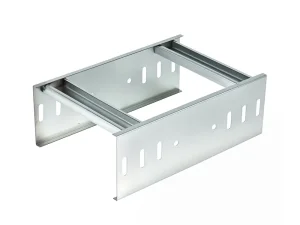
Buy 304/316 Stainless Steel Ladder Type Cable Tray Perforated Design
Technical Specifications
Macro Engineering Dynamics
Ethiopia’s Industrial Surge: Critical Electrical Containment Needs
An authoritative whitepaper assessment of electrical infrastructure requirements across the Horn of Africa, from high-altitude geothermal valleys to mega textile corridors.
Hydropower & Grid Transmission
Mega generation nodes such as the Grand Ethiopian Renaissance Dam (GERD), Koysha, and Gibe III require massive step-up transformer interconnects and high-capacity switchyards. High-voltage single-core cables dissipate excessive thermal energy; ladder cable trays provide up to 100% natural convective heat venting, eliminating current derating factors associated with solid-bottom troughs.
Industrial Parks (IPDC Corridor)
Federal special economic zones across Hawassa, Bole Lemi, Kilinto, Kombolcha, and Dire Dawa aggregate heavy agro-processing, textile mills, and pharmaceutical labs. These multi-acre manufacturing facilities demand robust cable ladder runs capable of routing thousands of power, automation, and instrumentation conductors over 4m to 6m spans with minimal structural sagging.
Telecom & Hyperscale Data Centers
The aggressive expansion of Ethio Telecom combined with the private network rollout of Safaricom Ethiopia and regional cloud tier-3 datacenters in Addis Ababa creates high demand for pre-galvanized, yellow/red powder-coated, and wire-grid ladder systems. Color coding guarantees swift overhead maintenance and safety segmentations between fiber optic trunks and 48V DC power supplies.
High Altitude (2,400m ASL) & Intense UV Degradation
Addis Ababa and the central Ethiopian plateau sit at elevations between 2,200m and 2,600m above sea level. Solar irradiance and atmospheric UV levels are exceptionally intense. Conventional organic polymer and thin paint finishes suffer premature chalking and brittle micro-cracking within 24 months. Shanghai Qiongkai provides UV-stabilized thermosetting polyester powder coatings and hot-dip galvanization with silicon content controlled below 0.04% or between 0.15%–0.25% (Sandelin curve compliance), preventing excessive flaking and ensuring a 40+ year exterior service life.
Main Ethiopian Rift (MER) Seismic & Geothermal Zones
Projects located within the East African Rift Valley (e.g., Aluto-Langano, Tendaho geothermal plants, and rail corridors near Awash) operate in active seismic and high-sulfur atmospheric conditions. Corrosive hydrogen sulfide (H2S) gases rapidly degrade standard zinc finishes. For these high-temperature geothermal areas, we engineer specialized SS316L austenitic ladder systems or vinylester pultruded FRP composite cable ladders equipped with engineered seismic bracing flanges to absorb multi-axis structural displacement.
Engineering Performance Data
Comparative Engineering Matrix: Metallurgy, Finish & Ethiopian Application
Select optimal containment metallurgy based on international mechanical classifications and verified environmental exposure ratings.
| Material / Treatment | Standard Specification | Tensile / Yield (MPa) | Corrosion Zone | Ethiopian Industrial Application Context | Recommended Span |
|---|---|---|---|---|---|
| Pre-Galvanized Steel (GI) PG | EN 10346 / JIS G3302 (Z275) | Yield ≥ 250 MPa | ISO 12944 C1–C2 | Commercial office towers in Addis Ababa, indoor data suites, enclosed HVAC crawl spaces. | 1.5m to 2.5m |
| Hot-Dip Galvanized (HDG) HDG | ISO 1461 / ASTM A123 / BS EN 61537 | Yield ≥ 235–355 MPa | ISO 12944 C3–C5 | Outdoor switchyards, GERD sub-stations, Modjo intermodal container depots, road bridges. | 3.0m to 6.0m (Heavy Duty) |
| Powder Coated over GI/CR Epoxy / Poly | ISO 12944-6 / Qualicoat Class 1 | Yield ≥ 235 MPa | Indoor / Architectural | Safaricom / Ethio Telecom data halls, security server rooms, industrial color coding (Red/Yellow/Blue). | 2.0m to 3.0m |
| Stainless Steel 304 (1.4301) SS304 | ASTM A240 / EN 10088-2 | Tensile ≥ 520 MPa | ISO 12944 C3–C4 | Bole Lemi food processing, beverage bottling plants, automated packaging lines. | 2.5m to 4.5m |
| Stainless Steel 316L (1.4404) SS316L | ASTM A240 / EN 10088-4 (Mo ≥ 2.0%) | Tensile ≥ 530 MPa | ISO 12944 C5-M / Extreme | Kilinto Industrial Park pharmaceutical active plants, chemical synthesis, geothermal acid air. | 3.0m to 5.0m |
| Fiberglass Reinforced Polymer FRP/GRP | ASTM D3917 / UL 94 V-0 / ASTM E84 | Flexural ≥ 200 MPa | Extreme Chemical / H2S | Wastewater treatment plants, fertilizer facilities, high-sulfur geothermal Rift Valley wells. | 2.0m to 4.0m |
Looking for NEMA VE 1 / IEC 61537 Certified Calculations for Your Bill of Quantities?
Our engineering division produces turnkey structural deflection simulations, rung shear stress calculations, and seismic anchoring designs tailored to Ethiopian local building codes.
Global Supply Chain & Compliance
Procurement Logistics: From Shanghai Factory Gates to Modjo Dry Port
How tier-1 EPC contractors, international project developers, and Ethiopian importers eliminate supply chain friction, navigate customs, and optimize logistics.
Intermodal Shipping via Port of Djibouti
Being a landlocked economy, Ethiopia routes over 95% of industrial trade through the Doraleh Multi-Purpose Port in Djibouti. Qiongkai pre-packs ladder trays in high-density nested steel strapping inside 40ft High Cube containers. Rail transfer via the electrified Addis Ababa–Djibouti Railway brings cargo directly into Modjo Dry Port or Dire Dawa Dry Port, minimizing overland trucking damages and demurrage charges.
ECAE Verification & Trade Documentation
Imports into Ethiopia must satisfy Ethiopian Conformity Assessment Enterprise (ECAE) technical mandates. Every Qiongkai production run is accompanied by 3.1 Mill Test Certificates (MTC) documenting steel chemical compositions (C, Mn, Si, P, S), coating thickness electromagnetic gauging logs, salt spray testing data (up to 1,000 hrs ASTM B117), and Third-Party Pre-Shipment Inspection (SGS, BV, Intertek) reports.
Forex (Letter of Credit) & NBE Compliance
Recognizing the foreign currency allocation processes governed by the National Bank of Ethiopia (NBE) and commercial banks (such as Commercial Bank of Ethiopia, Awash Bank, Dashen Bank), our commercial division accepts confirmed, irrevocable documentary Letters of Credit (L/C). We ensure all Proforma Invoices comply strictly with local customs tariff HS codes (7308.90 for steel ladder structures).
Future-Ready Engineering
Engineering Innovation: Modularity, BIM & Decarbonization
Leading the global evolution in cable containment architecture with smart engineering tools, high-speed connection assemblies, and sustainable fabrication.
Full BIM / Revit 3D Digital Twin Libraries
Modern mega projects in East Africa are drafted using Level-2 and Level-3 Building Information Modeling (BIM). We deliver parametric Autodesk Revit family models (.rfa) and IFC files containing precise side-rail profiles, rung weld centroids, connector bolt hole locations, and structural weight attributes. Electrical consultants can run clash-detection simulations against HVAC ducting, plumbing lines, and structural steel prior to factory cutting.
Rapid Snap-In Splice Plates & Grounding Continuity
Onsite labor availability for skilled metalworkers in remote Ethiopian substation sites is often limited. Our patented quick-connect expansion splice connectors cut installation time by up to 45%. Integrated serrated copper bonding clips guarantee earth continuity according to IEC 61537 Clause 11.1, eliminating external jumper wire soldering while preventing potential dangerous arc fault discharge.
Complete System Catalog
Extended Cable Ladder & Support Solutions for Ethiopia
Explore our full manufacturing range of stainless steel, lightweight pre-galvanized, and colored safety cable racks engineered to rigorous global specifications.
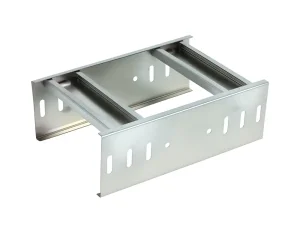
Wholesale 304 & 316 Stainless Cable Ladder Factory - Ethiopia Heavy Industry
View Product Specs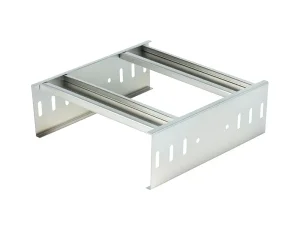
Buy Stainless Cable Ladder Factories, Direct Factory Price to Addis Ababa
View Product Specs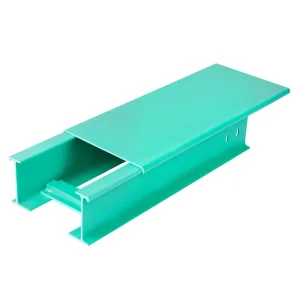
Buy Light Weight FRP Ladder Type Cable Tray Manufacturers, Supplier
View Product Specs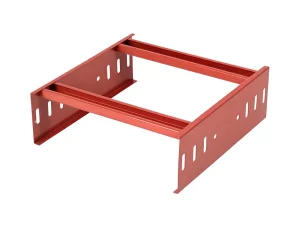
Buy Pre Galvanized Powder Coated Cable Ladder Red Manufacturer
View Product Specs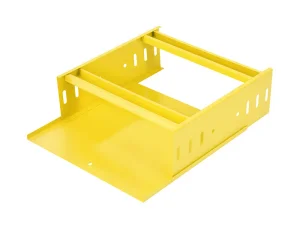
Buy Pre Galvanized Powder Coated Cable Ladder Yellow Manufacturers
View Product Specs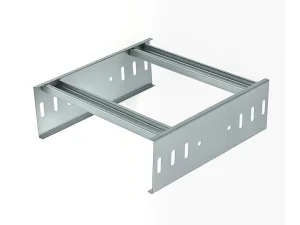
Wholesale Pre Galvanized Light Weight Cable Ladder Manufacturer Price
View Product Specs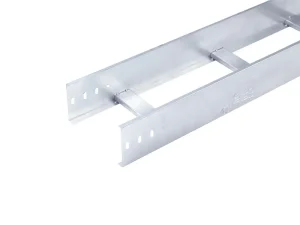
Wholesale Pre Galvanized Ladder Cable Tray Factory, Large Volume Supply
View Product Specs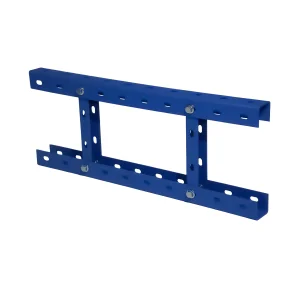
Wholesale Durable Blue Powder Coated Ladder Cable Rack Manufacturer
View Product Specs
Knowledge Repository & Engineering Answers
Frequently Asked Questions: Cable Ladder Procurement in Ethiopia
Direct technical and procurement clarifications addressing structural load limits, anti-corrosion standards, import tariffs, and on-site assembly requirements.
Why is a ladder-type cable tray preferred over perforated or solid bottom trays for Ethiopian power projects?
In major utility developments such as the GERD, sub-stations, and high-voltage industrial connections, large cross-section power cables (XLPE insulated, copper/aluminum core) generate substantial Joule heating (I2R losses). Perforated or solid-bottom cable trays restrict upward air convection, requiring electrical designers to apply severe current derating factors according to IEC 60364-5-52.
Ladder cable trays feature an open design with rungs spaced at 200mm to 300mm intervals, facilitating maximum 360-degree free air ventilation. This allows conductors to operate at their highest current carrying capacity. Furthermore, ladder trays prevent the accumulation of moisture and volcanic dust frequently encountered in the Rift Valley, minimizing short-circuit risks.
What zinc coating thickness is required for hot-dip galvanized ladder trays installed outdoors in Ethiopia?
For standard outdoor installations in high-altitude environments such as Addis Ababa or Hawassa, we recommend compliance with ISO 1461 and ASTM A123, requiring a minimum average hot-dip galvanized coating thickness of 65 μm to 85 μm (equivalent to approximately 460–610 g/m²).
In geothermal or heavy industrial chemical zones (such as Aluto-Langano or Kilinto Pharma Park), atmospheric sulfur dioxide and acidic moisture require heavier protection. For these locations, Qiongkai offers custom heavy-coat galvanizing up to 100–120 μm, or recommends switching to SS316L stainless steel or vinyl-ester pultruded FRP composite ladders.
How are containerized sea freight shipments dispatched to inland Ethiopian destinations?
Because Ethiopia is landlocked, maritime shipping routes originate from our factory near Shanghai port (Yangshan/Waigaoqiao) and arrive at the Port of Djibouti (Doraleh Port) via ocean carriers. Transit time is typically 18 to 24 days.
From Djibouti, cargo transfers to the Addis Ababa–Djibouti Railway for bonded multi-modal transport into inland terminals such as Modjo Dry Port, Kality Dry Port, or Dire Dawa Dry Port. Qiongkai provides complete export packaging, including moisture-barrier shrink wrap, wooden fumigated skids (ISPM 15 compliant), and steel reinforcement banding to prevent damage during intermodal handling.
Does Shanghai Qiongkai support Ethiopian Letter of Credit (L/C) payments and ECAE quality inspections?
Yes. We regularly work with international EPC contractors and Ethiopian commercial trading houses utilizing documentary Letters of Credit (L/C) managed through the Commercial Bank of Ethiopia (CBE) and private commercial banks. Our finance department ensures compliance with NBE foreign exchange rules.
To satisfy Ethiopian Conformity Assessment Enterprise (ECAE) and customs import clearance protocols, we coordinate with accredited international inspection agencies including SGS, Bureau Veritas (BV), and Intertek to issue Certificate of Conformity (CoC) documents prior to vessel departure.
Can Qiongkai provide seismic bracing brackets and custom-height side rails for high-span runs?
Yes. For regions in the Main Ethiopian Rift subject to tectonic activity, we manufacture specialized seismic bracing systems and 41×41 / 41×82 back-to-back slotted strut channels with anti-seismic grip flanges.
For long-span bridge crossings or overhead pipe racks requiring 4m to 6m spans between supports, we manufacture heavy-duty side rail profiles with heights of 100mm, 150mm, and 200mm, reinforced with return-flange edges. Deflection and load criteria are verified in accordance with NEMA VE 1 Class 20C / 20B test methods.
Partner with a Global Cable Ladder Manufacturer for Ethiopian Projects
Direct-from-factory production, full NEMA VE 1 / IEC 61537 testing compliance, fast transit via the Djibouti Corridor, and comprehensive structural documentation. Submit your bill of materials today for engineering review and competitive CIF Djibouti / Modjo quotes.