
Engineered Wire Mesh Cable Trays for Mumbai Projects
High-capacity mesh basket units tailored for commercial IT hubs in Bandra-Kurla Complex (BKC), clean industrial facilities in Rabale, and metro overhead systems.
Wire Mesh Cable Tray Supply Dynamics in Mumbai & MMR
Mumbai, the commercial nerve center of India, commands a unique infrastructure and industrial landscape. The Mumbai Metropolitan Region (MMR)—spanning South Mumbai, the Bandra-Kurla Complex (BKC), Navi Mumbai (Airoli, Mahape, Taloja), and the Thane-Belapur corridor—has evolved into the country’s most concentrated hyperscale data center hub and advanced manufacturing zone. Cable containment architecture in this high-density urban environment faces two non-negotiable operational requirements: unmatched thermal efficiency for power cables and aggressive defense against tropical maritime salinity.
Navi Mumbai Hyperscale Cluster
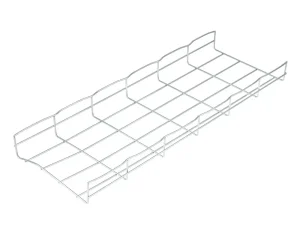
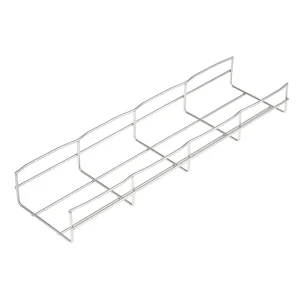
Over 55% of India’s data capacity is located around Navi Mumbai and Chandivali. Operators require 100% open-architecture wire mesh trays to maximize natural air cooling, decrease HVAC chill cycle consumption, and completely avoid zinc whisker contamination on high-speed server feeds.
Cost Engineering & Landed Prices
Procurement teams in Mumbai face volatile raw steel rates and local distributor markups. Sourcing engineered wire basket systems with high-tensile Chinese cold-drawn wire directly into Nhava Sheva Port (JNPT) provides a 15% to 28% total landed cost advantage over local piecemeal fabrication.
C4/C5 Coastal Marine Atmospheric Threat
With Arabian Sea winds bringing high chloride humidity (often exceeding 85% RH during monsoon seasons), conventional light galvanizing fails within 18 months. Qiongkai supplies high-micron hot-dip galvanized (HDG) to BS EN ISO 1461 and AISI 316L stainless steel wire mesh trays built for decades of zero maintenance.
Wire Mesh Cable Tray Price Per Meter in Mumbai: Technical Cost Analysis
A reliable engineering bill of quantities (BOQ) requires an understanding of how wire mesh cable tray prices are established. In Mumbai, unit rates are governed by four structural metrics: wire gauge cross-section (3.5mm to 6.0mm), metallurgy (carbon steel Q235B vs. AISI 304/316L), surface treatment thickness (microns of zinc), and automated welding precision. Below is our benchmark procurement guide for engineering consultants and EPC contractors.
| Tray Dimensions (W × H mm) | Wire Diameter (ø) | Material & Finish | Safe Load Capacity (Span 1.5m) | Estimated Mumbai Price Range (INR / Meter) | Equivalent USD Price (FOB/CIF) | Typical Mumbai Installation Site |
|---|---|---|---|---|---|---|
| 50 × 50 mm | 3.8 mm – 4.0 mm | Electro-Galvanized (EG) | 22 kg / m | ₹280 – ₹360 | $3.40 – $4.35 | Under-floor IT routing, BKC Office towers |
| 100 × 50 mm | 4.0 mm – 4.5 mm | Pre-Galvanized (PG) | 42 kg / m | ₹390 – ₹510 | $4.70 – $6.15 | Commercial ceilings, Mumbai Metro stations |
| 200 × 50 mm | 4.5 mm – 5.0 mm | Hot-Dip Galvanized (HDG) | 68 kg / m | ₹620 – ₹790 | $7.50 – $9.50 | Industrial manufacturing, Rabale / Taloja MIDC |
| 300 × 100 mm | 5.0 mm – 5.5 mm | Hot-Dip Galvanized (HDG) | 110 kg / m | ₹980 – ₹1,250 | $11.80 – $15.10 | Substation control rooms, Kurla power vaults |
| 400 × 100 mm | 5.0 mm – 6.0 mm | Nickel-Chrome / EG | 145 kg / m | ₹1,150 – ₹1,480 | $13.90 – $17.85 | Overhead fiber runs, Navi Mumbai Data Halls |
| 500 × 100 mm | 5.5 mm – 6.0 mm | HDG (≥65μm Zinc) | 185 kg / m | ₹1,450 – ₹1,890 | $17.50 – $22.80 | Heavy automation plants, auto corridor Thane |
| 200 × 50 mm | 4.5 mm | Stainless Steel 304 | 75 kg / m | ₹1,280 – ₹1,650 | $15.45 – $19.90 | Pharma labs, Tarapur / Thane cleanrooms |
| 300 × 100 mm | 5.0 mm | Stainless Steel 316L | 120 kg / m | ₹2,100 – ₹2,750 | $25.30 – $33.15 | JNPT Container Terminal, Marine platforms |
Cost Mitigation Advisory for EPC Procurement Directors
When evaluating suppliers in Mumbai, request mill test certificates verifying wire diameter after surface treatment versus nominal base metal thickness. Many local fabricators sell 3.8mm drawn wire advertised as 4.5mm by measuring thick, uneven zinc pools. Shanghai Qiongkai guarantees calibrated base steel wire gauge strictly measured prior to treatment, guaranteeing rated structural deflection limits (L/200 according to NEMA VE 1).
Macro Solutions: Why Global Tier-1 EPCs Specify Wire Mesh
Traditional closed sheet metal trunking and perforated cable trays are increasingly obsolete in modern digital infrastructure. Wire mesh cable trays (also termed wire basket trays) have achieved global dominance across high-performance facilities due to four core electrical and thermal engineering principles:
Thermal Dissipation & Ampacity Ratings
Closed metal trunking traps heat, forcing engineers to de-rate cable ampacity by 15% to 30% according to IEC 60364-5-52. Wire basket trays provide a 90% open surface area, allowing natural air convection to cool high-voltage and PoE data cables. This reduces building cooling energy consumption by up to 22% in Mumbai's hot, humid climate.
Elimination of "Zinc Whisker" Failures
Substandard electroplated trays can grow microscopic conductive zinc filaments (zinc whiskers) over time under static DC electrical fields. When dislodged by airflow, they enter server motherboards and cause disastrous short-circuits. Qiongkai applies proprietary post-weld passivated finishes and SS304/316 alloys certified completely whisker-free for mission-critical IT installations.
Site Installation Speed: 60% Faster
Unlike sheet metal trays that require pre-fabricated factory elbows, tees, and cross reducers, wire mesh trays can be cut and bent on-site using standard side-action bolt cutters and fast-clamping kits. Electrical contracting teams in Mumbai complete complex site rerouting in minutes rather than waiting weeks for custom sheet metal fittings.
Safe-T-Edge™ Patented Continuous T-Weld Wire Edge
Cable snagging and jacket tearing represent a primary cause of structural failure during high-tension cable pulling. Conventional mesh trays feature sheared wire ends that leave sharp, burred edges. Shanghai Qiongkai engineers every basket tray with a patented Safe-T-Edge™ round-chamfered longitudinal top wire. This guarantees zero cut damage to sensitive Cat6A, Cat7, and optical fiber jackets during high-speed cable pulls, meeting the stringent installation criteria of BICSI TDMM and TIA-569 standards.
Engineered Application Scenarios in Greater Mumbai
From underground transit tunnels to multi-tenant cloud facilities, our wire basket containment pathways are deployed across the most demanding physical infrastructure projects in Maharashtra.
Navi Mumbai & Chandivali Cloud Corridors
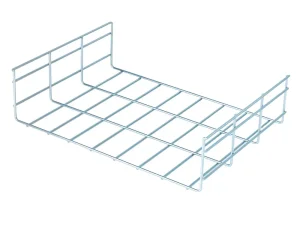
High-density data campuses require multi-tier overhead wire basket runs. Our 400mm × 100mm and 600mm × 100mm trays support massive fiber trunk bundles while sustaining zero magnetic induction interference and allowing instant fiber drop-outs via drop-out plates.
Thane-Belapur & Tarapur Pharma Corridors
Pharmaceutical processing environments demand sanitary containment that prevents airborne dust settlement and bacterial growth. Qiongkai AISI 316 electro-polished wire basket systems allow clean CIP (Clean-in-Place) washdowns without harboring moisture or particulate traps.
Mumbai Metro Line Expansion (Aqua & Red Lines)
Subway tunnels and passenger concourses require low-smoke zero-halogen (LSZH) compliant routing with certified fire integrity (E30 to E90 under DIN 4102-12). Our pre-galvanized and HDG steel basket trays ensure non-combustible pathways that maintain circuit operation in fire conditions.
JNPT Port Logistics & Uran Petrochem Complexes
Exposed coastal substations and chemical fuel processing plants suffer from airborne sulfur dioxide and salt fog. Our ISO 1461 hot-dip galvanized trays (≥85μm nominal zinc) and duplex stainless steels deliver a verified 25-year service life in C5-M extreme marine zones.
Full Regulatory Alignment: BIS, IEC & Project Audits
Navigating Indian regulatory compliance and municipal scrutiny is vital for EPC engineering contractors like Larsen & Toubro, Tata Projects, and Sterling & Wilson. Shanghai Qiongkai operates under ISO 9001:2015 quality standards, providing seamless documentation for local consultant approval.
Standard Harmonization (IEC 61537 / IS Standards)
Every cable tray is tested and certified in accordance with IEC 61537 (Cable management – Cable tray systems) and matches structural requirements under IS 2062 for structural steel and IS 4759 for hot-dip zinc coatings.
Direct Port-to-Site Logistics (Nhava Sheva)
Located near Shanghai and Ningbo export ports, Qiongkai arranges direct container liner sailings to Nhava Sheva (JNPT) with standard 12–15 day sea transit. We provide Form A / COO documentation to streamline customs clearance and minimize port demurrage risks.
Certified Mill Test Reports (EN 10204 3.1)
All delivered batches include full chemical composition analysis, tensile strength tests of welded wire intersections (>1,100 N shear strength), and magnetic induction zinc coating thickness gauges matching international project specifications.
The Future of Cable Containment in Smart Megacities
As Mumbai transitions into a global technology and financial superpower, cable management infrastructure is evolving beyond static steel bars. Qiongkai’s R&D team is pioneering three key technical advancements scheduled for Indian market rollout:
BIM Integration & 3D Digital Twin Libraries
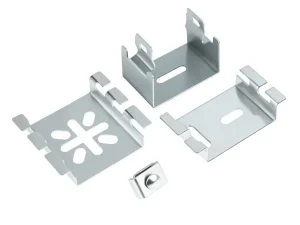
Full Autodesk Revit and Navisworks BIM parametric families for all mesh widths, couplers, and strut supports. Indian design engineers can accurately model thermal loads, cable drop-out clearances, and seismic bracing before ordering components.
Green Low-Carbon EPD Steel
In accordance with global net-zero mandates, our electric-arc-furnace (EAF) steel wire mesh trays reduce embodied carbon emissions by up to 45% compared to blast furnace products, assisting projects in achieving LEED Platinum and GRIHA 5-star ratings in MMR.
IoT Structural & Thermal Sensor Mounts
Integrated clip-on sensor brackets for fiber-optic temperature sensing (DTS) and load-deflection monitoring, enabling hyperscale facilities to identify local cable overheating and line sagging in real time.
Frequently Asked Questions: Wire Mesh Cable Trays in Mumbai
Detailed, technically verified answers to the most common questions raised by electrical consultants, procurement heads, and structural site engineers in Maharashtra.
What is the price difference between Pre-Galvanized (PG) and Hot-Dip Galvanized (HDG) wire mesh trays in Mumbai?
How does Shanghai Qiongkai handle shipping and customs clearance into Mumbai (JNPT Port)?
Can wire mesh cable trays replace traditional ladder cable trays in heavy industrial sites?
What measures prevent electrolytic (bimetallic) corrosion when mounting stainless trays on galvanized supports?
What wire diameter is recommended for hyperscale server halls in Navi Mumbai?
Do your wire mesh trays comply with electrical earthing and continuity standards?
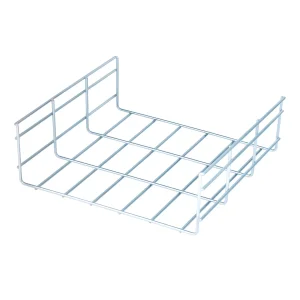
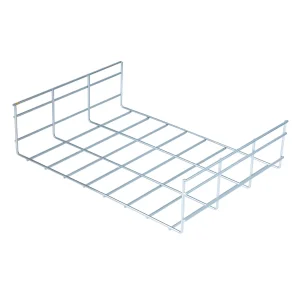
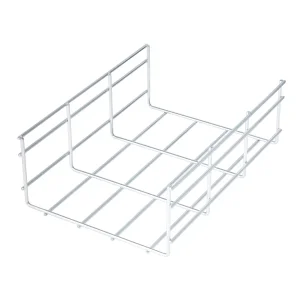
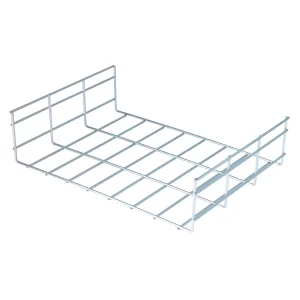
Explore Factory Specifications: Wire Mesh Series
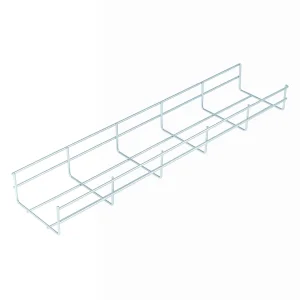
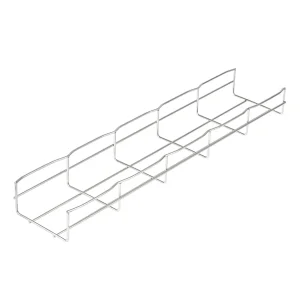
Direct factory manufacturing for engineering contractors. Select your target dimensions below to view load tables, accessory fittings, and CAD layouts.
Request Your Project BOM & Landed Price Quote for Mumbai
Submit your cable schedule, layout drawings, or Bill of Quantities (BOQ). Our engineering desk provides free static deflection calculations, custom dimensional layouts, and direct CIF Nhava Sheva container pricing within 24 business hours.