
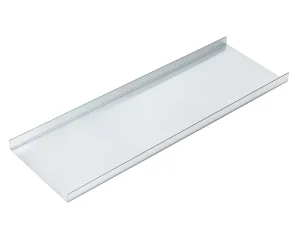
Pre-Galvanized Cable Tray Cover Protection (CEC Snow & Dust Compliant)
Buy Pre-Galvanized Cable Tray Cover Cable Protection Manufacturers, Supplier
Engineered to seamlessly integrate into standard Canadian Electrical Code installations. Cold-rolled, pre-galvanized, and hot-dip treated fittings designed for fast on-site bolted assembly.
Buy Pre-Galvanized Cable Tray Cover Cable Protection Manufacturers, Supplier
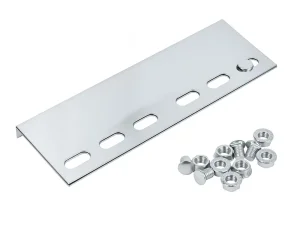
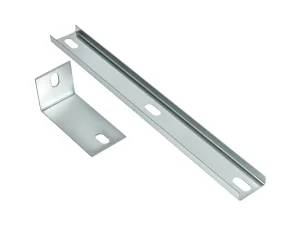
Wholesale Pre-Galvanized Cable Tray Connections spare parts Supplier, Price
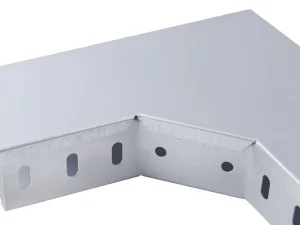
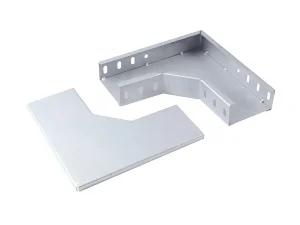
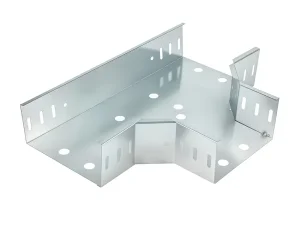
Buy Pre Galvanized Elbow / Tee / X for cable tray with cover product Manufacturer, Supplier
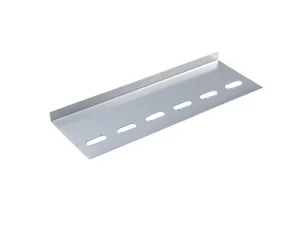
Wholesale Pre-Galvanized Connections spare parts Manufacturers, Factory
Analyzing environmental extremes, capital project demands, and the stringent CSA electrical framework governing industrial electrification across Canadian provinces.
Canada presents some of the most grueling operating environments for electrical containment systems globally. From the bitumen processing facilities in Fort McMurray, Alberta, where winter temperatures plunge to -45°C, to the humid marine and atmospheric chloride zones along British Columbia's coastal terminals and Halifax ports, cable tray accessories cannot be treated as commodity stamped hardware. In standard indoor applications, minor steel imperfections may pass unnoticed, but under Canadian freeze-thaw cycles and heavy ice-loading scenarios, low-quality accessories become structural failure points.
Cable tray accessories—including standard straight splice plates, horizontal and vertical adjustable hinges, expansion splices, hold-down clamps, barrier strips, and dropout plates—bear the combined stresses of mechanical cable pulling tension, dead loads from frozen ambient condensation, and severe thermal contraction. Shanghai Qiongkai Industry Co., Ltd. manufactures electrical containment accessories engineered with selected carbon steel and high-ductility structural grades that maintain Charpy V-notch impact toughness at sub-zero temperatures, eliminating brittle fracture risks during arctic cold snaps.
According to the Canadian Electrical Code (CEC, CSA C22.2 No. 0 / Part I), engineers must account for thermal elongation and contraction along any continuous cable tray run exceeding predetermined thresholds. In typical Canadian exterior installations, seasonal temperature differentials reach up to 75°C (from +35°C in midsummer to -40°C in midwinter). Steel tray runs will expand and contract by approximately 12 mm per 30 meters of continuous run.
Without engineered slotted expansion splice plates and step-shouldered guide bolts installed at calculated intervals, thermal forces will buckle side rails, shear off fasteners, or dislodge ladder rungs. Qiongkai supplies high-precision expansion connectors equipped with bonded copper or tinned copper electrical continuity bonding jumpers, ensuring the safety ground path remains compliant under CEC bonding and grounding directives while accommodating full thermal sliding movement.
Meeting and exceeding North American structural parameters for heavy-duty commercial fit-outs and mega-industrial infrastructure projects.
Jointly published by CSA and NEMA, this standard sets load classifications (Class A through E) and destructive testing criteria. All Qiongkai splice joints undergo dynamic structural load testing, ensuring 100% moment capacity transfer across joints without excessive deflection between standard 3m or 6m support spans.
Seismic restraint is mandatory in coastal British Columbia (Vancouver, Richmond) and the Saint Lawrence seismic zone in Quebec. Qiongkai manufactures seismic strut clamps, rigid 4-way sway braces, and heavy-duty seismic tray brackets engineered to resist horizontal and vertical seismic acceleration coefficients.
For aggressive environments such as potash mines in Saskatchewan and pulp and paper mills in New Brunswick, components undergo hot-dip galvanizing per ASTM A123/A153 with zinc baths exceeding 85 microns thickness, or are fabricated from marine-grade pickled & passivated SS316L stainless steel.
| Material / Finish Class | Applicable Canadian Standard | Yield Strength (MPa) | Target Environmental Exposure | Typical Canadian Project Archetype |
|---|---|---|---|---|
| Pre-Galvanized Steel (PG/G90) | ASTM A653 / CSA G40.21 | ≥ 250 MPa | Dry Indoor Controlled, RH < 60% | Commercial Office Towers (Toronto, Calgary downtown core) |
| Hot-Dip Galvanized (HDG) | ASTM A123 / ISO 1461 | ≥ 275 MPa | Outdoor Industrial, Heavy Snow, Moderate C3-C4 | Alberta Oil Sands Refineries, Mining Extraction Infrastructure |
| Marine Stainless Steel 316L | ASTM A240 / UNS S31603 | ≥ 290 MPa | High Salt Mist, Severe Chemicals, C5 Marine | BC Coastal LNG Terminals, Atlantic Offshore Oil Platforms |
| Extruded Aluminum 6063-T6 | ASTM B221 | ≥ 215 MPa | Chemical Fumes, Low Magnetic Losses, Lightweight | Electrochemical Smelters, Hydroelectric Generating Stations |
| Fiberglass Reinforced Polymer (FRP) | ASTM D3917 / UL 94 V-0 | Tensile ≥ 200 MPa | Extreme Acid / Alkali / Chloride Immersion | Saskatchewan Potash Refining, Industrial Wastewater Facilities |
How Shanghai Qiongkai bridges direct Chinese industrial precision with the fast-track procurement requirements of Tier-1 Canadian EPC firms.
The Canadian commercial construction market has historically suffered from prolonged distributor markups and 12-to-18-week lead times for non-standard cable tray fittings such as reducers, vertical tees, and custom radius bends. Qiongkai operates three dedicated production facilities covering 30,000 square meters in the Songjiang industrial hub of Shanghai, equipped with 12 continuous roll-forming lines, automated progressive stamping dies, and multi-axis laser cut-off systems.
By controlling the manufacturing pipeline directly from hot-rolled raw coil slitting to electro-deposition and hot-dip bath processes, Qiongkai eliminates middleman layers. For Canadian procurement directors at companies like Hatch, WSP, Fluor, and AtkinsRéalis (formerly SNC-Lavalin), this translates to an immediate 20% to 35% material cost efficiency while shrinking lead times for engineered fittings down to 3 to 4 weeks production time.
Logistical continuity is paramount in mitigating liquidated damages on multi-million dollar Canadian infrastructure jobs. Located in close proximity to both Shanghai Yangshan Port and Waigaoqiao Terminals, Qiongkai manages export logistics directly. Standard shipping routes provide direct ocean transport to the Port of Vancouver (handling Western Canada distribution via CP/CN Rail hubs in Calgary and Edmonton) within 14 to 18 transit days.
For Eastern Canadian destinations, cargo routes navigate directly to the Port of Montreal and Port of Saint John, ensuring seamless inland freight consolidation into the industrial corridors of Ontario and Quebec. All accessories are packaged in IP-rated shrink-wrapped fumigated timber pallets with color-coded carton labeling keyed directly to client Bill of Quantities (BOQ) line items and isometric spool drawings.
Whether matching legacy imperial side-rail flanges (3", 4", 5", 6" depths) or fabricating custom reducers (e.g., 900mm down to 300mm), in-house CNC mold workshops fabricate tooling within 7 working days, allowing exact retrofit compatibility with existing Canadian plants.
Every shipment is accompanied by complete mechanical and chemical assay documentation, coating thickness verification reports, torque-retention shear tests, and electrical resistance grounding verification in full compliance with Canadian QA/QC audit protocols.
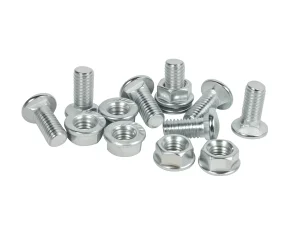
Accessories arrive pre-sorted with carriage bolts, serrated flange locknuts, and bonding straps packed per junction point. This drastically reduces field sorting time for IBEW union electrical contractors, accelerating on-site installation schedules by up to 25%.
Tailoring accessory alloy composition, mechanical strength, and protective finishes to specific regional resource sectors across Canada.
Heavy-duty ladder tray clamp kits, hold-down clips, and hot-dip galvanized peaked covers designed to shed heavy snowfall and withstand airborne sulfur, steam exhaust, and hydrocarbon vapor exposure.
Marine-grade SS316 cable clamps, aluminum strut brackets, and heavy-duty grounding accessories installed along tidal docks, pulp mills, and hydroelectric turbine cable galleries subject to 100% relative humidity.
Precision electro-zinc and powder-coated (RAL 9005/5015) wire mesh basket couplers, fast-splice fasteners, overhead trapeze hangers, and drop-out waterfalls deployed in mission-critical facilities across Montreal and Toronto.
High-tensile structural channel brackets, seismic sway bars, and heavy-duty blind ends designed for gold, nickel, and lithium processing mills subject to extreme blasting vibration and corrosive dust.
Epoxy-coated and specialized fiberglass (FRP) structural fittings, stainless steel fasteners, and sealing splice plates built to prevent catastrophic galvanic degradation from saturated potassium chloride salts.
How digital modeling, tool-less connection mechanics, and decarbonization are redefining the North American electrical infrastructure landscape.
With union electrician labor costs rising across Canada, mechanical contractors are demanding rapid-assembly hardware. Qiongkai is actively engineering patented snap-on splice plates and twist-lock hold-down clamps for wire mesh and perforated trays that eliminate nuts and bolts entirely. These tool-less connections reduce tray joining time from 4 minutes per joint to under 45 seconds, providing substantial savings on large commercial fit-outs and hyperscale data halls.
Furthermore, these rapid couplers incorporate integrated serrated spring-teeth that bite into metal side rails, providing both mechanical pullout resistance and verified electrical grounding continuity without requiring secondary bonding jumper installations.
Modern Canadian EPC projects are designed within advanced Building Information Modeling (BIM) ecosystems. Qiongkai provides a comprehensive library of Autodesk Revit families (.RFA) and 3D IFC parametric models for all cable tray fittings, reducers, tees, and support channel accessories. Every component contains accurate clearance envelopes, bend radius properties, and allowable weight parameters.
This allows design engineers to run clash detection in Navisworks prior to procurement, eliminating field fitting errors, avoiding collisions with HVAC ductwork or process piping, and enabling exact procurement counts on Bill of Materials (BOM) without over-ordering scrap allowance.
Direct answers to critical structural, compliance, material, and logistics questions asked by Canadian consulting engineers and EPC procurement teams.
Engineered bends, brackets, fasteners, perforated trays, and heavy-duty powder-coated ladder systems directly from our factory floor.
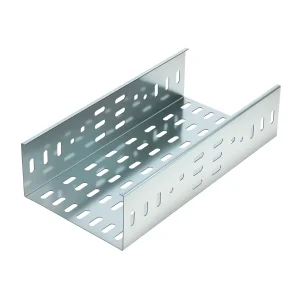
Buy Pre Galvanized Perforated Cable Tray 200 100mm Manufacturers, Supplier
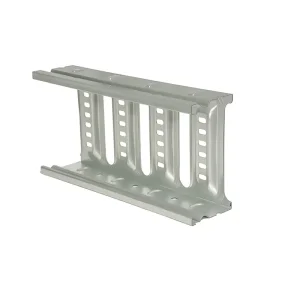
Wholesale Pre Galvanized Customizable Ladder Heavy Duty Cable Tray Manufacturers, Price
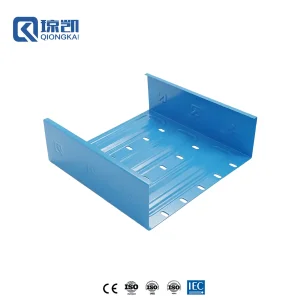
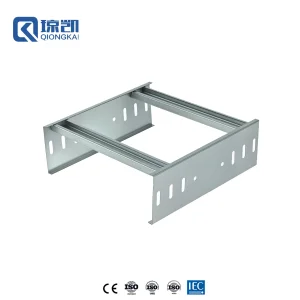
Buy Powder Coated Ladder Type Cable Tray 200*100 - Gray Manufacturer, Manufacturers