
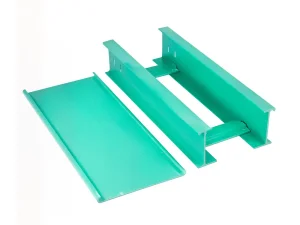
Engineered Production Line
Standard & Heavy-Duty Cable Ladders for Oman EPCs
High-capacity structural cable ladders optimized for downstream refining at Duqm, industrial gas distribution in Sohar, and subsea coastal power plants in Salalah.
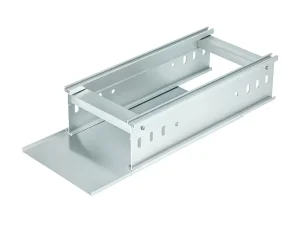
Sohar Heavy-Duty Hot-Dip Galvanized & GI Reinforced Cable Ladder
View Product Specs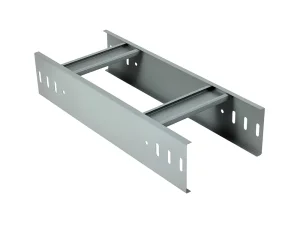
Muscat Power Substation Fireproof Powder-Coated Cable Ladder
View Product Specs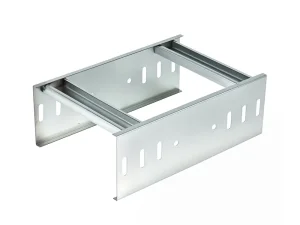
PDO Chemical Zone 1 SS304/SS316L Heavy Gauge Cable Ladder
View Product SpecsStrategic Market Intelligence
Oman Industrial Dynamics & The Critical Role of Cable Ladders
Analyzing macroeconomic infrastructure drivers, from Oman Vision 2040 industrial diversification to the unique environmental stresses of the Arabian Peninsula.
1. Oman's Expanding Industrial Corridors & Megaproject Demand
The Sultanate of Oman is undergoing a rapid economic diversification program anchored by major investment hubs including the Special Economic Zone at Duqm (SEZAD), the Port of Sohar Industrial Complex, and the Salalah Free Zone. As the country shifts toward downstream petrochemicals, green hydrogen facilities (such as HYPORT Duqm), and heavy metallurgical processing, the demand for high-reliability electrical cable management systems has surged. Unlike light-commercial containment, heavy-industrial complexes dictate the deployment of rugged, open-structure ladder type cable trays capable of supporting high-voltage feeder cables, instrumentation lines, and control circuits across extensive outdoor pipe racks and switchyards.
In upstream oil and gas operations overseen by Petroleum Development Oman (PDO), OQ, and Daleel Petroleum, cable ladders are required to deliver uninterrupted service over multi-decade concession lifespans. Cable ladder systems provide superior heat dissipation compared to solid-bottom or perforated cable trays, preventing thermal derating of heavy power cables operating under ambient temperatures that routinely exceed 50°C during Omani summer months.
Extreme Thermal Cycling
Interior desert sites (e.g., Fahud, Nimr, Marmul) experience diurnal temperature swings from 12°C at night to over 52°C in daytime. Metallic cable ladders must accommodate high thermal expansion differentials without racking structural supports or shearing fastener connections.
ISO 9223 C5-M Corrosivity
Coastal facilities bordering the Arabian Sea and the Sea of Oman face severe marine salinity combined with continuous atmospheric moisture. Unprotected steel deteriorates rapidly, requiring minimum 85μm–100μm hot-dip galvanizing, marine-grade SS316L, or corrosion-proof fiberglass (FRP).
Silica Sand Loading
Seasonal Shamal windstorms transport fine quartz sand that settles onto structural supports. Cable ladder designs serving the interior regions of the Sultanate must account for significant added dead loads caused by sand accumulation between cable bundles.
52°C+
Desert Peak Ambient Design Limit
C5-M
Marine Corrosivity Rating (Duqm/Sohar)
100 μm
Available HDG Heavy Zinc Coating
30+ Yrs
Target Design Life for PDO Specs
Procurement Intelligence
Global EPC Sourcing & Ladder Tray Factory Price Dynamics
Transparent cost breakdown of factory-direct cable ladder manufacturing versus local Middle Eastern stockist markups for delivery to Port Sultan Qaboos, Sohar, and Duqm.
Key Cost Drivers for Oman Delivery (CIF Sohar / Duqm / Salalah)
When international EPC contractors bid on mega-tenders in Oman, mechanical and electrical bulk containment packages constitute a major procurement expense. Pricing for cable ladder systems fluctuates based on three primary economic levers:
- Raw Material Indexation: Global hot-rolled carbon steel coils (Q235B / Q355B), nickel/molybdenum surcharges on AISI 316L stainless steel, and isophthalic/vinyl ester resin pricing for FRP ladders directly determine baseline kilogram costs.
- Surface Treatment Metallurgy: The cost of batch Hot-Dip Galvanizing in accordance with BS EN ISO 1461 / ASTM A123 is tied directly to London Metal Exchange (LME) special high grade (SHG) zinc pricing. Thicker coatings (85μm to 100μm) required for Omani coastal atmospheres add a 12% to 18% cost premium over standard commercial 45μm coatings.
- Containerized Freight Optimization: Sourcing factory-direct from our Shanghai manufacturing hub enables engineered nestable ladder designs. By manufacturing side rails with modular rung configurations, shipping density is increased by up to 40% compared to pre-assembled rigid welded units, dramatically reducing landed freight costs per meter.
| Tray Profile / Material Specification | Standard Size (W × H × L) | Estimated Factory Direct Price (USD/m) | Typical Oman Stockist Price (USD/m) | Recommended Application Environment |
|---|---|---|---|---|
| Pre-Galvanized (PG) Light Ladder | 300mm × 100mm × 3m | $8.50 – $12.50 | $16.00 – $22.00 | Indoor Commercial Muscat Commercial Buildings |
| Hot-Dip Galvanized (HDG 85μm) Industrial | 450mm × 125mm × 3m | $18.00 – $25.50 | $32.00 – $44.00 | PDO / Oil & Gas Upstream Pipeline Corridors |
| Heavy-Duty Reinforced HDG (100μm) | 600mm × 150mm × 3m | $27.00 – $38.00 | $48.00 – $65.00 | Sohar Port Heavy Industrial Substation Racks |
| Stainless Steel 316L Offshore Marine | 600mm × 125mm × 3m | $65.00 – $92.00 | $110.00 – $155.00 | Duqm SEZ Chemical, LNG & Jetty Platforms |
| Pultruded Vinyl Ester FRP/GRP Ladder | 450mm × 150mm × 6m | $32.00 – $48.00 | $58.00 – $80.00 | Salalah Coastal Highly Acidic / Desalination Units |
*Note: Pricing brackets represent FOB/CIF reference project figures subject to raw coil indexation, order volume, rung spacing (150mm vs 300mm), and specific third-party test witness protocols. Contact engineering for formal project quotes.
Sourcing Cable Containment for an Omani Tender?
Receive comprehensive structural deflection calculations, Mill Test Certificates (MTC 3.1), and factory-direct project pricing for Sohar, Duqm, and Muscat deliveries.
Structural Standards & Metallurgy
Technical Roadmap: Engineering for Harsh Desert & Marine Realities
Compliance with IEC 61537, NEMA VE-1, and PDO SP-1099 mechanical specifications across structural load classes, earthing integrity, and deflection limits.
Structural Load Classes (NEMA 20B/20C)
Our heavy-duty industrial series is built to sustain working loads exceeding 150 kg/m over 6-meter support spans. Side rails utilize cold-formed I-beam or rolled channel sections with return flanges for maximum torsional rigidity under eccentric loading conditions.
Robotic Welded Rung Connections
Rung-to-side-rail joints feature high-precision continuous robotic MIG welding or mechanical cold swaging capable of withstanding >12 kN shear pullout force. This prevents structural vibration failure induced by industrial gas turbines or desert wind shear.
Electrical Continuity & Earthing
Full conformance to IEC 61537 clause 11 electrical continuity requirements. Splice plates feature integrated bonding jumper configurations maintaining under 50 mΩ electrical impedance across joints, preventing stray arcing in hazardous oil/gas Zone 1 classified zones.
Deflection Criteria and Thermal Expansion Calculations
In accordance with NEMA VE-1 and standard OES-4 (Oman Electrical Standards) engineering guidelines, maximum allowable mid-span deflection must not exceed L/200 under total working load (cables + dead load + wind/sand accumulation). For sensitive instrumentation runs in Oman's downstream plants, conservative engineers frequently demand an L/360 deflection limit.
Because ambient temperatures in interior locations such as Fahud can fluctuate by over 40°C in a 24-hour cycle, expansion splice plates must be placed at calculated intervals. The formula governing expansion joint gaps in steel cable ladder installations across Oman is:
ΔL = L × α × ΔT
Where: L = distance between fixed support anchors (m) | α = steel coefficient of thermal expansion (12 × 10⁻⁶ m/m°C) | ΔT = maximum expected temperature differential (e.g., 65°C metal surface delta).
Where: L = distance between fixed support anchors (m) | α = steel coefficient of thermal expansion (12 × 10⁻⁶ m/m°C) | ΔT = maximum expected temperature differential (e.g., 65°C metal surface delta).
For a typical 48-meter continuous steel ladder run subjected to direct sunlight in Duqm, the total thermal movement reaches approximately 37.4 mm, requiring expansion guide plates and slotted splice hardware at least every 24 meters to avoid buckling.
Quality Assurance & Certification
Localization Support, Compliance & Project Documentation
Meeting the stringent verification frameworks of Petroleum Development Oman (PDO), Nama Group, and global EPC procurement audits.
Documentation & Inspection Matrix for Oman Clearance
Executing industrial projects in the Sultanate requires strict adherence to international vendor qualification procedures. International manufacturers supplying the Omani market must provide complete documentation packages before shipping containers arrive at Omani customs ports:
1. Raw Material Tracing
Original Mill Test Certificates conforming to EN 10204 Type 3.1 validating chemical composition (carbon, manganese, phosphorus, sulfur) and mechanical tensile/yield properties.
2. Coating Verification
Magnetic and eddy-current coating thickness reports (ASTM B499) confirming minimum local and mean zinc weights across side rails, rungs, and splice components.
3. Third-Party Inspection
Pre-shipment inspection (PSI) coordination with global verification bodies including SGS, Bureau Veritas, and TÜV Rheinland prior to factory dispatch from Shanghai.
Specialized Seaworthy Packaging for Equatorial Maritime Transit
Shipping cable containment systems through tropical maritime corridors requires specialized packing protocols. Carbon steel components coated with hot-dip galvanizing are susceptible to "white rust" (wet storage stain) when exposed to high humidity and trapped condensation during container transit across the Indian Ocean.
Our Shanghai facility implements strict container packaging protocols: items are bundled using heavy-gauge plastic strapping, interleaved with vapor corrosion inhibitor (VCI) films, stacked on timber bearers treated to ISPM-15 phytosanitary standards, and accompanied by heavy-load desiccants to ensure pristine surface appearance upon arrival at Port of Sohar or Duqm.
Complete Containment Catalog
Engineered Cable Ladders & Racks for GCC Industrial Applications
Discover our complete range of stainless steel, fiberglass, and heavy galvanized cable ladders manufactured to international project standards.
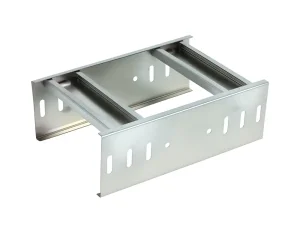
Duqm Refinery SS304/SS316 Heavy Industrial Cable Ladder
View Product Specs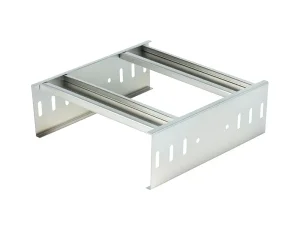
Oman Marine Desalination Plant Marine-Grade Stainless Cable Ladder
View Product Specs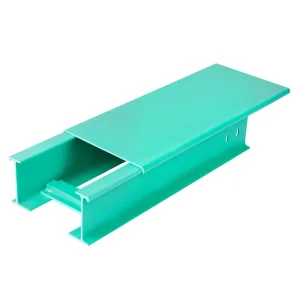
Salalah Port Lightweight Non-Conductive FRP Ladder Cable Tray
View Product Specs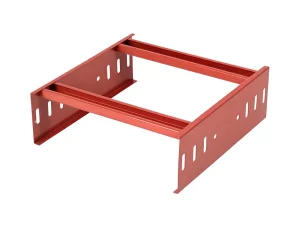
Oman Fire Protection Safety System Red Powder-Coated Cable Ladder
View Product Specs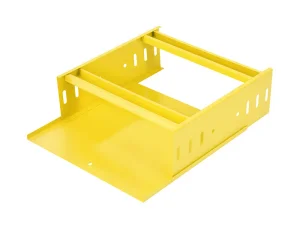
PDO Concession High-Visibility Yellow Powder-Coated Cable Ladder
View Product Specs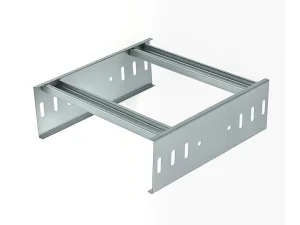
Muscat Commercial Ceiling Fast-Fit Pre-Galvanized Cable Ladder
View Product Specs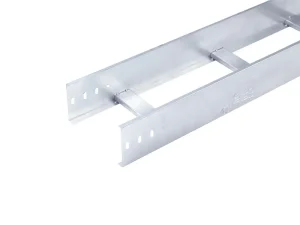
Industrial Warehouse Power Distribution Pre-Galvanized Cable Ladder
View Product Specs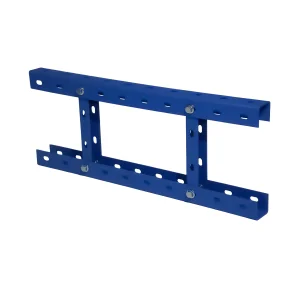
Oman Data Center Infrastructure Blue Powder-Coated Cable Runway Rack
View Product SpecsContractor & Specifier FAQs
Technical & Commercial FAQ for Oman Ladder Tray Procurement
Addressing crucial engineering specifications, shipping timelines, certification standards, and material selection for GCC projects.
What is the typical shipping transit time from your factory to Oman ports?
Direct ocean freight shipments originating from our factory in Shanghai typically require 18 to 24 days transit to Port of Sohar, Port Sultan Qaboos (Muscat), and the Port of Duqm. When factoring in standard manufacturing lead times of 15 to 25 days for containerized orders, contractors can reliably schedule landed project delivery within 5 to 7 weeks from technical drawing approval.
How do you guarantee hot-dip galvanizing quality in coastal C5-M environments?
All carbon steel ladder systems destined for coastal zones like Duqm and Sohar are galvanized after fabrication in accordance with BS EN ISO 1461 and ASTM A123. We maintain strict immersion temperature control and flux purity to deliver consistent zinc coatings between 85μm and 100μm (610 to 710 g/m²), accompanied by batch magnetic thickness test certificates and salt spray test verification.
When should an EPC specify SS316L versus Pultruded FRP ladders in Oman?
Stainless Steel 316L provides exceptional mechanical impact resistance, fire survivability, and electrical shielding, making it the premier choice for hazardous Zone 1 offshore oil rigs and petrochemical refineries. Conversely, Vinyl Ester FRP is immune to chloride stress cracking and acid vapor corrosion, making it optimal for reverse osmosis desalination plants and battery rooms while reducing deadweight on secondary pipe racks.
Can you manufacture custom side rail heights and non-standard rung spacings?
Yes. Our Shanghai facility operates 12 dedicated roll-forming and assembly lines capable of producing custom side rail profiles (e.g., 100mm, 125mm, 150mm, and 200mm heights) and rung configurations spaced at 150mm, 225mm, or 300mm centers. Custom rungs with slotted perforations for specialized cable cleat clamping can be fabricated directly to match client engineering drawings.
How are sand accumulation loads calculated for interior desert installations?
In accordance with regional engineering practices across interior Oman, horizontal cable ladders must accommodate an additional environmental dead load factor. A typical design allowance incorporates 10 kg/m² to 20 kg/m² of accumulated sand mass, particularly when solid tray covers are omitted to preserve free-air cable ampacity ratings.
Are third-party inspection agencies allowed at your factory prior to dispatch?
Absolutely. We routinely facilitate Third-Party Inspection (TPI) audits for our GCC export shipments. Inspectors from SGS, Bureau Veritas, DNV, or contractor QA representatives are granted full factory floor access to witness dimensional checks, weld integrity examinations, zinc coating adhesion testing, and physical packaging verification prior to container sealing.
Do you supply matching strut channels, brackets, and seismic supports?
Yes. We manufacture coordinated cable tray support systems including standard 41×41 and 41×82 back-to-back strut channels, cantilever arms, threaded rod trapeze hangers, hold-down clamps, and anti-seismic bracing hardware in matching HDG and stainless steel grades, ensuring guaranteed mechanical fit on the job site.
What payment mechanisms are standard for Omani commercial entities?
We work flexibly with international contracting models, accepting Irrevocable Letters of Credit (L/C at sight) issued through Tier-1 Omani financial institutions (such as Bank Muscat or National Bank of Oman) as well as standard telegraphic transfer (T/T) milestones aligned with raw material procurement, production inspection, and bill of lading dispatch.
Connect Directly With Our Cable Ladder Engineering Team
Whether you require a BOQ material takeoff, finite element load deflection analysis, or a fast-track CIF container quotation for your Omani project, our engineering department is ready to assist.