
FRP / GRP Composite
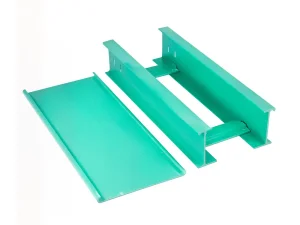
Engineered to meet stringent British and European electrotechnical standards (BS EN 61537 / BS 7671). Immediate manufacturing direct from our ISO 9001:2015 accredited facilities.
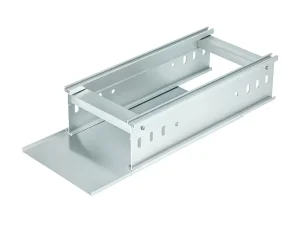
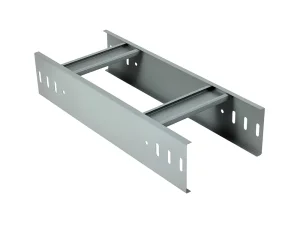
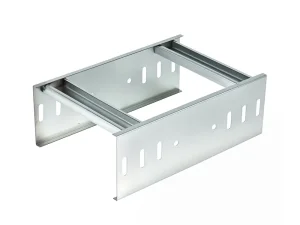
The industrial landscape across the United Kingdom is undergoing one of the most capital-intensive infrastructural shifts in modern history. Driven by the UK Government’s legally binding commitment to achieve Net Zero greenhouse gas emissions by 2050, massive private and public investments are flowing into offshore wind interconnections, nuclear new-builds (such as Hinkley Point C and Sizewell C), hyperscale data centre development along the London/M4 tech corridor, and the modern electrification of transport networks under Network Rail mandates.
Within this rigorous operating framework, cable containment systems are no longer treated as secondary passive steel commodities. Electrical consulting engineers, Tier-1 mechanical and electrical (M&E) contractors, and engineering, procurement, and construction (EPC) conglomerates require cable ladder platforms engineered to withstand profound static loading, dynamic short-circuit electrodynamic forces, and aggressive macro-environmental corrosivity.
From the Dogger Bank array to the Celtic Sea floating wind initiatives, high-voltage offshore substations and converter facilities demand containment materials impervious to chloride salt fog and high humidity.
As the primary financial and cloud intersection in Western Europe, the UK’s Slough, Hayes, and Docklands clusters experience intense heat loads, requiring optimized free-air ventilation.
Underground metro networks, Network Rail mainlines, and vehicular tunnels enforce non-negotiable smoke toxicity, fire survival, and shock vibration criteria.
Bridging the gap between tier-one structural engineering and competitive procurement economics for United Kingdom commercial and industrial builders.
Procuring heavy-duty cable management infrastructure directly from our Shanghai manufacturing hub eliminates traditional multi-layered distributor margins, import stockist surcharges, and local structural fabrication bottlenecks. By controlling the complete supply chain from raw primary coil handling to robotic MIG rung-welding and in-house hot-dip galvanizing, we provide UK clients with traceable, high-yield structural containment at a structural cost reduction averaging 30% to 45%.
Many localized European fabricators utilize two-piece stamped side channels to minimize machine capital cost. In contrast, our Shanghai facility operates continuous 16-station automated cold-roll forming lines. This continuous rolling process creates a monolithic "I-beam" or deep return-flange profile with unbroken metallurgical grain flow. The result is a 38% increase in section modulus (Zx) and moment of inertia (Ix) over pressed alternatives, completely eliminating the structural deflection commonly seen when pulling heavy 400mm² single-core copper cables across 4-meter support centers.
We recognize that UK infrastructure consultants will reject containment shipments if material mill certificates or batch thickness galvanizing verification fall short of BS EN ISO 1461. Our export inspection procedures are structured specifically to meet or exceed British project compliance requirements:
| Containment Platform | Material & Finish Standard | Typical Safe Working Load (3m Span) | Corrosion Category (ISO 12944) | Ideal UK Project Sector |
|---|---|---|---|---|
| Heavy Duty Welded Ladder | HDG to BS EN ISO 1461 | 240 kg/m (Type C Heavy) | C4 Industrial / C5 Coastal | Water Treatment, Grid Substations, Energy Plants |
| Aero-Grade Marine SS Ladder | AISI 316L Stainless Steel | 280 kg/m (Deep Flange 150mm) | CX Extreme Marine / Offshore | North Sea Wind Platforms, Chemical Processing, Desalination |
| Pultruded GRP/FRP Ladder | Isophthalic / Vinyl Ester Resin | 180 kg/m (Zero Electrolytic Pitting) | Severe Chemical & Acidic Gas | Petrochemical Refineries (Humber/Teesside), Marine Splash Zones |
| Architectural Interior Ladder | Pre-Galv (Z275) / RAL Coated | 120 kg/m (Light/Medium Profile) | C1 / C2 Controlled Indoor | Commercial Office Plenums, Retail Malls, Airport Terminals |
| Data Centre Runway Rack | Electro-Galv + Epoxy Powder | 150 kg/m (High Free-Air Ventilation) | C1 Climate Controlled | Hyperscale Server Halls, Telecommunication Co-locations |
From subterranean rail arteries to high-salinity offshore wind substations, our ladder tray systems solve critical load and longevity challenges across Great Britain.
The industrial decarbonization clusters surrounding Teesside and the Humber estuary require containment platforms capable of withstanding acidic flue gas scrubbing environments and chemical wash-downs.
Solution: Custom pultruded fire-retardant GRP ladder trays paired with 316-grade stainless hardware, eliminating atmospheric sulfide degradation.
The UK’s "Golden Triangle" in the East Midlands is witnessing unprecedented development of automated mega-distribution hubs demanding long-span overhead cable trays to minimize structural drop-hangers.
Solution: Extra-deep 150mm side rail ladder trays in 6-meter span lengths, reducing secondary ceiling steelwork requirements by over 40%.
National Grid transmission projects undergoing massive voltage upgrades require cable ladders proven under high short-circuit electrodynamic forces between bundled cables.
Solution: High-moment cold-formed rungs with pre-punched cleat fixing patterns matching trefoil clamp configurations certified to BS EN 61914.
Explore our specialized ladder tray configurations, factory-direct finishes, and heavy-duty industrial fabrications ready for consolidated container shipment.
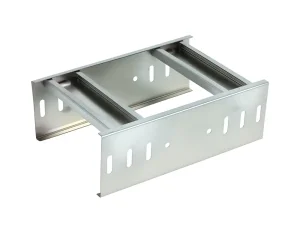
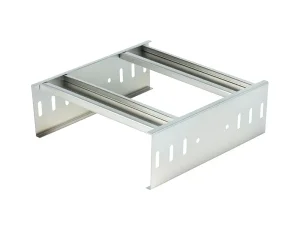
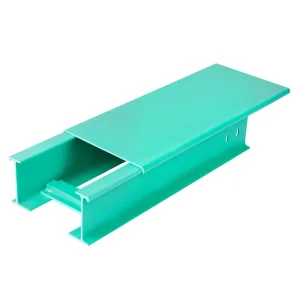
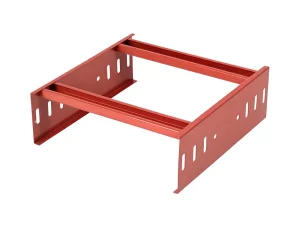
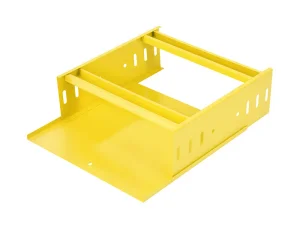
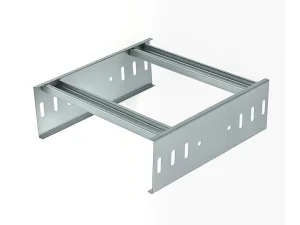
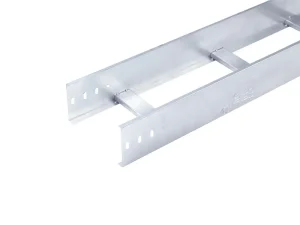
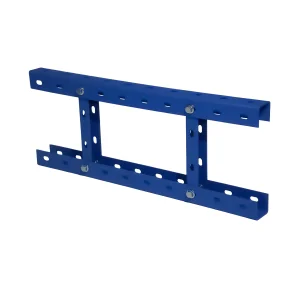
In structural containment design, compliance with BS EN 61537:2007 (Cable management — Cable tray systems and cable ladder systems) governs mechanical testing parameters across the United Kingdom. Section 10 of BS EN 61537 mandates the determination of Safe Working Load (SWL) limits under Type I, II, or III end-span configurations. Our manufacturing engineering protocols implement stringent structural criteria that eliminate site installation failures.
Deflection Performance Guarantee: British engineering consultants frequently enforce deflection limits of L/200 (where maximum deflection cannot exceed span length divided by 200). Our deep-flange ladders (side height 100mm to 150mm) comfortably maintain a deflection ratio under L/300 even at 100% rated SWL across 4.5-meter free spans.
When high-voltage cables experience an electrical fault condition, electromagnetic repulsion forces between conductors peak violently within the first 5 to 10 milliseconds. According to BS EN 61914:2016 (Cable cleats for electrical installations), the cable ladder rungs must absorb these transient mechanical shock waves without ductile rupture or weld detachment from the side rail.
Our ladder rungs are engineered with a reverse-lipped return channel profile, providing continuous slotting suitable for M10/M12 stainless steel cleat mounting bolts. With robotic welds rated to withstand over 8.5 kN of direct tensile pullout force per rung junction, our systems prevent rung deformation during severe asymmetrical fault currents up to 65 kA / 1 sec.
External installations across the UK—from high Scottish moorlands to coastal industrial complexes—experience broad annual thermal differentials ranging from -15°C in deep winter to +40°C during extreme summer heatwaves. For long continuous runs (exceeding 30 to 50 meters), thermal expansion joints must be integrated to prevent buckling of side rails or shear failure at support brackets.
The linear expansion formula applied by our technical support engineers calculates required joint gaps precisely:
For a 100-meter continuous run of hot-dip galvanized steel ladder experiencing a 50°C thermal swing, ΔL equals 60mm. We supply slotted expansion splice plates and spring-loaded nylon-core glide fixings to accommodate this longitudinal motion effortlessly while maintaining continuous electrical earth bonding across every expansion gap.
In life-safety installations—such as underground railway stations, road tunnels, emergency evacuation stairwells, and nuclear installations—the containment system must maintain structural load capacity during catastrophic fire incidents to keep essential smoke extraction, emergency illumination, and fire suppression pumps energized.
Our heavy-duty steel and specialized fire-resistant powder-coated ladders are audited to retain structural load carrying capacity under standard ISO 834 fire curve conditions (temperatures reaching 1000°C for durations up to 90 to 120 minutes), fulfilling European DIN 4102-12 (E30–E90) and British Standard testing equivalents.
Optimized container stowage, international export packaging, and sea freight routing straight into key UK deep-sea ports: Southampton, Felixstowe, Liverpool, and London Gateway.
Ladder trays naturally present substantial volumetric void space if bundled incorrectly. Our proprietary nested packing methods interlock side rails inside adjacent ladder bays, increasing 40ft High Cube (HC) container capacity by up to 45% to minimize ocean freight cost per meter.
Long sea transits across equatorial zones expose maritime cargo to severe condensation ("container rain"). Every finished ladder bundle is wrapped in heavy-duty cross-laminated VCI (Vapor Corrosion Inhibitor) polymer wrap with heavy timber corner protectors and desiccants.
We supply comprehensive documentation packages to guarantee seamless UK customs clearance without delays: full commercial invoices, packing lists with barcoded piece tracking, Certificate of Origin, and EN 10204 Type 3.1 Mill Certificates verified with heat numbers.
Direct answers for UK procurement directors, mechanical & electrical consultants, and lead structural engineers.
Under the UK Construction Products Regulations and electrotechnical codes, cable ladder systems are certified under harmonized standard BS EN 61537:2007. We maintain full Factory Production Control (FPC) files and provide Declarations of Conformity verified by third-party notified bodies, ensuring full compliance for any UK municipal, infrastructure, or commercial construction site.
For inland, sub-industrial, and standard urban environments, HDG according to BS EN ISO 1461 (with coating thickness >85µm) offers an expected lifecycle exceeding 30 to 50 years. However, in direct coastal marine spray zones, offshore platforms, or chemical plants with elevated chlorine/sulfate concentrations (C5-M or CX categories), AISI 316L stainless steel or pultruded FRP is required to avoid premature pitting corrosion and zinc patina depletion.
Yes. While standard UK specifications commonly use side heights of 50mm, 75mm, 100mm, 125mm, and 150mm with standard widths from 150mm up to 900mm (or 1000mm+), our CNC cold-roll tooling and flexible robotic welding lines allow us to produce bespoke dimensions, variable rung spacing (such as 150mm, 225mm, or 300mm centers), and specialized perforations tailored to exact client cable cleat schedules.
Standard fabrication runs for full container loads (FCL) are executed in our factory within 15 to 25 business days. Direct container vessel transit from Shanghai or Ningbo to UK ports (Southampton, Felixstowe, London Gateway) typically averages 26 to 34 days, allowing predictable critical-path project scheduling from drawing sign-off to site receipt.
In accordance with BS 7671 (IET Wiring Regulations) and BS EN 61537 clause 11, cable containment systems must ensure safe electrical bonding. Our ladder splice joints feature serrated flanged fasteners and pre-punched copper bonding strap connection points, consistently verifying an impedance well below the 50 mΩ maximum threshold across all interconnected segments.
Yes. To support UK BIM Level 2 (ISO 19650) engineering workflows, our technical drawing office provides comprehensive 3D Revit family (.rfa) files, IFC models, and 2D DWG engineering blocks complete with bend radiuses, tees, risers, and reducer fittings, facilitating clash-detection reviews in federated models.
Partner directly with Shanghai Qiongkai Industry Co., Ltd. for factory-direct engineering, rapid prototype verification, and fully certified BS EN 61537 ladder containment solutions delivered to any United Kingdom port or project site.