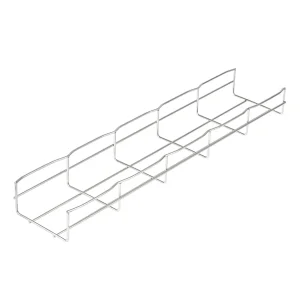
Engineering Standard IEC 61537 / JIS C 8425

Wire Mesh Cable Tray Supplier & Factories serving Osaka

Providing mission-critical wire mesh containment arrays, seismic-certified cable grids, and corrosion-resistant wire basket pathways for Osaka's hyperscale data facilities, industrial automation hubs, and smart energy corridors.

Enterprise Specifications

High-Density Wire Mesh Containment Systems Serving Osaka

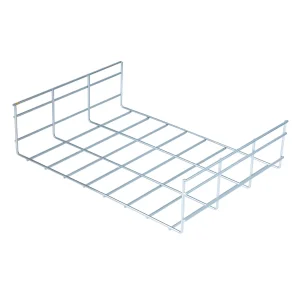
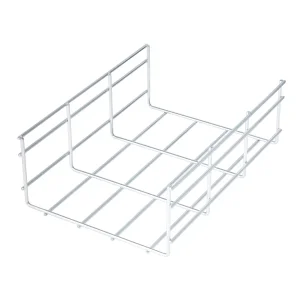
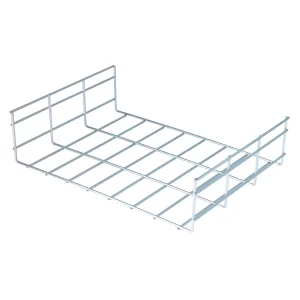
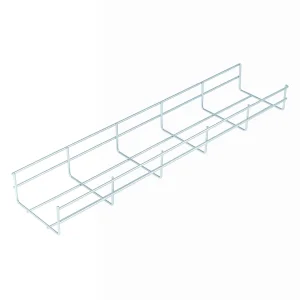
Engineered to deliver high heat dissipation and maximum cable fill density across Kansai’s commercial, mission-critical, and light-rail routing infrastructures.

Macro-Industrial Overview

Regional Specification Dynamics: The Osaka & Kansai Industrial Sphere

Osaka stands as the commercial powerhouse of western Japan, operating as an international nexus for semiconductor development, advanced medical complexes, and next-generation data storage centers.

Hyperscale Data Corridors

The accelerated construction of data centers across Osaka (including key sectors in Inzai, Nanko, and surrounding Kansai clusters) demands wire basket trays that maximize thermal convection. Open wire architecture reduces thermal throttling, lowering cooling loads on facility HVAC systems.

Industrial Automation & EV

Sakai and the Hanshin Industrial Belt host cutting-edge robotics assembly, lithium-ion battery production, and electronic components manufacturing. Wire mesh cable pathways provide the routing agility needed for high-frequency tooling reconfigurations and robotic workcell upgrades.

Seismic Readiness (JIS Level 2)

In accordance with the Building Standard Law of Japan (BSL) and strict Kansai earthquake protection protocols, containment systems deployed across Osaka must support dynamic shear loads. Qiongkai wire mesh arrays maintain structural integrity under severe seismic shifts.

Structural Metallurgy

Engineering Selection Guide: Wire Mesh Containment Across Osaka Micro-Climates

Selecting the appropriate metallurgical substrate guarantees structural longevity, electrical bonding reliability, and operational continuity throughout coastal and urban zones.

Containment Finish Tensile Strength Corrosion Resistance Ideal Osaka Application Zone Compliance Standards
Pre-Galvanized Carbon Steel > 480 N/mm² Moderate (Indoor Controlled) Umeda & Honmachi Enterprise Office Fit-outs, Underfloor Structured Cabling JIS G 3302, ISO 9001
Hot-Dip Galvanized (HDG) > 520 N/mm² Very High (>85μm Zinc Layer) Osaka Bay Logistics Hubs, Substation Overpasses, Outdoor Utility Runs ISO 1461, ASTM A123
Stainless Steel (SS304/SS316L) > 620 N/mm² Extreme (Acid/Chloride Immune) Biomedical Labs in Northern Osaka, Food & Beverage Plants, Coastal Marine JIS G 4305, EN 10088
Deep-Coated Powder Polymer > 450 N/mm² High (Anti-Static, Colored) Hyperscale Tier III/IV Data Halls, Structured Circuit Color-Segregation RoHS Compliant, IEC 61537
Innovation Vector

Engineering Roadmap: Future-Proofing Cable Infrastructure (2025–2030)

How Shanghai Qiongkai Industry is advancing physical containment infrastructure to integrate next-generation connectivity and sustainable fabrication methodologies.

Phase I: Smart Fabrication

Robotic Spot Welding

Employing multi-point automated resistance welding lines that eliminate micro-burrs and sharp wire protrusions, completely preventing fiber optic sheathing tears during cable pulls.

Phase II: Rapid Assembly

Boltless Coupling Systems

Developing tool-less snap-fit wire mesh connectors that cut Kansai job-site installation labor hours by up to 45%, helping offset regional trade labor constraints.

Phase III: Advanced Zinc Alloy

Eco-Galvanizing Metallurgy

Transitioning toward low-carbon zinc-aluminum-magnesium (ZAM) coatings that deliver 3x the atmospheric corrosion protection of conventional hot-dip processes with reduced environmental impact.

Phase IV: Digital Twin Integration

BIM & Structural CAD Libraries

Offering standardized Revit, IFC, and AutoCAD parametric families to simplify direct clash detection for Japanese engineering and construction (EPC) teams.

Logistics & Execution

Direct Shanghai-to-Osaka Supply Chain: Speed, Compliance, Precision

Leveraging deep-water proximity to Yangshan Port to execute seamless ocean freight transit directly to the Port of Osaka and Kansai International Logistics gateways.

Rapid 48-72h Ocean Shipping

Operating out of our Songjiang manufacturing facility, orders undergo sea freight departures from Shanghai to Osaka port terminals within 48 to 72 hours, ensuring consistent lead times for project milestones.

Full Japanese Documentation

Each container shipment includes mill test certificates (MTC), dimensional inspection logs, galvanization thickness reports, and structural load calculations aligned with local engineering sign-offs.

Custom Engineered Profiles

With 12 automated cold-roll lines and heavy fabrication machinery, we fabricate custom basket depths (30mm–150mm), wire gauges (3.5mm–6.0mm), and widths tailored to fit dense Japanese building utility shafts.

Certified Manufacturing Portfolio

Precision Wire Mesh Cable Tray Dimensions Serving Osaka

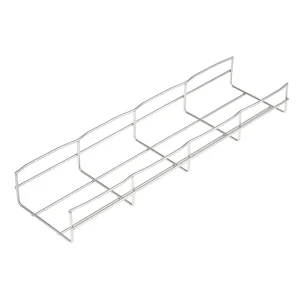
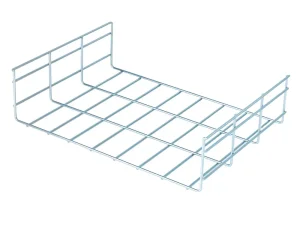
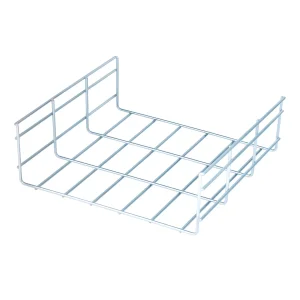
Explore standard, intermediate, and heavy-capacity wire basket profiles engineered to support power lines, telecommunications, and industrial fieldbuses.

Technical Validation

Frequently Asked Questions for Engineering & Procurement Teams

Straightforward answers addressing specification standards, anti-corrosion grades, seismic calculations, and direct import procedures for projects in Japan.

What engineering advantages do wire mesh cable trays offer over traditional sheet-metal trunking in Osaka data facilities?

Wire mesh (basket) cable trays offer an open structure (typically 50mm x 100mm grid layout) that facilitates complete 360-degree ambient air circulation. This drastically mitigates heat build-up generated by high-power server racks and dense copper patch bundles. Consequently, data hall cooling energy requirements are noticeably reduced. Furthermore, wire mesh trays weigh 40% to 50% less than closed metal trunking, reducing seismic overhead dead-load stress while allowing field-cut fabrication of tees, bends, and reducers directly on site without custom factory stampings.

How do Qiongkai cable containment systems comply with Japanese seismic bracing codes (JIS / BSL)?

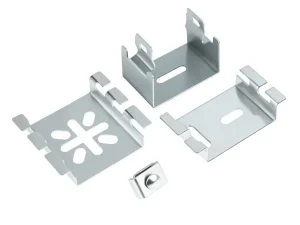
Under the Japanese Building Standard Law and seismic mitigation guidelines, overhead MEP installations must endure horizontal acceleration loads corresponding to anticipated regional seismic events. We engineer matched 41-series seismic strut channels, anti-sway cable bracing kits, and reinforced hold-down clamps that fix the wire mesh to structural anchors. These support systems hold certified mechanical test ratings that allow engineering contractors in Osaka to submit calculations directly to municipal inspectors.

Why is stainless steel (SS316L) recommended over electro-galvanized finishes in the Osaka Bay industrial zone?

The coastal microclimate along Osaka Bay (Konohana, Minato, Suminoe wards, and Yumeshima) features airborne saline aerosols, marine moisture, and elevated relative humidity. Electro-galvanized (EG) coatings provide thin sacrificial protection (usually 5 to 12 microns), making them vulnerable to rapid zinc depletion and white rust in coastal environments. Stainless steel (AISI 304 or 316L) possesses an intrinsic passive chromium-oxide layer that resists chloride pitting without degrading, eliminating maintenance shutdowns in marine and processing environments.

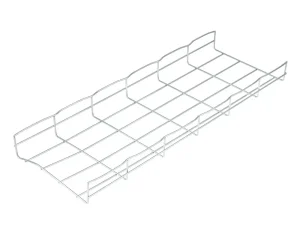
Can Qiongkai manufacture bespoke wire mesh dimensions to fit compact Japanese architectural footprints?

Yes. We operate 12 automated production lines supported by heavy welding machinery. We routinely manufacture non-standard basket widths (ranging from 50mm up to 1000mm) with custom side collar heights (30mm, 50mm, 75mm, 100mm, and 150mm) and wire diameters from 3.5mm up to 6.0mm. Custom drop-outs, partition dividers, and grounding lugs can be built to project drawing specifications.

What is the average shipping lead-time and clearance protocol from Shanghai to Osaka?

Ocean freight from Shanghai’s export terminals to the Port of Osaka typically completes transit in just 48 to 72 hours. We handle standard export packing with fumigated wooden pallets, wrapped waterproof polymer membranes, edge-reinforced stacking protectors, and clear tagging. We supply comprehensive documentation including Bill of Lading, Certificate of Origin, Mill Test Certificates (MTC), and full packing manifests for smooth customs clearance through Japanese port authorities.

Engineering a Containment Infrastructure Project in Osaka?

Collaborate directly with our engineering team for structural load assessments, finish selection guidance, and wholesale factory pricing. Direct shipments delivered to Osaka job sites with complete quality certification.

Send Inquiry Now