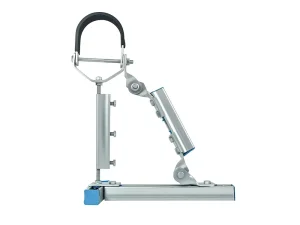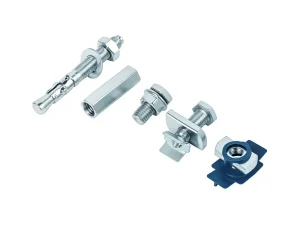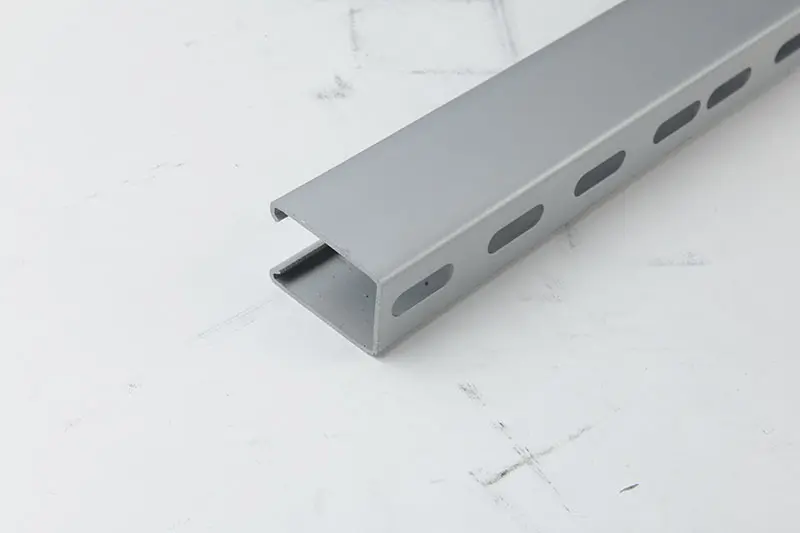
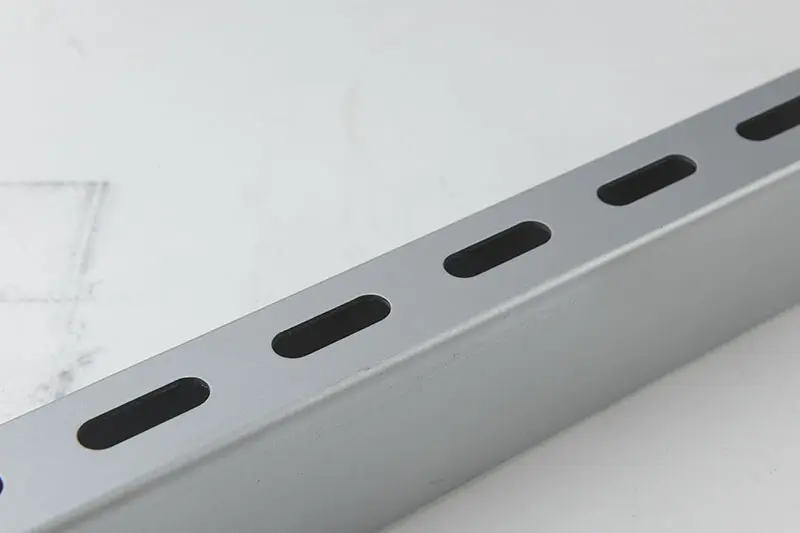
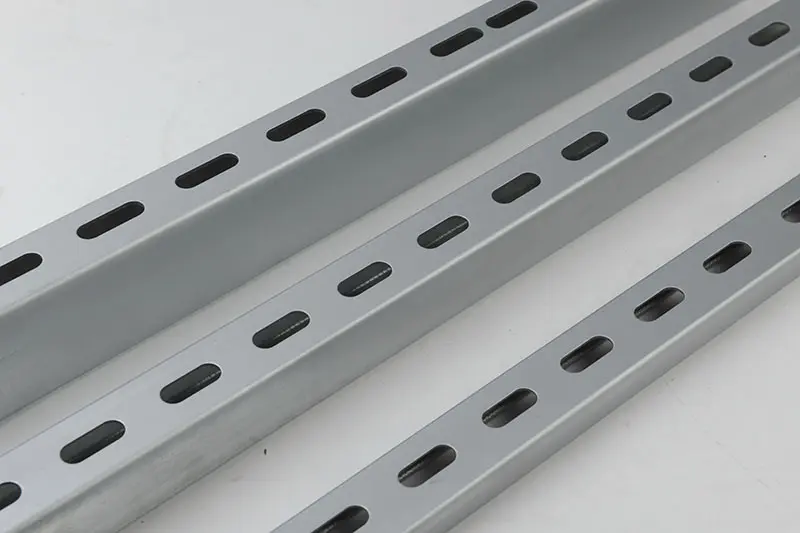
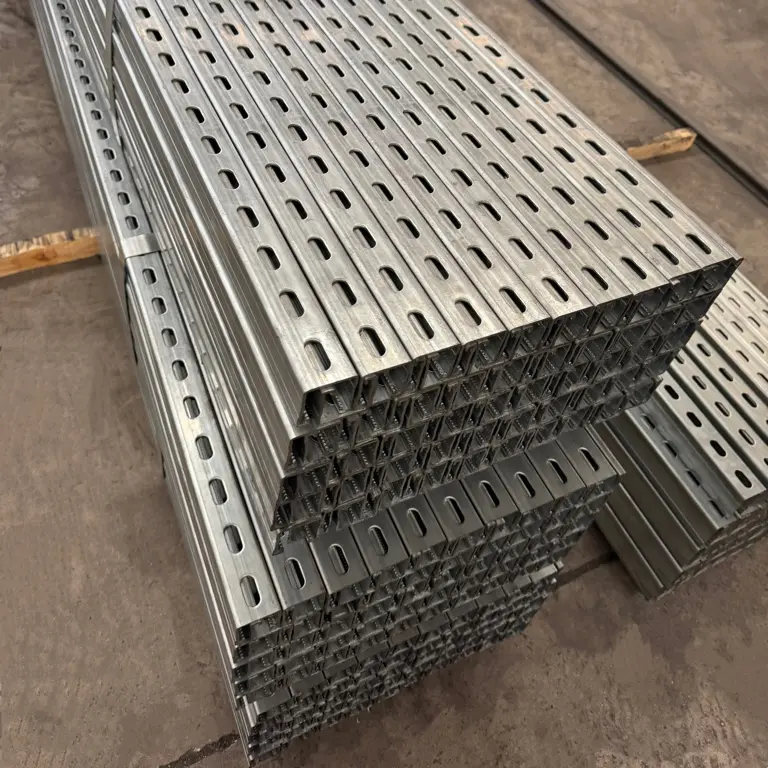
Wholesale Fireproof C slotted channel Factories, Price
Product Description
| Brand | Qiongkai |
| Model Tag | CC |
| Product Name | C-shaped steel |
| Material | Steel / Alloy / Stainless |
| Origin | Shanghai |
| Perforated Design | Customizable |
| Surface Treatment | Galvanized / HDG / Powder coated |
| Color | Silver / Black / Powder coated design |
| Finish | Raw / HDG / Powder coated |
| Thickness | 0.8-2.5mm |
| Width | 41mm |
| Height | 21mm / 41mm / 52mm / 62mm / 82mm |
| Length | 3m - 9m |
| Yield Strength | 391 Mpa |
| Tensile Strength | 484 Mpa |
| Certificates | CE / ISO |
| ODM / OEM | Supported (√) |
| MOQ | 50 |
| Insurance | Customizable |
| Loading Port | Shanghai, Tianjin |
| Selling Units | Meters / Pieces |
| Single Gross Weight | 1.6 KG |
| Production Capacity | 10,000 - 40,000 meters (depend on product) |
| Payment Terms | T/T, L/C, Western Union |
| Price Terms | EXW, FOB, CIF, CFR |
| Delivery Time | 25 days |
| After-sales Service | Online technical support |
| Free Sample | Available (√) |
Material Composition & Coating
C-section Steel Substrate
High-quality carbon structural steel or low-alloy high-strength steel, such as commonly used Q235 and Q345 steel. These materials deliver superior strength, toughness, and processing properties, providing stable structural support for fireproof sprayed profiles.
Inorganic Fireproof Coating
Composed of inorganic binders (silicates and phosphates), flame retardants (aluminum hydroxide, borates), mineral fillers (calcium carbonate, talcum powder), and functional additives. Non-combustible, non-toxic, highly durable, and creates a dense insulating barrier under high temperatures.
Organic Fireproof Coating
Formulated with synthetic resins, flame retardants, mineral fillers, and solvents. When subjected to extreme heat, it expands into a honeycomb-like carbonaceous foam layer that provides active thermal insulation, blocks oxygen, stops flame propagation, and ensures solid adhesion.
Specifications and Dimensions
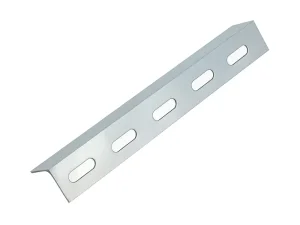
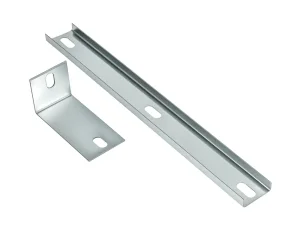
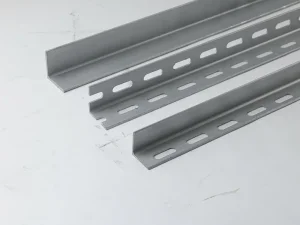
The specifications and dimensions of fireproof sprayed C-section steel align with standard structural specifications: common height ranges between 21mm and 82mm, standard width is approximately 41mm, and thickness ranges from 1.5mm to 6.0mm.
Characteristics & Advantages
Excellent Fire Resistance
Slows temperature rise during fires, minimizes high-temperature structural degradation, and significantly raises the component fire limit to allow safe building evacuation and effective rescue operations.
High Structural Strength
Retains the original load-bearing integrity and mechanical strength of C-section steel, fully meeting building design codes for primary framework use including beams, columns, and structural purlins.
Convenient Construction
Easily machined, bent, welded, or cut on site. The simplified coating procedure can be conducted directly on construction grounds, accelerating overall building timelines.
Good Durability
The specialized fire-retardant surface layer firmly adheres to the substrate, providing continuous defense against weathering, water immersion, and corrosive atmospheric elements to minimize maintenance.
Good Environmental Performance
Adopts eco-friendly, non-toxic, and odorless chemical formulations, ensuring a safe construction process without releasing harmful compounds to workers or environmental ecosystems.
Application Areas
Commercial Buildings
Ideal for shopping malls, corporate offices, and hotels. Used across roof purlins, interior wall keels, support beams, and column structures to increase commercial fire safety.
Industrial Buildings
Integrated into production workshops and logistics warehouses for roof trusses, crane runway beams, and support systems to maintain structural stability under thermal hazards.
Public Buildings
Meets strict fire prevention codes required in stadiums, exhibition centers, transit hubs, and theaters, ensuring robust life safety protection in densely populated spaces.
High-Rise Buildings
Used extensively in multi-story steel skeletons to upgrade fire resistance ratings, restrict vertical fire spread between floor levels, and ensure critical evacuation timeframes.
Production Process
C-section Steel Production
Hot-rolled or cold-rolled steel strip is uncoiled and fed into a cold-bending roll unit, progressively formed via continuous dies to achieve the exact C-profile, and sheared to target dimensions.
Surface Treatment
The steel substrate undergoes degreasing and shot blasting or sandblasting to clear surface scale, achieving specific roughness and cleanliness required for optimal coating bond strength.
Fireproof Spraying
Industrial spraying systems evenly apply layers of formulated fireproof compound to predetermined thicknesses under strictly managed nozzle pressure, working distance, and spray travel speeds.
Drying and Curing
Coated profiles undergo ambient air drying or regulated thermal curing within controlled atmospheres to form a firm, wear-resistant, and high-strength fire-insulating exterior barrier.
Quality Inspection
Components complete comprehensive testing—including coating thickness verification, adhesion metrics, and certified fire resistance evaluation—before packaging, tagging, and dispatch.