
Primary Containment Portfolio
High-Performance 300mm Cable Trays & Routing Systems
Explore our core 300 mm perforated, ladder, and wire mesh tray solutions engineered for maximum heat dissipation, high structural load-to-weight ratios, and rapid assembly.
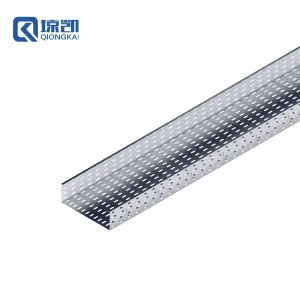
Buy Pre Galvanized High load capacity cable tray Factory, Price
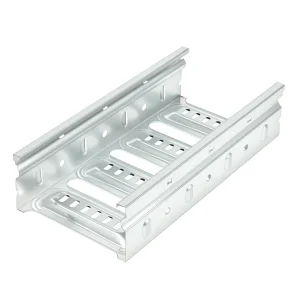
Request Spec Sheet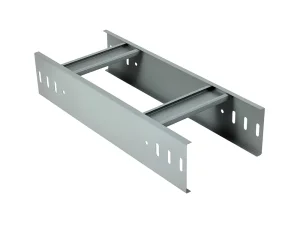
Buy Fireproof powder coated Pre galvanized ladder type cable tray Manufacturer
Request Spec Sheet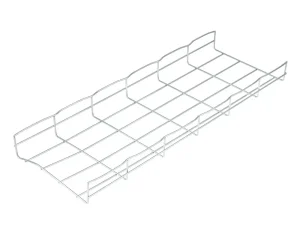
Wholesale Pre Galvanized grid cable tray 100mm Supplier, Factories
Request Spec Sheet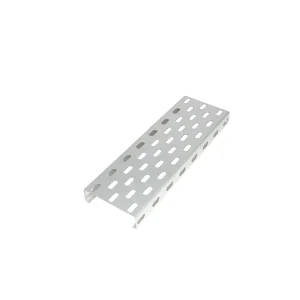
Buy Stainless Steel Marine Use Cable Tray Supplier, Price
Request Spec Sheet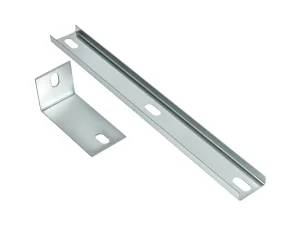
Wholesale Pre Galvanized L-shapedbracket Factories, Price
Request Spec Sheet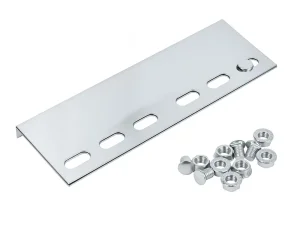
Wholesale Pre-Galvanized Cable Tray Connections spare parts Supplier
Request Spec Sheet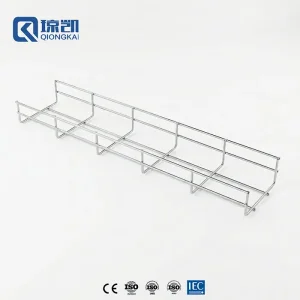
Buy Stainless Steel SS 304 316 Basket Wire Mesh Grid Cable Tray 100*50
Request Spec Sheet
Procurement Intelligence
Global Enterprise Demand Drivers for 300 mm Cable Tray Systems
The 300 mm (12-inch) profile represents the critical pivot width across international EPC electrical layouts, striking an optimal balance between volumetric cable fill, thermal ventilation, and physical overhead clearance.
Hyperscale Data Halls & Cloud Facilities
Modern data architecture requires massive volumes of Cat6A, Cat8, and high-density MPO fiber optic trunk cables. A 300 mm perforated or wire mesh cable tray configuration guarantees compliant bend radius tolerances, prevents inductive crosstalk, and maintains unobstructed convective airflow under raised floors and overhead server rows.
Offshore Platforms & Petrochemical Plants
Marine environments demand unyielding chemical and saline resistance. For harsh LNG trains and refining modules, 300 mm heavy-duty hot-dip galvanized (HDG) or marine-grade SS316 cable trays resist severe atmospheric chloride pitting while carrying multi-conductor armored power cables under extreme continuous static loads.
Modern Renewable Energy & EV Gigafactories
Utility-scale photovoltaic installations, centralized solar inverter stations, and battery energy storage systems (BESS) depend on 300 mm cable ladders to carry high-voltage direct current (HVDC) lines, mitigating ampacity derating caused by trapped thermal dissipation in confined industrial runs.
Engineering Whitepaper
Structural Load Capacities & Metallurgical Selection Matrix
Verified physical performance parameters for 300 mm cable containment systems manufactured in accordance with IEC 61537, NEMA VE 1, and ISO 1461 galvanization criteria.
| Containment Profile | Standard Gauge | Yield Strength | Corrosion Protection Standard | Safe Working Load (2.0m Span) | Ideal Industrial Application |
|---|---|---|---|---|---|
| 300×100 Perforated HDG | 1.5 mm – 2.5 mm | ≥ 235 N/mm² (Q235B) | ISO 1461 (Avg 65-85 μm Zinc) | 145 kg/m (Deflection < L/200) | Outdoor Substations, Petrochemical Modules |
| 300×100 Pre-Galvanized (PG) | 1.2 mm – 2.0 mm | ≥ 210 N/mm² (DX51D) | EN 10346 (Z275 Coating Layer) | 105 kg/m (Deflection < L/200) | Commercial HVAC Plenums, Clean Interiors |
| 300×100 Marine SS316L | 1.5 mm – 2.0 mm | ≥ 220 N/mm² (AISI 316L) | Passivated & Pickled / Electropolished | 160 kg/m (Deflection < L/250) | Offshore Oil & Gas Platforms, Marine Decks |
| 300×50 Wire Mesh Grid | 4.5 mm – 5.0 mm Wire | ≥ 350 N/mm² Tensile | Electro-Galvanized / SS304 | 65 kg/m (Deflection < L/150) | Telecommunications & Hyperscale Data Halls |
| 300×100 Fire-Rated Coated | 1.5 mm – 2.0 mm | ≥ 235 N/mm² Steel | Intumescent Powder Coat (DIN 4102-12) | 120 kg/m (Tested @ 90 Min E90 Fire) | Emergency Lighting Runs, Evacuation Tunnels |
20+
Years Continuous Manufacturing (Since 2005)
30,000 m²
Workshop Floor Space Across 3 Facilities
12
Automated Roll-Forming & Welding Lines
60+
Heavy-Duty Hydraulic CNC Punching Units
Integrated Systems
Macro Industry Solutions: Beyond Standard Containment
Cable management requires more than buying linear tray profiles. Shanghai Qiongkai delivers engineered system cohesion, interfacing trays directly with seismic supports, channeled framing, and structured fittings.
Seismic Strut Channel Coordination
Our 300 mm cable tray series integrates directly with 41×41 and 41×82 back-to-back anti-seismic strut channels. Tailored seismic channel brackets isolate lateral earthquake acceleration stresses, safeguarding mission-critical telecommunications systems from total structural collapse during seismic events.
Corrosive C5-M & Marine Resistance
From deep-sea drilling platforms to municipal desalination networks, standard coatings degrade rapidly under airborne chlorides. We supply hot-dip galvanization with silicon-controlled steel compositions alongside Austenitic SS316L and pultruded FRP composite materials, delivering verified 30+ year lifespans without structural failure.
Thermal Dispersion & Ampacity Optimization
Under continuous heavy electrical loads, conductors emit significant heat. Qiongkai 300 mm perforated cable trays feature precision-engineered hole punching geometries that maximize passive convection without lowering sheet rigidness, maintaining cable ampacity and preventing thermal jacket breakdown.
Future Engineering
Engineering Roadmap: The Next Era of Industrial Cable Containment
Modern electrical infrastructure demands greater sustainability, smart installation features, and lower embodied carbon footprints across every procurement lifecycle.
Boltless Click-Fit Splice Joints
Onsite labor accounts for over 45% of cable installation budgets. Next-generation 300 mm profiles incorporate integrated, self-locking connector tabs that eliminate loose nuts and bolts, reducing field install time by up to 60% while maintaining electrical grounding continuity across joints.
Decarbonized Green Steel Production
Aligning with Tier-1 ESG procurement criteria, our rolling mills are transitioning to electric arc furnace (EAF) scrap steel substrates, substantially lowering upstream Scope 3 carbon intensity per linear meter without compromising steel tensile performance.
BIM Level 3 Digital Integration
Full-spectrum Revit, AutoCAD MEP, and IFC models are integrated for all standard 300 mm straight lengths, horizontal bends, tees, and cross-junctions, ensuring zero-clash physical validation across MEP 3D coordination models prior to factory container loading.
Expanded Inventory
Precision Structural Trays, Powder Finishes & Specialty Profiles
Complete your layout with color-coded safety trays, reinforced molded runs, and precision accessories manufactured for international installations.
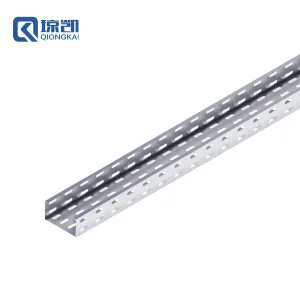
Wholesale Pre-galvanized Hot-dip-galvanized Perforated Cable Tray 100*50 Factory
Request Spec Sheet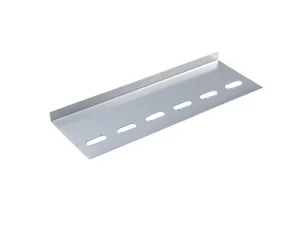
Wholesale Pre-Galvanized Connections spare parts Manufacturers, Factory
Request Spec Sheet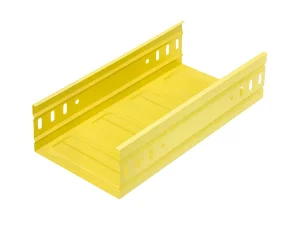
Wholesale Fireproof yellow Pre Galvanized Powder coated molded cable tray
Request Spec Sheet
Wholesale Pre Galvanized grid and wire mesh type cable tray Manufacturers
Request Spec Sheet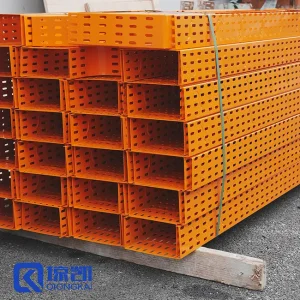
Reinforced Medium duty Pre-galvanized HDG Powder Coated Cable Tray 200*100 - Orange
Request Spec Sheet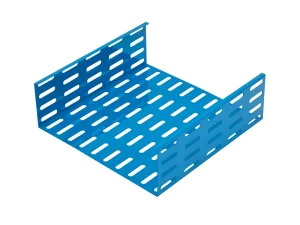
Buy Pre Galvanized Perforated Cable Tray Series With Powder Coating
Request Spec Sheet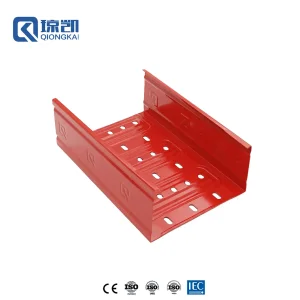
Powder Coated Cost Saving Heavy Duty Molded Cable Tray - RAL3020 Red 200*100
Request Spec Sheet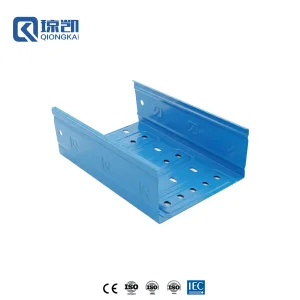
Powder Coated Cost Saving Heavy Duty Molded Cable Tray - RAL5015 Blue 200*100
Request Spec Sheet
Export & Quality Governance
Global Project Compliance & Export Delivery Support
Direct manufacturer export processes through Shanghai ports. We deliver comprehensive factory acceptance testing, metallurgical traceability, and full regional certification.
Material Traceability & Mill Test Certificates
Every shipment is accompanied by complete EN 10204 Type 3.1 Mill Test Certificates (MTC). We verify chemical composition, tensile yield, zinc layer thickness (magnetic gauge & gravimetric tests), and strict dimensional accuracy before loading container cargo at our Shanghai docks.
Export Crating & Damage-Free Maritime Packing
Our nesting and bundle protocols ensure maximum container volumetric efficiency while eliminating shipping transit abrasions. Trays are packed on treated wooden pallets with heavy-duty edge protectors, humidity-sealed plastic wrapping, and steel strap banding for safe deep-sea freight handling.
Field References in Global Megaprojects
Qiongkai containment solutions have been specified and installed across major global developments, including terminal expansion runs at Shanghai Hongqiao International Airport, extreme-heat LNG projects in Qatar, industrial installations in Thailand, agricultural facilities in Paraguay, and European infrastructure in Italy.
Technical FAQs
Frequently Asked Questions: 300 mm Cable Tray Engineering
Direct technical answers to common queries raised by electrical consulting engineers, EPC estimators, and project procurement managers.
What is the allowable cable fill weight for a standard 300 mm wide perforated tray?
According to standard IEC 61537 and NEMA VE 1 testing frameworks, the allowable safe working load for a standard 300×100 mm tray with a 1.5 mm to 2.0 mm wall thickness supported over a 2.0-meter span typically ranges from 120 kg/m to 145 kg/m. The allowable structural deflection under this load remains well below the recognized L/200 engineering threshold. For heavy-duty cable groupings, rungs and longitudinal side rails can be reinforced with structural ribs.
When should engineers specify Hot-Dip Galvanized (HDG) versus Pre-Galvanized (PG) for 300 mm trays?
Pre-galvanized (PG, mill galvanized) trays feature a zinc coating layer of 15–20 μm, making them cost-effective for indoor, temperature-controlled commercial buildings and ceiling voids. Hot-dip galvanization (HDG) is carried out after stamping, punching, and welding, immersing the entire steel tray into molten zinc to form a metallurgical alloy coating of 65–85 μm (under ISO 1461). HDG is mandatory for outdoor runs, industrial factories, high humidity areas, and coastal applications.
How does a 300 mm tray profile affect cable ampacity and heat dissipation?
Under continuous operational loading, conductors dissipate heat. Solid bottom trunking traps convective heat, requiring derating of current capacity according to IEC 60364-5-52. A 300 mm perforated tray provides generous ventilation with an open area exceeding 30%, which allows airflow around conductors, minimizes thermal build-up, and keeps ampacity ratings near optimal free-air values.
Can Qiongkai manufacture custom flange dimensions, depths, and hole patterns?
Yes. Shanghai Qiongkai operates 12 dedicated roll-forming lines and over 60 heavy-duty hydraulic press units. We produce standard 50 mm, 75 mm, 100 mm, and 150 mm side heights, as well as customized bottom perforation geometries, built-in dividers, and custom-profiled support sections—such as those delivered for the LNG project in Qatar.
What third-party testing and export documentation do you supply?
All export orders are delivered with full Mill Test Certificates (EN 10204 Type 3.1), salt spray corrosion test reports, electrical continuity bonding documentation, and coating thickness test logs. We also regularly facilitate third-party inspection agencies (SGS, BV, Intertek) to inspect dimensions, galvanizing adherence, and container loading at our factory prior to departure.