
High-Performance Cable Management & Channel Solutions
Engineered to interface seamlessly with 41x41 strut matrices. Batch-tested for cold-formed yield strength, UL load classification, and high-saline anti-corrosion compliance.
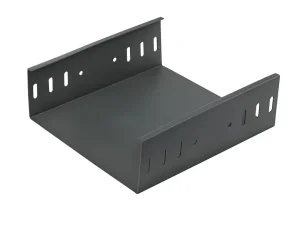
Wholesale Pre Galvanized Powder Coating Cable Tray Factory, Price
View Specifications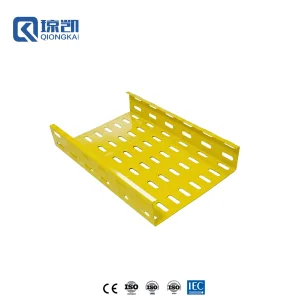
Wholesale Powder Coated Carbon Steel PG HDG Cable Tray with Reinforce Ribs - RAL1080 Yellow 200*50
View Specifications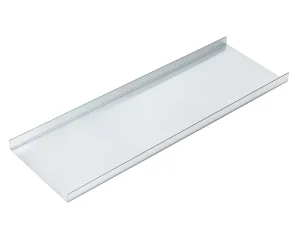
Buy Pre-Galvanized Cable Tray Cover Cable Protection Manufacturers, Supplier
View Specifications
Buy Pre Galvanized 200*100 Heavy Duty/Cost Saving Cable Tray Manufacturer, Supplier
View Specifications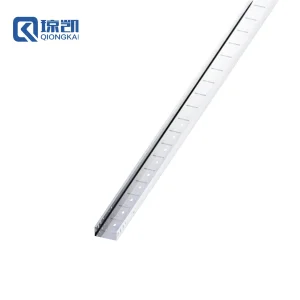
Wholesale Cost Saving Heavy Duty Reinforced Molded PG Cable Tray with Less Perforation
View Specifications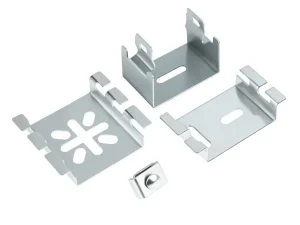
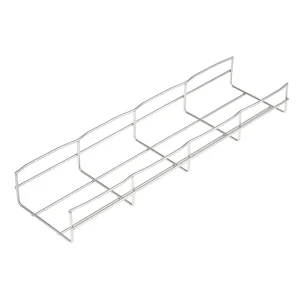
Wholesale Stainless Steel Grid Wire Mesh Cable Tray Manufacturers, Suppliers
View Specifications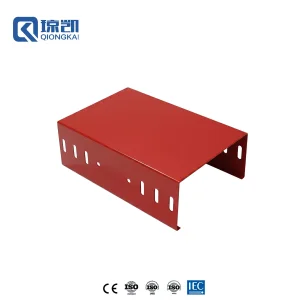
Wholesale Powder Coated Carbon Steel PG Cable Trunking Trough Channel - RAL3020 200*100
View SpecificationsStructural Anatomy & Cold-Roll Forming Physics of 41×41 Unistrut Channels
A rigorous examination of section modulus, moment of inertia, cold work hardening, and load dynamics for high-consequence MEP infrastructure.
Geometrical Mechanics & Continuous Roll Forming Precision
The standard 41×41 mm (equivalent to the international 1-5/8" × 1-5/8" standard) strut channel forms the structural backbone of modern mechanical, electrical, and plumbing (MEP) installations. While superficially straightforward, the cold-roll forming mechanics govern its true load-bearing capacity. At our Songjiang manufacturing facilities, coil strip steel undergoes progressive plastic deformation across 18 to 22 precision-ground roll stations. This cold forming process does not merely alter geometry; it selectively strain-hardens the outer corners, inducing controlled residual compressive stresses that elevate the effective yield strength from a nominal 235 MPa to well beyond 380 MPa in the corner radiuses ($R \le 1.5t$).
The inward inturned lips are the defining mechanical feature of the 41×41 channel profile. Precision-engineered with an internal lip hook tolerance of $\pm0.15\text{ mm}$, these lips incorporate CNC-machined micro-serrations designed to interface mechanically with the hardened grooves of channel spring nuts. This biting interlock provides critical slip resistance along the longitudinal channel axis, rated up to 9.5 kN per connection bolt, mitigating failure caused by dynamic pipe oscillations or harmonic thermal cycling.
| Profile Specification | Nominal Thickness (mm / Gauge) | Weight per Metre (kg/m) | Cross-Sectional Area (cm²) | Moment of Inertia Ix (cm⁴) | Section Modulus Zx (cm³) | Yield Strength Fy (MPa) |
|---|---|---|---|---|---|---|
| 41×41 Standard Plain | 1.5 mm / 16 Ga | 1.42 kg/m | 1.81 cm² | 3.94 cm⁴ | 1.82 cm³ | $\ge 235$ (Q235B / Gr.33) |
| 41×41 Medium Duty Slotted | 2.0 mm / 14 Ga | 1.86 kg/m | 2.37 cm² | 5.12 cm⁴ | 2.35 cm³ | $\ge 275$ (Q275B / Gr.40) |
| 41×41 Heavy Duty Reinforced | 2.5 mm / 12 Ga | 2.45 kg/m | 3.12 cm² | 6.65 cm⁴ | 3.05 cm³ | $\ge 355$ (Q355B / Gr.50) |
| 41×82 Back-to-Back (Double) | 2.5 mm / 12 Ga | 4.90 kg/m | 6.24 cm² | 38.45 cm⁴ | 9.38 cm³ | $\ge 355$ Structural Grade |
| 41×41 Stainless Steel 316L | 2.0 mm / 14 Ga | 1.91 kg/m | 2.41 cm² | 5.18 cm⁴ | 2.38 cm³ | $\ge 290$ (Austenitic Cr-Ni-Mo) |
Advanced Metallurgy & Extreme Environment Surface Finishing
Evaluating chemical passivation, intermetallic diffusion layers, and lifecycle performance across ISO 12944 atmospheric corrosivity categories C1 to CX.
Continuous Pre-Galvanized (PG)
Fabricated from cold-rolled steel coils pre-coated per EN 10346 / ASTM A653. Zinc mass typically reaches Z275 ($275\text{ g/m}^2$, double-sided, approx. $20\ \mu\text{m}$).
- Environment: ISO 12944 C1–C2 (Indoor cleanrooms, conditioned commercial buildings, residential HVAC).
- Edge Behavior: Cathodic sacrificial protection spans across cut slit edges up to 2.0 mm thickness.
- Lifecycle Expectancy: 25+ years in dry internal climates ($<60\%\text{ RH}$).
Hot-Dip Galvanized Post-Fab (HDG)
Total immersion of finished fabricated channels into molten zinc at 450°C complying with ISO 1461 / ASTM A123. Forms multi-phase metallurgical iron-zinc alloy layers.
- Alloy Architecture: Gamma, Delta, and Zeta phases topped with a ductile pure Eta zinc outer skin.
- Coating Depth: Heavy-gauge barrier between $65\ \mu\text{m}$ to $85\ \mu\text{m}$ ($460\text{--}610\text{ g/m}^2$).
- Environment: C3–C4 Industrial plants, petrochem tank farms, coastal sub-stations, and bridge conduits.
Austenitic Stainless Steel (SS304 / SS316L)
Molybdenum-stabilized (2.0–2.5% Mo in SS316L) austenitic formulation per ASTM A240 / EN 10088-2. Chemically pickled and passivated to eradicate surface iron contamination.
- Pitting Resistance: SS316L PREN value $\ge 23.5$, repelling chloride stress corrosion cracking (CSCC).
- Applications: Marine splash zones, offshore oil rigs, clean-in-place (CIP) pharmaceutical suites, and desulfurization stacks.
- Fire Integrity: Maintains exceptional yield resistance at elevated temperatures up to 800°C.
Zinc-Aluminum-Magnesium (ZAM / SuperDyma)
Next-generation revolutionary alloy bath (approx. 93.5% Zn, 3.5% Al, 3.0% Mg). Generates Simonkolleite ($Zn_5(OH)_8Cl_2\cdot H_2O$) precipitate across sheared profiles.
- Self-Healing Cut Edges: Magnesium migrates across laser-cut slots to create an impermeable protective film.
- Corrosion Superiority: 5–8 times higher salt spray chamber resistance compared to traditional batch HDG.
- Eco Footprint: Zero post-dip chemical waste, delivering lower embodied carbon for LEED v4 certified projects.
Why Tier-1 Global EPCs Buy Direct from Shanghai Qiongkai Factories
Eliminate intermediary trading margins, guarantee raw coil metallurgical provenance, and leverage hyper-scale automated roll-forming capacity.
Strategic Supply Chain Clustering
Situated within Shanghai's high-tech manufacturing corridor in Songjiang, Qiongkai directly sources primary structural steel coils from tier-1 mills like Baosteel and Shougang. With zero inland transit delays, certified hot-rolled and cold-rolled master coils are slit and roll-formed in a seamless, lean operational pipeline.
12 Automated Lines & 60+ Heavy Presses
Our 3 modern factories span over 30,000 m² of synchronized workshop area. High-speed continuous servo-fed punch presses punch intricate slotted matrices ($14\times28\text{ mm}$ or custom engineering patterns) at 60 strokes per minute prior to progressive roll forming, eliminating micro-cracking and stress concentration points.
In-House Metallurgical & CMM QA Lab
Every heat batch of structural channel is validated with optical emission spectrometry (OES) chemical analysis, computerized universal tensile load cells (ISO 6892-1), magnetic coating thickness gauges (ISO 2178), and salt spray chamber validation (ASTM B117), culminating in standard EN 10204 3.1 Mill Inspection Certificates.
Direct Deepwater Port Export Logistics
Proximity to Shanghai Waigaoqiao and Yangshan Deepwater terminals eliminates secondary transshipment risks. Channels are automatically strapped, bundled with VCI anti-corrosion barrier films, packed in wooden cradles with structural steel lifting eyes, and loaded inside dry containers to avoid sea freight condensation corrosion.
Macro Industry Trends Reshaping 41×41 Unistrut Channel Demand
From industrial modular prefabrication (DfMA) to strict ASCE 7 seismic restraint codes, modern strut systems are evolving into intelligent building frameworks.
Prefabricated Multi-Service MEP Modules (DfMA)
Contractors are abandoning manual stick-built jobsite installations. Multi-trade corridors (MTCs) combining HVAC ducts, cable trays, hydronic piping, and fire sprinklers are pre-assembled off-site on rigid 41×41 and 41×82 back-to-back strut space frames. This shrinks on-site labor overhead by up to 65% and guarantees sub-millimetre clash prevention.
Stringent Non-Structural Seismic Bracing
International building codes (IBC Chapter 16, ASCE 7-22, NZS 4219) now enforce stringent non-structural seismic certifications for building lifelines. 41×41 channels paired with specialized serrated locking brackets and seismic cable sway assemblies resist combined horizontal and vertical spectral acceleration forces ($S_{DS} > 1.5g$), safeguarding operations during seismic events.
BIM LOD 400 Digital Twin Integration
Global engineering consultants require parametric CAD/BIM libraries accurate down to punching matrices and fastener torque values. Qiongkai supplies native Autodesk Revit families, Tekla structures, and IFC schemas for our 41-series strut assemblies, facilitating automated bill of materials (BOM) export, clash analysis, and robotic CNC cut-to-length synchronization.
Engineered Sector Solutions: From Hyper-Scale Cloud Data Halls to Offshore LNG
Review how custom-configured 41×41 strut profiles perform under extreme physical loads, harsh environmental chemistry, and strict compliance regimes.
Hyperscale Data Centers
Suspended ceiling trapezes and underfloor framing supporting critical optical fiber mesh trays, heavy high-amperage busways, and containment walls. Powder-coated RAL 9005 black or electro-galvanized finishes minimize zinc whisker growth risk in pressurized clean air server rooms.
Offshore Marine & LNG Terminals
Installed on floating production platforms (FPSO) and coastal cryogenic storage tanks. Austenitic SS316L and custom thick-film HDG ($>85\ \mu\text{m}$) channels provide exceptional defiance against airborne sea-salt chlorides, sulfur dioxide, and intermittent wave crest splashing.
Commercial Solar & Carports
Serving as structural purlins, balance of system (BOS) wire channels, and bifacial solar panel racking rails. ZAM and high-tensile hot-dip galvanized 41×41 profiles absorb cyclical wind vortex shedding and dynamic snow loads across open utility-scale solar fields.
Metro Tunnels & Rail Transit
Corrosion-proof side-wall brackets carrying high-voltage traction signaling lines and emergency conduit runs. Fabricated to withstand high-pressure aerodynamic piston pulses generated by 300+ km/h bullet trains traversing tunnel networks with DIN 4102-12 fire survival.
The Global Procurement Playbook: Writing Bulletproof 41×41 Strut RFQs
Critical specifications every EPC supply chain officer, contract manager, and structural QA inspector must enforce to avert structural non-conformance.
Six Mandates for Your Bill of Quantities (BOQ)
Procuring metal framing channels from overseas factories often encounters technical ambiguities regarding gauge thicknesses, slit tolerances, and zinc chemistry. To protect structural integrity and eliminate commercial variation claims, incorporate these six technical covenants into your procurement contracts:
1. Base Metal Yield vs Thickness Tolerance
Mandate that the thickness specified is Bare Metal Thickness (BMT) rather than Total Coated Thickness (TCT). Define strict rolling tolerances in accordance with EN 10143 / ASTM A568 ($\pm0.08\text{ mm}$ tolerance limit). Reject under-gauged cold-rolled stock marketed under ambiguous trade aliases.
2. Inturned Lip Hardness & Serration Geometry
Specify minimum Rockwell B hardness (HRB $\ge 70$) for channel flanges. Ensure serrations have a sharp pitch geometry ($1.5\text{ mm}$ center-to-center) compatible with ISO metric spring nuts (M6, M8, M10, M12) to ensure specified longitudinal slip values are achieved without flange deformation.
3. Zinc Mass Gravimetric Verification
Do not accept simple visual shine as proof of anti-corrosion protection. For HDG channels, demand magnetic flux density testing per ISO 2178 and triple spot gravimetric stripping tests per ASTM A90 verifying minimum $65\ \mu\text{m}$ ($460\text{ g/m}^2$) local thickness and $70\ \mu\text{m}$ average thickness.
4. Slot Pitch & Flange Punch Centering
For slotted profiles ($14\times28\text{ mm}$ on $50\text{ mm}$ centers), stipulate maximum longitudinal cumulative pitch drift not exceeding $\pm1.5\text{ mm}$ over a 3-meter section. Slit edges must undergo automated deburring to prevent skin lacerations to field installers and damage to pulled power conductors.
5. Back-to-Back Welded Assembly Integrity
When purchasing 41×82 double channels, require continuous resistance spot-welding or high-frequency MIG stitch welds spaced at maximum $75\text{ mm}$ centers. Welded assemblies must pass shear-coupling capacity tests verifying complete composite structural action under cantilever loading.
6. Seaworthy Packaging Protocols
Channels must be bundled in hex-wrapped steel strapping with edge protectors, completely encapsulated in VCI (Vapor Corrosion Inhibitor) heat-sealed plastic wrap, placed on squared timber dunnage skids suited for side-loading forklift tines, preventing container salt-fog exposure during ocean voyages.
Modular Framing, Trunking & Ladder Tray Assemblies
Fully certified companion assemblies designed to integrate with structural 41×41 Unistrut channel profiles for multi-tier utility installations.
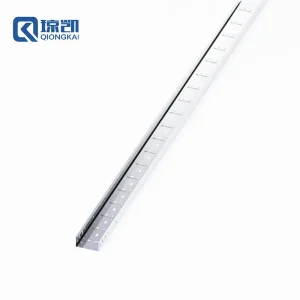
Buy Cost Saving Heavy Duty Reinforced Molded PG Cable Tray 100*50 Suppliers, Price
View Specifications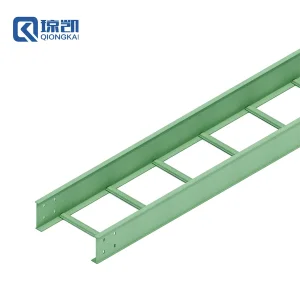
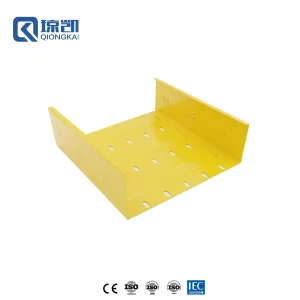
Buy Powder Coated Carbon Steel Molded PG Cable Tray - RAL1080 Yellow 300*100
View Specifications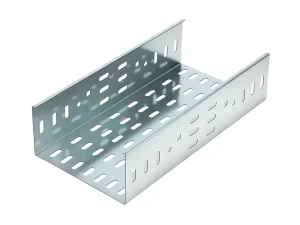
Buy Pre Galvanized Cable Tray With Customizable Parameters Manufacturer, Price
View Specifications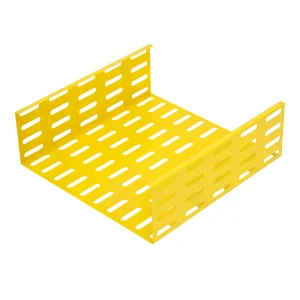
Wholesale Pre Galvanized Perforated Powder Coating Cable Tray Suppliers, Factories
View Specifications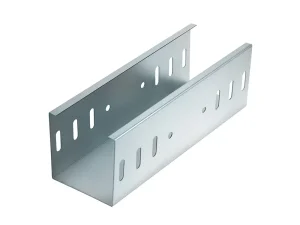
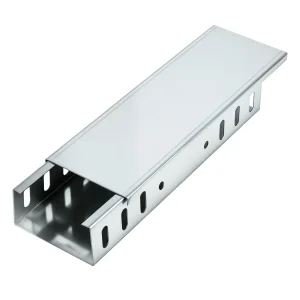
Wholesale Pre-Galvanized Cable Trunking 100*50 Manufacturer, Manufacturers
View Specifications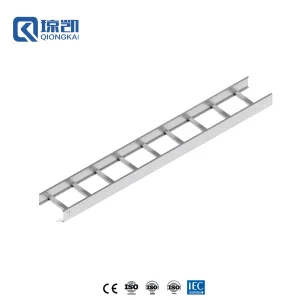
Buy Pre Galvanized Ladder Type Cable Tray 300*100 Factory, Factories
View SpecificationsFrequently Answered Engineering & Procurement Queries
In-depth structural calculations, fastener torque values, and logistics questions addressed by senior factory application engineers.
What is the exact maximum allowable uniform center load for a single 41×41×2.5 mm strut over a 2.0-meter span?
For a standard cold-formed 41×41×2.5 mm (12 Ga) single plain channel manufactured from structural steel with minimum yield strength $F_y = 235\text{ MPa}$ ($34\text{ ksi}$) and safety factor of 1.67 per AISI S100-16 specifications:
Over a simply supported span of $L = 2000\text{ mm}$, the allowable uniform load ($W$) governed by maximum bending moment without exceeding the yield limit is approximately 2,380 N (approx. 242 kg or 535 lbs). If deflection is limited to the standard $L/200$ aesthetic/serviceability threshold (10 mm), the deflection-limited uniform load is approximately 1,890 N (192 kg). When upgrading to our 41×82 mm back-to-back configuration, the load capacity surges by nearly 400% due to the cubic increase in moment of inertia ($I_x$).
How does Q235B steel compare metallurgically with ASTM A1011 SS Grade 33 and European S275JR?
Q235B is an unalloyed carbon structural steel standardized under Chinese national code GB/T 700. It features a specified yield strength ($R_eH \ge 235\text{ MPa}$ for thickness $\le 16\text{ mm}$), tensile strength of 370–500 MPa, and elongation $\ge 26\%$.
Metallurgically, Q235B is virtually equivalent to European EN 10025-2 S235JR and closely parallels North American ASTM A1011 SS Grade 33. For demanding projects requiring higher mechanical thresholds (equivalent to S275JR or ASTM A1011 Grade 40), Qiongkai supplies high-yield Q355B (EN S355JR) alloyed with trace manganese and silicon, providing a minimum yield strength of 355 MPa to optimize load capacities or permit thinner, weight-saving wall designs.
How can engineers prevent bimetallic galvanic corrosion when coupling stainless fasteners to HDG strut?
Galvanic corrosion occurs when metals with distinct electrochemical potentials are coupled in the presence of an electrolyte. Hot-dip zinc (-1.20 V) acts as an active sacrificial anode to stainless steel 316 (-0.08 V). In dry indoor environments (C1), galvanic degradation is negligible.
In high-humidity or marine atmospheres (C3–C5), however, direct contact will rapidly deplete the surrounding zinc layer. To prevent this, our engineering department mandates:
- Utilizing non-conductive UV-stabilized polyamide (PA66) or neoprene isolating washers and sleeve bushings.
- Applying zinc-nickel or Geomet-treated carbon steel fasteners instead of bare stainless steel on HDG channels.
- Specifying matching materials: pair SS316 channels exclusively with SS316 channel nuts, washers, and threaded rod.
What are the recommended torque values and pull-out safety factors for channel spring nuts?
Recommended bolt torque values vary with the fastener diameter and grade to prevent stripping the channel’s inturned lips:
- M6 Fastener: 15 N·m (11 ft-lbs) — Ultimate pull-out limit: 4.8 kN
- M8 Fastener: 28 N·m (20 ft-lbs) — Ultimate pull-out limit: 6.5 kN
- M10 Fastener: 55 N·m (40 ft-lbs) — Ultimate pull-out limit: 8.8 kN
- M12 Fastener: 85 N·m (62 ft-lbs) — Ultimate pull-out limit: 9.5 kN
All values include a minimum structural safety factor of 3.0 relative to yield deformation on genuine 2.5 mm thick cold-formed channel lips.
What is the optimum shipping container stuffing configuration for 3.0 m and 6.0 m channel bundles?
Standard ISO shipping containers measure internally: 20-foot GP (5.89 m long) and 40-foot GP/HQ (12.03 m long). Therefore:
- 3.00-Meter Profiles: Fit efficiently into both 20-foot and 40-foot containers. Bundles are configured in standard blocks of 50 or 100 channels. A 20ft container can hold up to 26–27 metric tons (approx. 10,000 to 11,000 meters of 2.0 mm 41×41 channel), constrained by container payload limits.
- 6.00-Meter Profiles: Cannot fit into standard 20ft boxes. They are loaded into 40ft containers, typically tilted slightly or loaded with specialized low-profile wheeled dunnage skids to clear the 5.89 m door opening threshold, maximizing container space utilization up to 94% volume efficiency.
Ready to Lock in Direct Factory Pricing for Your Next Project?
Connect directly with Shanghai Qiongkai's technical engineering department. Submit your project layout drawings, structural Bill of Quantities (BOQ), or custom punching profiles for rapid structural review, compliance documentation, and factory-direct commercial bids.