
Industrial Cable Containment Systems: Series 01
Engineered cable tray, trunking, and ladder assemblies manufactured in ISO-certified plants. Select your specification below to review direct manufacturer technical parameters, certifications, and volume pricing.
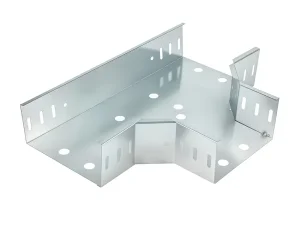
Buy Pre Galvanized TEE for Cable Tray
View Product Specs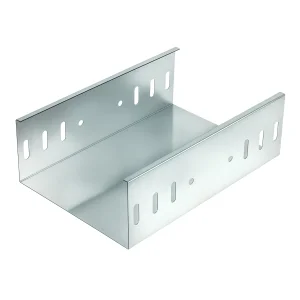
Custom Size Pre Galvanized Cable Trunking
View Product Specs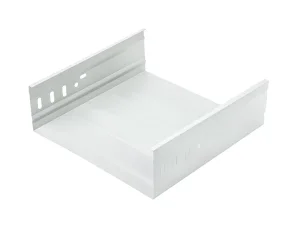
Wholesale Lightweight Tenacity Aluminium Molded Cable Tray
View Product Specs
Wholesale FRP Cable Trunking Trough Type Channel 100*50
View Product Specs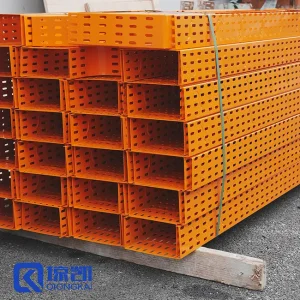
Reinforced Medium Duty PG HDG Perforated Cable Tray 200*100 Orange
View Product Specs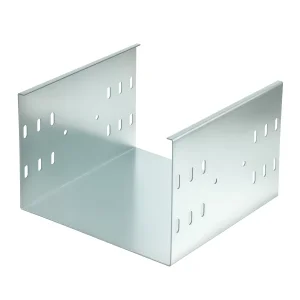
Wholesale QiongKai Pre Galvanized Cable Trunking
View Product Specs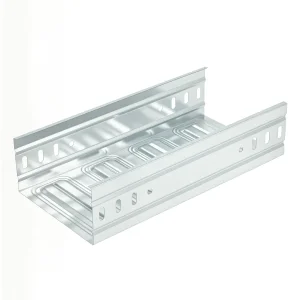
Buy Pre Galvanized Molded Cable Tray 200mm
View Product Specs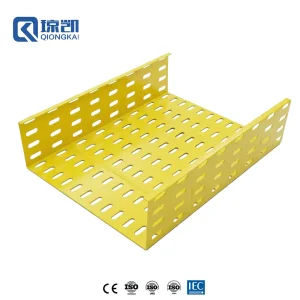
Powder Coated Carbon Steel Cable Tray With Ribs RAL1080 Yellow 300*100
View Product SpecsStructural Metallurgy & Mechanical Load Criteria in Aluminium Cable Ladders
Specifying high-capacity electrical raceways requires granular analysis of yield tensile strength, structural modulus, and resistance to environmental fatigue. Our factory manufactures cable ladders using precision-extruded architectural and marine-grade aluminum alloys engineered to exceed NEMA VE-1 and IEC 61537 international guidelines.
6063-T6 vs. 6082-T6 Marine Grade Extrusions
While 6063-T6 provides an optimal balance of yield strength (170 MPa) and superior surface anodizing quality for commercial and data center installations, 6082-T6 delivers heavy-duty structural performance with yield strength exceeding 255 MPa. The higher manganese and silicon content in 6082 provides exceptional resistance to dynamic mechanical stress and chloride-induced micro-pitting in maritime or heavy chemical plants.
I-Beam Side Rail Structural Mechanics
The moment of inertia ($I_x$) dictates span deflection under heavy industrial cable bundles. Our proprietary dual-flanged extruded I-beam profiles maximize structural stiffness while shedding deadweight. By concentrating metal thickness at extreme outer fibers, the rail withstands extreme transverse and lateral torsional buckling under full design working loads across 3-meter to 6-meter support spans without permanent deformation.
High-Integrity Swaged vs. Robotic Welded Rungs
Rung-to-rail mechanical attachment is critical to system integrity. We utilize multi-axis automated mechanical swaging with 360° internal cold-expansion for high vibration resistance, preventing the heat-affected zone (HAZ) softening common in inferior welding. For extreme seismic or marine torsion applications, automated continuous pulsed-MIG welding guarantees shear strength surpassing 4.8 kN per rung connection.
| Material Specification | Yield Strength (Rp 0.2) | Tensile Strength (Rm) | Elongation (A50mm) | Weight vs Galvanized Steel | Corrosion Mechanism |
|---|---|---|---|---|---|
| 6063-T6 Extruded Aluminium | 170 - 210 MPa | 215 - 245 MPa | 8 - 12% | -62% Lighter | Self-healing $Al_2O_3$ passivating oxide barrier |
| 6082-T6 Structural Marine Grade | 255 - 290 MPa | 295 - 340 MPa | 10 - 14% | -60% Lighter | Excellent resistance to marine chloride pitting |
| Hot-Dip Galvanized Carbon Steel (Q235/Q355) | 235 - 355 MPa | 375 - 500 MPa | 20 - 26% | Baseline (100%) | Sacrificial zinc depletion; prone to rust once broken |
| Stainless Steel 316L (Marine Benchmark) | 220 - 280 MPa | 520 - 680 MPa | 40 - 45% | +8% Heavier | Chromium oxide passive layer; susceptible to crevice attack |
Macro Industry Engineering Solutions for Aluminium Cable Ladders
Aluminium cable ladder systems are no longer an alternative—they are the baseline standard across hyper-scale facilities, complex processing complexes, and offshore environments demanding weight reduction and structural longevity.
Hyperscale AI & Cloud Data Centers
Next-generation compute clusters deploy extremely heavy bundles of 400G/800G optical interconnects and heavy 48V DC busway cabling. Aluminum ladders provide high electrical grounding conductivity (acting as an Equipment Grounding Conductor under NEC 392) while their non-magnetic nature prevents hysteresis loss and parasitic inductive heating generated by alternating high-current three-phase feeds.
Offshore Platforms & Marine LNG Terminals
Topside weight reduction is paramount on floating offshore units (FPSOs) and LNG liquefaction plants. Replacing structural steel trays with marine-grade 6082-T6 cable ladders reduces topside raceway deadweight by up to 60%. This significantly lowers structural deadweight moments while providing natural passivating oxide resilience against constant marine salt fog (ISO 12944 C5-M / CX conditions).
Utility-Scale Solar & Renewable Energy
Photovoltaic utility plants require miles of cable containment exposed to intense UV radiation, wide diurnal thermal expansion cycles (-20°C to +60°C), and airborne moisture. Aluminum’s thermal coefficient ($23 \times 10^{-6}/\text{K}$) is safely absorbed by our precision expansion splice plates, preventing thermal bowing and eliminating the zinc leaching issues common with galvanized steel over farmland.
Petrochemical & Corrosive Chemical Refineries
In downstream refining units saturated with hydrogen sulfide ($H_2S$), ammonia, and sulfurous gases, standard galvanized steel coatings deteriorate rapidly. Aluminum forms a stable passivating layer in neutral-to-mildly acidic gaseous atmospheres, extending maintenance-free raceway operational service life beyond 30 years without recoating.
China Factory 4.0: Modern Manufacturing, Resilience & Capacity
Direct factory procurement eliminates middle-tier broker margins and connects your engineering team with advanced fabrication machinery. With over 30,000 m² of specialized workshops in Shanghai, our automated production infrastructure delivers millimeter-accurate tolerances and high weekly output volume.
Automated High-Tonnage Extrusions
Operating dedicated extrusion presses with closed-loop laser gauge feedback ensures uniform wall thickness along every 6-meter section. Die tool geometries maintain strict parallel tolerance on rail flanges, eliminating twisting and warping during site hoisting and bolting operations.
CNC Multi-Axis Swaging & Punching
Programmable CNC stamping centers punch side rails and rungs simultaneously. Splice bolt holes, bonding jumper locations, and expansion slots are formed in a single operation, eliminating secondary drilling errors and guaranteeing fast alignment during field assembly.
Export Packaging & Ocean Logistics
Located near Shanghai’s Yangshan and Waigaoqiao deep-water container terminals, our facilities utilize nested structural packaging wrapped in protective shrink film and reinforced wooden crates. This maximizes container cube utilization while preventing scratching during long ocean transits.
Total Modern Workshop Floor Area Across 3 Dedicated Facilities
Heavy-Duty Automated Roll-Forming, Extrusion & CNC Press Units
Continuous Automated Assembly Lines for Simultaneous BOQ Production
Years Manufacturing Track Record Supplying Major Global EPC Contractors
Localized Engineering Support & International Compliance Assurance
Global project specifications demand strict adherence to testing standards. Qiongkai provides complete structural calculation documentation, PE (Professional Engineer) load calculations, and independent third-party laboratory test reports to streamline your local municipal and consultant approvals.
NEMA VE-1 / CSA C22.2 No. 126.1 Testing
Each ladder design is validated under destructive uniform loading configurations to verify structural load class ratings (e.g., Class 12A, 12B, 12C, 20A, 20B, 20C). Factor of safety parameters ($SF \ge 1.5$) are verified using simple beam test methods to ensure no rung separation or side rail collapse under unexpected overload conditions.
Short-Circuit Electromagnetic Withstand
High fault currents in low- and medium-voltage feeders generate violent dynamic electromagnetic repulsion forces between cable phases. Per IEC 61914, our rung profiles and cleat mounting bases are engineered to prevent rung dislocation or destructive structural deformation during peak fault events up to 100 kA.
Full BOQ BIM Integration & Engineering Submittals
We supply accurate 3D CAD and Revit BIM families for mechanical and electrical coordination, allowing your engineering consultants to perform clash-detection analysis early. Our engineering office provides complete material test certificates (EN 10204 3.1) and custom fabrication drawings for all non-standard fittings and transitions.
Global Procurement Strategy: Total Cost of Ownership (TCO) Analysis
Purchasing managers often focus only on the initial per-meter material cost. However, examining Total Cost of Ownership—including shipping weight, structural deadweight support requirements, and field installation speed—reveals why global engineering firms specify aluminum cable ladders over steel.
Field Installation Speed & Labor Savings
Because an aluminum ladder weighs roughly one-third as much as its hot-dip galvanized steel counterpart, overhead installation requires fewer workers, eliminates specialized crane equipment, and cuts field hoisting hours by up to 45%. Field modifications (cutting, notching, drill-tapping) are performed quickly using standard handheld power tools without requiring paint touch-ups.
Ocean Shipping & Container Packing Optimization
Heavy steel cable trays often hit maximum container weight limits (max gross payload ~26,000 kg) long before container volume is full. Lightweight aluminum ladders allow you to load more lineal meters per 40ft High Cube container, reducing per-meter sea freight charges by up to 55% during intercontinental transport.
Structural Support & Seismic Bracing Reduction
Lighter cable raceway systems transmit lower dead load back to the building's structural steel framing, trapeze drops, and ceiling struts. In high seismic regions, reduced deadweight directly reduces horizontal acceleration force calculations, cutting the size and density of required seismic sway bracing.
Technology Roadmap: Next-Gen Cable Ladders & Smart Containment
The cable management sector is rapidly modernizing. Digital manufacturing, structural health monitoring, and sustainability initiatives are driving our factory’s forward-looking technology roadmap.
IoT-Enabled Structural Strain & Heat Telemetry
Developing continuous busway and high-voltage cable runs with integrated fiber Bragg grating (FBG) optical sensors along the side rail groove. These real-time telemetry systems detect structural sag, seismic displacement, and cable insulation overheating well before catastrophic failures occur.
Zero-Carbon Recycled Architectural Aluminium
Addressing Scope 3 embodied carbon targets by increasing certified scrap-recycled billet inputs. Smelted with hydroelectric renewable energy, our eco-billet series reduces carbon intensity from 16.5 kg $CO_2$/kg aluminum down to less than 4.0 kg $CO_2$/kg, helping projects achieve LEED Platinum and BREEAM Outstanding status.
Robotic Friction Stir Welding (FSW) Automation
Transitioning from traditional arc welding to solid-state Friction Stir Welding (FSW) for our heavy-duty marine ladder rungs. FSW generates no melting, porosity, or micro-cracks, delivering parent-metal strength, superior fatigue life, and a clean, flat surface that protects sensitive cable jackets from abrasion.
Engineering FAQ: Aluminium Cable Ladder Systems
Direct technical answers addressing electrical isolation, thermal expansion, load calculations, and chemical compatibility from our factory engineering staff.
How do you prevent galvanic corrosion when mounting aluminium cable ladders on carbon steel supports?
Galvanic corrosion occurs when dissimilar metals (such as aluminum and carbon steel) are in direct electrical contact in the presence of an electrolyte. To prevent galvanic attack, we recommend isolating the two metals completely. Our factory supplies UV-stabilized, non-conductive Santoprene or nylon dielectric separation pads to place between the ladder rail and steel strut support. Additionally, stainless steel 316 hold-down clamps with insulated isolation washers ensure the fastener assemblies do not bridge electrical continuity between dissimilar metals.
What are the exact thermal expansion calculations needed across long outdoor ladder runs?
Extruded aluminum exhibits a linear thermal expansion coefficient of roughly $\alpha = 0.000023\text{ mm/mm/}^\circ\text{C}$. For a 100-meter continuous run subjected to an operational temperature differential of $\Delta T = 50^\circ\text{C}$ (from a winter low of -10°C to an exposed summer rooftop high of +40°C), thermal elongation is calculated as: $\Delta L = L \times \alpha \times \Delta T = 100,000 \times 0.000023 \times 50 = 115\text{ mm}$. Our factory provides slotted expansion splice plates and sliding hold-down clamps positioned at specified engineering intervals (typically every 24 to 30 meters) to absorb thermal movements without structural buckling or bolt-shearing stress.
Can aluminium cable ladders be utilized as an Equipment Grounding Conductor (EGC)?
Yes. Under NEC (National Electrical Code) Article 392 and CSA C22.2 No. 126.1, certified aluminum cable trays and ladders with sufficient cross-sectional structural rail area are permitted for use as an Equipment Grounding Conductor (EGC). Because aluminum features much higher electrical conductivity than steel, our UL-classified ladder side rails often satisfy grounding ampacity ratings without requiring a separate bare copper grounding conductor along the run. Factory UL-certified bonding jumpers must be installed across expansion joints to preserve ground circuit electrical continuity.
What is the standard manufacturing lead-time for large customized international orders?
Standard profile sizes (e.g., side rail heights of 100mm, 150mm; rung spacings of 200mm, 300mm; widths up to 900mm) are produced from on-hand extrusion billets within 10 to 18 business days for quantities of 2 to 5 full 40ft High Cube containers. Custom extruded profiles, non-standard rung profiles, or unique anodizing and powder-coating colors require approximately 20 to 28 days, including tooling verification and testing documentation. Finished containers are transferred directly to Shanghai export ports within 24 hours of container sealing.
How does the NEMA Class 20C rating differ from standard light-duty commercial trays?
The NEMA VE-1 classification code defines both the maximum structural support span and working load capacity. A '20C' designation means the ladder is certified to carry an uninterrupted design working load of 100 pounds per linear foot (148.8 kg/m) over a 20-foot (6.10-meter) support span while maintaining a structural safety factor of at least 1.5. In contrast, light-duty commercial systems typically conform to 8A or 12A ratings (50 lbs/ft over 8 to 12 feet). NEMA 20C systems utilize significantly deeper web depths, higher section moduli, and heavier rung attachment designs to carry industrial multi-conductor power cables without excessive mid-span deflection.
Industrial Cable Containment Systems: Series 02
Heavy-duty ladder assemblies, wire mesh channels, custom perforated trays, and industrial metal containment profiles. Review our complete catalogue below or contact our sales engineering division for tender quotations.
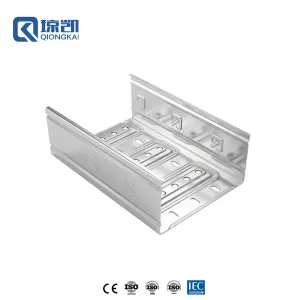
Heavy Duty Reinforced Molded Pre Galvanized Cable Tray 300*100
View Product Specs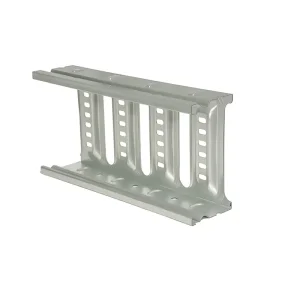
Wholesale Pre Galvanized Customizable Ladder Heavy Duty Cable Tray
View Product Specs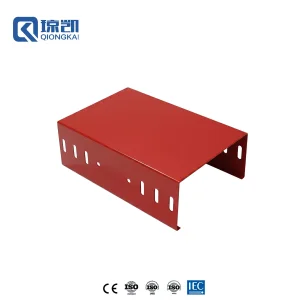
Powder Coated PG Cable Trunking Trough Channel RAL3020 Red 200*100
View Product Specs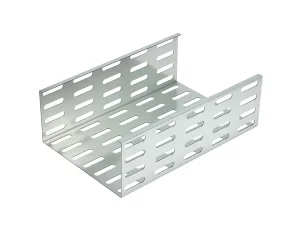
Wholesale Pre Galvanized Cable Tray With Perforation
View Product Specs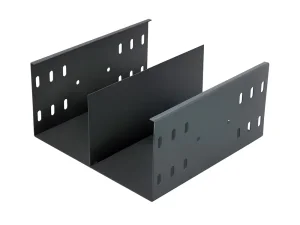
Pre Galvanized Powder Coated Cable Trunking With Split Plate Black
View Product Specs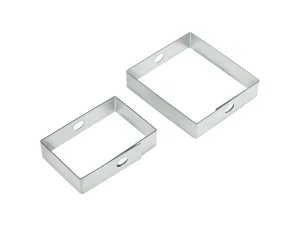
Wholesale Pre Galvanized Square Metal Profile Enclosures
View Product Specs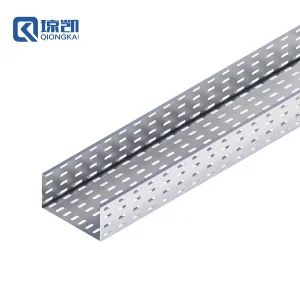
Wholesale PG HDG Perforated Cable Tray 200*100
View Product Specs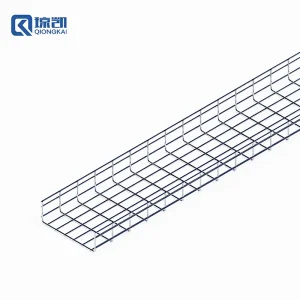
Wholesale Pre-Galvanized Basket Wire Mesh Tray 300*100
View Product SpecsReady to Engineer Your Cable Raceway Infrastructure?
Send your project Bill of Quantities (BOQ), single-line diagrams, or structural support criteria to our senior applications engineering team. We provide free design calculations, span-deflection optimization, and factory-direct volume pricing within 24 hours.