
Standard & Heavy-Duty Cable Support Systems
Explore our factory-engineered cable routing components, including aluminum-compatible profiles, fiberglass trunking, structural ladder trays, and precision brackets.
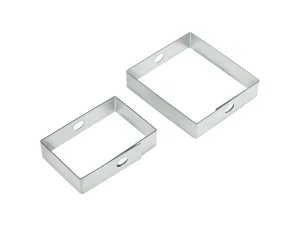
Wholesale Pre Galvanized Square Metal Baking Molds Manufacturer, Supplier
Inquire Factory Specs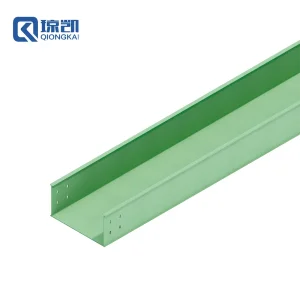
Buy FRP Cable Trunking Trough Type Channel 200*100 Manufacturer, Manufacturers
Inquire Factory Specs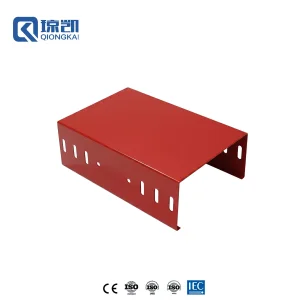
Wholesale Powder Coated Carbon Steel PG Cable Trunking RAL3020 Red 200*100
Inquire Factory Specs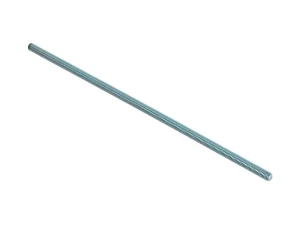
Buy Metal hanger rod Supplier, Price
Inquire Factory Specs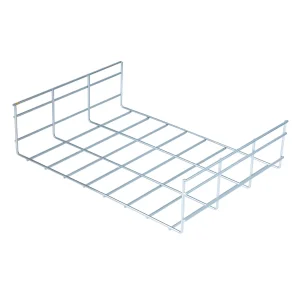
Buy Pre Galvanized grid Cable tray 400mm Supplier, Price
Inquire Factory Specs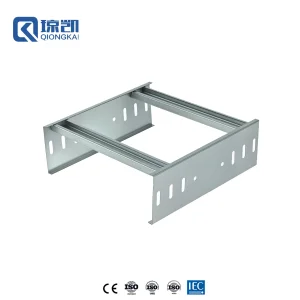
Buy Powder Coated Ladder Type Cable Tray 200*100 - Gray Manufacturer
Inquire Factory Specs
Buy Customized Dense Pre Galvanized Perforated Cable Tray Factory, Price
Inquire Factory Specs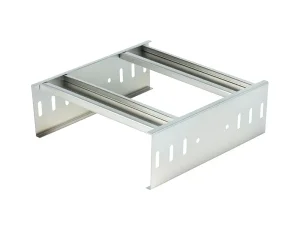
Buy Stainless Cable ladder Factories, Price
Inquire Factory SpecsGlobal Aluminum Cable Tray Market Dynamics & Structural Economics
An analytical engineering evaluation on structural aluminum alloy selection (6063-T6 vs. 5052-H32), thermal dissipation mechanics, and life-cycle costing for heavy commercial and industrial infrastructure.
The Structural Transition: Why Modern EPCs Specify Aluminum
Over the past decade, major international engineering, procurement, and construction (EPC) conglomerates have accelerated the structural migration from traditional hot-dip galvanized (HDG) mild steel toward engineered structural aluminum alloys (specifically AA 6063-T6 and AA 5052-H32). While the initial per-kilogram raw material cost of primary aluminum is intrinsically higher than structural carbon steel, the aggregate installed system cost demonstrates a definitive financial advantage.
Aluminum's exceptional strength-to-weight ratio yields an installed deadweight reduction of roughly 55% to 65% compared to equivalent heavy-gauge steel systems. In high-density cable applications—such as artificial intelligence hyperscale data centers, offshore floating production storage and offloading (FPSO) units, LNG liquefaction trains, and gigawatt-scale chemical refining complexes—this weight reduction reverberates through the entire structural framing system. Secondary steel supports, strut channels, seismic braces, and overhead roof trusses can be downsized significantly, producing immediate structural CapEx savings.
- Autonomous Passivation: Natural generation of an amorphous aluminum oxide (Al₂O₃) barrier layer prevents oxidation without zinc flake flaking or zinc whisker contamination in cleanrooms.
- Grounding Efficiency (NEC 392.60): Superior electrical conductivity allows aluminum side rails to act as high-capacity equipment grounding conductors (EGC), reducing copper pull requirements.
- Non-Magnetic Permeability: Eliminates hysteresis losses in single-conductor alternating current circuits, maintaining cool operating profiles and reducing cable ampacity derating.
Aluminum vs. Steel: Engineering Matrix
Measured comparison per 6-meter span length, 600mm width, 150mm side-rail height conforming to NEMA VE-1 Class 20C (100 lbs/ft design working load).
Alloy Chemistry, Mechanical Strengths & NEMA VE-1 Ratings
Specifying the correct metallurgical profile prevents premature mechanical creep, catastrophic seismic deflection, and galvanic failure across extreme operating conditions.
Extruded Side Rails: AA 6063-T6
Aluminum Association 6063 heat-treated to T6 temper represents the gold standard for structural side rails. With a minimum tensile yield strength of 170 MPa (25 ksi) and ultimate tensile strength exceeding 205 MPa (30 ksi), it offers the ideal balance of torsional rigidity, extrusion ductility, and crisp detail for integrated snap-in splice plate receivers and cover clamp grooves.
Solid Bottoms & Covers: AA 5052-H32
For solid-bottom trough trays, ventilated perforated liners, and flanged snap-on covers, marine-grade AA 5052-H32 is designated. Alloyed with 2.5% magnesium and stabilized via work hardening, it exhibits superior fatigue limits and exceptional resistance to saltwater vapor, coastal chloride atmospheres, and sulfurous industrial plumes, outperforming carbon sheet.
Fasteners & Hardware: 316 Stainless
A critical engineering consideration in aluminum cable containment is mitigating galvanic corrosion. While aluminum forms an insulating barrier, electrical coupling with dissimilar metals under electrolytic exposure (moisture + salts) causes localized pit formation. Qiongkai supplies high-tensile 316 stainless steel carriage bolts and serrated flanged nuts fitted with non-conductive nylon isolation washers.
| Tray Profile Architecture | Material / Temper | Load Class Standards | Side Rail Heights | Rung Spacing Pitch | Primary Sector Application |
|---|---|---|---|---|---|
| Heavy Industrial Ladder Tray | AA 6063-T6 Extrusion | NEMA 20C / IEC 61537 | 100mm, 150mm, 200mm | 150mm, 225mm, 300mm | Offshore Oil & Gas, LNG Terminals, Smelters |
| Ventilated Trough Channel | AA 6063-T6 + AA 5052 | NEMA 16B / CSA C22.2 | 75mm, 100mm, 125mm | Perforated Bottom (28% open) | Telecom Central Offices, Hyperscale Data Halls |
| Solid Bottom Enclosed Trunking | AA 5052-H32 Marine Sheet | NEMA 12A / IEC Type III | 50mm, 100mm, 150mm | Continuous Shielding | EMI/RFI Sensitive Instrumentation, Defense |
| Modular Wireway / Mesh Grid | High-Tensile Al-Mg Wire | Light / Medium Duty | 50mm, 100mm | 50mm × 100mm Grid Matrix | Fiber Optic Pathways, Server Rack Overhead Drops |
How to Buy Aluminum Cable Trays: Supplier Pricing Mechanics
Understanding how raw ingot indices, extrusion billet processing, profile die complexity, and shipping freight formulas formulate your landed quote.
LME / SMM Ingot Benchmarking
Aluminum tray pricing directly correlates with global aluminum ingot spot cash prices on the London Metal Exchange (LME) or Shanghai Metals Market (SMM). Transparent suppliers utilize transparent pass-through pricing formulas: Base Metal Price + Conversion Fee + Tooling Amortization.
Extrusion Complexity & Die Charges
Custom structural flange profiles with integral guide tracks or heavy internal reinforced ribs require bespoke tungsten carbide extrusion dies. Qiongkai houses over 400 standard open dies, eliminating custom tooling surcharges on 95% of standard international tender configurations.
Automated Swage vs. Manual TIG
The manufacturing process used to join rungs to side rails determines both cycle speed and unit price. Automated mechanical swaging or robotic dual-torch MIG welding reduces fabrication labor by up to 70% compared to manual workshops, yielding lower unit prices and uniform weld penetration.
Ocean Freight Cube Optimization
Aluminum is lightweight but voluminous. Qiongkai engineers nested stack packaging where ladder trays of stepped widths (e.g., 150mm inside 300mm inside 600mm) or knocked-down (CKD) assembly configurations double container stuffing density, reducing freight cost per linear meter by 40%.
Indicative Factory Direct Price Ranges (FOB Shanghai Port)
Note: Prices vary dynamically based on prevailing LME ingot prices. Below metrics represent benchmark ranges for 6063-T6 ladder trays with 225mm rung spacing and standard splice plates.
| Tray Width Profile | Side Rail Height (H) | Gauge / Wall Thickness | Design Load Class | Estimated Unit Price (USD / Meter) |
|---|---|---|---|---|
| 150 mm (6 inch) | 100 mm (4 inch) | 2.0 mm Extrusion | NEMA 12A / 12B Equivalent | $14.50 – $18.20 |
| 300 mm (12 inch) | 100 mm (4 inch) | 2.2 mm Extrusion | NEMA 16B / CSA Class B | $22.00 – $27.80 |
| 450 mm (18 inch) | 150 mm (6 inch) | 2.5 mm Heavy Flange | NEMA 20B / CSA Class C | $31.50 – $38.90 |
| 600 mm (24 inch) | 150 mm (6 inch) | 2.8 mm Heavy Flange | NEMA 20C Heavy Industrial | $39.00 – $49.50 |
| 900 mm (36 inch) | 150 mm (6 inch) | 3.2 mm Structural Rail | NEMA 20C+ Super Span | $58.00 – $72.00 |
China Manufacturing Velocity: The Qiongkai Industrial Ecosystem
Shanghai Qiongkai Industry Co., Ltd. is located in the Songjiang Port Science and Technology City of Shanghai. Since our foundation in 2005, our corporate trajectory has focused on high-throughput, precision-engineered metal forming. Across 3 regional factory facilities spanning over 30,000 square meters, our manufacturing ecosystem combines raw extrusion capability, multi-axis CNC punching, robotic welding, and automated powder coating.
By leveraging China's mature Yangtze River Delta industrial supply corridor, our raw 6063 billet sourcing, precision die making, and anodizing lines operate in zero-latency synergy. What typically demands an 8-to-12 week lead time from North American or European fabricators is regularly dispatched from Shanghai port terminals within 14 to 21 calendar days.
- Deep-Water Maritime Proximity: Located minutes from Yangshan and Waigaoqiao container terminals, eliminating overland transit delays and preserving strict FOB/CIF shipping schedules.
- 60+ Heavy-Duty Machine Arsenal: Multi-station roll formers, 400-ton hydraulic press brakes, and computerized fiber lasers handle non-standard project geometry with zero lag.
- In-House Rig Testing: Every production batch undergoes full-span static load testing to destruction, verifying structural deflection against IEC 61537 and NEMA VE-1 standards.
Quality Assurance & Certification Protocol
Optical Emission Spectrometry
Chemical alloy verification verifying Silicon (0.2–0.6%), Magnesium (0.45–0.9%), and trace Iron limits to ensure T6 heat-treatment integrity.
Full-Span Hydraulic Deflection Verification
Validating L/200 deflection criteria on 3.0m, 4.5m, and 6.0m unsupported spans with distributed sandbag and deadweight load testing rigs.
Bonding & Continuity Resistance Test
Measuring milliohm path resistance across splice plate joints in accordance with NEC Article 392 and UL 568 guidelines.
Mission-Critical Applications & Project Track Record
From high-speed aviation hubs to harsh offshore LNG terminals, Qiongkai cable management systems are proven across the world's most demanding environments.
Shanghai Hongqiao International Airport
Engineered and manufactured high-capacity, corrosion-resistant trunking systems running uninterrupted power and sensitive flight communications throughout the passenger terminals, baggage handling areas, and ground apron lighting corridors.
Offshore LNG Terminal Infrastructure, Qatar
Manufactured bespoke profiled structural sections engineered to resist extreme Gulf temperatures, severe sandblast abrasion, and high-salinity maritime humidity across multiple offshore liquefaction gas treatment modules.
Heavy Chemical & High-Temperature Plants, Thailand
Delivered customized FRP and hybrid cable tray assemblies designed to combat aggressive acidic vapors, extreme atmospheric condensation, and chemical washdowns without loss of structural modulus.
Agro-Industrial Livestock Complex, Paraguay
Supplied a cost-optimized, heavy-duty cable tray deployment engineered for intensive organic ammonia vapors and routine high-pressure thermal sanitary washings across a large commercial livestock breeding facility.
Hyperscale AI Cloud Data Halls (Global Tier IV)
Overhead aluminum ladder and wire basket runway systems designed for rapid multi-tier cable dropoffs, zero zinc whisker contamination, and maximum convective airflow cooling above high-density server racks.
Civil Infrastructure & Commercial High-Rise, Italy
High-volume maritime container exports of CE-marked, hot-dip galvanized and aluminum containment solutions serving transit hubs and commercial facilities throughout the European Union.
Frequently Asked Questions (FAQ)
Essential technical and commercial clarity for MEP consulting engineers, procurement directors, and electrical project estimators.
What alloy and temper is recommended for standard industrial vs. marine applications?
For standard industrial, commercial, and data center pathways, extruded AA 6063-T6 is the universal standard due to its structural yield strength (≥170 MPa) and ease of extrusion into complex I-beam side-rail profiles. In aggressive marine splash zones, chemical refineries, or offshore decks, AA 5052-H32 is preferred for sheet components and fittings due to its magnesium content (~2.5%) and resistance to chloride pitting.
How does aluminum cable tray pricing compare to hot-dip galvanized (HDG) steel?
On an ex-factory raw material basis, aluminum cable tray profiles are approximately 15% to 30% higher in initial unit purchase price than pre-galvanized or standard carbon steel. However, when compared against hot-dip galvanized (HDG) after fabrication, aluminum prices are frequently comparable or lower. Furthermore, because aluminum is 60% lighter, freight costs per meter drop by 30-40%, and job-site installation velocity accelerates by up to 50%, resulting in a lower Total Installed Cost (TIC).
Can aluminum cable trays be used as an Equipment Grounding Conductor (EGC)?
Yes. Under NFPA 70 National Electrical Code (NEC) Article 392.60, aluminum cable tray systems are officially recognized as Equipment Grounding Conductors, provided the side-rail cross-sectional area meets minimum requirements and certified UL-listed bonding jumpers or serrated high-pressure splice connection plates are utilized. This can eliminate the need to run an external bare copper grounding cable through the tray run.
How do you prevent galvanic corrosion between aluminum trays and steel supports?
When aluminum trays are installed on carbon steel strut channels, steel trapeze hangers, or structural building steel in the presence of an electrolyte, galvanic corrosion can occur. Qiongkai mitigates this by supplying heavy-duty thermoplastic isolation pads, non-metallic nylon washers, and 316 stainless steel carriage fasteners with fluoropolymer coatings to ensure complete electrical separation between dissimilar metals.
What are the typical lead times and minimum order quantities (MOQ) for custom profiles?
Standard catalog dimensions (100mm to 900mm widths in 3m or 6m lengths) require an MOQ of just 100 meters, with container orders typically ready for maritime dispatch in 14 to 20 days. For bespoke side-rail heights, specialized rung profiles, or non-standard hole patterns, our Shanghai tooling center creates custom extrusion dies within 7 to 10 days, followed by full sample verification before volume production commences.
Which international testing certifications accompany Qiongkai cable tray shipments?
Every shipment is accompanied by comprehensive quality verification dossiers, including: EN 10204 Type 3.1 Mill Test Certificates (MTC), load deflection testing certifications conforming to NEMA VE-1 / CSA C22.2 No. 126.1 and IEC 61537, electrical continuity test reports, and third-party spectroscopic alloy chemistry verifications (SGS / BV available on request).
Support Framing, Mesh & Seismic Bracing Inventory
Explore additional specialized cable management elements, industrial trunking modules, seismic support assemblies, and high-load channels manufactured in our Shanghai facilities.
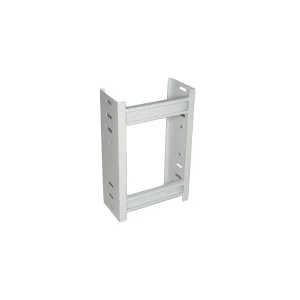
Wholesale Powder Coated Ladder Tray Factory, Price
Inquire Factory Specs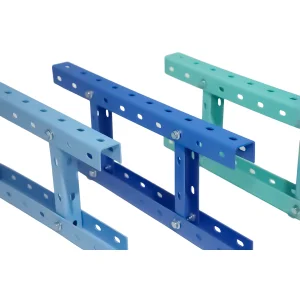
Wholesale Durable Powder Coated Telecom Cable Rack Supplier, Factory
Inquire Factory Specs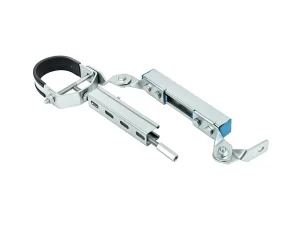
Buy Seismic Bracket Factory, Price
Inquire Factory Specs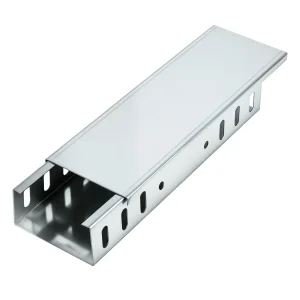
Wholesale Pre-Galvanized Cable Trunking 100*50 Manufacturer
Inquire Factory Specs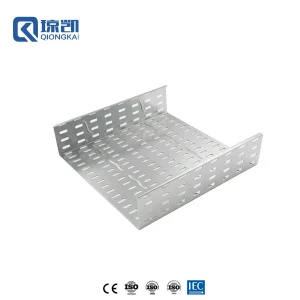
Wholesale PG / HDG Cable Tray with Reinforce Ribs 400*100
Inquire Factory Specs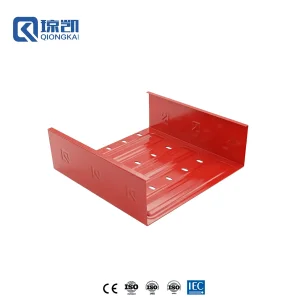
Powder Coated Cost-Saving Molded Cable Tray RAL3020 Red 300*100
Inquire Factory Specs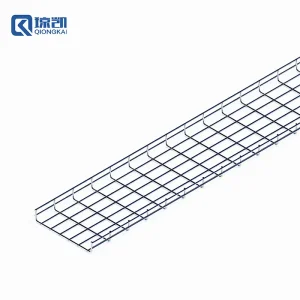
Wholesale Pre-galvanized Grid Cable Tray 300*50 Manufacturer
Inquire Factory Specs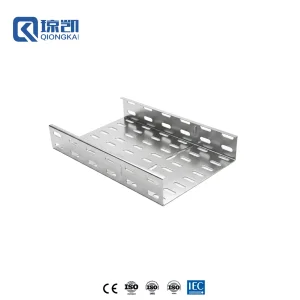
Wholesale PG / HDG Cable Tray with Reinforce Ribs 200*50
Inquire Factory SpecsPlan Your Cable Route With Direct Factory Support
Submit your project Bill of Quantities (BOQ), single-line diagrams, or tender specifications for immediate structural load calculations and factory-direct pricing within 24 hours.