
Integrated Cable Containment & Tray Solutions
Explore our precision-engineered cable trays and fittings designed to seamlessly interface with heavy-duty cable cleats for maximum dynamic fault current resistance.
-
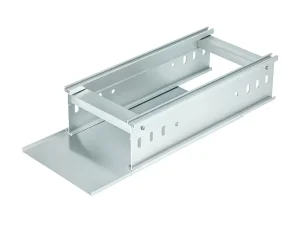
Buy Pre Galvanized ladder type cable tray Gi and HDG customizable reinforcing Manufacturers, Suppliers
Request Quotation -
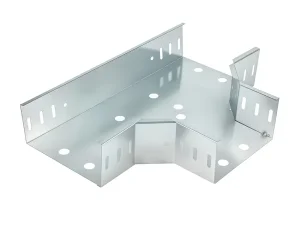
Buy Pre Galvanized TEE for cable tray Manufacturers, Price
Request Quotation -
Buy Cost Saving Heavy Duty Reinforced Molded Pre Galvanized Cable Tray with less perforation 400*200 Manufacturers, Factory
Request Quotation -
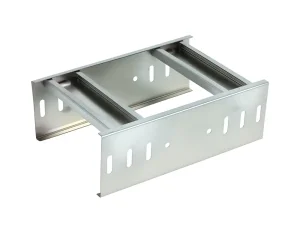
Wholesale 304 and 316 Stainless Cable ladder Factory, Factories
Request Quotation -
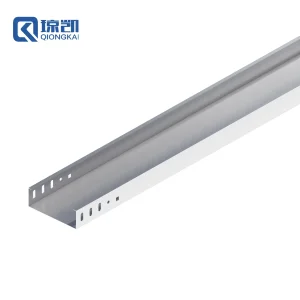
Buy Carbon Steel PG Pre Galvanized HDG Hot Dip Galvanized SS Stainless Steel Cable Trunking Trough Type Channel 150*50 Manufacturers, Price
Request Quotation -
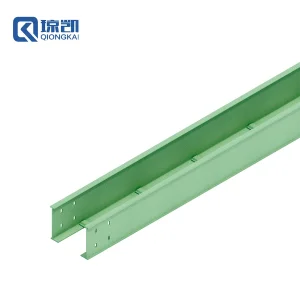
Buy FRP Cable Ladder 200*150 Factory, Factories
Request Quotation -
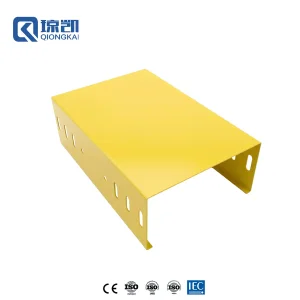
Buy Powder Coated Carbon Steel PG Pre Galvanized Cable Trunking Trough Type Channel - RAL1080 Yellow 200*100 Manufacturer, Factories
Request Quotation -
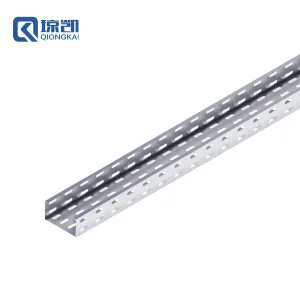
Wholesale Pre-galvanized Hot-dip-galvanized Perforated Cable Tray 100*50 Factory, Factories
Request Quotation
Physics of Cable Cleats in Modern Cable Tray Layouts
Short circuits generate massive electromechanical forces in fractions of a second. Cable cleats are not simply cable retainers; they are rated physical restraints safeguarding infrastructure, human lives, and system longevity.
Dynamic Electromechanical Forces
Under short-circuit conditions, peak current (Ip) produces electromagnetic repulsion between conductors that scales quadratically: Ft = 0.17 × (Ip)² / d (where d is center distance). Unrestrained cables whip violently, instantly shearing unrated cable ties and tearing ladder tray rungs from their side rails.
IEC 61914 Mandatory Standard
Certified cable cleats are tested in accordance with IEC 61914:2015 / 2021. Compliance dictates that cleats withstand lateral and axial loads, retain conductors without puncturing insulation jackets, maintain integrity in extreme temperatures (-40°C to +120°C), and resist flame propagation under UL94 V-0 requirements.
Structural Compatibility with Cable Ladders
A cleat is only as robust as the tray beneath it. When sourcing from specialized manufacturers like Shanghai Qiongkai Industry, cleats and heavy-duty ladder rungs are structurally matched. Reinforced rungs prevent structural deflection when peak short-circuit torque transmits downward into the cable support system.
Material Engineering & Environmental Match Matrix
Specifying the wrong cleat-to-tray metallurgy leads to galvanic corrosion, accelerated polymer degradation, or mechanical failure during thermal cycling.
| Cleat Configuration | Base Material Options | Liner / Cushioning | Peak Fault Current Capacity | Ideal Cable Tray Application |
|---|---|---|---|---|
| Trefoil Cleats (Tri-Bundle) | Stainless Steel 316L / Die-Cast Al | Low Smoke Zero Halogen (LSZH) EVA | Up to 170 kA Peak | Medium & High-Voltage 3-phase feeds on heavy-duty ladder trays. |
| Single Cable Cleats | High-Grade Polyamide 66 / SS304 | Integral Santoprene Pad | Up to 80 kA Peak | DC distribution lines, generator mains, and industrial switchgear risers. |
| Dual / Quad Bundling Cleats | Cast Aluminum Alloy (LM6) | Neoprene / Polymeric Cushion | Up to 135 kA Peak | Parallel conductor configurations in commercial data center plants. |
| Composite FRP Cleats | Fiberglass Reinforced Polymer | EPDM High-Temp Gasket | Up to 75 kA Peak | Acidic chemical plants, offshore splash zones, and rail tunnels. |
China Factory Direct Supply Chain & Global EPC Scale
Why Tier-1 international contractors bypass secondary intermediaries and partner directly with dedicated Chinese production clusters in Songjiang, Shanghai.
Integrated 3-Plant Footprint
Spanning 30,000 m² across 3 Shanghai-area production hubs, Shanghai Qiongkai operates 12 advanced roll-forming and metal fabrication lines backed by over 60 heavy-duty punch, stamping, and welding stations.
System Co-Engineering
Ordering cable cleats from one vendor and cable trays from another creates installation bottlenecks. We engineer our strut channels, ladder rungs, and mounting clamps as a matched structural package, eliminating field drilling.
Export Port Proximity
Located in the Songjiang Port Science and Technology corridor, our facilities enjoy rapid direct access to Shanghai Yangshan Deep-Water Port and Waigaoqiao Container Terminals, shaving 7–10 days off intercontinental project logistics.
Rigid Quality Control & MTR
Full Mill Test Reports (MTR), raw material spectrographic assays, coating thickness verification (ASTM A123 / ISO 1461), and factory mechanical pull tests are provided with every export container consignment.
Global Project Scenarios & Industry Evolutions
From the harsh desert heat of the Middle East to deep-water offshore LNG platforms, certified cable restraint systems adapt to diverse demanding environments.
Hyperscale AI Data Center Infrastructure
High-density GPU clusters require high-amperage bus feeds and large single-conductor power cables operating near thermal capacity limits. Single and trefoil cleats engineered with LSZH liners prevent cable migration during dynamic step-load transients without pinching high-temperature insulation.
Offshore Energy, LNG & Desalination
Offshore platforms in Qatar, the North Sea, and Southeast Asia demand C5-M extreme marine corrosion resistance. Here, SS316L cable ladder systems paired with passivated 316 stainless cleats or heavy-duty FRP composite systems eliminate structural galvanic oxidation caused by saline ocean spray.
Seismic Resilience & Green Megaprojects
International building codes increasingly mandate combined seismic bracing and short-circuit containment. Fast-mount cleat hardware compatible with 41×41 and 41×82 anti-seismic strut flanges allows rapid tool-free installation, cutting labor budgets across renewable solar and nuclear projects.
Specialized Cable Trays, Channels & Framing
Engineered channel systems, reinforced ribs, and corrosion-resistant trunking manufactured by Shanghai Qiongkai Industry for major worldwide construction installations.
-
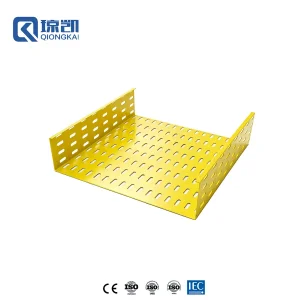
Wholesale Powder Coated Carbon Steel Pre Galvanized Hot Dip Galvanized PG HDG Cable Tray with Reinforce Ribs - RAL1080 Yellow 400*100 Manufacturers, Factory
Request Quotation -
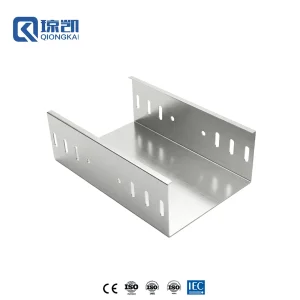
Wholesale Stainless Steel SS 304 316 Cable Trunking 200*100 Manufacturer, Suppliers
Request Quotation -
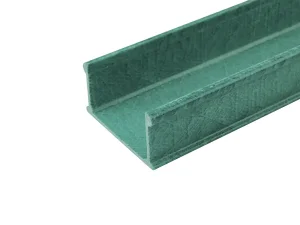
Buy FRP Cable Trunking 200*100 mm Manufacturer, Factories
Request Quotation -
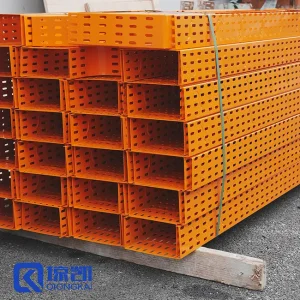
Wholesale Reinforced Medium duty Pre-galvanized Hot-dip-galvanized Powder Coated Perforated Cable Tray 200*100 - Orange Manufacturers, Factories
Request Quotation -
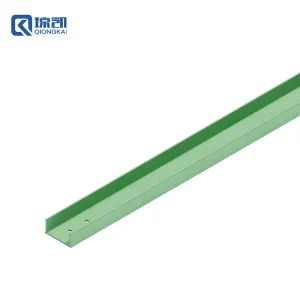
Wholesale FRP Cable Trunking Trough Type Channel 100*50 Manufacturer, Factories
Request Quotation -
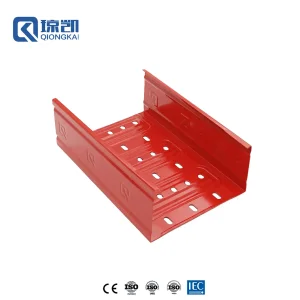
Buy Powder Coated Carbon Steel Cost Saving Heavy Duty Reinforced Molded Pre Galvanized Cable Tray - RAL3020 Red 200*100 Supplier, Factory
Request Quotation -
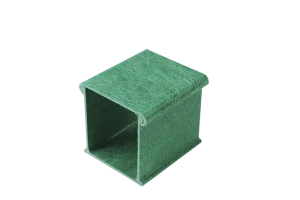
Wholesale FRP Through cable tray 50mm Supplier, Suppliers
Request Quotation -
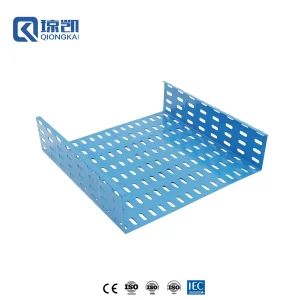
Buy Powder Coated Carbon Steel Pre Galvanized Hot Dip Galvanized PG HDG Cable Tray with Reinforce Ribs - RAL5015 Blue 400*100 Manufacturer, Price
Request Quotation
Engineering Questions & Technical Clarifications
Authoritative answers curated by senior electrical structural engineers for procurement managers and EPC specifiers.
How do I calculate the correct cleat spacing on a ladder-type cable tray?
Cleat spacing is governed by the peak dynamic short-circuit current (Ip), cable outer diameter (d), and the certified mechanical holding strength (Fs) of the cleat per IEC 61914. Spacing (S) is calculated using the formula: S = (Fs × d) / (0.17 × Ip²). In typical industrial configurations with 50kA RMS fault levels, trefoil cleats are spaced between 300 mm and 600 mm near terminations and bends, and up to 900 mm to 1200 mm along continuous straight runs. Our Shanghai technical team provides complimentary layout calculations based on your specific single-line diagrams.
Can standard nylon cable ties replace rated cable cleats on cable trays?
No. Standard nylon zip ties or metallic straps lack dynamic short-circuit containment certification under IEC 61914. During an electrical fault, the instantaneous electromechanical repulsion forces reach thousands of Newtons per meter in less than 5 milliseconds. Standard cable ties snap instantaneously, allowing unrestrained conductors to whip violently, destroying the tray system and posing extreme danger to personnel. Cable ties should only be utilized for non-critical bundle tidying, never as fault-rated physical restraints.
How can galvanic corrosion between stainless steel cleats and galvanized trays be prevented?
Direct contact between stainless steel (304 or 316) and zinc (HDG or Pre-Galvanized) establishes a bimetallic galvanic cell in the presence of an electrolyte (moisture or humidity), accelerating zinc consumption. To avoid this, our cleat systems incorporate integrated dielectric isolation pads, polymeric base plates, or EPDM-coated mounting feet. Alternatively, specifiers can select cast aluminum cleats with passivated coatings or opt for all-stainless/all-FRP support systems for demanding offshore marine installations.
What international compliance certifications are provided for export orders?
Every shipment engineered by Shanghai Qiongkai Industry includes complete factory documentation: ISO 9001 quality management records, IEC 61914 mechanical load test verification, EN 10204 3.1 Mill Test Reports (MTR) verifying metal chemical composition, hot-dip galvanizing thickness inspection reports (ISO 1461 / ASTM A123), and UL94 V-0 non-flammability certifications for polymeric lining components.
How does Shanghai Qiongkai handle custom profile dimensions and rapid project turnarounds?
With 3 owned manufacturing plants, 12 complete production lines, and over 60 high-precision stamping and roll-forming units in Shanghai, we control the entire vertical manufacturing process without outsourcing delays. Custom ladder rung slotting, heavy-gauge side-rail heights (up to 200 mm), and specialized cleat mounting adapters can be fabricated and surface-treated within 7 to 15 working days, expediting urgent EPC milestones worldwide.