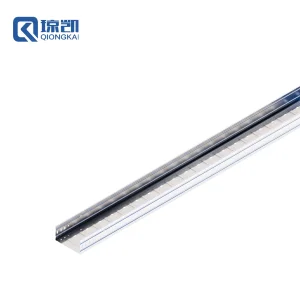
Featured Cable Ladder & Support Systems (Batch I)
Select from precision pre-galvanized, powder-coated, and heavy-duty structural channels engineered for mission-critical electrical distribution and high mechanical loads.
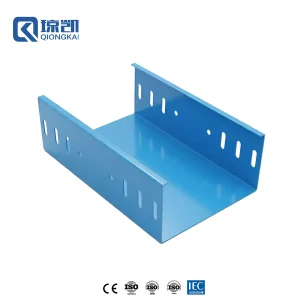
Buy Powder Coated Carbon Steel PG Pre Galvanized Cable Trunking Trough Type Channel - RAL5015 Blue 200*100
Request Factory Quote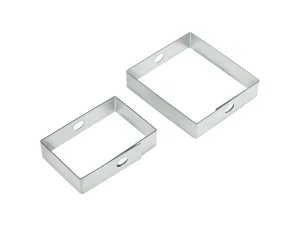
Wholesale Pre Galvanized Square Metal Baking Molds Manufacturer, Supplier
Request Factory Quote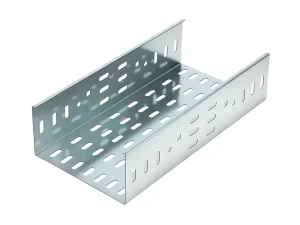
Buy Pre Galvanized Cable Tray With Customizable Parameters Manufacturer, Price
Request Factory Quote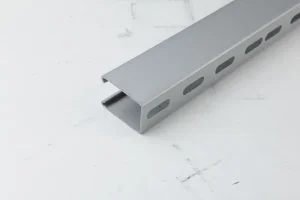
Wholesale Fireproof C slotted channel Factories, Price
Request Factory Quote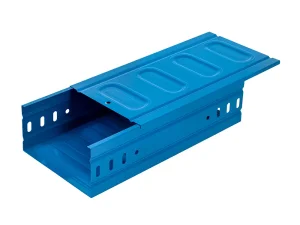
Wholesale Blue Pre Galvanized Powder coated molded cable tray Manufacturer, Supplier
Request Factory Quote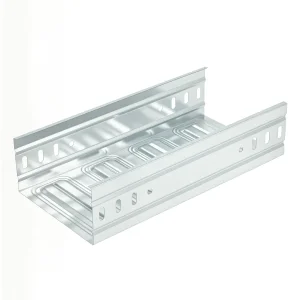
Buy Pre Galvanized molded cable tray 200mm Suppliers, Factory
Request Factory Quote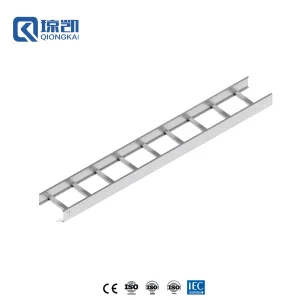
Buy Pre Galvanized Ladder Type Cable Tray 300*100 Factory, Factories
Request Factory Quote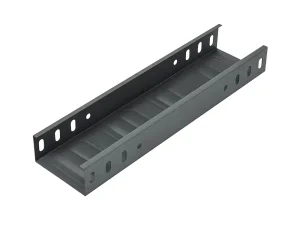
Wholesale Grey Pre Galvanized Powder coated molded cable tray Factory, Price
Request Factory QuoteGlobal Cable Ladder Procurement Dynamics: The Enterprise Buyer's Blueprint
Navigating capital expenditure (CapEx) efficiency, structural compliance, and global supply chain vulnerabilities across mega-scale industrial and utility installations.
Tier-1 Factory Selection Matrix
For international Engineering, Procurement, and Construction (EPC) consortiums, selecting a manufacturer from an unverified cable ladder list introduces catastrophic project risks. Authentic Tier-1 factories distinguish themselves through in-house automated cold roll-forming lines, automated robotic rung welding, and integrated hot-dip galvanizing baths that comply with ASTM A123 / ISO 1461 standards.
- Continuous mill-test certs according to EN 10204 Type 3.1
- Robotic rung insertion with mechanical swaging or MIG weld
- Direct OEM/ODM customization for side-rail profiles
Total Cost of Ownership (TCO)
Cable ladder procurement accounts for 4% to 8% of total electrical balance of plant (EBoP) expenditure, yet structural failures result in unrecoverable downtime. Smart buyers calculate lifecycle cost including zinc coating thickness, field installation speed (splices, fasteners, un-drilled fittings), thermal heat dissipation efficiency, and current derating avoidance.
- Zero-maintenance design life exceeding 25+ years
- Ventilated ladder geometry reduces conductor ampacity derating
- Pre-punched side rails reduce on-site labor up to 35%
Supply Chain Resilience & Logistics
Cross-border procurement demands rigorous logistical packaging and sea-freight nesting designs. Because cable ladders consist of hollow volumetric space, factory nesting capabilities directly govern shipping container cubic meter (CBM) utilization. Certified factories provide nested packing configurations with reinforced steel strapping and fumigated wooden skids.
- Optimized nested dimensions maximizing 40ft HQ stuffing
- VCI anti-corrosion poly-wrap preventing sea transit moisture
- Staged phased deliveries matched to EPC installation milestones
Years Industrial Manufacturing Legacy
Heavy Cold-Forming Rollers & CNC Presses
Continuous High-Speed Automated Lines
NEMA VE 1 / IEC 61537 Certified Compliance
Macro-Industry Solutions: Deploying Cable Ladders Across Critical Sectors
Engineering cable containment to endure specific operational stresses: seismic accelerations, corrosive saline winds, heavy thermal expansion, and severe cryogenic/petrochemical vapors.
Hyperscale Data Centers
High-density fiber optic and power distribution require massive open ladder systems with smooth, rounded rungs to eliminate bend-radius stress. Electro-galvanized or RAL-coded powder finishes prevent zinc whiskers while facilitating mission-critical server row cable segmentation.
Offshore Oil, Gas & LNG
Exposed to severe marine chloride attacks (ISO 12944 C5-M / CX environments). Stainless Steel 316L and pultruded thermoset Fiberglass Reinforced Polymer (FRP) ladders guarantee non-sparking, self-extinguishing flame resistance and total resistance to hydrogen sulfide.
Utility-Scale Energy & BESS
Solar photovoltaic plants and Battery Energy Storage Systems (BESS) require heavy-gauge Hot-Dip Galvanized (HDG) cable ladders supporting heavy copper bus-duct feeds across long spans (6m to 9m) with high ultraviolet stability and structural wind resistance.
Mining & Heavy Metallurgy
Vibration-intense crushing facilities and blast furnaces require high-deflection resistance (L/200 structural rating) using reinforced C-channel and I-beam side-rail profiles capable of holding armored power feeds up to 300 kg/meter working load limits.
| Material / Metallurgy | Standard Specification | Yield Strength (MPa) | Corrosion Resistance | Recommended Industrial Environment |
|---|---|---|---|---|
| Pre-Galvanized (PG) Carbon Steel | EN 10346 / ASTM A653 CS-B | 280 - 320 MPa | Moderate (Indoor) | Commercial buildings, clean data center ceiling plenums, low-humidity sub-floors. |
| Hot-Dip Galvanized (HDG) Steel | ASTM A123 / ISO 1461 (65-85μm) | 350 - 420 MPa | High (C3 - C4 Industrial) | Outdoor switchyards, chemical refineries, wastewater treatment plants, cooling towers. |
| Marine Grade Stainless Steel (SS316L) | AISI 316L / EN 1.4404 | 480 - 580 MPa | Maximum (C5-M Marine) | Offshore drilling rigs, FPSO vessels, coastal desalination complexes, chemical dosing. |
| Extruded Aluminum Alloy (6063-T6) | ASTM B221 / EN 755 | 215 - 245 MPa | Self-Passivating | High strength-to-weight applications, marine vessel topsides, pharmaceutical plants. |
| Fiberglass Reinforced Polymer (FRP) | ASTM D3917 Pultruded Vinylester | 300 - 400 MPa (Flexural) | Total Non-Metallic | Electrolytic refining rooms, battery acid storage facilities, extreme acid gas exposure. |
Structural Integrity Roadmap: NEMA VE 1 / IEC 61537 Mechanics
Deconstructing the physics of deflection ratios, dynamic wind and seismic live-load calculations, and factory automated roll-forming precision.
Deflection Verification & Load Classes
A compliant cable ladder must never exceed allowable deflection limits under full design cable load plus environmental ice or concentrated wind loads. Under NEMA VE 1, load classifications (e.g., Class 12C, 20C) define working capacities from 75 lbs/ft up to 200 lbs/ft over designated 12ft and 20ft spans.
- Deflection criteria: Strictly verified against span length L/200
- Safety factor: Minimum 1.5x structural failure margin per IEC 61537
- Concentrated static load: 90 kg mid-span load resistance
Side Rail Geometries & Cold Forming
Advanced cold roll-forming lines shape carbon steel or aluminum strip into reinforced I-beam or hollow return-flange C-channels. The moment of inertia (Ix) is engineered to maximize section modulus while conserving metal mass, ensuring exceptional structural rigidity across extended support intervals.
- Reinforced bottom-flange swaging eliminates sharp burrs
- Continuous rung spacing available at 150mm, 225mm, 300mm
- Slotted rung profiles accommodate universal cable cleats
Thermal & Seismic Restraint Dynamics
Linear expansion over long continuous cable ladder runs in desert or industrial environments causes severe buckling if not compensated. Expansion splice plates engineered with slotted holes and bonding jumpers maintain electrical continuity while accommodating thermal cycles from -40°C to +80°C.
- Seismic bracing verified up to Zone 4 seismic conditions
- Bonding resistance under 0.00033 ohms across splice joints
- Integrated copper earthing jumpers meet UL 2703 / IEC standards
Localization Support, Regulatory Compliance & Factory Testing
How premier cable ladder manufacturers enforce traceability, international certifications, and third-party inspection readiness for global projects.
ASTM B117 Salt Spray
Continuous accelerated corrosion testing in automated salt fog chambers verifies coating integrity. Hot-dip galvanized coatings undergo 1,000+ hours without red rust initiation, validating C4/C5 durability ratings.
UL / CE Dual Certification
Dual-standard compliance permits seamless international procurement. Equipment Grounding Conductor (EGC) listings under UL 568 and structural performance declarations under CE / EN 61537 guarantee smooth site handovers.
Destructive Load Rigs
Every lot batch undergoes destructive mid-span load testing on hydraulic computerized test benches. Static loads are applied to simulate extreme cable drops and verify that actual failure thresholds exceed design by >150%.
Localized Site Support
From site-specific shop drawings to 3D BIM/Revit models and localized field installation manuals, dedicated export engineering teams provide direct assistance to project field managers across all continents.
Need a Complete Technical Submittal Dossier?
Receive comprehensive factory inspection test plans (ITP), mill certificates, NEMA VE 1 deflection test curves, and custom CAD layout proposals tailored to your project schedule.
Frequently Asked Procurement & Engineering Questions
Direct, authoritative answers addressing structural calculations, coating choices, and factory procurement protocols.
What is the definitive engineering distinction between a cable ladder and a perforated cable tray?
Cable ladders consist of two structural side rails connected by individual transverse rungs at regular intervals (typically 150mm, 225mm, or 300mm), providing an open ventilation ratio exceeding 70%. In contrast, perforated cable trays utilize a continuous, sheet-metal bottom with ventilation cutouts. Cable ladders are specifically chosen for medium- to high-voltage power cables because the open design eliminates heat entrapment, preventing conductor ampacity derating. Furthermore, cable ladders offer significantly higher load-bearing capacity per kilogram of metal weight and permit cables to exit or enter freely through rung openings at any point along the run.
How do NEMA VE 1 and IEC 61537 standards differ in load testing protocols?
While both standards define testing procedures to establish the Safe Working Load (SWL), their deflection acceptance limits and safety multipliers differ. NEMA VE 1 measures deflection over simple single spans under a continuous uniform load, with load classes explicitly designating the allowable weight (lbs/ft) over standard spans (e.g., Class 20C accommodates 100 lbs/ft over a 20-foot span with a safety factor of 1.5). IEC 61537 evaluates multi-span continuous configurations with distinct intermediate and end spans, mandating that transverse deflection cannot exceed L/100 and longitudinal deflection must remain within acceptable engineering criteria without irreversible plastic deformation. Reputable Tier-1 manufacturers furnish dual-test data sheets verified for both standards.
When should an EPC contractor specify Hot-Dip Galvanized (HDG) versus Stainless Steel 316L?
Hot-Dip Galvanized (HDG) steel (conforming to ASTM A123 / ISO 1461 with zinc thickness ≥ 65-85μm) is the global benchmark for outdoor industrial, utility solar, and petrochemical environments classed up to ISO 12944 C4. However, in C5-M (Marine coastal) and CX (extreme offshore) atmospheres where airborne chloride levels exceed 300 mg/m²/day, zinc patination is destroyed, leading to premature substrate corrosion. Stainless Steel 316L containing 2% to 3% molybdenum provides superior resistance to pitting and crevice corrosion (PREN ≥ 23 - 25), making it mandatory for offshore platforms, splash zones, and wash-down facilities using chlorine sanitation agents.
How is thermal expansion engineered across long continuous outdoor cable ladder runs?
The thermal expansion of metallic cable ladders is calculated using the formula: ΔL = L × α × ΔT, where L is run length, α is the coefficient of thermal expansion (approx. 12 × 10−6 /°C for carbon steel, 23 × 10−6 /°C for aluminum), and ΔT is the maximum temperature variation. To prevent mechanical buckling, expansion splice plates must be installed at calculated intervals (typically every 30 to 45 meters). These plates feature slotted bolt holes, nylon-washer fasteners tightened to specific torque limits to allow sliding, and flexible tinned copper earth bonding jumpers to guarantee electrical grounding across the expansion gap.
What are the minimum quality criteria for approving a direct factory supplier in China?
A rigorous factory audit must verify: 1) In-house automated roll-forming and welding equipment rather than third-party sub-contracting; 2) Direct procurement of prime steel coils with EN 10204 3.1 chemical and mechanical test certificates; 3) An on-site or certified laboratory equipped with an ASTM B117 salt spray tester, coating thickness gauges (Elcometer), and calibrated hydraulic deflection test frames; 4) ISO 9001, ISO 14001, and ISO 45001 management systems; and 5) Valid third-party product type-test certificates issued by internationally accredited testing bodies such as UL, SGS, or TÜV.
Featured Cable Ladder & Support Systems (Batch II)
Heavy-duty reinforced channels, FRP composites, fireproof profiles, and structural slotted angles manufactured for rigorous commercial and industrial standards.
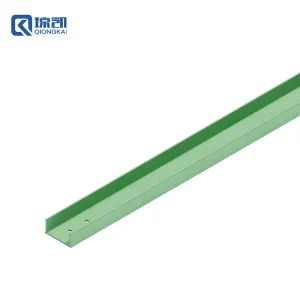
Wholesale FRP Cable Trunking Trough Type Channel 100*50 Manufacturer, Factories
Request Factory Quote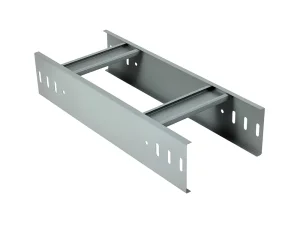
Buy Fireproof powder coated Pre galvanized ladder type cable tray Manufacturer, Manufacturers
Request Factory Quote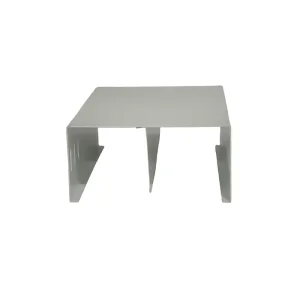
Buy Split Cable Trunking With partition in between Supplier, Factories
Request Factory Quote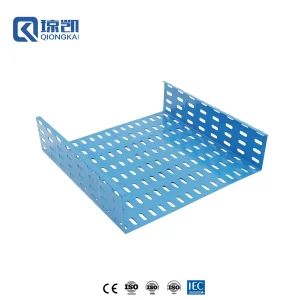
Buy Powder Coated Carbon Steel Pre Galvanized Hot Dip Galvanized PG HDG Cable Tray with Reinforce Ribs - RAL5015 Blue 400*100 Manufacturer
Request Factory Quote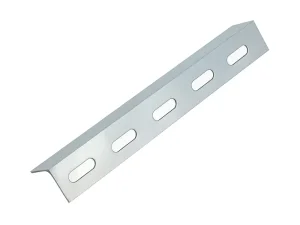
Wholesale Pre Galvanized Slotted Channel - Angle Iron Suppliers, Price
Request Factory Quote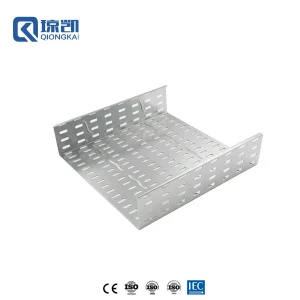
Wholesale Carbon Steel Pre Galvanized PG Hot Dip Galvanized HDG Cable Tray with Reinforce Ribs 400*100 Supplier, Suppliers
Request Factory Quote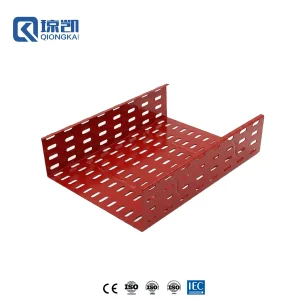
Buy Powder Coated Carbon Steel Pre Galvanized PG Cable Tray with Reinforce Ribs - RAL3020 Red 300*100 Suppliers
Request Factory Quote