
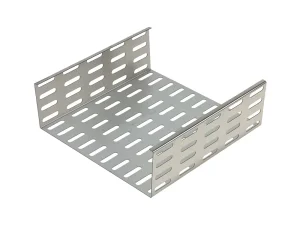
Direct-From-Manufacturer Lineup
Engineered Cable Routing & Containment Systems
Precision-fabricated in Shanghai Qiongkai’s certified production hubs to match automated computational CAD/BIM specifications and strict NEMA VE-1 / IEC 61537 standards.
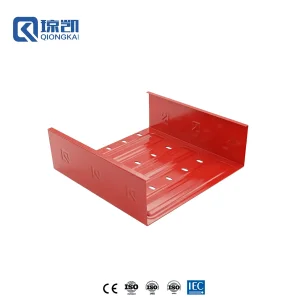
Wholesale Powder Coated Carbon Steel Reinforced Molded PG Cable Tray - RAL3020 Red 300*100
Explore Specifications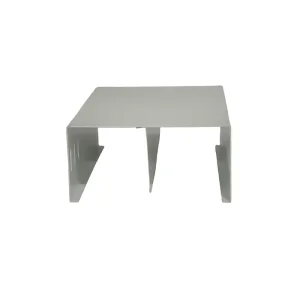
Buy Split Cable Trunking With Partition in Between Supplier, Factories
Explore Specifications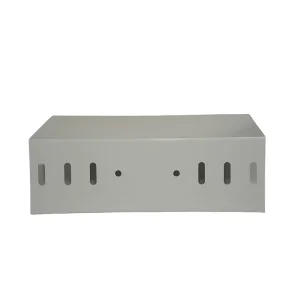
Wholesale Powder Coated Cable Trunking Manufacturers, Factory
Explore Specifications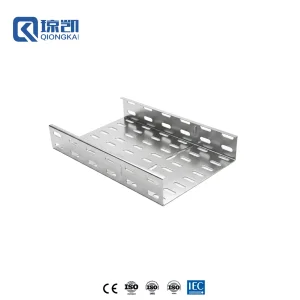
Wholesale Carbon Steel PG / HDG Cable Tray with Reinforce Ribs 200*50
Explore Specifications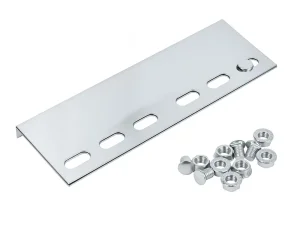
Wholesale Pre-Galvanized Cable Tray Connections Spare Parts Supplier, Price
Explore Specifications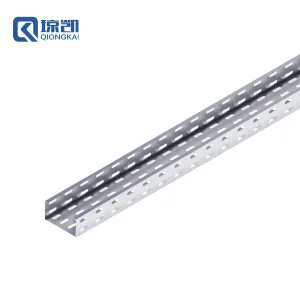
Wholesale Pre-galvanized HDG Perforated Cable Tray 100*50 Factory
Explore Specifications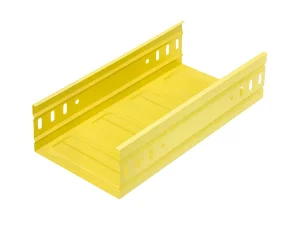
Wholesale Fireproof Yellow PG Powder Coated Molded Cable Tray
Explore Specifications
Industry Macro Landscape
The Paradigm Shift: Computational Software Meets Heavy Manufacturing
Modern EPC project delivery models require the continuous synchrony of algorithmic routing software with physical roll-forming lines to eradicate project lead-time inflation, field rework, and structural failure.
Algorithmic Digital Twin Delivery
Global Engineering, Procurement, and Construction (EPC) consortiums no longer procure cable trays as detached, static steel components. Complex mega-projects demand complete parametric integration. Modern cable tray software automates physical route generation, clash-free intersection checks, structural deflection limits, and direct-to-mill Bill of Materials (BOM) compilation with sub-millimeter tolerances.
Thermal & Fill Factor Compliance
Cable congestion within hyperscale mission-critical facilities generates substantial Joule heating. Proprietary calculation algorithms compute fill ratios under National Electrical Code (NEC 392) rules and IEC 60364-5-52 thermal derating standards. This prevents cable jacket insulation degradation, maximizes ventilation, and eliminates unplanned lifecycle outages before field deployment.
Direct-to-CAM Factory Interoperability
The gap between software layout and physical sheet metal output is bridged through Computer-Aided Manufacturing (CAM) post-processors. When engineers finalize routing inside 3D software suites, automated tooling schedules export instantly to automated CNC uncoilers, perforating presses, and roll-forming machinery across Shanghai Qiongkai’s manufacturing facilities.
Computational Mechanics
Algorithmic Core Capabilities of Modern Cable Tray Software
High-reliability electrical systems rely on multi-variable computational engines calculating static beam deflection, continuous dynamic wind loads, seismic ground acceleration, and real-time volumetric capacity.
Finite Element Structural Analysis (FEA)
Integrated FEA engines evaluate beam bending moments, longitudinal shear stress, and deflection criteria. Software verifies span-to-depth ratios against NEMA VE-1 deflection guidelines (typically L/200 or L/360) and IEC 61537 Safe Working Load (SWL) curves, ensuring that safety factor margins (minimum 1.5x) are preserved across unsupported overhead runs spanning up to 6 meters.
Automated Cable Segregation & Routing
High-voltage (HV) transmission lines, low-voltage (LV) power circuits, sensitive instrumentation cables, and fiber-optic data channels require rigorous physical separation to prevent electromagnetic interference (EMI). Algorithmic routing engines parse cable schedules, verify Minimum Bending Radii (MBR), and dictate internal metallic partition placements inside trunking paths automatically.
Seismic Bracing & Dynamic Sway Calculations
Conforming to ASCE 7-16, IBC, and SMACNA guidelines, modern software models spectral acceleration parameters ($S_s$, $S_1$) to dictate rigid and cable-stayed seismic brace sizing. The software calculates longitudinal and transverse lateral force coefficients, specifying precise strut channel wall thicknesses (2.0mm to 2.5mm) and expansion anchor bolt embedment depths.
| Evaluation Parameter | Manual 2D Drafting & Spreadsheets | Standalone Cable Design Software | Integrated Software + Manufacturer Ecosystem |
|---|---|---|---|
| BOM Accuracy & Scrap Rate | High error rate; 8–14% material surplus scrap | Moderate; digital BOM with 3–5% discrepancy | Optimal: <0.5% scrap, 100% factory mill match |
| Load & Deflection Verification | Static point approximations, error-prone | Algorithmic FEA checks across standard beams | Dynamic multi-span FEA + certified lab physical testing |
| Seismic & Wind Calculation | Rarely verified in-house; costly third-party consult | Automated ASCE/IBC force calculations | Full strut channel, seismic bracket & hanger rod modeling |
| Clash Resolution Timelines | Discovered late during site fit-out phase | Pre-construction 3D collision flagging | Real-time BIM Level 3 synchronization & custom fitting fabrication |
| Procurement Lead-Time | Extended RFQ cycle with multi-tier intermediaries | User still requires separate supplier qualification | Streamlined direct factory intake across 12 automated lines |
Industrial Footprint & Assurance
Built on Twenty Years of Heavy Engineering Excellence
Shanghai Qiongkai Industry Co., Ltd. marries digital parametric design agility with massive sheet-metal and composite processing capacity across 3 Shanghai production hubs.
20+
Years Manufacturing (Since 2005)
3
Modern Shanghai Factories
30,000
Total Square Meters Floor Space
12
Automated Continuous Assembly Lines
60+
Heavy-Duty Presses & Cold Rollers
Stringent ISO 9001 / CE / UL QC Gates
From raw coil ultrasonic thickness testing to zinc coating mass verification (magnetic gauge measurement for HDG meeting ASTM A123 / ISO 1461), every run undergoes rigorous optical, salt-spray, and mechanical deflection quality verification.
Turnkey Engineering BOQ Formulation
Submit your structural Revit (.RVT), IFC, or DWG schematic files. Our dedicated engineering desk parses line routes, executes structural load calculations, and returns comprehensive, actionable Bill of Quantities (BOQ) with matching CAD drawings within 24 hours.
Direct Coastal Export Logistics
Located adjacent to Shanghai’s Yangshan and Waigaoqiao deepwater ports, our export logistics cell guarantees high-speed container loading, seaworthy steel-banded bundle packing, moisture-barrier wrapping, and direct customs clearance processing for rapid transit to any continent.
Tailored Global Deployments
Macro-Industry Engineering Solutions
Different industrial operational realities demand distinct cross-sectional geometries, metallurgy selections, and software modeling routines.
Hyperscale Cloud Data Halls
Challenge: Massive overhead networking density requiring high thermal circulation, rapid cross-connect changes, and minimal dust accumulation.
Solution: Algorithmic wire-mesh basket tray networks paired with overhead ladder racks. Electro-galvanized or durable powder-coated (custom RAL) finishes allow logical color-coded segregation between server feeds, storage SANs, and fiber uplinks.
Offshore LNG & Petrochemical Complexes
Challenge: Aggressive airborne chlorides, high relative humidity, hydrogen sulfide exposure, and severe ambient vibration.
Solution: Custom-profiled Fiberglass Reinforced Plastic (FRP/GRP) ladder trays and pickling-passivated Marine-Grade Stainless Steel (SS316L). Engineered successfully for extreme cryogenic environments including offshore LNG facilities in Qatar.
Commercial Transport Terminals & Airports
Challenge: Long unsupported clear spans, complex multi-tier MEP coordination, and rigorous human-safety smoke/fire resistance mandates.
Solution: Corrosion-resistant CT series cable trunking and hot-dip galvanized (HDG) perforated trays with reinforced longitudinal ribs, as deployed in premier infrastructure including Shanghai Hongqiao International Airport.
Metallurgical Engineering
Material Specification & Environmental Resilience Matrix
Premature cable tray failure in 85% of field cases stems from mismatched material metallurgy. Match your operational atmospheric corrosivity category (ISO 9223) with our factory-standardized finishes.
| Material / Treatment | Corrosivity Category (ISO 9223) | Coating Thickness / Metallurgy | Optimal Industrial Deployment |
|---|---|---|---|
| Pre-Galvanized Steel (PG) | C1 – C2 (Very Low to Low) | 12 – 20 µm (Z180 – Z275 continuously coated) | Indoor commercial air-conditioned ceiling spaces, light industrial dry basements |
| Electro-Galvanized (EG) | C1 (Very Low) | 8 – 15 µm smooth zinc electrolytic plate | Telecommunications rooms, indoor wire-mesh server racks, enterprise IT closets |
| Hot-Dip Galvanized (HDG) | C3 – C4 (Medium to High) | 65 – 85 µm post-fabrication bath (ASTM A123 / ISO 1461) | Outdoor substations, power utilities, humid manufacturing plants, rooftop arrays |
| Stainless Steel (SS304) | C3 – C4 (Chemical/Organic) | 18% Cr, 8% Ni austenitic alloy composition | Food and beverage processing, dairy plants, commercial breweries, pharmaceutical packaging |
| Marine Grade (SS316 / 316L) | C5-M (Marine & Offshore) | 16% Cr, 10% Ni, 2–3% Mo passivated surface | Offshore drilling rigs, coastal desalination plants, chlor-alkali chemical processing |
| Fiberglass Reinforced Plastic (FRP) | C5-I / Extreme Chemical | Pultruded isophthalic polyester or vinyl ester resin | Wastewater aeration basins, battery storage facilities, severe acid/alkali vapors |
| Epoxy Powder Coated (RAL) | Custom Decorative / Identification | 60 – 100 µm thermoset electrostatic polyester coat | System circuit identification (Fire/Emergency lines in Red RAL3020, High Voltage in Yellow) |
Future Horizons
The Computational Roadmap: 2025–2030
Where computational software and automated fabrication collide: AI-driven generative path optimization, dynamic carbon tracking, and robotic field prefabrication.
Generative AI Route Synthesizers
Next-generation design suites will transcend manual path drawing. By ingesting structural bounding boxes, electrical single-line diagrams (SLD), and HVAC duct spatial reservations, machine learning models will auto-synthesize optimal, clash-free routing paths that minimize overall steel tonnage and reduce total cable run lengths by up to 18%.
Automated Embodied Carbon (LCA) Audits
ESG mandates require transparent cradle-to-gate carbon disclosure. Emerging software plugins calculate real-time embodied carbon footprints based on steel gauge, coil scrap ratios, galvanizing chemical baths, and shipping distances, empowering EPCs to balance structural safety margins against carbon compliance goals seamlessly.
Robotic Assembly & Automated Kitting
Bridging cloud software with the factory floor, automated kitting algorithms bundle individual cable tray lengths, custom radius bends, splice plates, and fasteners into tagged modular crate assemblies aligned exactly with site installation sequences (4D BIM scheduling), cutting contractor on-site labor overhead by over 35%.
Engineering Help Desk
Frequently Asked Technical & Procurement Questions
Critical engineering criteria, software interoperability, and custom manufacturing inquiries addressed by our senior application engineering team.
How does cable tray design software calculate beam deflection and allowable working load?
Modern engineering software relies on continuous Euler-Bernoulli beam theory combined with empirical finite element formulas certified under NEMA VE-1 and IEC 61537. The calculation takes into account the tray's moment of inertia ($I_x$), section modulus ($S_x$), steel yield strength ($F_y$), total cable load per meter ($w$), and span length ($L$). Under NEMA VE-1 standards, deflection limits typically restrict mid-span sag to $\Delta \le L/200$ or $L/360$. If a calculated load violates this criterion, the software automatically prompts an upgrade in tray side-rail height (e.g., from 50mm to 100mm) or specifies thicker sheet metal gauges.
Can design software output be directly used by Qiongkai's automated production machinery?
Yes. Shanghai Qiongkai Industry Co., Ltd. operates a connected digital fabrication workflow. Standard CAD/BIM outputs (including STEP, DXF, IFC, and CSV BOM schedules) are translated by our technical engineering cell via CAM post-processors into direct CNC G-code. This code controls our automated coil decoilers, multi-ton hydraulic punching arrays, high-speed roll formers, and robotic welders across our 12 assembly lines, ensuring that non-standard widths, custom flange lips, and specialized perforation pitches precisely match your 3D digital model.
What parameters dictate whether I should specify HDG, SS316, or FRP in industrial designs?
Material selection is governed by the ISO 9223 atmospheric corrosivity tier, ambient chemical agents, and temperature dynamics. Hot-Dip Galvanized (HDG) carbon steel offers cathodic zinc barrier protection ideal for outdoor, industrial C3–C4 atmospheres. However, in environments with heavy airborne chlorides (coastal and offshore platforms) or chemical contact, zinc sacrificial layers deplete rapidly. For these applications, Stainless Steel 316 (containing 2–3% Molybdenum) or Fiberglass Reinforced Plastic (FRP) is required. FRP is completely immune to galvanic corrosion, non-conductive, and significantly lighter, making it ideal for offshore platforms in Qatar or chemical tank farms.
How does automated cable software manage thermal ampacity derating under NEC and IEC regulations?
When current passes through conductor cores, heat accumulates. Bundling multiple conductors together in solid-bottom trunking restricts convective air circulation, necessitating ampacity derating factors. Advanced design software references NEC Section 392.80 and IEC 60364-5-52 tables, tracking the total heat dissipation volume based on single-conductor or multi-conductor groupings, cross-sectional area, ambient operational temperature, and tray ventilation profile (solid vs. perforated vs. open ladder rung spacing). This ensures conductors operate within their designated insulation ratings (e.g., 75°C or 90°C XLPE) without thermal runaway.
What support accessories, strut channels, and seismic brackets are required for a complete run?
A structurally certified cable containment system extends beyond the tray profile itself. Complete systems require trapeze support assemblies consisting of 41-series strut channel (41×21, 41×41, 41×62, or back-to-back 41×82), electro-plated or HDG threaded hanger rods (M8 to M16), spring channel nuts, beam clamps, splice connection plates with high-tensile carriage bolts, and rigid seismic sway brace brackets. Qiongkai designs and supplies the entire envelope as an integrated, coordinated structural solution, eliminating field incompatibility.
High-Performance Containment Portfolio
Heavy-Duty Trays, Ladder Systems & Hardware Support
Engineered for extreme tensile resilience, high dynamic load factors, and prolonged design lifecycles across mission-critical facilities.
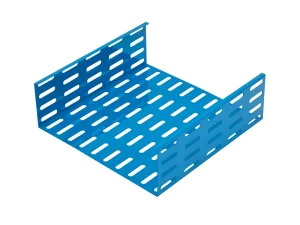
Buy Pre Galvanized Perforated Cable Tray Series With Powder Coating Suppliers
Explore Specifications
Wholesale 100*25 Stainless Steel Extreme Perforated Cable Tray Supplier
Explore Specifications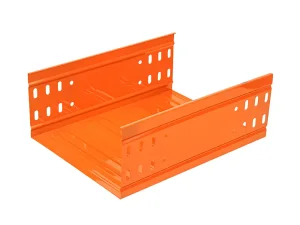
Wholesale Fireproof Pre Galvanized Powder Coated Molded Cable Tray
Explore Specifications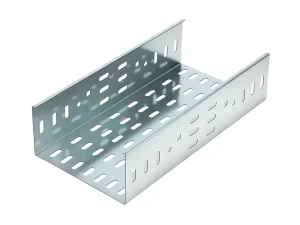
Buy Pre Galvanized Cable Tray With Customizable Parameters Manufacturer
Explore Specifications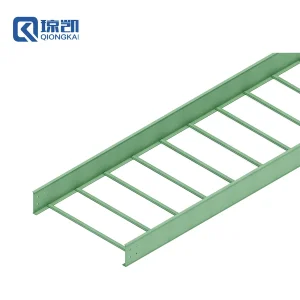
Wholesale FRP Ladder Type Cable Tray 1000*200 Manufacturer, Price
Explore Specifications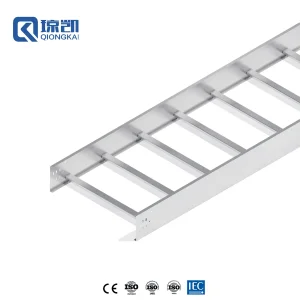
Buy PG Pre-galvanized Ladder Tray 800*200 Manufacturer, Factory
Explore Specifications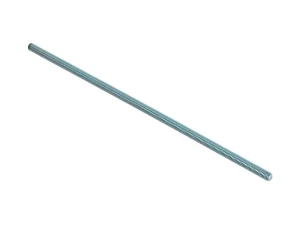
Buy Metal Hanger Rod High-Strength Structural Fastener Supplier, Price
Explore Specifications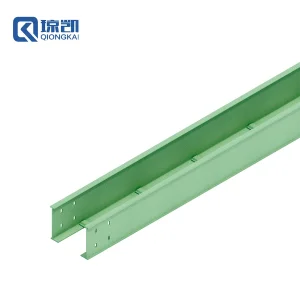
Buy FRP Cable Ladder 200*150 Corrosion-Proof Factory, Factories
Explore SpecificationsAccelerate Your Project with Integrated Computational Design & Direct Manufacturing
Transfer your architectural CAD/BIM models, bill of materials, or technical specifications directly to our engineering desk. Receive verified static deflection simulations, thermal derating audits, and factory-direct wholesale pricing within 24 hours.