
Featured Linear Cable Management By The Meter
Factory-direct linear procurement pricing for standard 2-meter, 3-meter, and 6-meter span bundles. Available in Pre-Galvanized, Hot-Dip Galvanized (HDG), Stainless Steel (304/316), and Pultruded FRP.
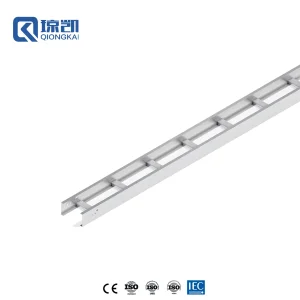
GI Galvanized Cable Ladder 200*100 Supplier, Suppliers
Configure Per Meter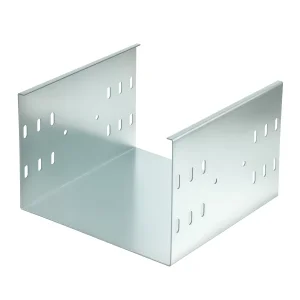
Wholesale QiongKai Pre Galvanized Cable Trunking Manufacturers, Price
Configure Per Meter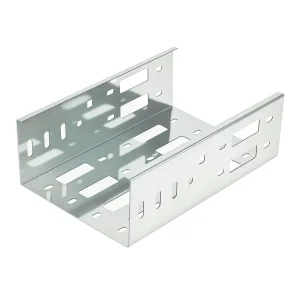
Wholesale Custom Size Pre Galvanized Perforated Cable Tray Factory, Price
Configure Per Meter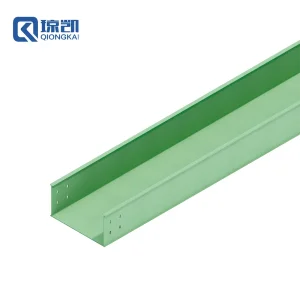
Buy FRP Cable Trunking Trough Type Channel 200*100 Manufacturer
Configure Per Meter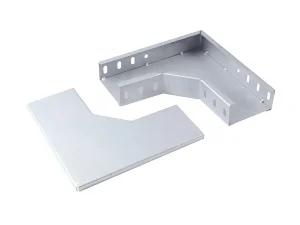
Buy Pre Galvanized Elbow cable tray Factories, Price
Configure Per Meter
Buy Cost Saving Heavy Duty Reinforced Molded Cable Tray 400*200
Configure Per Meter
Wholesale Cost Saving Heavy Duty Molded Cable Tray 200*100
Configure Per Meter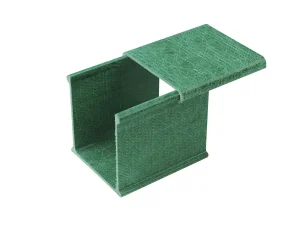
Buy Fiberglass Reinforced Plastic (FRP) Cable Tray Manufacturers
Configure Per MeterEngineered Manufacturing Capacity & Linear Supply Scale
The Macroeconomics of Per-Meter Cable Tray Procurement in Global Megaprojects
Modern mega-infrastructure, green-energy transitions, and global cloud-computing data center construction have transformed the electrical containment sector from an overlooked commoditized structural component into a strictly engineered discipline. In international contracting, evaluating cable tray systems on a “per meter” (linear meter) procurement model rather than raw tonnage has emerged as the definitive procurement methodology. Linear meter unit pricing encapsulates the complete holistic lifecycle value: sheet metal thickness optimization, structural load rating per unit length, automated cold-forming precision, corrosion-resistant surface coatings, and installation speed on site.
According to international engineering, procurement, and construction (EPC) industry benchmarks, the global electrical containment market surpasses US$ 5.8 billion annually, with rapid compound growth driven by industrial automation, semiconductor fabrication plants (fabs), gigafactories for electric vehicle batteries, and high-voltage transmission sub-stations. In major infrastructure undertakings—such as the Shanghai Hongqiao International Airport transit expansion or LNG processing trains in Ras Laffan, Qatar—containment runs span tens of thousands of linear meters. A marginal difference of just 5% in linear meter weight combined with equivalent or superior structural load capacity yields immense reductions in structural dead-load calculations, shipping freight volume, seismic hanger density, and contractor field-installation labor hours.
Linear Cost Transparency
Specifying cable management by linear meters allows EPC estimators to align directly with building information modeling (BIM) cable routing takeoff bills of quantities (BOQ), eliminating hidden tonnage conversions and scrap estimates.
Volumetric Shipping Density
Precision roll-formed channels with tapered side flanges allow seamless nesting during intermodal container loading. This slashes ocean freight costs per meter by up to 38% compared to non-nesting welded designs.
System Standardization
Buying per meter includes pre-engineered hole matrices, integrated splice connection provisions, and matched strut framing hardware, delivering an engineered mechanical ecosystem rather than detached steel parts.
Chinese Factory Efficiency: Why Direct Sourcing Redefines Per-Meter ROI
The manufacturing efficiency of Chinese cable tray fabrication is grounded in an unmatched domestic steel supply chain, high-throughput automated roll-forming, and deep geographic proximity to prime global shipping hubs like the Port of Shanghai and Port of Ningbo-Zhoushan. At Shanghai Qiongkai Industry Co., Ltd., based in the Songjiang High-Tech corridor, manufacturing cable trays per meter operates on an integrated metallurgical model from hot-rolled carbon steel coil directly to final surface finishing.
Continuous Roll-Forming
Automated 18-station roll-forming lines shape coils continuously at speeds exceeding 25 meters per minute, guaranteeing longitudinal straightness tolerances under 1.0 mm per 3-meter section.
CNC Servo Punching
High-speed CNC stamping arrays produce precision ventilation slots, earth ground bonding knockouts, and cable tie fixings without burrs or micro-cracks that could damage delicate cables.
Automated HDG Baths
In-house immersion lines strictly maintain molten zinc temperatures between 445°C and 455°C, generating Fe-Zn intermetallic alloy layers yielding coating thicknesses exceeding 65 to 85 μm per ISO 1461.
Export Packing Logistics
Custom automated strapping, rust-inhibiting VCI film wrapping, fumigated pine skids, and cantilevered crating protect linear profiles from transit distortion across ocean voyages.
By eliminating multiple tiers of distributors, trading agents, and third-party processing markups, our direct-from-factory per-meter pricing model delivers cost savings between 22% and 40% to international procurement buyers while maintaining complete material tractability via EN 10204 3.1 Mill Test Certificates.
Material Grades, Finish Options & Per-Meter Performance Benchmark
Select the optimal material specification per linear meter based on ISO 12944 atmospheric corrosivity categories (C1 through CX) and mechanical working load demands.
| Material / Treatment | Standards Compliance | Corrosivity Category | Yield Strength (MPa) | Typical Coating Mass / Thk | Primary Industrial Field |
|---|---|---|---|---|---|
| Pre-Galvanized (PG / Mill Galv) | EN 10346, ASTM A653 | C1 - C2 (Dry Indoor) | 250 - 320 MPa | Z140 - Z275 (14 - 20 μm) | Commercial buildings, IT server rooms, dry ceiling plenums |
| Hot-Dip Galvanized (HDG) | ISO 1461, ASTM A123 | C3 - C4 (Industrial) | 235 - 355 MPa | ≥ 65 - 85 μm (450 - 610 g/m²) | Power stations, petrochemical refineries, outdoor substations |
| Stainless Steel (AISI 304 / 1.4301) | ASTM A240, EN 10088 | C3 - C4 (Hygienic) | ≥ 205 MPa | Passivated Natural Chromium Oxide | Food processing, beverage plants, pharmaceutical cleanrooms |
| Marine Stainless (AISI 316 / 316L) | ASTM A240, EN 10088 | C5-M / CX (Offshore Marine) | ≥ 220 MPa | 2.0 - 2.5% Molybdenum Passivated | Offshore oil platforms, coastal desalination, FLNG terminals |
| Fiberglass Reinforced (FRP / GRP) | ASTM D3917, UL 94 V-0 | Extreme Chemical / Acidic | Flexural: ≥ 180 MPa | Isophthalic / Vinyl Ester Polymer | Fertilizer plants, chlor-alkali units, galvanic pickling lines |
| Electrostatic Powder Coated | Qualicoat, ISO 12944-6 | C2 - C3 (Aesthetic) | Base Metal Dependent | 60 - 100 μm Epoxy-Polyester | Architectural data center color-coding (RAL 3020, 1080, 5015) |
Mission-Critical Environments Built on Qiongkai Cable Trays
From extreme sub-zero conditions to caustic marine atmospheres and hyperscale data transmission corridors, our per-meter containment systems are engineered for uninterrupted operation.
Hyperscale Cloud Data Halls
Overhead wire mesh basket runways and enclosed powder-coated trunking systems installed in Tier III/IV data halls. Optimized high-perforation patterns guarantee continuous convective cooling airflow around high-density optical fiber and Cat6A copper wiring while mitigating dust build-up.
Offshore LNG & Petrochem Plants
Delivered custom heavy-gauge FRP and 316L ladder systems for Qatar LNG projects. Specially engineered rung joints withstand severe saline spray, high ultraviolet radiation, and corrosive gas environments without micro-cracking or requiring on-site zinc touch-ups.
Utility-Scale Solar PV & BESS
Hot-dip galvanized, high-span 6-meter cable trays designed for outdoor ground-mounted photovoltaic farms and utility battery energy storage (BESS) containers. Deflection remains strictly below L/200 under intense wind-load shear and thermal expansion variances.
Semiconductor Cleanrooms
Stainless steel 304 and passivated electro-galvanized troughs providing zero zinc whisker hazard, critical for ISO Class 4 microelectronics fabrication. Electro-polished surfaces prevent particle accumulation and ease laminar washdown protocols.
High-Speed Rail & Metro Tunnels
Heavy-duty reinforced molded cable trunking deployed in transit systems like Shanghai Hongqiao International Airport. Fire-rated E90 structural containment designed to withstand piston pressure pulses created by passing high-speed passenger trains.
Harsh Agricultural Facilities
Supplied high-corrosion-resistant coated cable channels for an extensive commercial farming operation in Paraguay. Highly resistant to concentrated ambient ammonia vapors, liquid slurry runoff, and biological wash solvents.
Global Industry Trends: Modularization, Seismic Compliance, and BIM Integration
The cable tray industry is experiencing pivotal technological evolution driven by shortened project turnaround schedules and stringent international life-safety codes. When procurement specialists analyze cable tray manufacturers per meter today, several dominant engineering trends dictate supplier selection:
Tool-Less Rapid-Lock Connections
Traditional splice connections required 4 to 8 nut-and-bolt sets per joint. Next-generation linear systems incorporate snap-fit integrated couplers and tool-less spring-steel splices, slashing linear meter assembly times by up to 60% on overhead ladders.
Integrated Seismic Support Systems
In accordance with OSHPD standards and GB 50981 seismic provisions, cable tray runs are engineered alongside matched 41×41 / 41×82 slotted strut channels and rigid anti-sway bracing to prevent collapse during earthquake events.
BIM LOD 400 Digital Twins
Engineers now insist on native parametric 3D models (Autodesk Revit, IFC formats) for all tray geometries, exact bend radii, tee intersections, and reducer junctions to verify clash detection in congested ceiling plenums before purchase orders are issued.
Procurement Checklist: Essential Criteria for Sourcing Linear Cable Trays
When sending out Requests for Quotation (RFQ) for bulk per-meter cable trays, international procurement teams must ensure the supplier provides documented verification of:
- Structural Load Testing: Verifiable load deflection curves tested under NEMA VE-1 / IEC 61537 parameters (confirming whether ratings apply to continuous spans or simple single spans).
- True Steel Thickness: Distinguish between nominal commercial gauge and guaranteed Minimum Base Metal Thickness (BMT) after galvanizing.
- Surface Coating Verification: Magnetic pull-off gauge testing per ASTM B499 and salt spray corrosion endurance records per ASTM B117.
- Earth Continuity Bonding: Certified resistance across splice couplings lower than 50 mΩ to ensure safe fault current grounding paths.
Industrial Channels, Conduits & Color-Coated Series
Explore the complete Qiongkai ecosystem: specialized powder-coated identification lines, stainless containment, and heavy-duty structural conduits configured per linear meter.
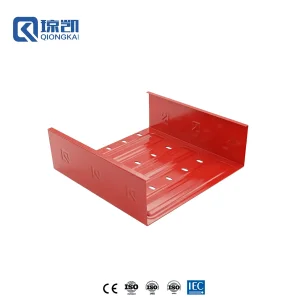
Powder Coated Cable Tray RAL3020 Red 300*100 Factory, Factories
Configure Per Meter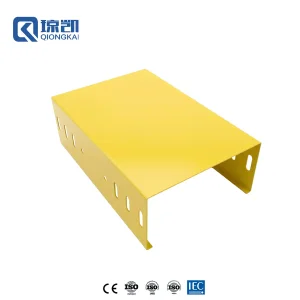
Powder Coated Cable Trunking RAL1080 Yellow 200*100 Manufacturer
Configure Per Meter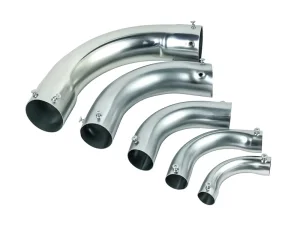
Wholesale All radius Pre galvanized cable conduit Manufacturer
Configure Per Meter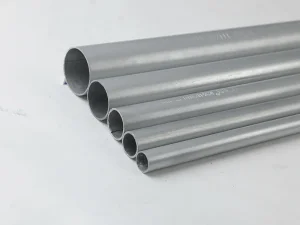
Buy DN20 DN25 conduit Supplier, Factories
Configure Per Meter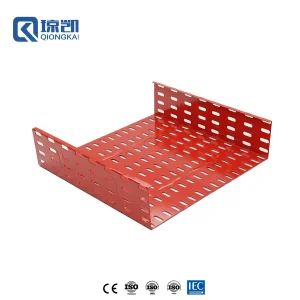
Powder Coated Cable Tray with Reinforce Ribs RAL3020 Red 400*100
Configure Per Meter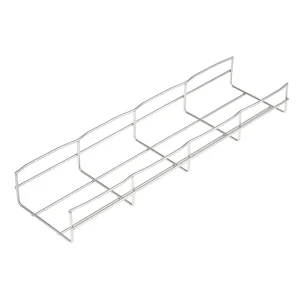
Wholesale Stainless steel cable tray 50mm Manufacturers
Configure Per Meter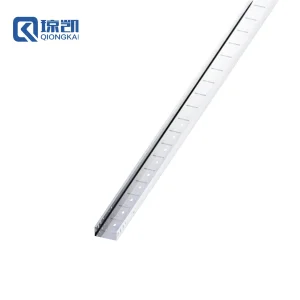
Heavy Duty Molded Pre Galvanized Cable Tray 100*50 Suppliers
Configure Per Meter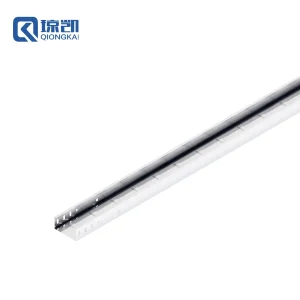
Pre Galvanized Cable Trunking Trough Channel 100*50 Manufacturer
Configure Per MeterFrequently Asked Questions: Cable Tray Per Meter Procurement
Technical clarity and contract specifications answered directly by our senior structural and electrical engineering department.
How is cable tray pricing calculated on a per-meter basis versus raw tonnage?
What standard lengths are supplied per linear section, and can custom lengths be ordered?
What is the difference between Pre-Galvanized (PG) and Hot-Dip Galvanized (HDG) cable trays per meter?
How are load-carrying capacities verified across different span lengths per meter?
How do reinforcing ribs optimize structural strength without increasing per-meter weight?
What international compliance certifications accompany international shipments?
Can color-coded powder-coated cable trays be ordered for specific project systems?
How are container loads arranged to maximize linear meter capacity and prevent transit damage?
Request Project-Specific Cable Tray Pricing Per Meter
Send us your cable schedule, layout drawings, or Bill of Quantities (BOQ). Our engineering desk will calculate structural load deflection profiles, recommend optimal finish coatings, and supply detailed per-meter pricing and container packing plans within 24 hours.