
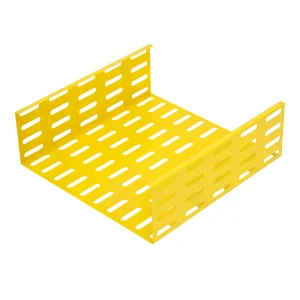
Industrial Product Catalog
High-Performance Cable Trays Available for Pune Delivery
Explore heavy-duty pre-galvanized, powder-coated, and wire mesh systems designed to meet IEC 61537, NEMA VE-1, and IS standards for manufacturing facilities and commercial MEP builds.
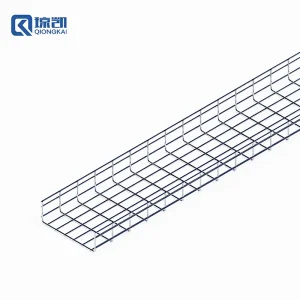
Wholesale Pre-galvanized Basket Cable Tray 300*100 Manufacturers, Price
View Product Specs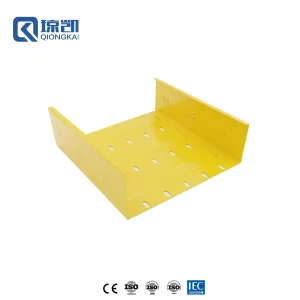
Buy Powder Coated Carbon Steel Heavy Duty Molded Pre-Galvanized Cable Tray RAL1080 Yellow 300*100
View Product Specs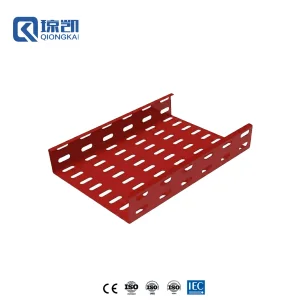
Buy Powder Coated Carbon Steel Pre Galvanized PG Cable Tray with Reinforce Ribs RAL3020 Red 200*50
View Product Specs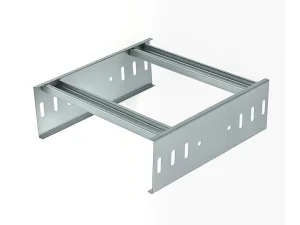
Wholesale Pre Galvanized light weight cable ladder Manufacturer, Price
View Product Specs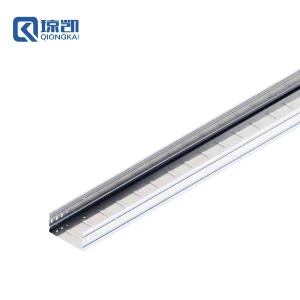
Wholesale Heavy Duty Reinforced Molded Pre-Galvanized Cable Trunking Channel 200*100
View Product Specs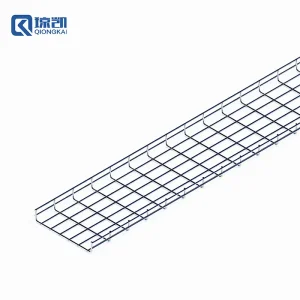
Wholesale Pre-galvanized Grid Cable Tray 300*50 Manufacturer, Factories
View Product Specs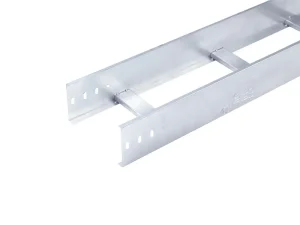
Wholesale Pre Galvanized Ladder Cable Tray Factory, Factories
View Product Specs
Industrial Whitepaper Analysis
The Cable Containment Landscape in Pune: Trends, Engineering & Sourcing Realities
A comprehensive examination of electrical containment infrastructure across the Pune Metropolitan Region (PMR) — bridging the gap between local fabrication and Tier-1 global manufacturing standards.
Pune, historically known as the 'Detroit of India' and now a flourishing nucleus for cloud data centers, biotechnology, and advanced electronics, has seen an unprecedented shift in MEP (Mechanical, Electrical, and Plumbing) specifications. The convergence of automated manufacturing clusters in Chakan, Bhosari, Talegaon, and Ranjangaon with IT hardware facilities in Hinjewadi and Kharadi has transformed cable containment from a secondary utility purchase into a critical engineering decision.
Modern electrical distribution networks carry high-voltage busways, dense fiber-optic backbones, and heavy multi-core power feeds. When industrial projects in Maharashtra face demanding deadlines, procurement managers are confronted with a stark choice: rely on localized manual fabrication workshops in Bhosari MIDC, or leverage direct factory partnerships with established international manufacturers like Shanghai Qiongkai Industry Co., Ltd. (operating 3 specialized facilities with 12 automated roll-forming lines since 2005). The stakes involve mechanical load safety, thermal dissipation, deflection under maximum cable fill, and zinc galvanic protection across variable monsoon environments.
The Core Procurement Shift in Pune (2025–2030)
Global EPC contractors (L&T, Tata Projects, Shapoorji Pallonji, Sterling & Wilson) are rapidly abandoning conventional hand-welded cable ladders. Sourcing demands have pivoted toward continuous roll-formed, molded-rib cable trays featuring pre-engineered slot patterns, burr-free edges, and automated powder coatings (RAL 3020 Red for fire life safety, RAL 1080 Yellow for instrumentation, and RAL 5012 Blue for high-voltage cables).
This technical whitepaper details the structural dynamics, anti-corrosion metallurgy, supply-chain economics, and application-specific parameters necessary when sourcing cable tray systems for the Pune market.
20+
Years Engineering Cable Systems (Since 2005)
30,000m²
Consolidated Workshop Floor Capacity
12
Continuous CNC Roll-Forming Assembly Lines
60+
Heavy-Duty Hydraulic & Molding Presses
Engineering Compliance
Standardization Comparison: IEC / NEMA vs. Bureau of Indian Standards (BIS)
When preparing Bill of Quantities (BOQ) documentation for Pune infrastructure tenders, reconciling international EPC specifications with domestic Indian standard practices is paramount.
| Evaluation Parameter | IEC 61537 (International standard) | NEMA VE-1 / CSA C22.2 (North American) | IS 1079 / IS 2062 / IS 2629 (Indian standard) | Qiongkai Factory Engineering Baseline |
|---|---|---|---|---|
| Safe Working Load (SWL) Validation | Type test with 1.7x safety factor; mid-span deflection monitored. | Destructive testing with 1.5x safety multiplier based on span length. | Typically relies on static deflection tests; varies widely in local Pune shops. | Certified load test protocols matching IEC 61537 Section 10.3 with documented SWL graphs. |
| Galvanizing Thickness (HDG) | Class 5 to Class 8 (45µm to >85µm) based on BS EN ISO 1461. | ASTM A123 / ASTM A653 G90 / G140 commercial coating weights. | IS 4759 / IS 2629 standardizing 65µm to 80µm average immersion coatings. | Controlled hot-dip galvanizing baths achieving uniform 65µm – 85µm layer thickness. |
| Edge Finish & Cable Safety | Mandatory rounded return flanges; zero sharp punch burrs allowed. | Curved side rail profile to eliminate snagging during high-tension cable pulling. | Manual guillotining in small workshops often leaves razor edges unless post-ground. | CNC continuous roll-folded hemmed top edges ensuring absolute cable sheath integrity. |
| Electrical Continuity & Bonding | Max 50 mΩ across splice joints; certified earth continuity path. | Bonding jumpers or UL-classified mechanical splice plates. | IS 3043 grounding integration; relies on onsite welding or tinned copper jumpers. | Pre-punched earthing holes and low-resistance zinc-coated bonding splice connectors. |
| Seismic & Vibration Resilience | Assessed in combination with certified seismic trapeze struts. | Strict requirements for nuclear, hospital, and critical facilities. | Often neglected in commercial layouts unless specified for Zone III (Pune). | Engineered seismic strut channels (41x41 / 41x82) with serrated anti-slip grip teeth. |
For high-density cable installations in Pune, deflection limits should never exceed L/200 of the support span (where L = center-to-center distance between trapeze hangers or cantilever brackets). Unstiffened cable trays fabricated from substandard 1.2mm commercial sheet metal frequently buckle when loaded with heavy armored cross-linked polyethylene (XLPE) power lines. Qiongkai utilizes structural-grade cold-rolled sheet with molded longitudinal reinforcing ribs, boosting section modulus (Z) while decreasing deadweight by up to 20% compared to flat plate designs.
Supply Chain Resilience
Why Pune Sourcing Directors Are Transitioning to Factory 4.0 Direct Supply
A granular look at Total Cost of Ownership (TCO), lead-time reliability, and technical quality when buying direct from high-capacity manufacturing lines.
Elimination of Multi-Tier Trading Margins
Local traders in Pune frequently add 20% to 35% markups across distributors, stockists, and retail brokers. Ordering direct from an enterprise manufacturer unlocks mill-direct raw steel pricing and automated volume fabrication, yielding substantial savings on multi-kilometer project runs.
Automated Consistency vs Hand Welding
Manual MIG welding of ladder rungs in unstandardized workshops results in uneven throat thickness, weld spatter, and zinc burn-off points. Qiongkai uses automated multi-station progressive stamping and robotic induction assembly to ensure every hole pattern matches project CAD files within ±0.3mm.
Direct JNPT Nhava Sheva Sea-Freight Corridor
Strategically situated near Shanghai's primary export ports, Qiongkai dispatches standard 40-foot high-cube containers directly to the Port of Nhava Sheva (JNPT) with transit times of just 14–18 days. The smooth Pune-Mumbai Expressway route ensures door-to-jobsite delivery in Chakan or Hinjewadi without regional transit bottlenecks.
With an annual production volume eclipsing US$ 50 Million and a facility equipped with over 60 heavy-duty machine sets, Qiongkai mitigates the supply disruptions frequently caused by localized raw material shortages or regional power curbs in Western India. Our large-scale coil procurement contracts with tier-one steel mills guarantee raw material grade certification (MTC) with each shipment, confirming precise carbon, sulfur, and phosphorus limits.
Regional Micro-Hubs
Localized Engineering Applications across Pune’s Key Industrial Zones
Every industrial belt in Pune poses distinct environmental and mechanical challenges. Here is how our cable management systems are specified for each district.
Chakan & Talegaon Industrial Clusters
Automotive OEM & Robotic Assembly Lines
Home to global automotive plants (Mercedes-Benz, Bajaj, Volkswagen, Tata Motors, Mahindra). Demands heavy-duty reinforced molded pre-galvanized trays and C-channel strut systems capable of withstanding dynamic shop-floor vibrations, frequent robot cell retooling, and heavy robotic umbilical cable runs.
Hinjewadi & Kharadi Infotech Corridors
Tier-III / Tier-IV Hyperscale Data Centers
Dense overhead and under-floor data routing requires electro-galvanized (EG) and powder-coated wire mesh basket trays. Open wire architecture provides unobstructed airflow, cooling efficiency, and rapid installation of high-count Cat6A and MPO fiber trunks without cable kinks.
Bhosari & Pimpri-Chinchwad (PCMC)
Precision Tooling & Heavy Fabrication Plants
Machine shop environments laden with cutting fluid mists and metal grinding dust require enclosed trough-style cable trunking with snap-fit covers, preventing mechanical damage and particulate ingress into critical power wiring.
Ranjangaon & Sanaswadi Industrial Belt
White Goods & Heavy Electronics Manufacturing
Continuous automated lines for consumer durable brands (LG, Whirlpool, Haier) prioritize high-volume pre-galvanized perforated cable trays with coordinated accessories like horizontal cross tees, reducers, and internal risers for fast assembly.
Kurkumbh & Baramati Chemical MIDC
Pharmaceutical & Agro-Chemical Complexes
Severely corrosive ambient fumes containing acidic sulfates and chlorides demand Marine-grade Stainless Steel 316 / 316L or pultruded FRP (Fiberglass Reinforced Polymer) cable trays that resist chemical oxidation and eliminate maintenance outages.
Pune Metro Rail & Pune Airport Corridors
Public Transit Infrastructure & Metro Stations
Demands Hot-Dip Galvanized (HDG) heavy-duty ladder racks tested for fire survivability (E30/E90 integrity) and seismic containment brackets engineered to keep life-safety cabling functional during emergency events.
Material Science
Engineering Finishes: Matching Metallurgy to Operating Atmosphere
Premature cable tray corrosion in industrial Maharashtra is commonly caused by mismatched protective finishes. Review our material durability Matrix before confirming specifications.
Pre-Galvanized (PG)
Coating: Z120–Z275 (12–20µm zinc).
Best for: Clean indoor office false ceilings, commercial premises, and controlled indoor data center server racks. Cost-effective and aesthetically clean.
Hot-Dip Galvanized (HDG)
Coating: 65µm–85µm (BS EN ISO 1461).
Best for: Outdoor rooftop PV arrays, substation yard runs, and unconditioned factory environments exposed to humid monsoon downpours.
Powder Coated Carbon Steel
Coating: 60–100µm thermoset polyester.
Best for: Visual circuit separation (e.g., Red for Fire Safety, Yellow for Automation, Blue for Medium Voltage). Applied over PG substrate for dual protection.
Stainless Steel 304 / 316L
Alloy: 18/8 & Molybdenum enriched 316.
Best for: Sterile pharmaceutical cleanrooms, dairy plants, food processing, and chemical zones where aggressive wash-down chemicals are utilized.
Civil & MEP Guidelines
Engineering Calculations: Support Span, Deflection Ratios & Cable Load
Ensure structural integrity under maximum cable fill with verified deflection formulas and thermal expansion allowance guidelines.
Cable tray support systems must be calculated based on continuous uniform distributed loading (UDL). According to NEMA VE-1 and IEC 61537, the allowable load is determined by the formula:
Uniform Distributed Load Equation
W = (8 × F × Z) / L²
Where: W = Total cable weight per meter (kg/m); F = Allowable bending stress of the steel grade (N/mm²); Z = Section modulus of side rails (cm³); L = Span length between support brackets (meters).
When engineering cable trays for industrial facilities in Pune, MEP design consultants must apply a thermal expansion compensation coefficient for outdoor installations. The annual temperature differential in Pune swings from 12°C in December to over 42°C in May (ΔT = 30°C). For standard carbon steel with a linear expansion coefficient (α) of 12 × 10⁻⁶ / °C, a 100-meter straight run will experience an expansion of:
ΔL = 100 m × 30°C × (1.2 × 10⁻⁵ / °C) = 0.036 m (36 mm)
To avoid thermal buckling or shearing of anchor studs, slotted expansion splice plates must be placed every 30 to 36 meters along unshaded rooftop installations.
Advanced Product Series
Heavy-Duty, Reinforced & Specialty Cable Containment Systems
Precision-molded cable trays, heavy cable ladders, and wire mesh systems ready for containerized project shipments to Pune and Maharashtra industrial sites.
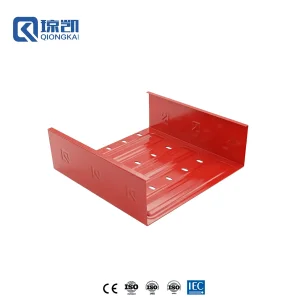
Wholesale Powder Coated Reinforced Molded Cable Tray RAL3020 Red 300*100 Factory
View Product Specs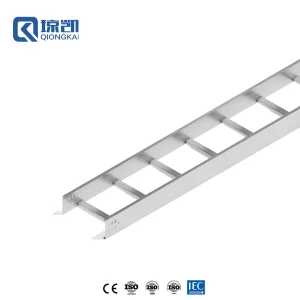
Wholesale Galvanized Ladder Type Cable Tray 400*150 Suppliers, Factory
View Product Specs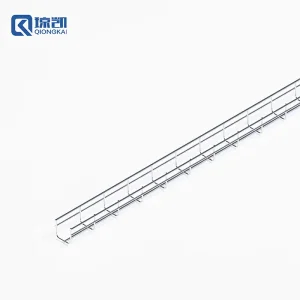
Buy GI Galvanized Wire Mesh Cable Tray 50*50 Manufacturer, Factories
View Product Specs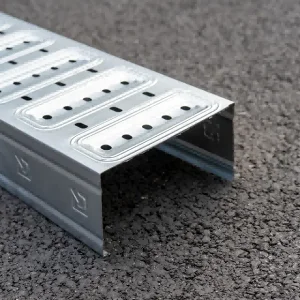
Buy Pre-Galvanized Perforated Energy saving cable tray 200*100 Manufacturers, Suppliers
View Product Specs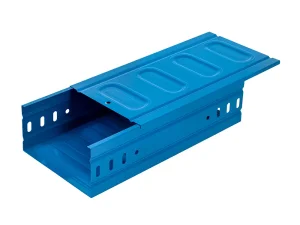
Wholesale Blue Pre Galvanized Powder coated molded cable tray Manufacturer, Supplier
View Product Specs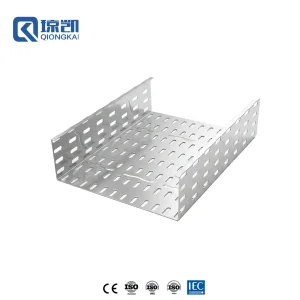
Buy Carbon Steel Pre Galvanized PG HDG Cable Tray with Reinforce Ribs 300*100
View Product Specs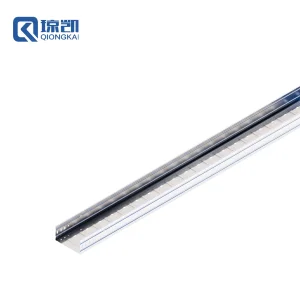
Wholesale Heavy Duty Reinforced Molded Pre Galvanized Cable Tray 200*100
View Product Specs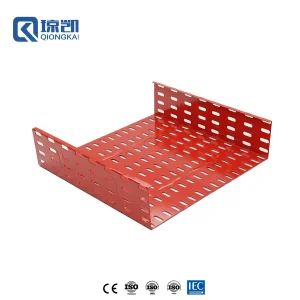
Buy Powder Coated Pre-Galvanized PG Cable Tray Reinforce Ribs RAL3020 Red 400*100
View Product Specs
Technical Clarifications
Frequently Asked Questions: Sourcing Cable Trays for Pune Projects
Direct technical answers addressing the real engineering, importation, certification, and commercial queries raised by procurement heads in Western India.
How does direct factory sourcing compare with purchasing from Bhosari or Chakan local suppliers?
Local workshops in Pune primarily operate manual brake presses and manual welding lines, which frequently leads to inconsistent rung alignment, burred cut-outs, and varying zinc layer thicknesses. Sourcing directly from an automated Industry 4.0 plant like Qiongkai eliminates middleman markups (typically saving 15–25%), guarantees mill-tested steel coils, and delivers uniform, certified safe working loads under IEC 61537 standards.
What is the standard ocean and inland transit time from Shanghai factory to Pune jobsites?
Direct containerized shipments from Shanghai Port to Nhava Sheva (JNPT) typically take between 14 and 18 days on the water. Following swift customs clearance through an Inland Container Depot (ICD Talegaon or Dighi), container trucks reach project sites across Chakan, Ranjangaon, or Hinjewadi within 24 to 48 hours via the Mumbai-Pune Expressway.
Which cable tray finish is best suited for Pune’s monsoon climate?
For outdoor cable runs, substation interconnects, and rooftop solar systems exposed to Pune's intense monsoon rains (June to September), Hot-Dip Galvanized (HDG) coating with an average thickness of 65µm–85µm conforming to BS EN ISO 1461 is essential. For indoor, climate-controlled commercial buildings and data halls, Pre-Galvanized (PG) or electro-galvanized wire mesh provides optimal, cost-efficient lifecycle performance.
Can Qiongkai manufacture customized hole patterns, side heights, and thicknesses?
Yes. With 12 dedicated roll-forming lines and more than 60 heavy-duty hydraulic press sets, we routinely produce customized side rail heights (50mm, 75mm, 100mm, 150mm), widths from 50mm up to 1000mm, sheet thicknesses from 1.0mm to 3.0mm, and unique perforation patterns engineered to meet specialized ventilation or strapping specifications.
Why is wire mesh basket tray preferred over perforated tray in Hinjewadi data centers?
Wire mesh basket trays offer 90% open surface area, which dramatically improves heat dissipation around dense power and data cable bundles. It also eliminates dirt and dust accumulation, prevents fiber stress points with smooth rounded wire cross-welds, and permits quick, tool-free directional field bends without requiring custom-fabricated fittings.
What quality documentation and mill test certificates accompany each export order?
Every shipment is backed by a full Quality Dossier: Mill Test Certificates (MTC) EN 10204 3.1 verifying chemical composition and mechanical tensile/yield properties; Hot-Dip Galvanizing thickness reports verified via magnetic induction gauges; salt spray test reports; and factory dimensional inspection sheets confirming tolerance compliance.
Are seismic support brackets and strut channels supplied alongside the cable trays?
Yes. We engineer complete, fully-coordinated support systems: plain and slotted 41x21, 41x41, and 41x82 back-to-back strut channels, threaded suspension rods, beam clamps, cantilever arms, and seismic bracing kits capable of dampening lateral and longitudinal seismic shock in compliance with regional seismic zone requirements.
What is the standard packaging method used to prevent transit damage on sea shipments?
Trays are nested tightly to maximize container volume, bound with heavy-duty plastic and steel strapping, wrapped in protective moisture-barrier stretch film, and fitted with reinforced corner protectors. For powder-coated or stainless steel orders, protective interleaving paper is placed between layers to prevent surface scratching.
Ready to Streamline Your Cable Tray Sourcing for Pune Projects?
Send your project Bill of Quantities (BOQ), single-line diagrams, or tender specifications. Our engineering application desk will prepare a complete system proposal with full structural load calculations, custom profile drawings, and direct CIF Nhava Sheva pricing within 24 hours.