
Industrial Cable Trays & Hardware Assemblies
Browse factory-direct prefabricated cable routing systems, perforated wireway channels, stainless marine modules, and modular brackets engineered to high structural load specifications.
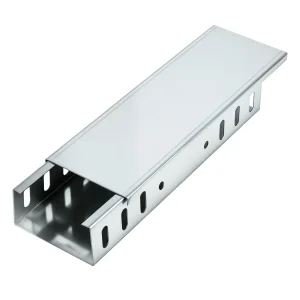
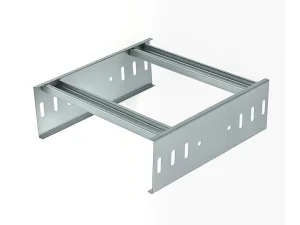
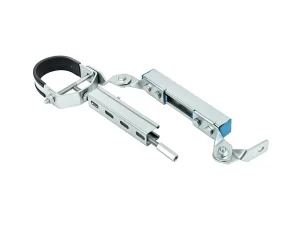
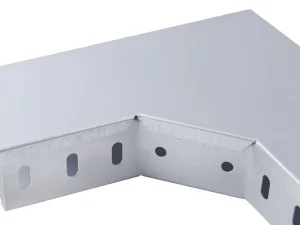
Cable Tray Evolution: Industry 4.0 & Structural Shifts
Modern electrical routing systems have evolved from passive structural raceways into highly engineered, standards-compliant life-safety pathways capable of resisting seismic acceleration, harsh corrosive chemical exposures, and thermal runaway events.
AI Data Centers & High-Density Cables
Accelerating rack densities (exceeding 40kW–100kW per cabinet) demand high-volume cable runway systems, wire basket trays, and ventilated trough systems with superior natural heat convection to prevent ampacity derating according to NEC 310.15 standards.
Seismic & Vibration Resilience
Structural building codes globally mandate integrated seismic bracing (complying with GB 50981 and ASCE 7-16). Our specialized strut channels and seismic rigid arm brackets dissipate lateral kinetic energy, ensuring uninterrupted power continuity during major seismic occurrences.
Decarbonized Metallurgy
Global EPC contractors and developers increasingly calculate Scope 3 carbon footprints. The transition toward low-emission electric arc furnace (EAF) carbon steel, recycled stainless grades, and halogen-free pultruded FRP composite trays aligns directly with LEED and BREEAM criteria.
Modular Quick-Assembly Systems
Labor shortages on mega-sites require pre-punched, boltless splice plates, push-in click connectors, and toolless cover latches. Modern modular tray configurations reduce field installation man-hours by up to 45% compared to legacy nut-and-bolt systems.
Direct OEM Manufacturing & Global Capacity
Since 2005, Shanghai Qiongkai Industry Co., Ltd. has delivered direct factory manufacturing solutions for international Tier-1 EPC contractors, international project owners, and regional industrial distributors.
Tier-1 Global Project References
From supplying corrosion-resistant CT series trunking for Shanghai Hongqiao International Airport to fabricating specialized deep-profile support sections for an Offshore LNG platform in Qatar, our factory delivers verified quality under stringent project audits.
Cost-Optimized Engineering Proposals
For large-scale agricultural projects such as the mega pig farming facility in Paraguay, our technical team re-engineered cross-sectional profiles to reduce material weight by 18% without diminishing SWL (Safe Working Load), achieving direct budget savings.
European & American Export Standards
With deep port access to Shanghai Yangshan and Waigaoqiao export terminals, we reliably manage volume containerized shipments of Hot-Dip Galvanized trays to Italy, custom FRP systems to Thailand, and specialized strut framing across the Americas.
Industrial Finish Selection & Environmental Categorization
Selecting the correct metallurgical finish prevents catastrophic structural failures. Our manufacturing covers standard indoor light commercial through extreme offshore marine atmospheric classifications.
| Material / Treatment | Reference Standards | Corrosivity Category (ISO 12944) | Protective Coating Thickness | Recommended Industrial Applications |
|---|---|---|---|---|
| Pre-Galvanized Steel (PG / GI) | EN 10346, ASTM A653 | C1 - C2 Indoor Clean | 12 – 20 μm (≥ 140–275 g/m²) | Commercial office buildings, HVAC plenums, dry data halls, light ceiling framing. |
| Hot-Dip Galvanized (HDG) | ISO 1461, ASTM A123 | C3 - C4 Industrial Outdoor | 65 – 85 μm (≥ 450–600 g/m²) | Power plants, outdoor oil & gas terminals, rooftop solar, wastewater facilities. |
| Stainless Steel (SS304 / SS316L) | ASTM A240, EN 10088 | C5-I / C5-M Marine Coastal | Passivated self-healing chromium oxide | Offshore rigs, marine vessels, pharmaceutical cleanrooms, food processing plants. |
| FRP / GRP Composite | ASTM D3917, UL 94 V-0 | CX Severe Chemical | Non-metallic resin barrier (Isophthalic/Vinyl) | Fertilizer manufacturing, chlorine refining, pickling plants, extreme acid/alkali environments. |
| Thermoset Powder Coated | GB/T 18593, Qualicoat | C2 - C3 Controlled System | 60 – 120 μm (Epoxy/Polyester) | Color-coded circuit segregation in hyperscale data centers (RAL 5015 blue, yellow, orange). |
Lifecycle Cost Optimization (TCO)
While Hot-Dip Galvanized or 316L stainless cable trays represent a higher initial CAPEX than electro-galvanized units, they prevent premature rust perforation, eliminating expensive cable pulling outages over 25+ operating years.
Thermal Dissipation & Ampacity
Perforated bottoms and ladder rung designs provide continuous air circulation. Maintaining proper cable spacing on open rungs prevents excessive thermal heat traps, enabling electrical cables to run at their maximum rated current carrying capacities.
EMI/RFI Shielding Containment
For sensitive instrument and telemetry cabling near high-voltage busways, solid trough cable trunking fitted with tightly clamped overlapping covers provides attenuation against high electromagnetic and radio-frequency interference.
Structural Engineering & Global Compliance Guarantees
Each profile rolling and stamping operation is governed by strict Quality Control checkpoints, assuring verified load deflections and full material traceability from raw steel coils to the final project site.
International Code Alignment
Full conformance with NEMA VE 1 / VE 2, IEC 61537, UL classification, and ASTM galvanizing norms. Test certificates document Safe Working Load (SWL) and deflection ratios below L/200 over standard 2.0m to 6.0m spans.
Metallurgical Traceability
Every heat number from the primary steel mill is inspected for chemical composition (C, Mn, Si, P, S). Batch Mill Test Certificates (EN 10204 Type 3.1) accompany all export consignments to confirm yield strength and zinc bond integrity.
Seismic Bracing Integration
Engineered seismic channel framing profiles (41×21, 41×41, 41×62, and 41×82 mm) paired with slotted serrated strut nuts prevent longitudinal slipping under dynamic earthquake acceleration loads.
Export Seaworthy Packaging
Nested bundles wrapped in waterproof polymer membranes, steel corner protectors, timber fumigated skids (ISPM 15), and custom container packing prevent transit chafing and white rust during lengthy oceanic voyages.
Technology Roadmap: Smart Support Systems (2025–2030)
How modern digital modeling, precision robotics, and intelligent raceway monitoring are transforming tomorrow's cable infrastructure.
BIM (Building Information Modeling) Integration
Direct supply of parametric 3D Revit families and IFC files up to LOD 400. Mechanical and electrical consultants can run automated clash detection against piping and structural beams, virtually eliminating costly on-site cutting and routing adjustments.
Automated Robotic Welding & Piercing
Continuous integration of optical laser positioning and robotic rung weld arms. This assures uniform structural weld penetration on ladder trays without micro-porosity, preventing hot spots and structural failure under maximum cantilever loadings.
Integrated Fiber-Optic Thermal Sensing
Next-generation heavy-duty cable trunking systems accommodate embedded distributed temperature sensing (DTS) fiber pathways. Facility teams can track real-time thermal profiles of medium-voltage feeders, detecting electrical hot spots prior to circuit interruption.
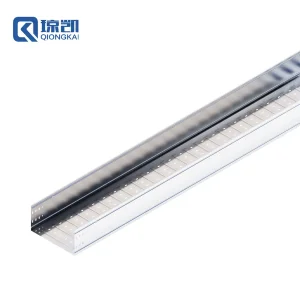
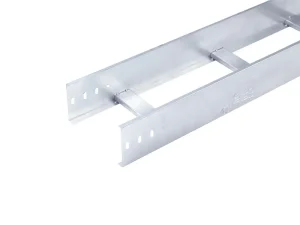
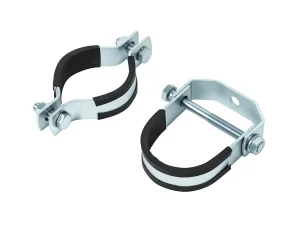
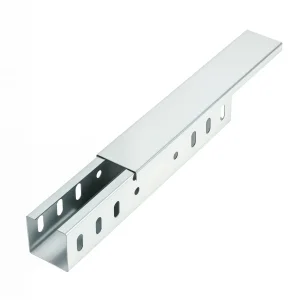
Heavy Duty Trays, Trunking, Clamps & Spare Parts
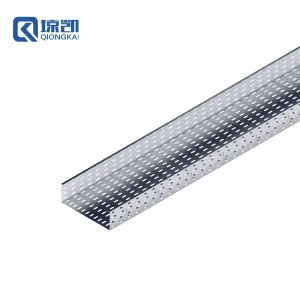
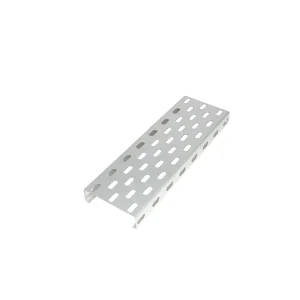
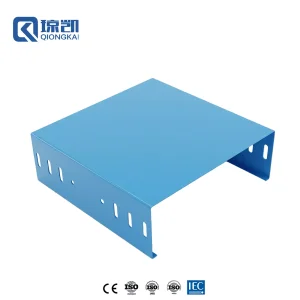
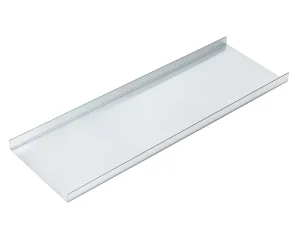
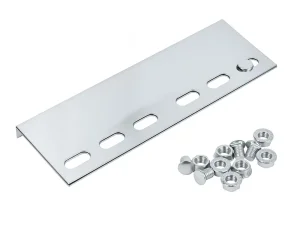
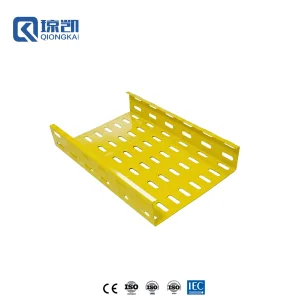
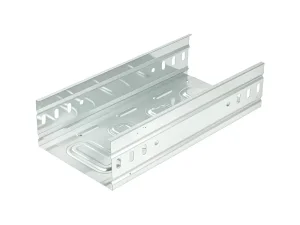
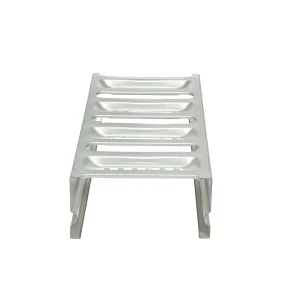
Complement your cable runs with certified molded pre-galvanized troughs, heavy-duty ladders, high-retention pipe clamping components, and factory-matched structural splice hardware.
Frequently Asked Questions by EPCs & Facility Owners
Technical, structural, and contractual guidelines addressing critical factors in large-scale cable tray specification, manufacturing lead times, and on-site assembly.
What is the maximum allowable deflection for heavy-duty industrial cable trays?
Under international standards such as NEMA VE 1 and IEC 61537, standard design practice recommends a maximum deflection of L/200 (where L is the support span distance). For a typical 3.0-meter span, deflection under full Safe Working Load (cables plus 90kg worker static weight allowance, where specified) should not exceed 15 mm to avoid joint strain and visual sagging.
How do you prevent galvanic corrosion when mounting dissimilar metals?
Galvanic reactions occur when metals with significant electrolytic potential differences (e.g., stainless steel and carbon steel or zinc) contact each other in humid or saline atmospheres. We provide non-conductive nylon/EPDM isolation pads, dielectric washers, and passivated stainless hardware kits to electrically isolate dissimilar materials.
Can Qiongkai manufacture customized profile dimensions and hole patterns?
Yes. Operating 12 automated roll-forming lines and over 60 heavy-duty hydraulic and punching units across 3 production bases in Shanghai, we regularly customize channel depths (50mm–200mm), widths (50mm–1200mm), gauge thicknesses (1.0mm–3.0mm), and non-standard perforated venting patterns tailored to specific project drawings.
What is the standard production and export lead time for full container orders?
Standard Pre-Galvanized and carbon steel orders typically complete fabrication within 10 to 18 days for 1 to 3 40ft High Cube containers. Batch Hot-Dip Galvanizing (HDG) per ASTM A123 requires 15 to 22 days due to thermal acid-pickling, flux dipping, and passivation processes. Urgent infrastructure project fast-tracking is available upon engineering review.
How does Hot-Dip Galvanizing compare to Pre-Galvanizing in humid coastal environments?
Pre-galvanized sheet (GI) offers a continuous 15–20 μm zinc layer suitable exclusively for dry indoor or climate-controlled environments. Hot-Dip Galvanizing (HDG) submerges fabricated steel into a 450°C molten zinc bath, forming metallurgically bonded iron-zinc alloy layers with an outer pure zinc shell exceeding 65–85 μm, delivering superior sacrificial protection outdoors.
Are cable tray systems certified as Equipment Grounding Conductors (EGC)?
Yes. When installed per NEC Article 392 and IEC 61537 guidelines, our steel and aluminum cable tray systems with certified bonding jumpers and proper torque-tightened splice plates maintain ground path continuity, functioning safely as an equipment grounding conductor without auxiliary copper ground wire in many configurations.
Consult Our Structural Cable Support Engineering Team
Send your project Bill of Quantities (BOQ), mechanical shop drawings, or load specification sheets. Our Shanghai engineering office delivers complete tray sizing, structural deflection calculations, and competitive direct factory pricing within 24 hours.