
3 Factories
30,000 m² High-Precision Production
20+ Years
OEM/ODM Manufacturing Since 2005
25%–40% Savings
Factory Landed Cost vs Retail Markup
100% Tested
Mill Test Certificate & Load Verification
Commercial & Industrial Infrastructure Support
Engineered Cable Routing Product Lines
Precision-formed cable trays, wire mesh baskets, corrosion-proof UPVC trunking, and high-tensile conduits manufactured directly for international EPC contractors and commercial projects.
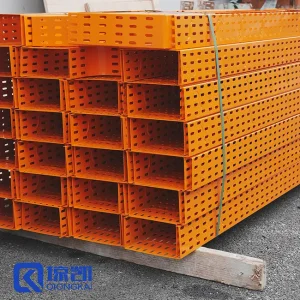
Perforated Cable Tray 200*100 HDG / Powder Coated Orange
View Specifications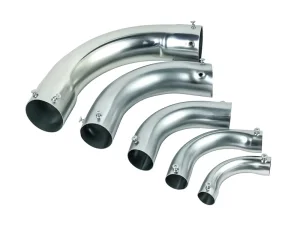
All Radius Pre-Galvanized Electrical Cable Conduit
View Specifications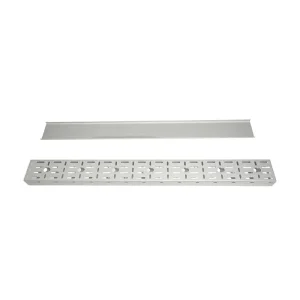
Stainless Steel 316/316L Maximum Perforated Cable Tray
View Specifications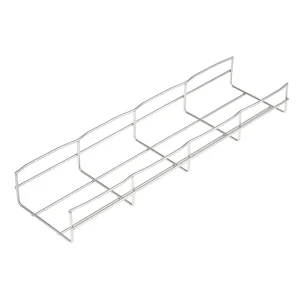
Stainless Steel Wire Mesh Grid Cable Basket Tray
View Specifications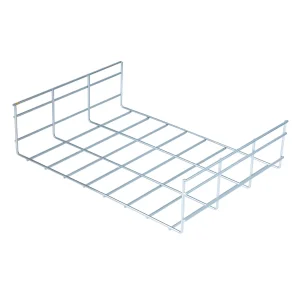
Pre-Galvanized Grid Mesh Cable Tray 400mm
View Specifications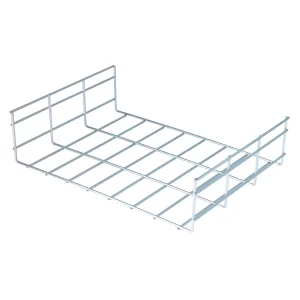
Pre-Galvanized Heavy Grid Mesh Cable Tray 500mm
View Specifications
Fiberglass Reinforced Plastic (FRP) Perforated Tray 100*50
View Specifications
Industry Deep-Dive & Supply Chain Analytics
Cable Tray Seller Glodok: Evolution From Trading Stalls to Tier-1 Supply Chains
For decades, the bustling commercial district of Glodok—specifically around LTC Glodok (Lindeteves Trade Center) and Jalan Hayam Wuruk in West Jakarta—has functioned as the undisputed epicenter for mechanical, electrical, and plumbing (MEP) hardware in Indonesia. When mechanical contractors, electrical engineers, and project managers search for a Cable Tray Seller Glodok, they seek immediate availability, quick local quotes, and on-the-ground support. However, as Southeast Asian industrialization surges and mega-infrastructure projects demand stringent conformity with international engineering protocols, the traditional Glodok trading model is reaching structural capacity limits.
Traditional Glodok Stockists
Local merchants provide valuable localized retail buffering, stocking standard light-gauge perforated trays (often 0.8mm to 1.2mm) and basic cable ladders. While advantageous for small maintenance repairs, stockists generally face:
- Multi-tier trader markups increasing unit cost by 20% to 35%
- Lack of comprehensive Mill Test Certificates (MTC)
- Limited inventory for high-tonnage capital expenditure rollouts
- Variable hot-dip galvanizing zinc thickness (sub-45µm)
The Direct Factory Paradigm
Partnering directly with high-capacity manufacturers like Shanghai Qiongkai Industry empowers Indonesian EPC contractors to bypass distributor margins while accessing precision-engineered support systems:
- Strict adherence to NEMA VE-1, IEC 61537, and ASTM standards
- Direct coil-slitting to roll-forming line automation (2.0mm–3.0mm)
- Guaranteed batch-consistent zinc mass (>85µm / >610 g/m²)
- Complete structural calculation reports and load deflection tests
The Integrated Procurement Model
Savvy commercial entities utilize a hybrid procurement pipeline. Baseline infrastructure tonnage is secured directly at source factory pricing, while local Glodok contacts are leveraged for last-mile fast-turnaround fittings:
- Capital expenditure reduction of 25% to 40% across main runs
- Reduced risk of site delays via staggered container shipments
- Customized finishes tailored to high-salinity Indonesian environments
- Direct engineering alignment for complex seismic and expansion joint layouts
Strategic Procurement Takeaway for Project Directors
While requesting prices from a cable tray seller in Glodok delivers rapid local market price estimation, executing major infrastructure—such as the IKN Nusantara governmental city, Morowali nickel smelters, Cikarang data campuses, or Balikpapan refinery expansions—demands direct manufacturer integration to verify structural traceabilities and guarantee uncompromised lifecycle durability.
Engineering Compliance & Metallurgical Physics
Technical Standards Matrix: NEMA VE-1, IEC 61537 & ISO 12944
Global EPC firms and Indonesian Tier-1 contractors (such as PT Wijaya Karya, PT Adhi Karya, and PT PP) cannot afford structural deflection failures or premature oxidation. Below is the definitive metallurgical and structural engineering comparison for cable tray selection in tropical, maritime, and chemical manufacturing zones.
| Material & Coating System | Reference Standards | Corrosion Class (ISO 12944) | Working Yield Strength | Optimal Indonesian Deployment Scenario |
|---|---|---|---|---|
| Pre-Galvanized Steel (PG) JIS G3302 / Z12-Z27 |
IEC 61537, ASTM A653 | C1 – C2 (Low Humidity) | 235 – 275 MPa | Commercial office towers, HVAC suspended ceilings in dry indoor Jakarta. |
| Hot-Dip Galvanized (HDG) ASTM A123 / ISO 1461 |
NEMA VE-1 Class 20C, BS EN 1461 | C3 – C4 (High Industrial) | 250 – 355 MPa | Power plants, outdoor substations, port terminals (Tanjung Priok), mining surface belts. |
| Stainless Steel 304 AISI 304 / EN 1.4301 |
ASTM A240, IEC 61537 | C3 – C4 (Hygienic/Washdown) | ≥ 205 MPa | Food & beverage processing, pharmaceutical clean rooms, brewery cabling networks. |
| Stainless Steel 316 / 316L AISI 316L / EN 1.4404 |
ASTM A240, NEMA VE-1 | C5-M (Marine Coastal Extreme) | ≥ 220 MPa | Offshore oil & gas rigs, LNG processing terminals (Bontang, Tangguh), coastal petrochemicals. |
| Fiberglass Pultruded (FRP) Isophthalic / Vinyl Ester |
ASTM D3917, UL 94 V-0 | CX (Extreme Corrosive / Acidic) | Flexural: ≥ 210 MPa | Nickel smelters (Morowali, Pomalaa), fertilizer factories, acid leach processing tanks. |
| Heavy Duty UPVC Rigid Unplasticized PVC |
UL 94 V-0, DIN 4102 B1 | Immune to Electrolytic Corrosion | Tensile: ≥ 45 MPa | Telecom distribution corridors, data halls, environments with high ambient moisture and zero grounding. |
Beam Deflection & Safe Working Load (SWL)
Under NEMA VE-1 and IEC 61537, safe load capacities are determined through catastrophic physical load testing. The maximum permitted deflection ratio for standard installations is L/200 for continuous industrial spans and L/360 for deflection-critical data center runs.
When side rails are cold-rolled with stiffening flange returns, structural rigidity increases exponentially ($I_x$ and $Z_x$ moment of inertia). This allows contractors to extend structural support spacing from 2.0 meters up to 3.0 meters or 6.0 meters, reducing costly unistrut cantilever brackets and trapeze hangings by up to 35%.
Electrical Continuity & Earth Bonding
Cable trays operate as both physical supports and integrated equipment grounding conductors (EGC) under NEC Article 392 and IEC 61537 Clause 11.
A common failure in uncertified market fittings bought across retail channels is poor joint impedance. Qiongkai supplies precision-punched fish plates, copper earth bonding jumpers, and serrated flange locking hardware ensuring joint resistance remains below 0.00033 ohms across every joined section, mitigating arching hazards during line faults.
Smart Manufacturing Powerhouse
China Industry 4.0 Factory: Production Resilience & Direct Price Superiority
Why are multinational corporations, EPC mega-consortiums, and elite Indonesian project managers shifting their primary procurement from local open-market vendors to direct manufacturers like Shanghai Qiongkai Industry Co., Ltd.? The answer lies in the massive economies of scale, technological precision, and automated quality control delivered by smart manufacturing facilities.
12 Automated Roll-Forming Lines
Continuous CNC roll-forming machinery bends carbon steel coils into complex profiles with ±0.3mm tolerance. Automated in-line hydraulic punches stamp perforation patterns simultaneously, eliminating human punching errors and jagged edges that tear high-voltage cable jackets.
Robotic Ladder Rung Welding
Unlike manual hand-welding prevalent among small-scale workshop fabricators, Qiongkai deploys automated dual-sided multi-head robotic projection welders. Each rung is molecularly bonded to the side rail simultaneously, yielding 100% weld penetration with zero distortion.
Deep-Port Logistics Integration
Strategically located in Songjiang, Shanghai, factory facilities are situated directly adjacent to the deep-water maritime ports of Yangshan and Waigaoqiao. This ensures prompt, cost-efficient container vessel sailings directly into Jakarta’s Tanjung Priok or Surabaya’s Tanjung Perak.
Economic Breakdown: Glodok Retail Spot Buying vs. Factory Direct CIF Price
On a standard 50-ton order of 300x100 HDG Perforated Cable Trays (2.0mm thickness), the typical Glodok distributor retail quote includes importer tariffs, distributor holding financing, multi-tier warehouse markups, and local transport friction—averaging $28.50 – $34.00 per meter. Direct factory CIF Tanjung Priok pricing from Qiongkai typically stabilizes at $17.80 – $21.50 per meter (inclusive of ocean freight and export seaworthy palletization), returning over $120,000 in bottom-line gross project margin to the contractor.
Localized Engineering Deployment Scenarios
Field Implementations: Solving Indonesia's Extreme Operational Challenges
Indonesia’s geographical landscape presents intense environmental hazards for cable installations: high year-round relative humidity (75%–90%), high UV indices, salty coastal trade winds, volcanic sulfur emissions, and active seismic fault lines (Ring of Fire). Here is how engineered cable support systems thrive where generic market trays disintegrate.
1. Nickel Smelters & HPAL Refineries (Morowali, Weda Bay)
High-Pressure Acid Leach (HPAL) plants and Rotary Kiln-Electric Furnace (RKEF) smelters release massive amounts of sulfur dioxide ($SO_2$), sulfuric vapors, and slurry mist. Carbon steel trays, even with standard hot-dip galvanizing, often oxidize within 14–24 months.
The Solution: Qiongkai’s Pultruded Fiberglass Reinforced Plastic (FRP) and Stainless Steel 316L cable ladders. Engineered with vinyl ester resin matrices and synthetic surfacing veils, these systems withstand continuous sulfuric acid splash and ambient heat exceeding 85°C without structural softening.
2. Hyperscale Data Centers (Cikarang, BSD City, Batam)
Driven by cloud operators and AI data hubs, Indonesia’s data center capacity is expanding exponentially. Traditional heavy steel trays trap heat, obstruct cooling airflow under raised floors, and can cause zinc whisker contamination on high-speed fiber transceivers.
The Solution: Precision Electro-Galvanized and Powder Coated Wire Mesh (Basket) Cable Trays (50x100mm grid). The open-wire matrix provides 360-degree ventilation, minimizes dust accumulation, allows flexible drop-outs without cutting tools, and features rounded safety-T edges to safeguard sensitive Cat6A and optical cabling.
3. New National Capital (IKN Nusantara, East Kalimantan)
The greenfield construction of IKN requires strict smart-city specifications: long service life (>50 years), non-toxic fire retardancy, and unified multi-utility service tunnels (Multi-Utility Tunnel - MUT).
The Solution: Heavy-Duty Hot-Dip Galvanized Cable Trays with Reinforcing Ribs paired with Anti-Seismic Strut Channel Supports (41x41 and 41x82 back-to-back). Tested to seismic category D/E ground acceleration, these support structures prevent cable shedding during tectonic shifts.
4. Commercial Towers & MRT/LRT Underground Tunnels
Underground Jakarta MRT transit and mega-mixed commercial towers require low-smoke, zero-halogen (LSZH) materials that do not emit lethal toxic gases during high-rise electrical fire events.
The Solution: UL94 V-0 flame-retardant UPVC trunking systems and epoxy powder-coated carbon steel systems with reinforcing side ribs. These assemblies maintain circuit integrity during emergency power evacuations while providing neat electrical phase separation.
Procurement & Engineering Intelligence
Frequently Asked Questions: Cable Tray Glodok vs. Factory Direct
Critical technical insights addressing pricing mechanics, customs clearance into Indonesia, coating thicknesses, and lead-time scheduling.
What are the key price differentiators between buying from LTC Glodok versus directly from your factory?
Glodok retailers are primarily stockists who purchase from third-party importers or regional workshops, adding multiple layers of intermediary overheads (importer margin, wholesale markups, retail booth rent, and inventory financing costs). On commercial contracts involving 20 to 500 metric tons, buying directly from Shanghai Qiongkai eliminates middleman markups, yielding 25% to 40% net cost savings on a landed CIF Tanjung Priok basis, while ensuring guaranteed mill test certificates and customized section lengths (e.g., 3.0m or 6.0m instead of standard 2.4m stock).
How does your factory handle shipping, import clearance, and logistics into Indonesia?
We provide full export support from our Shanghai deep-water facilities to all major Indonesian ports: Tanjung Priok (Jakarta), Tanjung Perak (Surabaya), Belawan (Medan), and direct feeder shipments to Batam or Morowali private jetties. We operate under Incoterms 2020 (FOB, CFR, or CIF). Our export documentation suite includes Form E (ASEAN-China Free Trade Agreement) to reduce or eliminate import duties, clean Bills of Lading, Certificate of Origin (CO), Mill Test Certificates (MTC), and standardized packing lists tailored for streamlined Indonesian customs release.
What hot-dip galvanizing (HDG) coating thickness is guaranteed on heavy-duty trays?
We strictly enforce ASTM A123 and ISO 1461 galvanizing standards. For structural steel thicknesses between 1.5mm and 3.0mm, our automated immersion process guarantees a minimum average zinc coating thickness of 65µm to 85µm (exceeding 610 g/m²). For aggressive maritime or chemical environments, we can provide heavy-coat galvanizing reaching 100µm+ with magnetic gauge test verification provided in pre-shipment quality inspection dossiers.
Can Qiongkai manufacture customized dimensions and non-standard perforated patterns?
Yes. With 12 automated cold-roll lines and over 60 heavy-duty hydraulic press machines, we fabricate custom tray widths from 50mm to 1200mm, side rail heights from 25mm to 200mm, and material gauges from 1.0mm up to 3.5mm. We routinely engineer customized slot patterns, side reinforcement stiffeners, and custom radius bends (300mm, 450mm, 600mm, 900mm) for high-density power cables, such as those supplied for an offshore LNG facility in Qatar and industrial plants in Thailand.
What is the typical production and delivery lead time for Indonesian project deliveries?
Standard containerized orders (1 to 3 x 40HQ containers, approximately 25–70 tons) are manufactured within 12 to 18 business days. Transit time from Shanghai Port to Tanjung Priok (Jakarta) is remarkably fast: typically 7 to 11 days on direct container lines. This means total turnaround from PO release to arrival at Jakarta port is often within 25 to 30 days—frequently faster than local jobbing fabricators who face raw sheet supply backlogs.
When should a contractor choose FRP cable ladder over 316L stainless steel?
FRP (Fiberglass Reinforced Plastic) is preferred in high-chemical environments with heavy concentrations of hydrochloric acid, chlorine gas, sulfuric emissions, or strong alkalis (e.g., wastewater plants, battery manufacturing, chemical bleaching). FRP is non-conductive, requires no electrical grounding, and is approximately 40% lighter than steel, significantly reducing ceiling loading. Stainless steel 316L remains the benchmark for offshore platforms, maritime salt-spray zones, high-temperature operations (>120°C), and food/sanitary environments where fire rating and extreme tensile ductility are legally mandatory.
Heavy Industrial & Engineered Systems
Structural Cable Ladders & Heavy-Duty Series
High-load carrying capacities for power distribution, petrochemical facilities, mining complexes, and advanced architectural installations.
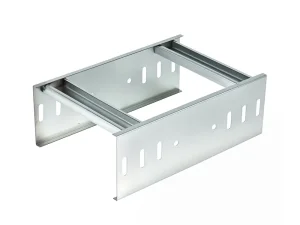
SS304 / SS316 Ladder Type Cable Tray Perforated Design
View Specifications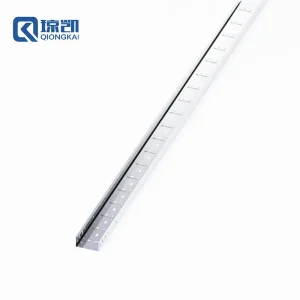
Cost-Saving Heavy Duty Reinforced Pre-Galvanized Tray 100*50
View Specifications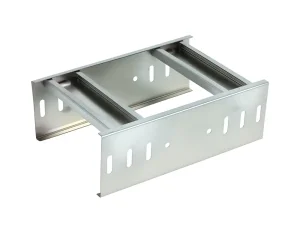
Marine Grade 304 and 316 Stainless Steel Cable Ladder
View Specifications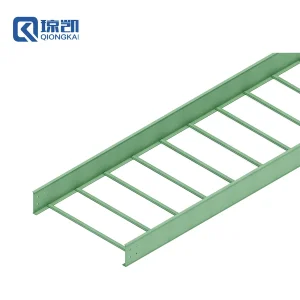
Heavy Industrial FRP Ladder Cable Tray 1000*200
View Specifications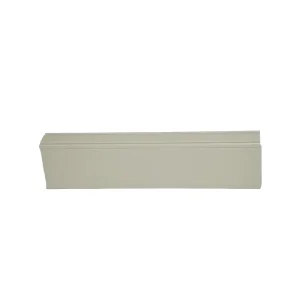
Lightweight Flame-Retardant UPVC 100*50 Cable Trunking
View Specifications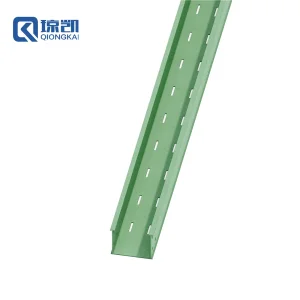
Corrosion-Proof FRP Perforated Cable Tray 200*100
View Specifications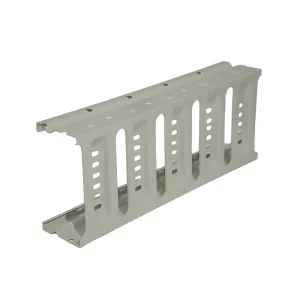
Customizable Powder Coated Ladder & Perforated Cable Tray
View Specifications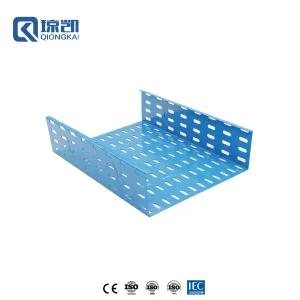
Rib-Reinforced HDG Cable Tray RAL5015 Blue 300*100
View SpecificationsAccelerate Your Cable Support Procurement
Compare your current local Glodok quote against certified factory-direct landed pricing. Send your Bill of Quantities (BOQ) or MEP isometric layouts to receive comprehensive structural calculations, load deflection charts, and a formal commercial proposal within 24 hours.