
Featured Cable Trays & Structural Systems (Series I)
Immediate container-load fulfillment and custom profile fabrications engineered for data hubs, commercial superstructures, and offshore plants.
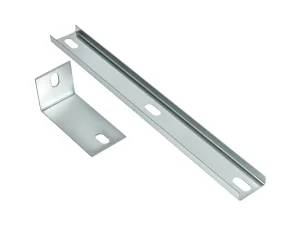
Pre-Galvanized L-Shaped Support Bracket Systems
Wholesale Pre Galvanized L-shapedbracket Factories, Price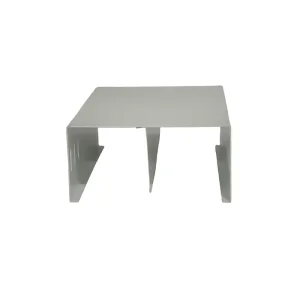
Split Cable Trunking with Internal Isolation Partition
Buy Split Cable Trunking With partition in between Supplier, Factories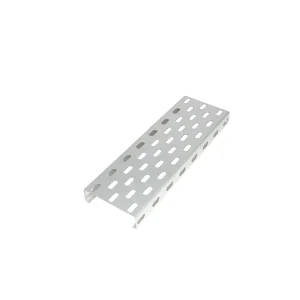
Austenitic Stainless Steel Marine-Grade Cable Tray
Buy Stainless Steel Marine Use Cable Tray Supplier, Price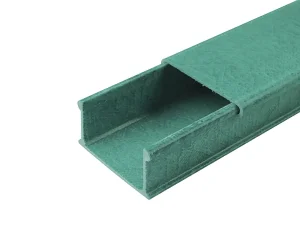
Pultruded FRP Anti-Corrosion Cable Trunking
Wholesale FRP Cable Trunking Customizable Parameter Manufacturers, Suppliers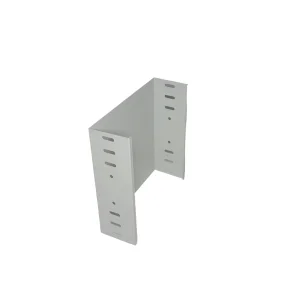
300×100 Precision Powder-Coated Cable Trunking
Wholesale 300*100 Powder Coated Cable Trunking Manufacturers, Supplier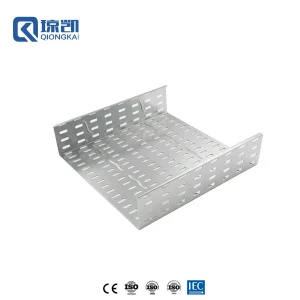
PG / HDG 400×100 Cable Tray with Reinforcing Ribs
Wholesale Carbon Steel Pre Galvanized PG Hot Dip[ Galvanized HDG Cable Tray with Reinforce Ribs 400*100 Supplier, Suppliers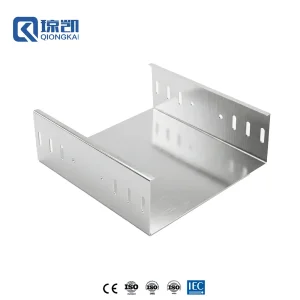
SS304 / SS316 Hygienic 300×100 Cable Trunking
Wholesale Stainless Steel SS 304 316 Cable Trunking 300*100 Manufacturers, Supplier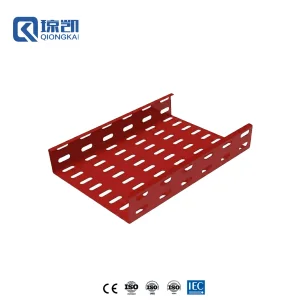
RAL3020 Red 200×50 Ribbed Fire Alarm Cable Tray
Buy Powder Coated Carbon Steel Pre Galvanized PG Cable Tray with Reinforce Ribs - RAL3020 Red 200*50 Suppliers, PriceEvolution of Cable Routing Architecture in Modern Infrastructure
From standard light-gauge bending to cold-formed roll profiling and intelligent modular support configurations, understand the macro engineering shifts redefining cable trays and ladder systems globally.
The electrical and telecommunication infrastructure market has transitioned from static, non-engineered conduit enclosures to dynamic, open-architecture cable management systems (CMS). Modern industrial plants, gigawatt-scale data facilities, renewable energy hubs, and transportation super-structures demand cable trays and ladders capable of bearing dynamic conductor loads, withstanding short-circuit electromechanical forces (up to 100 kA peak), and surviving ambient corrosive atmospheres classified from C1 to CX under ISO 12944.
Specifying engineered cable ladders versus perforated trough or wire mesh basket trays is no longer merely an aesthetic or minor cost consideration. Electrical project directors, EPC contractors, and MEP consultants must balance Joule-heating thermal dissipation, structural deflection limits governed by NEMA VE 1 / NEMA VE 2 and IEC 61537, and seismic zone lateral restraints. As conductors carry higher amperage in hyper-dense configurations, unventilated raceways lead to heat buildup, necessitating severe cable ampacity derating. Engineered ladder trays, featuring open rung spacings (typically 150mm, 225mm, or 300mm), provide uninhibited convective airflow, dropping conductor operating temperatures by up to 12°C compared to fully enclosed non-ventilated trunking, saving thousands of megawatt-hours annually across high-density facilities.
Years Continuous Manufacturing Excellence (Est. 2005)
Dedicated Production Plants in Shanghai Industrial Hub
Integrated Workshop & ISO-Certified Stamping Footprint
Continuous Roll-Forming & Robotic Assembly Lines
Technical Comparative Matrix: Cable Support Archetypes
Selecting the optimal structural profile dictates project lifecycle cost (LCC), seismic endurance, and maintenance overhead. The engineering matrix below contrasts load profiles, span limitations, and ventilation characteristics across core profiles:
| Profile Archetype | Standard Span (m) | Ventilation Ratio | Load Capability | Primary Application Environment | Compliance Standard |
|---|---|---|---|---|---|
| Cable Ladder (C-Channel / I-Beam Rung) | 3.0 m to 6.0 m (Heavy) | High (>70% Free Area) | Heavy-Duty (>150 kg/m) | Power generation, offshore oil & gas, chemical plants, substations | IEC 61537 / NEMA VE 1 |
| Perforated Cable Tray (Trough Type) | 1.5 m to 3.0 m | Moderate (15%–30%) | Medium to Heavy | Commercial buildings, tunnels, light industrial, control cabling | IEC 61537 / BS EN 61537 |
| Wire Mesh Basket Tray | 1.5 m to 2.0 m | Maximum (>90% Free Area) | Light to Medium | Hyperscale data centers, telecommunications, food & pharma cleanrooms | NEMA VE 1 / UL Classified |
| Solid-Bottom Enclosed Trunking | 1.0 m to 2.0 m | Zero (Fully Shielded) | Light to Medium | Sensitive instrument lines requiring Faraday EMI/RFI isolation | BS 4678 / IEC 61084 |
| Pultruded FRP Ladder System | 3.0 m to 6.0 m | High (>70% Free Area) | Exceptional Strength-to-Weight | High-salinity coastal, acid mist, wastewater treatment, LNG terminals | ASTM D3917 / NEMA FG 1 |
Engineered Pathways for Critical Vertical Industries
Turnkey cable management engineered specifically around strict thermal loads, aggressive atmospheres, electromagnetic compatibility, and dynamic short-circuit restraints.
Hyperscale Data Centers & AI Clouds
High-density fiber optic overhead drops, powder-coated cable runway systems, and electro-galvanized wire basket mesh designed for zero-particulate shedding (zinc whisker mitigation) and rapid tier-4 routing scalability.
Renewable Energy, BESS & Utilities
Pre-galvanized and 85µm+ hot-dip galvanized cable ladder trays engineered to carry heavy DC collector cables across wide outdoor spans. Designed for extreme UV stability, thermal cyclic deflection, and wind load resistance.
Marine, Offshore & LNG Terminals
Pickled and passivated marine-grade stainless steel 316L and fire-retardant pultruded FRP systems resilient to direct saltwater spray, sulfuric gas exposure, and Class 1 Division 2 hazardous chemical zones.
Airports, Rail & Mega Infrastructure
Low-smoke zero-halogen (LSZH) trunking channels, integrated seismic cable bracing systems, and ribbed high-load trays supplied for premier global hubs such as Shanghai Hongqiao International Airport.
Engineering Guide: Material & Protective Finish Selection
Over 68% of premature raceway failures stem from galvanic incompatibility or incorrect surface passivations. Review the technical metallurgy guide below before finalizing project procurement schedules.
Selecting cable tray materials requires analyzing the microclimate of the intended cable route. Industrial facilities exhibit distinct microclimates: indoor air-conditioned switchgear rooms (ISO 12944 Category C1), semi-exposed industrial boiler mezzanines (C3), coastal sulfur storage yards (C5-M), and chemical processing corridors subject to acid condensates (CX).
| Finishing / Substrate | Standard Specification | Coating Thickness (µm) | Corrosivity Category | Design Life Expectancy | Recommended Application Scenarios |
|---|---|---|---|---|---|
| Pre-Galvanized (PG / Mill Galv) | ASTM A653 / EN 10346 | 15 – 20 µm (Z275) | C1 to C2 | 20+ Years (Indoor Dry) | Commercial ceilings, IT corridors, residential riser shafts |
| Electro-Galvanized (EG) | ASTM B633 / BS 7371 | 8 – 12 µm | C1 | 15+ Years (Clean Indoor) | Wire mesh basket trays, data center server halls |
| Hot-Dip Galvanized (HDG) | ASTM A123 / ISO 1461 | 65 – 85+ µm | C3 to C4 / C5-I | 30 to 50 Years (Outdoor) | Refineries, power substations, open industrial trestles, solar yards |
| Stainless Steel 304 (SS304) | AISI 304 / EN 1.4301 | Self-Passivated Oxide | C4 to C5 | 40+ Years | Food and beverage processing, dairy, pharmaceutical washdown areas |
| Stainless Steel 316 / 316L | AISI 316L / EN 1.4404 | Molybdenum Passivated | C5-M to CX | 50+ Years (Extreme Saline) | Offshore oil platforms, marine vessels, desalination plants, coastal ports |
| Fiberglass Reinforced Polymer (FRP) | Isophthalic / Vinyl Ester | Non-Metallic Matrix | CX (Chemical Immersion) | 30+ Years (Zero Rust) | Sulfuric/Chlorine environments, fertilizer plants, pickling lines |
| Thermoset Powder Coating | Polyester / Epoxy Hybrid | 60 – 100 µm | C2 to C3 (Color Coded) | 25+ Years (Indoor Protected) | Substation system ID, fire-fighting loops (RAL 3020), aesthetic architectural fitouts |
Mitigating Galvanic Dissimilar-Metal Corrosion: When mounting hot-dip galvanized trays on stainless steel framing, or vice-versa, direct metallic contact induces accelerated galvanic breakdown in the presence of moisture. Qiongkai supplies vulcanized neoprene isolation pads, dielectric non-conductive washers, and specialized nylon-coated fasteners that prevent galvanic battery action across mismatched electrochemical potentials.
Global Enterprise Sourcing: Mitigating Volatility & Lead Times
Navigating raw material price swings, international shipping cubage constraints, and project phased delivery milestones with Tier-1 direct manufacturer execution.
International sourcing managers procuring cable management hardware face significant market pressures: volatile steel coil price swings (CRU index variations), international shipping freight container volume bottlenecks, and tight project commissioning penalties (Liquidated Damages). A common failure point in overseas purchasing is the high freight dead-space associated with rigid, pre-formed cable trays.
At Shanghai Qiongkai Industry Co., Ltd., we have optimized our roll-forming geometry to facilitate precision nesting configurations. Trough trays and cable ladders are engineered with slight tapered side-rail angles and complementary modular components, enabling up to 40% higher volumetric packing efficiency inside standard 40ft High Cube (HQ) shipping containers. This geometric engineering directly reduces sea-freight cost per linear meter, shielding EPC project budgets from high oceanic shipping rates.
Strategically located in Shanghai's Songjiang District, adjacent to the deep-water maritime ports of Yangshan and Waigaoqiao, Qiongkai eliminates inland intermodal friction. Orders move directly from factory finishing lines into export container stuffing bays, accompanied by standard Mill Test Certificates (EN 10204 3.1), salt-spray laboratory validation logs, and third-party inspection certifications (SGS, TÜV, BV).
Nesting & Cubage Optimization
Engineered profile nesting reduces shipping air volume by up to 40%, optimizing freight costs across multi-container international project deployments.
Transparent Mill Traceability
Full 3.1 MTC steel coil heat-number tracking, zinc-layer micrometer depth logs, and ISO 9001 quality audits supplied with every shipment.
Dedicated Project Management
A dedicated bilingual project engineer oversees your project from submittal drawings and BOM generation through container staging and customs release.
Engineering Compliance: Load Ratings & Seismic Bracing
International mechanical testing, certified structural deflection tolerances, and full-spectrum anti-seismic certifications safeguarding installations worldwide.
Cable tray support integrity is subject to strict engineering oversight. Structural deflection across horizontal spans must adhere to the standard deflection formula limit of L/200 under full working electrical load (SWL) as specified by NEMA VE 1 and IEC 61537. Excessive deflection degrades conductor jackets, induces strain on electrical terminations, and risks raceway collapse under dynamic short-circuit electromagnetic pulses.
Peak Annual Global Supply Capacity Executed
Heavy-Duty Automated Stamping & Bending Workstations
Pre-Shipment Dimensional & Zinc Thickness Inspection
Fully Integrated Cable Management Subsystems
Track Record: Validated Worldwide Infrastructure References
Qiongkai's manufacturing capability is proven through deployments across demanding environments:
- Shanghai Hongqiao International Airport (China): Supplied extensive runs of custom CT series heavy-duty, corrosion-resistant cable trunking systems supporting critical ground radar, apron power, and passenger terminal electrical grids.
- Qatar Offshore LNG Facilities & Petrochemical Complexes: Delivered pultruded non-metallic FRP composite cable ladders engineered to resist 55°C ambient desert heat, high humidity, and airborne saline/sulfur deposits.
- Industrial Process Plants (Thailand): Engineered heavy-gauge FRP-lined steel hybrid cable trays combining structural steel load strength with acid-resistant polymer barriers.
- Industrial Agricultural Megaproject (Paraguay): Delivered cost-optimized, high-span heavy-duty cable trays designed for high-ammonia atmospheres within strict capital expenditure allocations.
- Industrial European Distribution (Italy): Bulk export contracts of CE/IEC-compliant hot-dip galvanized cable trays and 41-series strut channel networks.
Technology Roadmap: The Future of Cable Infrastructure
Strategic developments shaping our production, material sciences, and digital engineering integration over the coming decade.
BIM / Revit Dynamic Parametric Modeling
Full integration of native LOD 400 BIM and Revit families, enabling automated interference checks, clash detection, and instant Bill of Quantities (BOQ) take-offs directly from digital construction models.
Next-Gen Zinc-Aluminum-Magnesium (ZAM)
Transitioning high-exposure product lines to advanced ZAM coatings, offering 3x to 5x higher corrosion self-healing at sheared edges compared to conventional hot-dip galvanizing, with a lower carbon footprint.
IoT Sensor & Distributed Temperature Monitoring
Developing integrated smart rungs with embedded fiber-optic DTS channels for continuous temperature and load monitoring, providing automated early warnings for conductor hotspots in high-load corridors.
EAF Green Steel & Circular Life Cycles
Partnering with electric-arc-furnace (EAF) mills to offer structural cable trays with up to 70% lower embodied carbon, backed by Environmental Product Declarations (EPD) to support LEED and BREEAM certifications.
Frequently Asked Questions for Engineering & Sourcing
Direct answers to the critical engineering, compliance, and logistical inquiries evaluated by procurement managers, consulting engineers, and estimating teams.
What are the key structural distinctions between Cable Trays and Cable Ladders?
How is working load capacity determined according to NEMA VE 1 and IEC 61537?
When should stainless steel 316L be selected over Hot-Dip Galvanized (HDG) steel?
Can Qiongkai manufacture customized profiles, non-standard rungs, and specific color finishes?
How do you manage thermal expansion and contraction over long outdoor cable runs?
What export packaging and container consolidation standards are applied?
Engineered Cable Ladders, Wire Mesh & Channels (Series II)
Precision-manufactured wire mesh baskets, angle iron frames, reinforced channel profiles, and pultruded non-metallic composite systems ready for project delivery.
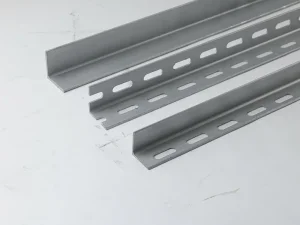
Pre-Galvanized Non-Perforated Structural Angle Iron
Wholesale Pre Galvanized non-perforated angle iron Manufacturer, Factories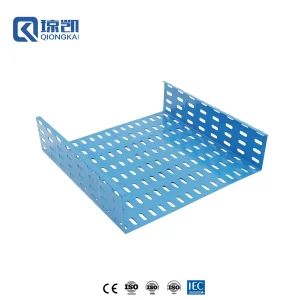
RAL5015 Blue 400×100 Ribbed PG/HDG Cable Tray
Buy Powder Coated Carbon Steel Pre Galvanized Hot Dip Galvanized PG HDG Cable Tray with Reinforce Ribs - RAL5015 Blue 400*100 Manufacturer, Price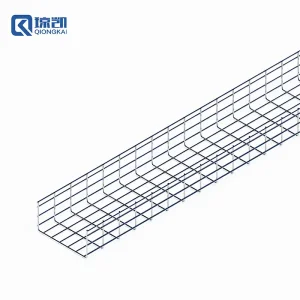
GI Galvanized 300×150 Wire Mesh Basket Tray
Buy GI Galvanized Wire Mesh Tray 300*150 Factory, Factories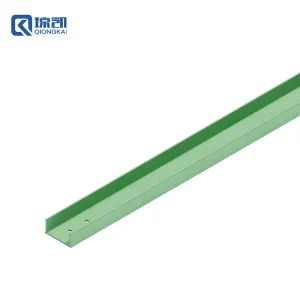
FRP Composite Trough Channel 100×50 Trunking
Wholesale FRP Cable Trunking Trough Type Channel 100*50 Manufacturer, Factories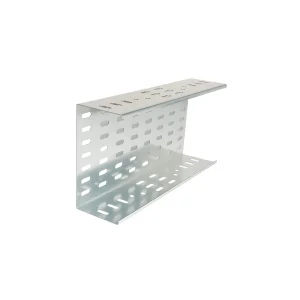
High-Density Pre-Galvanized Perforated Cable Tray
Buy Customized Dense Pre Galvanized Perforated Cable Tray Factory, Price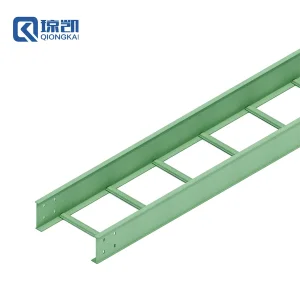
Pultruded FRP Ladder Cable Tray 400×150
Buy FRP Ladder Type Cable Tray 400*150 Supplier, Factory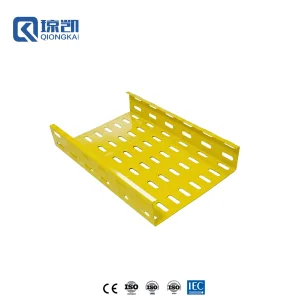
RAL1080 Yellow 200×50 Ribbed Cable Tray
Wholesale Powder Coated Carbon Steel Pre Galvanized Hot Dip Galvanized PG HDG Cable Tray with Reinforce Ribs - RAL1080 Yellow 200*50 Manufacturer, Factories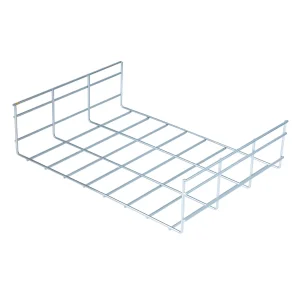
400mm Pre-Galvanized Steel Grid Cable Tray
Buy Pre Galvanized grid Cable tray 400mm Supplier, PriceEquip Your Project with Direct Factory Cable Support Systems
Connect directly with Shanghai Qiongkai’s engineering department for structural load verifications, custom profile drawings, mill certificates, and container-optimized volume quotes.