
Featured Cable Management System Deployments
Tested and certified basket grid trays, fireproof trunking, and ladder support solutions engineered for enterprise white rooms and power distribution hubs.
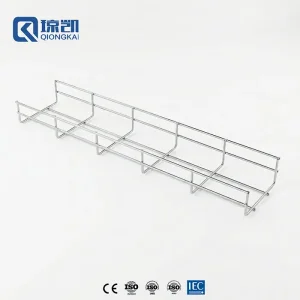
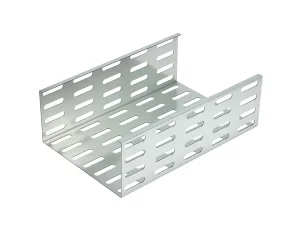
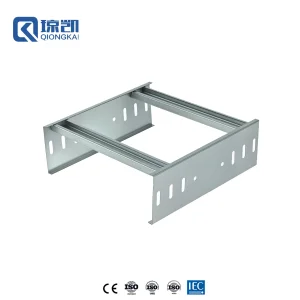
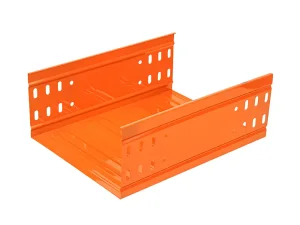
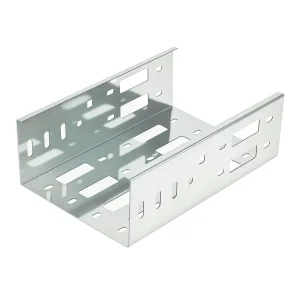
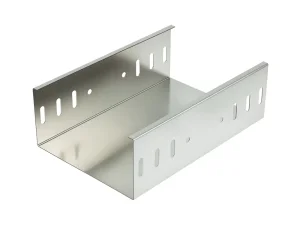
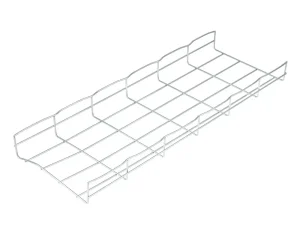
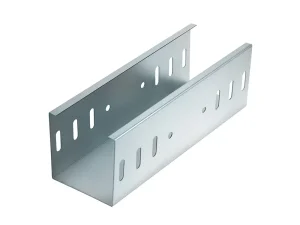
Modern Data Center Pathways: Thermal, EMI & Weight Architecture
Navigating the generational shift toward ultra-high-density AI rack computing, where cable containment systems must support thermal convective airflow, electromagnetic shielding, and extreme linear cable weights.
Thermal Optimization & CFM Containment
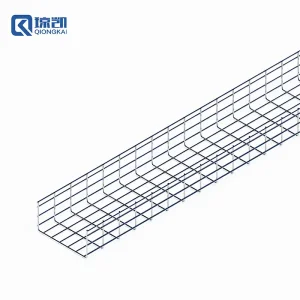
Traditional solid-bottom channels block underfloor cooling plenum circulation. Modern hyperscale engineering implements T-weld wire mesh basket pathways and ventilated ladder designs that reduce airflow resistance by up to 64%, eliminating static hot-air pockets across hot/cold aisle containment corridors.
High-Density AI Cluster Load Capacities
Driven by 400G/800G optical interconnects and bulky 48V DC busway feeder drops, tray load configurations routinely exceed 120 kg/m. Our factory applies longitudinal cold-rolled stiffening ribs and high-tensile carbon steel alloys that resist sagging within strict L/200 deflection parameters.
EMI Attenuation & Signal Integrity
Proximity between high-amperage power trunks and Category 6A / OM5 fiber optics demands dedicated physical segregation. Our hot-dip galvanized and powder-coated trunking systems provide exceptional attenuation against transient harmonic interference, keeping packet drop rates near zero.
Industrial Manufacturing Powerhouse (Songjiang, Shanghai)
Since 2005, Shanghai Qiongkai Industry Co., Ltd. has bridged the gap between rapid design-stage prototypes and high-throughput production lines for massive international cloud infrastructures.
| Material / Treatment Specification | Salt Spray Resistance (ASTM B117) | Tensile Strength Yield | Optimal Project Application |
|---|---|---|---|
| Pre-Galvanized Carbon Steel (PG) | 120 - 180 Hours | ≥ 330 MPa | Controlled Climate White Rooms & Server Raised Floors |
| Hot-Dip Galvanized (HDG ISO 1461) | 720 - 1,200+ Hours | ≥ 360 MPa | Exterior Substation Pathways & Cooling Towers |
| Stainless Steel (SS 304 / SS 316L) | 1,500 - 3,000+ Hours | ≥ 520 MPa | Coastal Facilities, Battery Energy Storage (BESS) |
| Thermally Cured Electrostatic Powder Coat | 400 - 600 Hours | Impact Resistant ≥ 50kg/cm | Network Pathway Color-Coding (A/B Redundancy Power) |
Resolving Enterprise Procurement Bottlenecks
Tier-1 engineering, procurement, and construction (EPC) contractors require rigid schedules, certified quality guarantees, and predictable containerized logistics.
Direct Factory Sourcing vs. Trading Intermediaries
Eliminate middle-tier broker markups (typically 18-35%) while ensuring sub-millimeter manufacturing tolerances. Direct interaction with Qiongkai shop-floor engineers streamlines submittal drawing approvals and minimizes production re-work.
Container Optimization & Nesting Architecture
Freight overheads represent a significant portion of landed cost. Our modular trays and strut profiles are designed for volumetric nesting, increasing standard 40ft HQ container loading density by up to 28% while avoiding transit deformations.
Compression of Lead Times for Rapid Turnkey
With an inventory of over 10,000 tons of structural steel and 12 synchronized production lines, we support aggressive delivery milestones, shipping fully customized project packages within 15 to 25 business days from drawing signoff.
Seismic Engineering, Anti-Vibration & Global Standards
Designing data center cable tray infrastructure requires rigorous adherence to regional and international building codes, from vibration mitigation to electrical grounding integrity.
IEC 61537 & NEMA VE-1 Compliance
Every batch of ladder and basket tray undergoes destructive load testing under extreme structural configurations to guarantee mechanical load ratings, safe working loads (SWL), and bonding resistance as low as 0.003 Ω across splice joints.
Seismic Bracing & Sway Support
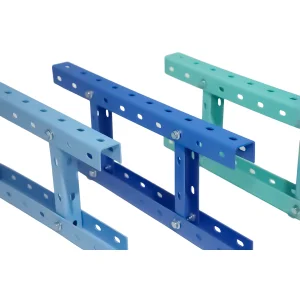
Data facilities in seismically active regions require lateral and longitudinal bracing assemblies. Using our slotted 41x41 and 41x82 back-to-back strut channels with serrated locking nuts, trays withstand high peak ground acceleration forces.
Field Installation Guidance & BIM Models
We provide Revit and IFC files along with stamped structural calculations for MEP clash-detection workflows. This enables swift on-site boltless splicing and rapid installation, cutting contractor labor hours by up to 30%.
Engineering Ahead: Modular Trays for 100kW+ Compute Densities
As liquid-to-chip manifold layouts and immersive cooling tanks transform server room layouts, our design lab is engineering pathways for hybridized utility delivery.
Hybrid Fluid & Cabling Co-Pathways
Next-generation ladder designs include isolated non-conductive sub-racks engineered specifically for secondary coolant supply and return hoses, preventing mechanical damage and shielding delicate optical links from condensation risks.
Low-Embodied Carbon Alloys
To align with global Scope 3 emissions commitments, our production facility offers low-carbon, recycled-content high-strength steel profiles that provide equivalent yield points with a 24% reduction in verified carbon intensity.
Integrated Smart Sensor Arrays
We are prototyping clip-on thermal stress, ambient temperature, and deflection sensors that interface with DCIM management suites, providing predictive load warnings before mechanical sagging damages critical fiber lines.
Structural Trays, Channels & Telecom Systems
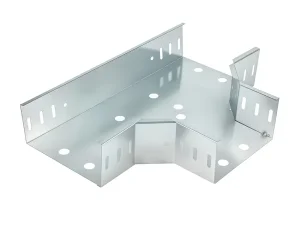
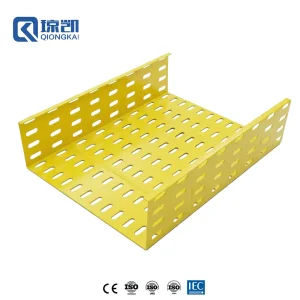
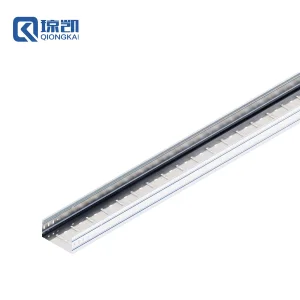
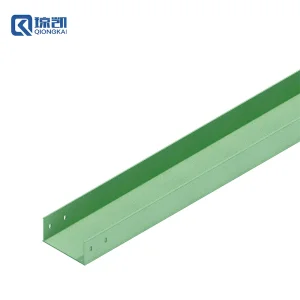
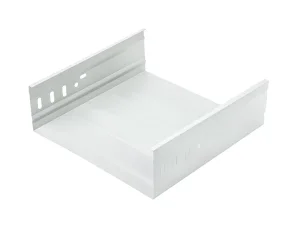
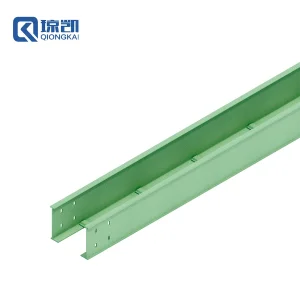
Explore our complete catalog of reinforced trays, FRP corrosion-proof channels, and custom tees built to handle demanding enterprise load profiles.
Engineering & Procurement Clarifications
Common inquiries from consulting engineers, project directors, and procurement leaders sourcing data center cable management systems.