
High-Performance Flexible Trunking & Cable Support Systems
Engineered containment solutions deployed globally across automated logistics, offshore platforms, hyperscale cleanrooms, and commercial infrastructure.
Macro-Industry Dynamics & Cable Containment Solutions
Navigating the convergence of industrial automation, electrified transit, and AI data centers through next-generation mechanical cable routing.
In modern industrial engineering, the demand for flexible trunking for cables has transformed from an auxiliary containment convenience into a mission-critical structural sub-system. As industrial environments integrate automated robotic cells, multi-axis machining tools, modular renewable power units, and hyperscale edge data clusters, the electrical and communications infrastructure must endure perpetual mechanical dynamic stresses, localized thermal buildup, aggressive corrosive agents, and rigorous electromagnetic interference (EMI). Shanghai Qiongkai Industry Co., Ltd. addresses this paradigm shift by developing holistic, cross-compatible cable tray, ladder, trunking, and strut systems engineered to meet international safety standards while lowering the total cost of installation and ownership.
Grid Modernization & Green Power
Utility-scale solar farms, wind turbine nacelles, and battery energy storage systems (BESS) require trunking and cable management capable of resisting extreme UV radiation, severe daily thermal cycling (-40°C to +85°C), and cyclic expansion stresses without structural fatigue.
Hyperscale & AI Compute Density
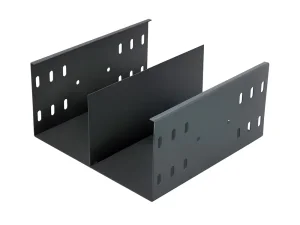
High-density computing demands structured overhead cable runways, partitioned flexible trunking with split plates, and precision wire basket routes to segregate high-voltage power from sensitive Category 6A / Category 8 fiber lines, eliminating crosstalk while preserving convection cooling paths.
Robotics & Dynamic Articulation
Automated manufacturing assembly floors rely heavily on flexible, segmented, or corrugated metal and hybrid polymer trunking to accommodate repeated cyclical movement, vibration dampening, and fast-access snap-fit lids for minimal line-down maintenance intervals.
Commercial Pricing Dynamics & Material Selection Matrix
Understanding cost structures, raw material indexes, and protective finishes to make informed life-cycle budgeting decisions.
When sourcing flexible cable trunking, perforated trays, and mounting strut systems from verified manufacturers, price quotation is rarely a static metric. Procurement directors and project estimators must evaluate raw material composition, surface treatment standards, wall thickness tolerance, and logistics packing efficiency. A nominal cost-saving on thin-gauge pre-galvanized trunking can easily translate to catastrophic failure and premature re-installation expenses if applied within a maritime coastal facility or high-chemical manufacturing environment.
| Material / Treatment Specification | Corrosion Resistance Class | Installed Price Index | Ideal Industrial Environments | Operational Service Life |
|---|---|---|---|---|
| Pre-Galvanized (PG) Carbon Steel Zinc Coating: Z120 - Z275 (EN 10346) |
C1 - C2 Low | Baseline (1.0x) | Indoor dry spaces, commercial office ceiling plenums, modular partition walls. | 15 - 25 Years (Controlled) |
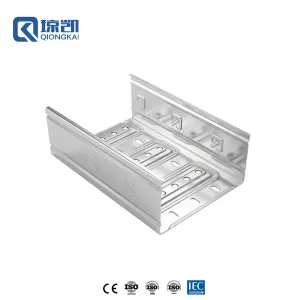
| Hot-Dip Galvanized (HDG) Post-Fabrication Zinc Bath: ≥65 - 85 μm (ISO 1461 / ASTM A123) |
C3 - C4 Industrial | 1.35x - 1.55x | Outdoor substations, industrial plants, open refineries, rooftop solar arrays. | 35 - 50+ Years |
| Powder Coated over PG / HDG Polyester / Epoxy RAL Coating (60-100 μm) |
C2 - C3 Custom | 1.25x - 1.40x | Data halls (visual circuit identification), architectural ceilings, auto plants. | 20 - 30 Years |
| Stainless Steel (AISI 304 / 316 / 316L) Molybdenum Alloyed (ASTM A240) |
C5-M Extreme | 2.40x - 3.20x | Offshore oil & gas platforms, marine ports, food processing, pharma cleanrooms. | 50+ Years (Immune to Chlorides) |
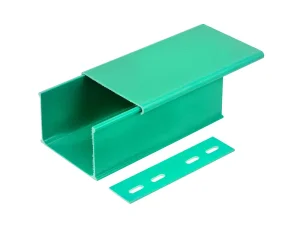
| Fiberglass Reinforced Polymer (FRP/GRP) Pultruded Isophthalic / Vinyl Ester Resin |
Acid / Chemical Max | 1.80x - 2.20x | Wastewater treatment plants, fertilizer facilities, coastal sulfur/acid exposure. | 40+ Years (Non-Conductive) |
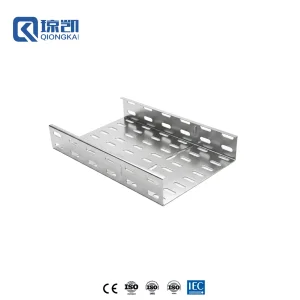
Pricing Rule of Thumb for EPC Contractors: Standard flexible trunking runs between US$ 3.50 to US$ 18.00 per linear meter depending on cross-sectional dimensions (e.g., 50x50mm up to 300x100mm), gauge thickness (1.0mm to 2.5mm), and the selected metallurgy. Shanghai Qiongkai operates automated rolling machinery that reduces structural weight by up to 18% through engineered reinforcement ribs while preserving load capacity, delivering direct steel tonnage savings and lowering ocean freight costs for overseas shipments.
Localized Engineering Applications & Global Compliance
Stringent compliance with global engineering codes backed by audited project deliveries across Asia, Europe, South America, and the Middle East.
IEC 61537 & NEMA VE 1 / VE 2
All fabricated trunking, ladder rungs, and tray systems undergo systematic destructive load testing, electrical continuity evaluation, and thermal resistance confirmation to ensure strict alignment with European and North American industrial codes.
Corrosion Class ISO 12944 Validation
Galvanized coatings and multi-layer electrostatic treatments are audited via salt spray chamber trials (ASTM B117) exceeding 1,000+ hours, ensuring dependable deployment in maritime berths, chemical distillation complexes, and high-salinity coastal terminals.
Seismic Bracing & Dynamic Flanges
For installations in active seismic zones or high-vibration plants, Qiongkai manufactures reinforced 41-series strut profiles (41x21 to 41x82) fitted with serrated anti-seismic locking teeth to eliminate channel-nut slippage under dynamic loads.
Selected Field Project Track Record:
| Project Scope | Geographic Region | Engineering Challenge | Supplied Solution |
|---|---|---|---|
| Shanghai Hongqiao Int'l Airport | East Asia (China) | Dense commercial passenger terminal with low vibration thresholds and zero-hazard smoke fire specs. | Custom fire-retardant, high-corrosion-resistant CT Series Trunking with toolless snap cover profiles. |
| Offshore LNG Terminals | Middle East (Qatar) | Sub-tropical extreme marine exposure, ambient temperatures >50°C, high atmospheric hydrogen sulfide. | Custom SS316L pultruded support profiles and heavy-duty FRP cable trays with UV-stabilized resins. |
| Industrial Agriculture Complex | South America (Paraguay) | Strict budget envelope combined with aggressive biological ammonia gas corrosive environment. | Cost-optimized reinforced pre-galvanized ribbed trays with localized protective dip coatings. |
| Automated Transit Infrastructure | Southern Europe (Italy) | European rail containment code compliance, exact delivery timelines, and full dimensional certification. | Deep-bath hot-dip galvanized (HDG) perforated cable tray systems and accessories packed for zero-defect sea transport. |
Engineering Roadmap: The Future of Cable Containment
Integrating digital monitoring, ultra-lightweight composite matrices, and sustainable low-carbon metallurgy.
Sensor-Integrated Smart Trunking
Embedding distributed fiber optic temperature sensors (DTS) and load cells directly into trunking channels to monitor thermal hotspots and cable weight deflection in real-time, preventing industrial electrical fires.
Low-Carbon Recycled Metallurgy
Adopting EAF (Electric Arc Furnace) green steel certified with low embodied carbon, allowing international contractors to fulfill Scope 3 sustainability targets and achieve LEED/BREEAM building certification credits.
BIM 3D Modular Prefabrication
Delivering digital twin BIM objects (Revit / IFC) that match factory modular trunking sections down to millimeter precision, slashing on-site cutting, hot-work permits, and fabrication scrap to virtually zero.
Frequently Asked Questions for Project Engineers & Buyers
Direct technical answers addressing procurement, fabrication times, structural properties, and overseas shipping logistics.
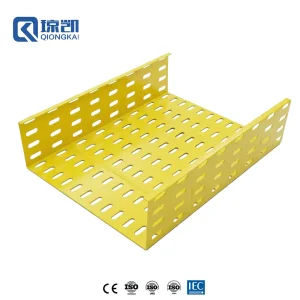
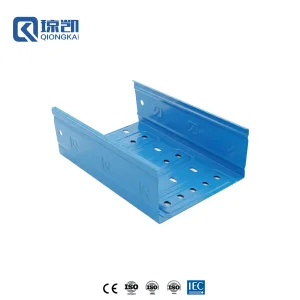
Flexible cable trunking is engineered with slotted, articulating, or corrugated geometry that accommodates non-linear pathways, dynamic equipment offsets, and minor structural shifts without requiring customized mitered elbow fittings. Rigid cable trays provide higher continuous span-load capacity across open structural bays.
All hot-dip galvanized parts are bathed in accordance with ISO 1461 or ASTM A123 standards. Ultrasonic thickness gauges calibrate zinc deposition across flat surfaces, welds, and cut edges to verify a minimum of 65–85 μm protection, supported by certified mill test reports (MTR) with every bill of lading.
Yes. With in-house automated tooling and high-tonnage punch presses, we regularly fabricate continuous internal split plate dividers for voltage separation, alongside client-specified ventilation patterns and custom stamped contractor identification logos.
Standard configurations (PG/HDG carbon steel) maintain typical factory production runs of 10 to 18 days for 20ft or 40ft high-cube ocean containers. Minimum order quantities typically begin at 500 meters for tailored custom profiles or full pallet quantities for catalog standards.
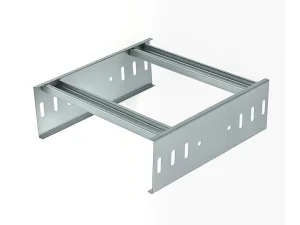
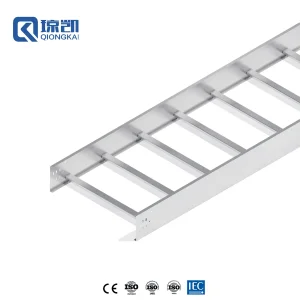
When power cables carry heavy current inside enclosed solid-bottom trunking, ambient heat build-up derates conductor current-carrying capacity (NEC 310.15). In high ambient environments, our engineering desk advises ventilated ladder trays or perforated ribbed profiles to facilitate continuous convective cooling.
Every export dispatch includes Certificate of Origin (Form E, CO, etc.), Mill Test Certificates (EN 10204 3.1), Third-Party Chemical Assay Records, Packing Lists with volumetric nested container schematics, and Bill of Lading documentation aligned with Incoterms (FOB, CIF, CFR, DDP).
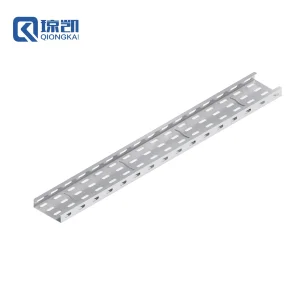
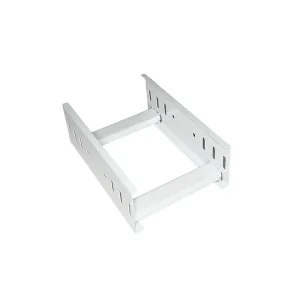
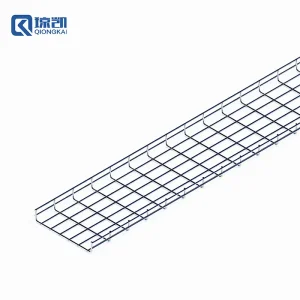
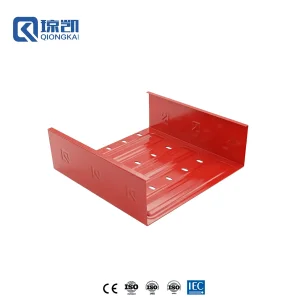
Engineered Conduits, Mesh Trays & Specialized Profiles
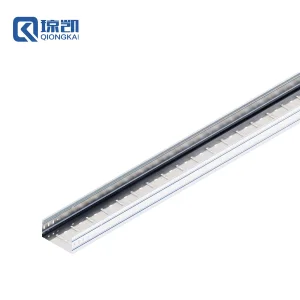
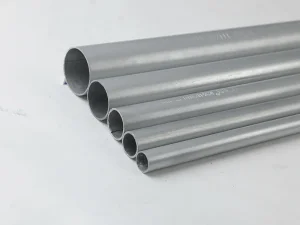
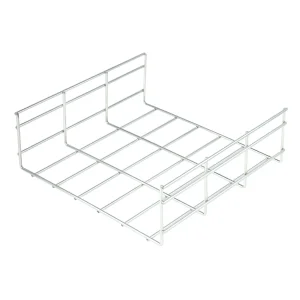
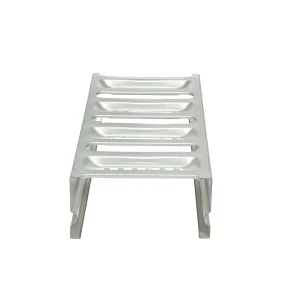
Explore complementary wire mesh baskets, heavy-duty perforated channels, and specialized steel conduit systems.
Request an Engineering Take-Off & Factory Price Schedule
Send your project Bill of Quantities (BOQ), CAD shop drawings, or load specification metrics. Our senior application engineers will provide a verified structural containment layout and direct manufacturing quotation within 24 hours.