
Factory-Engineered Cable Trays & Heavy-Duty Containment
Select from our certified industrial containment portfolio engineered for extreme mechanical loads, harsh coastal atmospheres, and zero-downtime mission-critical facilities.
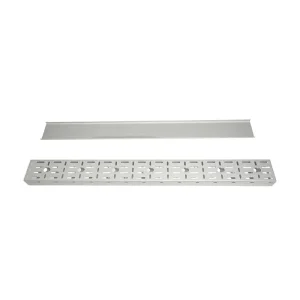
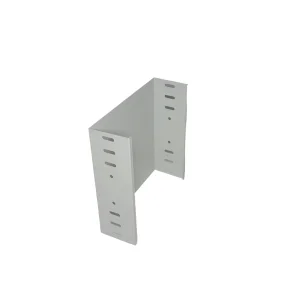
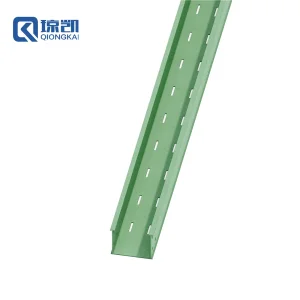
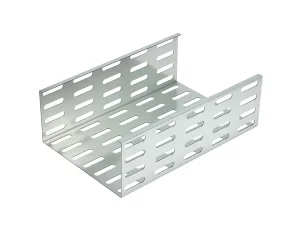
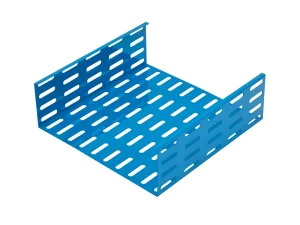
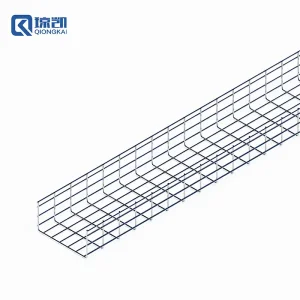
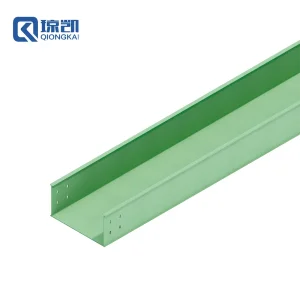
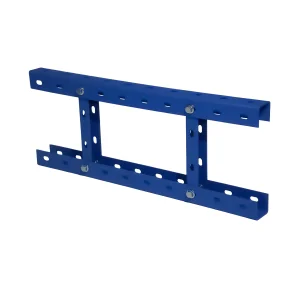
Retail Containment vs Mill Direct: Decoding the Sourcing Paradox
When contractors search for "Galvanised Cable Tray Screwfix", they search for instant availability and clear benchmark pricing. However, for industrial infrastructure projects exceeding 500 meters, trade retailer logistics encounter profound scaling, financial, and compliance limits.
Disintermediation & Sourcing Velocity
Retail trade distributors such as Screwfix, Toolstation, or local electrical wholesalers fulfill crucial spot demands: sudden repair works, minor light commercial fit-outs, or single-bundle needs under 20 meters. However, their catalog prices encapsulate severe retail markups: multi-tier distribution logistics, regional warehousing overhead, consumer packaging, and intermediary gross margins. When purchasing directly from primary manufacturing mills like Shanghai Qiongkai, EPCs eliminate 3 to 4 middle layers, redirecting procurement capital directly into higher steel gauges (1.5mm to 2.5mm vs retail 0.9mm) and bespoke hot-dip galvanizing baths.
Engineering Gauge & Deflection Realities
A primary structural limitation of trade counter galvanized trays is standard sheet gauge. Retail stock almost universally adopts light-duty 0.8mm - 1.0mm pre-galvanized coils to minimize shipping weight and retail freight fees. In industrial cabling corridors carrying 400V - 11kV cross-linked polyethylene (XLPE) power feeds, a 1.0mm tray experiences catastrophic structural sag at spans above 1.5 meters. Mill-engineered trays operate on rigorous L/200 deflection calculations under BS EN 61537, utilizing continuous roll-formed stiffening ribs, integrated swaged return flanges, and heavy plate thicknesses reaching up to 2.5mm.
Traceability, QA & Certified MTCs
Every commercial infrastructure tender—whether governed by FIDIC contract conditions, IEEE specifications, or national building regulations—mandates Mill Test Certificates (MTC) conforming to EN 10204 3.1. Trade counter retail packaging cannot supply heat batch traceability, tensile yield verification, nor verified salt spray chamber logs. Factory-direct procurement guarantees lot-tracked chemical compositions, zinc coating weight certifications (g/m²), ultrasonic weld tests for wire mesh systems, and complete seismic qualification reports.
Commercial Reality: Trade Retail Price vs Factory FOB Gate Index
Transparent comparison between standard UK/EU trade distributor rates (modeled on retail catalogue baselines) and direct mill manufacturing costs per linear meter, factoring in metallurgical coating thickness.
| Profile & Dimension (W x H) | Material & Coating Spec | Nominal Gauge (mm) | Trade Retail (Screwfix Est. / m) | Mill Direct FOB Price (m) | Zinc Weight / Micron (μm) | Typical Safe Load @ 2.0m Span |
|---|---|---|---|---|---|---|
| Perforated Tray 100 x 50mm | Pre-Galvanized (PG) BS EN 10346 | 1.0 mm (Retail) vs 1.2 mm (Mill) | £11.50 - £14.80 | $2.80 - $3.40 / m | Z275 (18-20 μm) | 42 kg / linear meter |
| Perforated Tray 200 x 50mm | Pre-Galvanized (PG) Z275 Coated | 1.2 mm (Standard Industrial) | £18.20 - £22.50 | $4.90 - $5.60 / m | Z275 (18-20 μm) | 68 kg / linear meter |
| Perforated Tray 300 x 100mm | Hot-Dip Galvanized BS EN ISO 1461 | 1.5 mm Heavy Gauge Structural | £34.00 - £42.00 | $9.10 - $11.20 / m | Batch HDG (65-85 μm) | 115 kg / linear meter |
| Heavy Duty Ladder 400 x 100mm | Batch HDG Post-Welded Carbon Steel | 2.0 mm Side Stringers + Welded Rungs | £56.00 - £68.00 | $16.50 - $19.80 / m | Batch HDG (85 μm+) | 190 kg / linear meter |
| Wire Mesh Basket 300 x 100mm | Electro-Galvanized (EG) / Passivated | 5.0 mm Longitudinal / Cross Wires | £15.80 - £19.50 | $4.20 - $5.10 / m | Electro-Zinc (8-12 μm) | 55 kg / linear meter |
| Wire Mesh Basket 300 x 100mm | Hot-Dip Galvanized After Welding | 5.0 mm Continuous High-Yield Rod | £26.00 - £33.00 | $6.80 - $7.90 / m | Batch HDG (60-75 μm) | 72 kg / linear meter |
| Cable Trunking Solid Flange 200 x 100mm | Pre-Galvanized with Screw/Turnbuckle Lid | 1.2 mm - 1.5 mm Lock-Formed Body | £28.50 - £36.00 | $7.40 - $8.90 / m | Z275 (20 μm) | 80 kg / linear meter |
Information Gain Procurement Insight: The data confirms that for typical commercial fit-outs requiring 1,500 meters of 300x100mm heavy-duty containment, purchasing through retail counter stock incurs a landed material cost of approximately £51,000 - £63,000 ($65,000 - $80,000 USD). Procuring containerized factory-direct freight from Qiongkai lowers direct material expenditure to roughly $13,650 - $16,800 USD, liberating more than 60% of budget allocation toward professional rigging and seismic bracing infrastructure.
Pre-Galv vs Hot-Dip Galvanizing: Chemical & Coating Life Cycles
Selecting cable containment without cross-referencing environmental corrosivity categories (ISO 12944-2 C1 through C5-M) leads to premature substrate failure, rust blooming, and electrical continuity degradation.
Pre-Galvanized Steel (Sendzimir Process)
Conforming strictly to BS EN 10346 (formerly BS 2989), pre-galvanized coils undergo continuous hot dipping prior to mechanical punching and slitting. This yields a zinc layer averaging 18 to 20 microns (Z275, providing 275 g/m² combined on both faces). While its uniform zinc-iron phosphate surface provides high aesthetic appeal for clean, dry interior environments (ISO 12944 C1/C2 classifications), exposed shear edges created during perforation rely solely on sacrificial cathodic edge protection. If installed outdoors or in high-humidity mechanical basements, galvanic depletion overpowers edge passivation, generating rust bleeding within 6 to 18 months.
Post-Fabrication Batch HDG (BS EN ISO 1461)
Batch Hot-Dip Galvanizing involves completely immersing fully stamped, cold-formed, and punched steel trays into an alkaline degreasing, acid pickling, fluxing, and molten zinc bath sustained at ~450°C (ASTM A123 / ISO 1461). This metallurgical reaction creates a true metallurgical bond composed of four distinct intermetallic iron-zinc alloy layers: Gamma ($\Gamma$, 75% Zn, 25% Fe), Delta ($\delta$, 90% Zn, 10% Fe), Zeta ($\zeta$, 94% Zn, 6% Fe), and Eta ($\eta$, 100% pure zinc outer shell). With a minimum mean thickness of 65 to 85 microns, batch HDG completely seals cut edge perforations, welding beads, and stamping seams, delivering 30 to 50 years of service life across ISO C3, C4, and industrial coastal C5 environments.
The Hidden Hazard: Zinc Whiskers in Data Halls
A critical engineering failure phenomenon frequently overlooked by retail buyers is the growth of "zinc whiskers" on electro-galvanized (EG) wire mesh trays and strut channels. Under internal compressive crystalline stress within bright electro-deposited zinc films, microscopic conductive zinc filaments (1-2 μm diameter, reaching up to 10mm length) break free and enter the forced laminar airflow of server racks, short-circuiting low-voltage server mainboards. Qiongkai solves this for Tier III & IV data centers by manufacturing dedicated pre-galvanized powder-coated (RAL 9005/7035) systems or passivated SS304/316 basket systems with zero risk of filament detachment.
Load Deflection Statics: BS EN 61537 Type II Structural Analysis
Safe containment design requires rigorous verification of bending moments, section modulus ($Z$), and connector splice positioning along continuous support runs.
Bending Moments & Splice Location
In standard electrical installations, cable trays do not behave as isolated simply-supported beams ($M_{max} = \frac{qL^2}{8}$); they act as multi-span continuous beams. Under continuous loading, bending moments invert over supports, producing peak negative moments ($\approx -0.105 qL^2$) and mid-span positive moments ($\approx +0.077 qL^2$). Placing joint connectors directly above a support bracket or precisely at mid-span constitutes an engineering failure. Qiongkai field installation drawings specify that splice joints must be anchored at 0.211 L from support centerlines—the theoretical inflection point of zero bending moment.
Longitudinal Reinforcing Ribs ($I_x$)
Material thickness is only one factor in structural stiffness. The second moment of area ($I_x$) governs deflection under load:
δ = (5 * q * L^4) / (384 * E * I_x)
Qiongkai rolls cold-formed continuous return flanges combined with dual longitudinal stiffening swages pressed directly into tray side plates. This increases the effective section modulus by up to 34% without increasing total steel tonnage, preventing the common "flange bowing" seen in unreinforced retail-grade trays.
Equipotential Bonding & Earth Continuity
Per IEC 61537 Section 11, metallic cable containment systems must serve as reliable supplementary equipotential bonding conductors or provide a low-impedance protective earth return path. Batch HDG coatings act as non-conductive zinc oxide barriers across mechanical joints. Qiongkai supplies serrated flange lock nuts and specialized copper earth continuity bonding straps, maintaining joint electrical resistance consistently below 0.05 Ω across the entire installation length.
Engineered on Site: Real-World Industrial Field Implementations
From coastal LNG processing terminals to massive aviation hubs and intense chemical agricultural complexes, our engineering systems are validated across extreme global operating conditions.
Shanghai Hongqiao International Airport
Environment: Underground utility tunnels and high-vibration terminal concourses.
Engineering Solution: Corrosion-resistant CT Series heavy-gauge cable trunking with integrated turnbuckle latches and fire-barrier partition dividers, guaranteeing zero EMC interference between baggage handling power feeds and flight telemetry networks.
Offshore LNG Terminal, State of Qatar
Environment: Extreme UV, saline marine salt spray, ambient heat reaching +52°C.
Engineering Solution: Custom profiled structural FRP (Fiberglass Reinforced Polymer) along with AISI SS316L cable ladder runs. Zero maintenance requirements after 7+ years of continuous coastal exposure.
Mega Livestock Complex, Paraguay
Environment: Concentrated ammonia vapors, daily high-pressure washdown with acidic detergents.
Engineering Solution: Cost-optimized heavy-duty pre-galvanized cable trays treated with secondary electrostatic thermoset epoxy barrier coatings, achieving exceptional service life at a competitive linear meter cost.
Industrial Rail Substation, Northern Italy
Environment: Strict CE / EN compliance, freezing winter conditions, heavy dynamic vibration.
Engineering Solution: Direct batch Hot-Dip Galvanized (HDG) cable ladders and 41x82 anti-seismic back-to-back strut channels manufactured with slotted return lips, shipped via factory-packed 40HQ container sets.
The Horizon of Containment: Zn-Al-Mg Alloys & BIM LOD 400
How next-generation sheet coatings and robotic automated roll-forming are redefining cable management economics and carbon footprint over the next decade.
Zinc-Aluminum-Magnesium (Zn-Al-Mg)
Known commercially under names such as Magnelis® or SuperDyma®, Zn-Al-Mg alloy coatings represent the greatest metallurgical advance in continuous coil protection in 40 years. Containing roughly 3.0% Magnesium and 3.5% Aluminum, the magnesium creates an extraordinarily dense, self-healing simonkolleite ($Zn_5(OH)_8Cl_2\cdot H_2O$) patina over sheared perforation edges. This delivers 4x to 5x higher corrosion resistance than standard pre-galv at identical coating weights, reducing embedded carbon by eliminating energy-intensive post-weld dipping kettles.
BIM LOD 400 Digital Twin Integration
Modern mega-datacenter construction requires total coordination inside Autodesk Revit and Navisworks to prevent spatial clashes between HVAC ducting, chilled water manifolds, fire protection mains, and electrical ladders. Qiongkai provides full Revit Family (.RFA) libraries modeled up to Level of Development (LOD) 400, including exact bolt-hole alignments, coupler splice allowances, and parametric bend radius calculators, slashing on-site field modifications by up to 70%.
Robotic Roll-Forming & Smart Fasteners
Traditional containment requires labor-intensive field nut-and-bolt assembly: four sets per coupler, eight per tee junction. Qiongkai is introducing patented snap-lock push-through splice plates and tool-less quick-connection covers. Coupled with CNC multi-head roll-forming lines capable of holding ±0.2mm dimensional tolerances over 6-meter continuous runs, installation crews achieve 40% faster corridor handovers compared with traditional bolted hardware.
Frequently Asked Questions: Commercial & Technical Insights
Authoritative answers to the key engineering, logistical, and commercial inquiries raised by EPC procurement managers and consulting engineers.
Why is factory-direct galvanized cable tray pricing 40% to 60% lower than buying from trade counters like Screwfix?
What is the definitive engineering difference between Pre-Galvanized (PG) and Hot-Dip Galvanized (HDG) cable trays?
How do British and International Standards (BS EN 61537 / IEC 61537) regulate safe working loads?
Can Qiongkai manufacture bespoke widths, depths, gauge thicknesses, and custom return flanges?
What is the realistic shipping lead time and container packing efficiency for export orders?
What are "zinc whiskers", and why are electro-galvanized (EG) trays restricted in data centers?
How should cable tray joints and coupler plates be positioned along a run?
What are the performance advantages of duplex coating systems (Galvanizing + Powder Coating)?
What QA documentation and Mill Test Certificates (MTC) accompany mill-direct orders?
Heavy Industrial Cable Support & Modular Systems
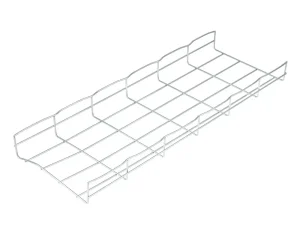
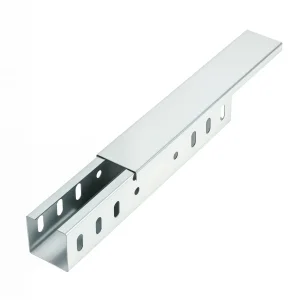
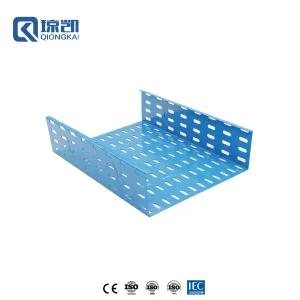
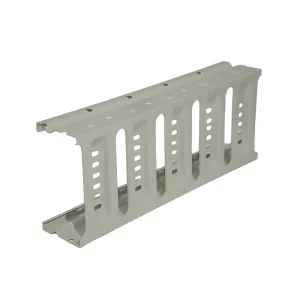
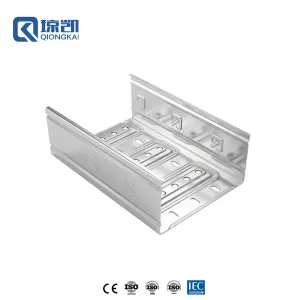
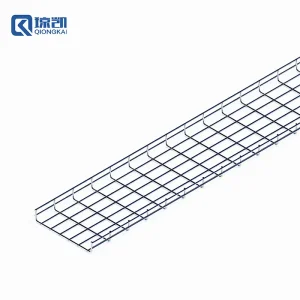
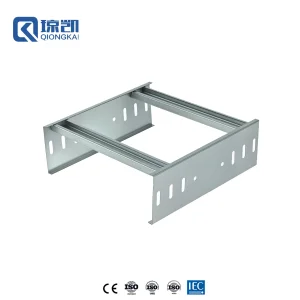
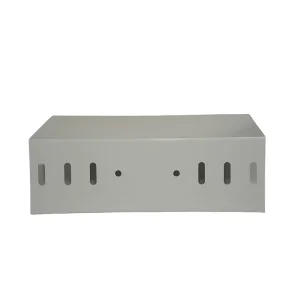
Explore our expanded containment range: reinforced wire basket pathways, enclosed dust-proof trunking channels, and custom powder-coated ladder racks.
Request a Factory Engineering Quote & Full Calculation Pack
Submit your Bill of Quantities (BOQ), single-line drawings, or required linear meter schedule. Our engineering division will return a complete project quotation including Safe Working Load calculations, container packing optimization schematics, and certified Mill Test validation.