
Buy Galvanized Steel Strut Channel Manufacturer & Factories
Engineered Cold-Roll Formed Framing, High-Tonnage Seismic Bracing, and Zinc-Diffusion Technologies Certified for Global Infrastructure, LNG Terminals, and Hyperscale Data Centers.
Engineered Cable Routing & Structural Strut Systems
Mill-direct procurement for heavy industrial contractors. Every channel, tray, and raceway is precision cold-formed from structural steel grades with traceable mill test certification.
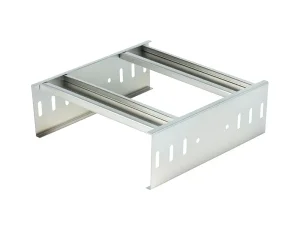
Buy Stainless Cable Ladder Factories, Price
Request Factory Quotation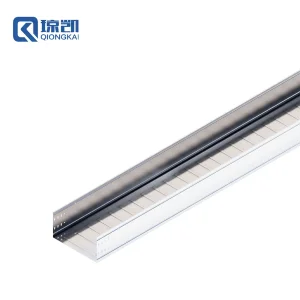
Wholesale Heavy Duty Cost Saving Reinforced Molded Pre Galvanized Cable Trunking Trough Type Channel 400*200 Manufacturers, Supplier
Request Factory Quotation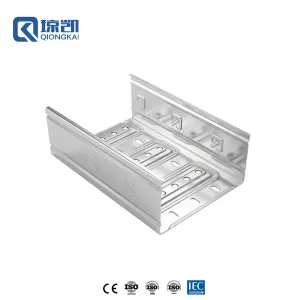
Buy Cost Saving Heavy Duty Reinforced Molded Pre Galvanized Cable Tray Logo Punched Reinforcement on Side Plates 300*100 Factory, Price
Request Factory Quotation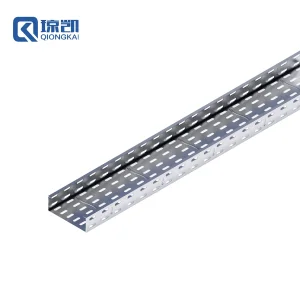
Buy Reinforced Medium duty Pre-galvanized Hot-dip-galvanized Perforated Cable Tray 150*50 Manufacturer, Price
Request Factory Quotation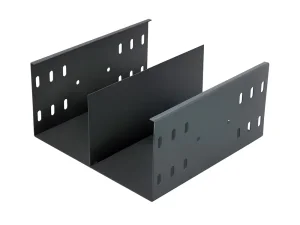
Buy Pre Galvanized Powder Coating Cable Trunking With Split Plate - Black Coating Manufacturers, Supplier
Request Factory Quotation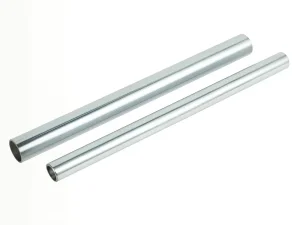
Wholesale Pre Galvanized conduit Supplier, Suppliers
Request Factory Quotation
Wholesale Cost Saving Heavy Duty Reinforced Molded Pre Galvanized Cable Tray 200*100 Supplier, Price
Request Factory Quotation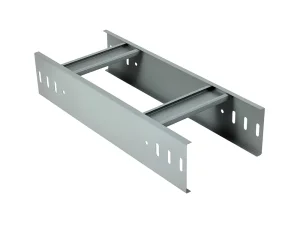
Buy Fireproof powder coated Pre galvanized ladder type cable tray Manufacturer, Manufacturers
Request Factory QuotationGlobal Galvanized Strut Channel Trends & Structural Demand Drivers
Evaluating structural shifts from legacy structural welding to cold-formed modular mechanical support systems in mission-critical facilities.
Total Installed Cost Reduction (TIC)
Traditional structural steel angle frames require on-site hot work permits, specialized welding labor, non-destructive testing (NDT), and post-weld touch-up painting. Modular galvanized strut channels (41×41mm / 41×21mm) eliminate hot-work risks entirely, cutting MEP installation labor schedules by up to 42% through bolted bracket assemblies.
Seismic Bracing & Dynamic Fatigue Compliance
Modern building codes, including ASCE 7-22, IBC Chapter 16, and Eurocode 8, require non-structural MEP components to withstand transverse, longitudinal, and vertical seismic accelerations. Serrated inward-pointing lips in back-to-back 41×82mm configurations create an interlocked mechanical friction bite with spring nuts, preventing lateral slip under cyclic dynamic loads.
Corrosion Classification Migration (C1 to CX)
Accelerating offshore renewables, coastal petrochemical facilities, and extreme industrial environments demand precise metallurgical finishes. Global EPC contracts have transitioned from basic electro-galvanizing (<8μm) to heavy continuous pre-galvanized coils (Z275/G90) and Hot-Dip Galvanizing (HDG to ISO 1461 / ASTM A123) with zinc coatings exceeding 65–85μm for 50-year service lifespans.
Global Enterprise Procurement Strategy: Mitigating Material & Compliance Risks
Procuring galvanized steel strut channels (also commercially termed metal framing channels or unistrut profiles) for Tier-1 global capital projects requires crossing beyond basic unit-price negotiations. EPC engineering directors and commercial managers evaluate vendor capabilities across dimensional stability, yield strengths ($f_y$), zinc-coating adhesion kinetics, and full-traceability QA/QC protocols. Below is the structural criteria framework applied when selecting heavy-duty strut framing manufacturers.
Structural Profile Geometry & Section Properties (Standard 41mm Series)
Cold-roll-formed strut channels rely on their profile design to resist bending moments ($M_x$), vertical deflections ($L/360$ or $L/240$), and lateral torsional buckling. The critical design element is the cold-formed inward lip with precision-rolled serrations (teeth). These serrations grip the matching grooved teeth of hardened carbon steel channel spring nuts (Grade 5 or Class 8.8), transforming point fasteners into rigid mechanical interlocks capable of sustaining dynamic slip loads up to 15 kN per fastener node.
| Profile Dimension (W×H) | Standard Gauges (Thickness) | Cross-Section Area ($A$) | Moment of Inertia ($I_x$) | Section Modulus ($S_x$) | Primary Application Matrix |
|---|---|---|---|---|---|
| 41 × 21 mm (Shallow) | 1.5mm (16 Ga) / 2.0mm (14 Ga) / 2.5mm (12 Ga) | 1.34 – 2.12 cm² | 0.86 – 1.25 cm⁴ | 0.72 – 1.05 cm³ | Low-clearance ceiling plenums, lighting grids, light cable trays |
| 41 × 41 mm (Standard Deep) | 1.5mm (16 Ga) / 2.0mm (14 Ga) / 2.5mm (12 Ga) | 2.15 – 3.45 cm² | 4.85 – 7.22 cm⁴ | 2.10 – 3.15 cm³ | General MEP supports, HVAC duct trapeze, solar mounting rails |
| 41 × 62 mm (Extra Deep) | 2.0mm (14 Ga) / 2.5mm (12 Ga) | 3.20 – 4.60 cm² | 12.40 – 17.50 cm⁴ | 3.80 – 5.20 cm³ | Heavy piping manifolds, large span cable trays, busduct runs |
| 41 × 82 mm (Back-to-Back BTB) | 2.0mm × 2 / 2.5mm × 2 | 4.30 – 6.90 cm² | 32.50 – 48.20 cm⁴ | 7.80 – 11.20 cm³ | Seismic 4-way sway bracing, high-load industrial pipe bridges, vertical risers |
Galvanization Chemistry: Pre-Galvanized vs. Hot-Dip Batch Galvanized (HDG)
A frequent error in procurement schedules is the misclassification of zinc finishes. Understanding the boundary between inline coil galvanizing and post-fabrication batch hot-dip galvanizing defines operational reliability across corrosive atmospheres (C1 to C5-M per ISO 12944):
- Pre-Galvanized (Continuous Mill Galvanized / Sendzimir Process, ASTM A653 / EN 10346): Hot-rolled or cold-rolled structural steel coils pass continuously through a molten zinc bath before roll-forming. Coating weights range from Z140 (140 g/m²) to Z275 (G90, 275 g/m², ~20μm per side). The surface finish is uniform, smooth, and aesthetic. Slit edges benefit from cathodic sacrificial protection where zinc ions migrate to heal exposed steel edges up to 2.0mm thickness in moderate humidity. Best suited for interior HVAC, commercial office MEP, and controlled environment data centers.
- Hot-Dip Galvanized After Fabrication (Batch HDG, ASTM A123 / ISO 1461): The raw steel channel is first stamped, slotted, deburred, chemically pickled in hydrochloric or sulfuric acid, fluxed, and fully submerged into a molten zinc kettle at ~450°C (842°F). This produces a metallurgical bond comprised of iron-zinc alloy layers (Gamma, Delta, and Zeta phases) capped by pure zinc (Eta phase). Minimum average coating thickness ranges from 65μm to 85μm (450–610 g/m²), encapsulating every edge, interior hole radius, and weld seam. Essential for outdoor substations, petrochemical refineries, chemical processing units, and coastal infrastructure.
Turnkey Support Solutions for Critical Enterprise Sectors
Engineered channel assemblies configured for extreme temperature swings, dynamic mechanical vibrations, and hazardous chemical exposures.
Hyperscale Data Centers & Telecommunications
Overhead ceiling grids in modern server halls require uncompromised structural rigidity to carry high-density fiber runner baskets, busway power distribution tracks, and hot-aisle containment curtains. Qiongkai supplies 41×41mm and back-to-back 41×82mm modular trapeze assemblies powder-coated over pre-galvanized substrates (RAL 9005 black / custom RAL) to ensure cleanroom aesthetics and zero zinc whisker formation.
Utility-Scale Solar PV & Energy Storage (BESS)
Solar tracking brackets, rooftop racking structures, and inverter skid platforms demand high torsional resistance against cyclical wind buffeting. Continuous-punched slotted strut profiles manufactured from high-yield structural steel (S350GD / ASTM A1011 SS Gr 50) with heavy HDG or Zinc-Aluminum-Magnesium (ZAM) alloy coatings provide a 25-year design life in severe agricultural and desert UV conditions.
Offshore LNG Plants & Marine Terminals
In Qatar offshore LNG modules and marine terminals, salt-laden chloride fog rapidly destroys ordinary galvanized coatings. For these extreme C5-M / CX settings, Qiongkai delivers specialized structural solutions: heavy-gauge deep strut framing combined with customized SS316L (EN 1.4404) channels and vinyl-ester composite FRP supports that eliminate galvanic corrosion between dissimilar metals.
Rail Transit, Underground Tunnels & Traction Power
Subway tunnels and high-speed rail corridors face rapid pressure pulses from passing train piston effects. Strut channel networks carrying signaling cables and overhead contact system (OCS) conduits utilize heavy-duty 2.5mm / 12-gauge profiles mounted via seismic brackets, with fire-resistive ratings maintaining load capability under EN 1363-1 furnace curves.
Factory Production Ecosystem: Shanghai Qiongkai Manufacturing Excellence
Headquartered in the Songjiang Port Science and Technology City of Shanghai, Shanghai Qiongkai Industry Co., Ltd. (founded 2005) operates an integrated manufacturing base of 3 specialized factory campuses encompassing over 30,000 square meters of automated production space. Located adjacent to the deep-water container terminals of Yangshan and Waigaoqiao, our facility provides optimized export shipping logistics for mega-tonnage infrastructure orders across Europe, the Middle East, Southeast Asia, and the Americas.
Continuous Cold Roll-Forming & Hydraulic Punching Equipment
Our workshops house 12 complete, continuous automated roll-forming lines equipped with multi-station precision forming rollers. The raw strip steel is straightened via hydraulic precision levelers, passes through servo-fed CNC high-speed punching presses (stamping slotted holes, round holes, or anti-vibration knockouts with 0.1mm dimensional center tolerances), and undergoes gradual incremental cold-forming through 16 to 22 forming passes. This gradual roll progression avoids localized work-hardening microcracks along the channel radii, ensuring uniform yield strength and exact flange lip alignment throughout continuous 3-meter or 6-meter bundle lengths.
Laboratory Testing & Third-Party Certification (E-E-A-T Reliability)
Every mill production batch undergoes rigorous internal QA verification before release, complemented by accredited third-party test reports (SGS, TUV, Intertek):
- Tensile & Yield Strength Verification (ASTM E8 / ISO 6892-1): Verifying minimum yield strength ($R_{p0.2} \ge 250\text{ MPa}$ up to $355\text{ MPa}$) and ultimate tensile strength ($R_m$) to confirm compliance with published maximum uniform beam loads.
- Coating Mass & Thickness Testing (ISO 2178 / ASTM B499): Magnetic eddy-current gauges verify that hot-dip galvanized coating thicknesses meet or exceed specified contract limits ($>65\mu\text{m}$ / $>500\text{ g/m}^2$).
- Neutral Salt Spray Testing (NSS per ASTM B117 / ISO 9227): In-house accelerated environmental corrosion chambers validate red-rust resistance up to 720 hours for pre-galvanized parts and 1,500+ hours for heavy batch hot-dip galvanized strut channels.
- Channel Nut Slip Resistance & Pullout Testing: Evaluating ultimate longitudinal slip limits according to MFMA-4 standards to certify anti-seismic assembly stability.
Next-Generation Strut Engineering: ZAM Alloys, BIM LOD 400 & Decarbonized Steel
Pioneering green metallurgy and smart digital engineering to meet net-zero construction mandates.
Zinc-Aluminum-Magnesium (ZAM) Coatings
Traditional batch hot-dip galvanizing produces carbon emissions through high furnace temperatures. Qiongkai is expanding roll-forming using continuous coated Zinc-Aluminum-Magnesium (Zn-Al-Mg) strip steel. The ternary eutectic microstructure creates a dense, insoluble simonkolleite patina that migrates over cut edges, delivering 5× to 10× the corrosion resistance of standard pre-galvanized steel with significantly reduced embodied carbon.
BIM LOD 400 Parametric Libraries & Modular Prefab
To eliminate site waste, Qiongkai provides project contractors with native Revit and Tekla BIM object libraries (Level of Development 400). Mechanical designers can simulate exact 3D cable tray pathways, generate automated Bills of Materials (BOM), and order custom factory-cut lengths and pre-assembled seismic trapeze kits shipped directly to site coordinates.
High-Strength, Low-Alloy (HSLA) Steel Lightweighting
By engineering structural channels with advanced HSLA grades (yield strengths $\ge 420\text{ MPa}$), our structural team reduces metal gauge thickness while preserving moment of inertia. This cuts overall structural dead loads by 18–24%, reducing shipping freight volume and streamlining ceiling anchor load distributions.
Specialized Cable Trays, Brackets & Support Accessories
Complete modular ecosystem: cantilever arms, seismic framing fittings, FRP systems, and heavy-duty reinforced trays.
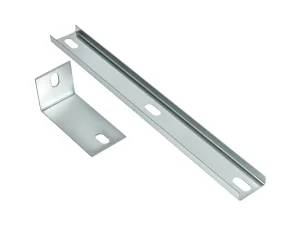
Wholesale Pre Galvanized L-shapedbracket Factories, Price
Request Factory Quotation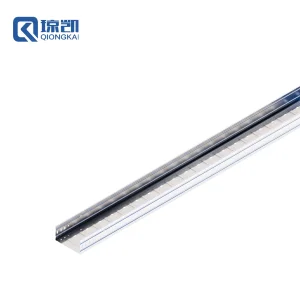
Wholesale Cost Saving Heavy Duty Reinforced Molded Pre Galvanized Cable Tray with less perforation 200*100 Factory, Price
Request Factory Quotation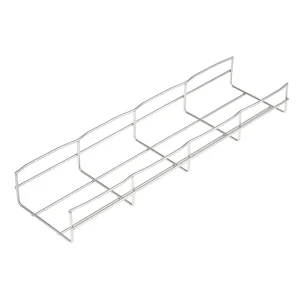
Wholesale Stainless cable tray50mm Manufacturers, Factories
Request Factory Quotation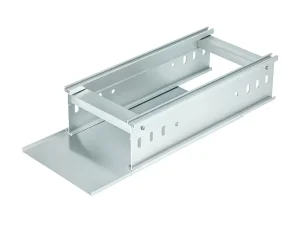
Buy Pre Galvanized ladder type cable tray Gi and HDG customizable reinforcing Manufacturers, Suppliers
Request Factory Quotation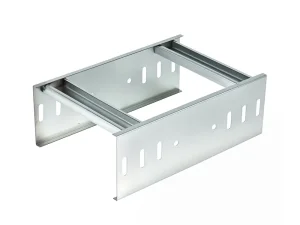
Buy 304 and 316 stainless steel ladder type cable tray customizable perforated design Manufacturer, Factory
Request Factory Quotation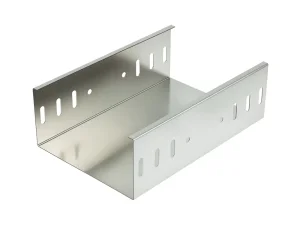
Buy Stainless Cable Tray With Perforation Supplier, Factories
Request Factory Quotation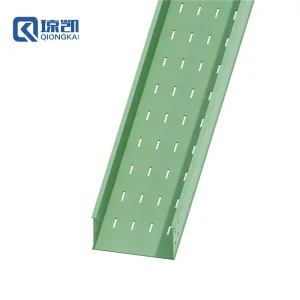
Wholesale FRP Perforated Cable Tray 400*200 Manufacturer, Factory
Request Factory Quotation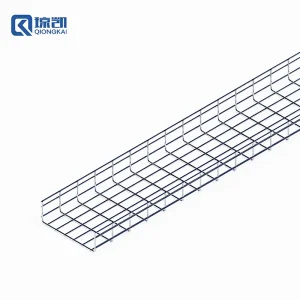
Wholesale Pre-galvanized Basket Cable Tray 300*100 Manufacturers, Price
Request Factory QuotationFrequently Asked Questions: Technical & Sourcing Specifications
Clear answers for EPC structural engineers, electrical estimators, and global procurement specialists.