
High-Performance GI & Pre-Galvanized Cable Trays
Precision engineered cable trunking, perforated channels, wire mesh grids, and heavy-duty ribbed solutions certified for mission-critical industrial distribution.
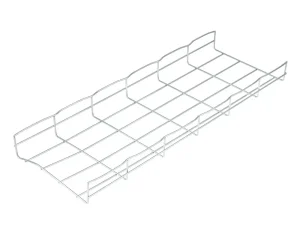
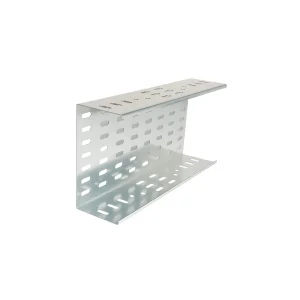
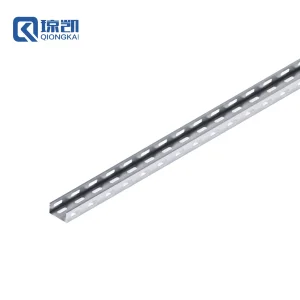
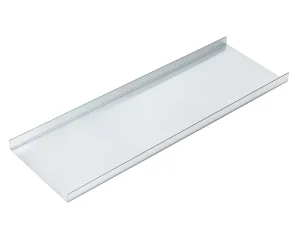
Global Industrial Landscape of Galvanized Iron (GI) Cable Management
Analyzing procurement strategies, metallurgical life-cycle costing, and international supply-chain mechanics across modern power, transport, and processing infrastructure.
Supply Chain Resiliency & Raw Material Dynamics
Global infrastructure investments demand robust, scalable, and non-combustible cable containment systems. The industrial GI cable tray market relies heavily on structural carbon steel coils (DX51D+Z, Q235B, ASTM A1011) treated with continuous or post-fabrication molten zinc bathes. Mill-level price fluctuations, carbon border adjustment mechanisms (CBAM), and regional metallurgical availability dictate global supply lines. Sourcing directly from high-capacity manufacturing centers ensures traceability from hot-rolled coil slitting to precision roll-forming.
Total Cost of Ownership (TCO) Economics
Specifying engineers prioritize 30-to-50-year maintenance-free operational lives over superficial initial purchase price savings. While pre-galvanized (PG) coatings (15–20µm) provide optimal cost structures for conditioned indoor facilities, hot-dip galvanized (HDG) post-fabrication dipping provides a self-healing sacrificial zinc carbonate layer (>65–85µm). This metallurgical barrier prevents premature localized pitting, galvanic corrosion, and cataclysmic electrical containment failures across aggressive atmospheric environments.
Compliance with Stringent Engineering Norms
Global Engineering, Procurement, and Construction (EPC) consortiums must adhere strictly to harmonized structural norms. Primary references encompass IEC 61537 (Cable management - Cable tray systems and cable ladder systems), NEMA VE-1 / CSA C22.2 No. 126.1 (Metal Cable Tray Systems), and BS EN ISO 1461 (Hot dip galvanized coatings on fabricated iron and steel articles). Ensuring full earth-continuity bonding, safe working load (SWL) verification, and edge-burr elimination prevents cable sheath rupture during high-tension pulling.
Engineering Selection Guide: Galvanized & High-Alloy Treatments
Comparative analysis of corrosion resistance categories (ISO 12944), structural load capacities, and fire resistance integrity under real-world operating loads.
| Material / Treatment Type | Standard Specification | Zinc / Protective Thickness | ISO 12944 Corrosivity | Primary Industrial Environments | Design Life Expectancy |
|---|---|---|---|---|---|
| Pre-Galvanized (PG) Carbon Steel | EN 10346 / ASTM A653 CS | 15 – 20 µm (Z180 - Z275) | C1 – C2 (Low) | HVAC ceiling plenums, commercial office complexes, IT server cleanrooms | 25+ Years (Dry Interior) |
| Hot-Dip Galvanized (HDG) Steel | BS EN ISO 1461 / ASTM A123 | 65 – 85 µm (Batch Dipped) | C3 – C4 (Medium/High) | Outdoor switchyards, chemical processing, highway tunnels, petrochemical plants | 40–60 Years (Outdoor/Harsh) |
| Electro-Galvanized (EG) Wire Mesh | ASTM B633 / ISO 2081 | 8 – 12 µm (Zinc Electroplate) | C1 (Controlled) | Data halls, under-floor plenum cable distribution, telecom switching stations | 15–20 Years (Controlled RH) |
| Powder-Coated over PG / HDG | Qualicoat / ISO 12944-5 | 60 – 100 µm Poly/Epoxy Topcoat | C3 – C4 (Duplex) | Architectural applications, color-coded voltage segregation (RAL codes) | 35+ Years (Enhanced Shielding) |
| Stainless Steel (SS304 / SS316L) | ASTM A240 / EN 10088-2 | Passivated Chromium Oxide Layer | C5-I / C5-M (Extreme) | Offshore oil & gas platforms, marine coastal splash zones, clean food processing | 75+ Years (Corrosive Halides) |
| Fiberglass Reinforced Polymer (FRP) | ASTM D3917 / UL 94 V-0 | Thermoset Isophthalic / Vinyl Ester | CX (Extreme Acidic) | Wastewater treatments, fertilizer plants, pickling tanks, heavy chlorination zones | 50+ Years (Non-Conductive) |
Structural Deflection Mechanics (L/200 vs. L/360)
Under NEMA VE-1 standards, safe working loads (SWL) are dictated by structural beam depth, flange geometry, and reinforcing rib design. Mid-span deflection under design cable loads must not exceed span length divided by 200 (L/200) for standard industrial cabling, or L/360 for high-voltage and fiber optic pathways where optical micro-bending losses or joint stresses must be eliminated. Qiongkai designs incorporate cold-formed stiffener returns that increase the section modulus ($Z_x$) by up to 34% without escalating dead-load steel mass.
Earthing & Fault-Current Continuity
A crucial safety criterion per IEC 61537 Class C/D is the electrical impedance across cable tray joints. Untreated hot-dip galvanized surfaces can form insulating zinc oxides over time. Our precision manufacturing includes pre-punched grounding lug locations, serrated flange nuts, and copper bonding jumpers that guarantee end-to-end resistance below 0.005 Ω. This rapid fault-current path triggers upstream circuit breakers instantly during insulation failure, protecting expensive automation systems.
Proven Infrastructure Applications Across Five Continents
From extreme Middle Eastern thermal cycles to European coastal installations, our engineered cable management systems deliver verified reliability.
Shanghai Hongqiao International Airport
Challenge: Managing high-density power distribution and baggage handling control circuitry in non-accessible ceiling plenums requiring smoke toxicity limits and vibration resistance.
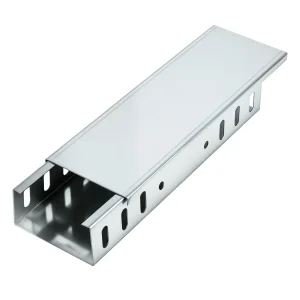
Delivered Solution: Corrosion-resistant CT Series GI Cable Trunking fabricated with captive covers, quick-lock couplers, and zinc-iron alloy surface passivation, ensuring zero flame spread and rapid circuit maintenance access.
Qatar LNG Terminal & Coastal Plants
Challenge: Extreme UV exposure, ambient temperatures surpassing 50°C, and airborne maritime chlorides creating severe C5-M atmospheric corrosive attack.
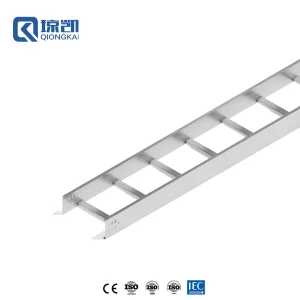
Delivered Solution: Custom profiled section support structures combining Heavy-Duty Structural HDG steel paired with specialized pultruded FRP-lined cable ladders that resist salt encrustation, preventing thermal sag across 6-meter span intervals.
Modern Agro-Industrial Facility, Paraguay
Challenge: Heavy airborne ammonia ($NH_3$), elevated humidity, and organic acids inside a mega livestock complex combined with constrained budget parameters.
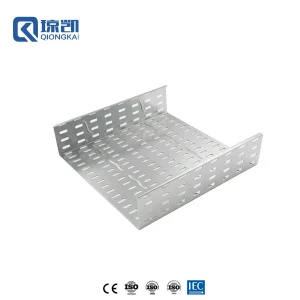
Delivered Solution: Value-engineered Heavy-Duty Reinforced Molded Pre-Galvanized Cable Trays with dense micro-perforations for heat dissipation, cutting initial capital expenditure by 28% without sacrificing structural durability.
Industrial Infrastructure Projects, Italy
Challenge: Strict European Union CE / EN standards requiring certified batch galvanizing, trace material test certificates (MTC 3.1), and rapid modular assembly.
Delivered Solution: Continuous containerized export shipments of HDG Perforated Cable Trays complete with factory-fitted slotted splice plates, reducing contractor installation times by over 35% on site.
Technology Roadmap: The Next Decade in Cable Containment
Addressing AI data center density, automated off-site construction, and circular metallurgical decarbonization.
BIM Level 3 & Digital Twin Integration
Modern mega-projects mandate comprehensive Building Information Modeling (BIM). Our product lines are pre-modeled into parametric Revit and IFC families, integrating real-time collision detection, weight distribution analytics, and automated bill-of-materials generation. Future revisions will tie physical cable trays via engraved QR/NFC tracking tags directly to facility lifecycle digital twins for instantaneous maintenance logs.
Zinc-Whisker Mitigation in Hyperscale AI Facilities
High-frequency GPU clusters in artificial intelligence server farms require total elimination of microscopic zinc filaments (zinc whiskers) generated by post-electroplating stress relief. Our engineering roadmap implements thermally diffused zinc-iron alloy coatings and precision continuous coil-galvanized steels that pass rigorous 1000-hour environmental thermal-cycling tests without microscopic zinc shedding.
Decarbonized Metallurgy & Circularity
By 2030, Qiongkai's manufacturing pipeline targets 100% electric arc furnace (EAF) carbon steel sourcing, reducing Scope 3 embodied carbon emissions by over 55%. Closed-loop fluxing baths in our hot-dip processes reclaim 92% of zinc skimmings, aligning with international Net-Zero building mandates, LEED v4.1 certification requirements, and BREEAM sustainability standards for tier-one international developments.
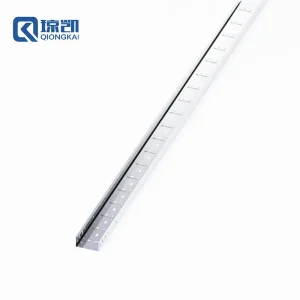
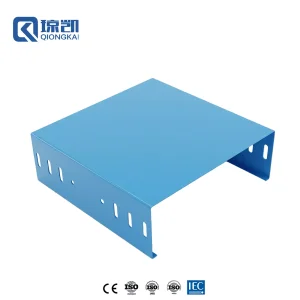
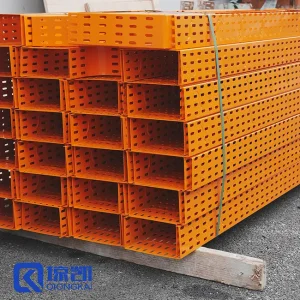
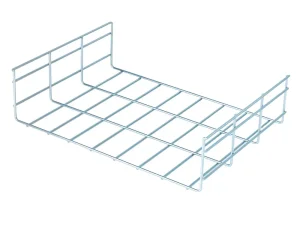
Engineered Channels, Brackets & Support Systems
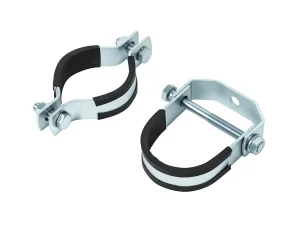
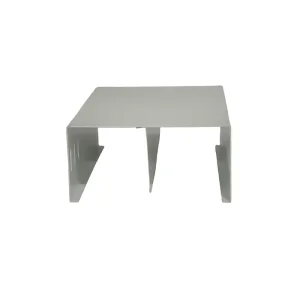
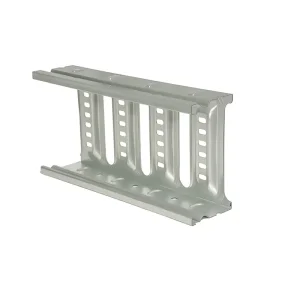
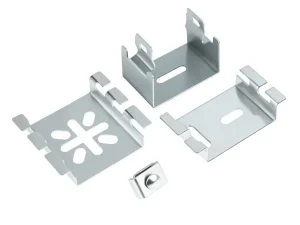
Discover our advanced split cable trunking, architectural powder-coated lines, anti-seismic pipe clamps, and structural hardware accessories.
End-to-End Manufacturing QA & Metrology Validation
How Qiongkai enforces zero-defect engineering tolerances from mill raw materials to site-ready export packaging.
Spectrometric & Zinc Coating Testing
Every steel batch undergoes strict optical emission spectroscopy (OES) to inspect carbon, manganese, phosphorus, and sulfur content. Post-galvanizing zinc mass is systematically tested using magnetic induction thickness gauges per ASTM B499 and microscopic cross-section verification per ISO 1460. Our testing ensures that zinc coatings achieve unbroken, uniform metallurgical intermetallic layers (Gamma, Delta, and Zeta phases) bonded directly to the iron base.
Full-Scale Dynamic Load Destruction Rig
We perform full-span destructive and non-destructive load tests in our Shanghai testing facility. Trays are configured with spans ranging from 1.5 to 6.0 meters, loaded with calibrated lead ingots or hydraulic rams to measure deflection characteristics under both simple support and continuous beam configurations. We calculate the ultimate safety factor (≥ 1.5 per NEMA VE-1), ensuring trays never experience plastic buckling under extreme emergency overfill conditions.
Export Seaworthy Packaging & Fast Lead Times
Serving ports including Yangshan and Waigaoqiao in Shanghai, our export logistics team utilizes automated bundle strapping, high-density polyethylene moisture-barrier wrap, corner edge protectors, and treated fumigated timber pallets. Trays are nested precisely to maximize shipping container cubic volume, driving down intercontinental ocean freight costs for international EPC projects while ensuring zero scratching of delicate zinc surfaces.
Frequently Asked Questions by EPC Engineers & Procurement Directors
Addressing metallurgical properties, installation mechanics, seismic bracing calculations, and international trade compliance.
What is the definitive engineering difference between Pre-Galvanized (PG) and Hot-Dip Galvanized (HDG) GI cable trays?
Pre-Galvanized (PG) steel (often designated mill galvanized per ASTM A653 / EN 10346) is continuously passed through a molten zinc bath at the steel mill prior to slitting, stamping, and roll-forming. It features a smooth, visually pristine surface with a coating thickness generally between 15µm to 20µm (Z180 to Z275). It is optimal for indoor, temperature-controlled, low-humidity environments (ISO 12944 C1 and C2 categories).
Hot-Dip Galvanized (HDG) cable trays, in contrast, are completely fabricated (punched, bent, cut, and welded) from bare carbon steel (such as Q235B or ASTM A1011) and subsequently immersed entirely into a molten zinc bath at approximately 450°C per BS EN ISO 1461 or ASTM A123. This batch process coats all cut edges, perforations, and weld seams, creating a multi-layer zinc-iron alloy barrier exceeding 65µm to 85µm thickness. HDG is mandatory for outdoor, industrial, chemical, marine, and high-humidity environments (C3 to C5-M).
How do you calculate safe working loads (SWL) and allowable span deflection under NEMA VE-1?
NEMA VE-1 establishes standardized structural load test methodologies. Safe Working Load (SWL) represents the total cable load (lb/ft or kg/m) that the tray can safely support when installed as a simple beam over a specified support span distance (e.g., 6 ft, 10 ft, 12 ft, 20 ft or 1.5m to 6.0m), without exceeding a permanent set or safety factor failure under 1.5 times the rated load.
Allowable deflection ($f$) is typically restricted to $f \le L/200$, where $L$ is the distance between support centers. For critical installations (such as fiber optic distribution or sensitive signal lines), engineers often specify tighter criteria of $f \le L/360$. Qiongkai engineers provide certified structural load-deflection curves for every catalog profile, ensuring compliant support bracket spacing during structural coordination.
What causes "Zinc Whiskers" and how does Qiongkai prevent them in mission-critical data centers?
Zinc whiskers are tiny filamentary single crystals that grow spontaneously from electro-galvanized (EG) steel coatings over time due to compressive mechanical stresses in the zinc electroplate layer. In data centers, airflow can dislodge these conductive micro-filaments, which then circulate into server power supplies and motherboards, triggering destructive short circuits.
Qiongkai prevents zinc whiskers by prescribing either Pre-Galvanized (PG) continuous mill hot-dipped coil or specialized proprietary powder-coated finishes over continuous-galvanized substrates for data hall pathways. Hot-dip galvanizing produces a crystalline metallurgical bond free of internal compressive electrodeposition stresses, completely eliminating zinc-whisker generation.
How should site contractors manage cut edges and drill holes to maintain corrosion warranty?
While galvanizing provides sacrificial cathodic protection (where surrounding zinc oxidizes preferentially to protect minor exposed steel), cut edges or field-drilled holes exceeding 2mm in width must be treated in accordance with ASTM A780 / BS EN ISO 1461 Annex C.
Site technicians must deburr all cuts with a hand grinder to prevent cable snagging, remove metal filings and moisture, and apply an approved high-zinc cold-galvanizing compound containing a minimum of 90% to 95% metallic zinc dust in the dry film. Apply two coats to achieve a minimum dry film thickness (DFT) equal to the original coating specification.
How do cable trays accommodate structural building expansion and thermal movement?
Steel cable trays expand and contract under temperature swings. The coefficient of thermal linear expansion for carbon steel is approximately $12 \times 10^{-6}\ \text{m}/(\text{m}\cdot^\circ\text{C})$. In long linear runs (such as outdoor industrial pipe racks or switchyards) with ambient temperature variations of 50°C, a 100-meter continuous run will experience 60mm of linear dimensional change.
We supply specialized thermal expansion splice plates fitted with elongated slotted holes and Teflon washers, installed without overtightening bolts at calculated intervals (typically every 24 to 30 meters). Additionally, trays crossing building structural seismic or expansion joints must utilize expansion plates combined with flexible copper bonding straps to preserve electrical earth continuity.
What certification and inspection documents are provided with international export shipments?
Every industrial export shipment from Shanghai Qiongkai Industry Co., Ltd. is accompanied by a full traceability package:
- Material Test Certificates (MTC / EN 10204 Type 3.1) verifying steel chemical heat analysis and mechanical tensile/yield properties.
- Hot-Dip Galvanizing Inspection Reports documenting magnetic dry film thickness (DFT) readings in compliance with ASTM A123 / ISO 1461.
- IEC 61537 / CE Conformity Declaration verifying electrical conductivity and safe working load (SWL) compliance.
- Factory Acceptance Test (FAT) & Pre-Shipment Inspection (PSI) logs including photographic verification of nested packaging, dimensional verification, and container loading tallies.
Can Qiongkai manufacture customized cable tray profiles, non-standard heights, and punch patterns?
Yes. Operating 12 automated roll-forming lines and over 60 heavy-duty hydraulic and CNC punching machines, we regularly fabricate bespoke cable containment profiles. Examples include custom side flange heights (from 25mm up to 200mm), non-standard widths (50mm to 1200mm), gauge thicknesses (1.0mm to 3.0mm), dense perforation configurations for enhanced airflow, and custom profiled sections as supplied to the offshore LNG terminal in Qatar.
Request a Customized Cable Management BOQ & Technical Quote
Whether you are designing a high-density AI data center, an offshore energy terminal, or an international airport transport hub, Qiongkai's engineering team provides full system optimization, span-load verification, and direct factory pricing.