
PG / Reinforced
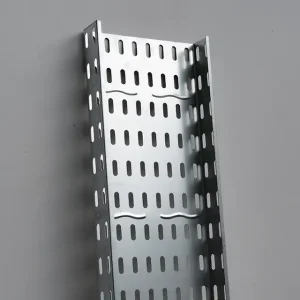
Precision cold-roll formed, anti-corrosion rated cable containment systems tested to NEMA VE 1 and IEC 61537 standards for critical mechanical and electrical installations.
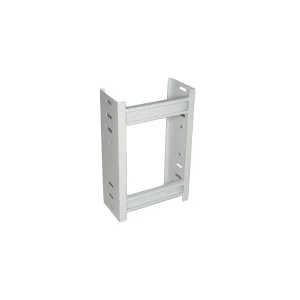
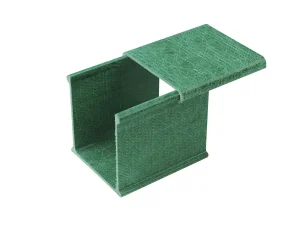
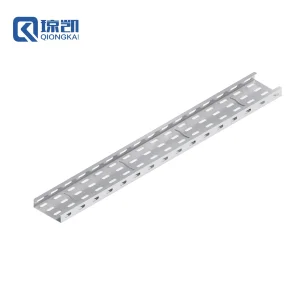
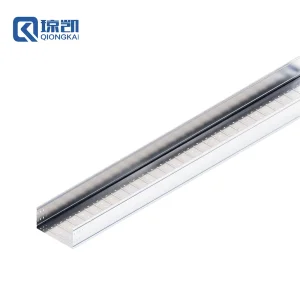
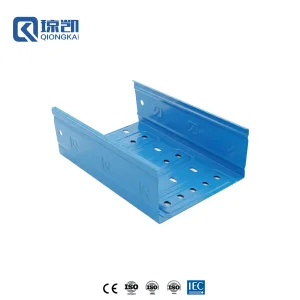
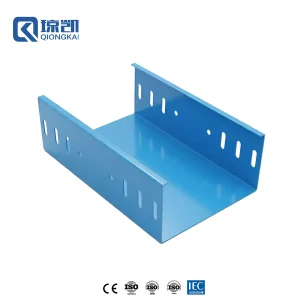
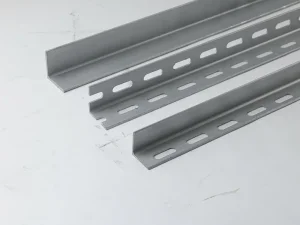
Evaluating the multi-billion-dollar cable tray infrastructure market across hyperscale compute, maritime energy terminals, and utility electrification.
Years Engineering Excellence (Since 2005)
Total Workshop & Galvanizing Area
Continuous Automated Roll-Forming Lines
Heavy-Duty CNC Stamping & Bending Units
The global transition toward artificial intelligence data clusters demands uncompromised current-carrying infrastructure. Modern AI GPU clusters run power densities exceeding 40 kW to 100 kW per rack, translating to dense medium-voltage feeds and bus duct drop lines. Hot dip galvanized ladder trays provide the mechanical rigidity, thermal dissipation through 70%+ open free-air ventilation, and electromagnetic shielding essential to eliminate signal harmonics and thermal runaway in mission-critical facilities.
Liquefied natural gas (LNG) liquefaction trains, offshore drilling jackets, and floating production storage and offloading (FPSO) units operate in severe maritime salt atmospheres classified under ISO 12944-2 as C5-M or CX. In these chloride-saturated environments, conventional paint or electro-plating degrades within months. Specifying heavy-coat hot-dip galvanizing with strict control over zinc-iron alloy phases guarantees multi-decade design lifespans without costly mid-cycle remediation shutdowns.
Global Engineering, Procurement, and Construction (EPC) firms encounter substantial project delivery risks when routing orders through commercial intermediaries. Intermediaries introduce margin markups, lack direct metallurgical oversight over molten zinc kettles, and obscure Mill Test Certificates (MTC). Sourcing directly from verified manufacturers like Shanghai Qiongkai Industry guarantees ISO 9001 quality audits, raw material traceability to prime steel mills, and precision dimensional tolerances.
Understanding diffusion metallurgy, intermetallic phase bonding, and global testing benchmarks across ASTM, ISO, and NEMA frameworks.
Hot-dip galvanizing is not a superficial mechanical coating; it is a high-temperature diffusion reaction at 445°C–455°C (835°F–850°F). When cleaned carbon steel is immersed in molten zinc, iron and zinc react to form metallurgically bonded crystalline layers: the Gamma phase (75% Zn, 25% Fe), the Delta phase (90% Zn, 10% Fe), and the Zeta phase (94% Zn, 6% Fe), topped by the ductile pure Eta zinc layer (100% Zn). The Zeta layer is actually harder than the base carbon steel itself (microhardness ~179 DPN vs. base steel ~159 DPN), providing unmatched scratch and abrasion resistance during rough site pulling of heavy armoured power cables.
Should field modifications occur—such as drilling holes for drop rods or trimming lengths with cold saws—the zinc coating provides sacrificial cathodic protection. Because zinc has a lower standard reduction potential (-0.763V) than iron (-0.440V), zinc preferentially oxidizes, forming a barrier of insoluble zinc hydroxycarbonates over raw exposed steel edges up to 2mm in width. In contrast, pre-galvanized (PG) coatings (averaging 15–20 µm) or electro-galvanized (EG) finishes (5–10 µm) lack sufficient zinc mass, leading to immediate undercut corrosion and structural embrittlement.
Engineers specifying cable management systems must rigorously verify structural deflection under full design loads. Under NEMA VE 1 and IEC 61537, maximum allowable deflection is governed by $d_{max} = L / 200$ or $L / 100$, where $L$ is the span distance between support bents. Shanghai Qiongkai integrates cold-rolled stiffening ribs into tray side rails and rung profiles, raising the section modulus ($Z_x$) and moment of inertia ($I_x$) by over 32% compared to flat-sheet fabrications. This geometry enables wider spans up to 6 meters, significantly reducing structural steel framing and installation labor costs.
| Containment Finish / Material | Standard Specification | Mean Coating Thickness | Corrosion Category (ISO 12944) | Estimated Service Life | Typical Industrial Deployment |
|---|---|---|---|---|---|
| Hot-Dip Galvanized After Fab (HDG) | ASTM A123 / ISO 1461 | 65 – 100+ µm (450–700 g/m²) | C3, C4, C5 (Marine / Industrial) | 35 – 60+ Years | Petrochemical, Substation, Offshore LNG, Rail |
| Pre-Galvanized Mill Sheet (PG / GI) | ASTM A653 / EN 10346 | 15 – 20 µm (180–275 g/m²) | C1, C2 (Dry Indoor Heated) | 10 – 15 Years | Commercial fitouts, ceiling voids, HVAC risers |
| Electro-Galvanized (EG) | ASTM B633 / ISO 2081 | 5 – 12 µm | C1 (Controlled Environments) | 3 – 7 Years | Indoor server closets, clean IT rooms, wire basket |
| Duplex (HDG + Powder Coating) | ASTM D7803 / ISO 12944-5 | 85 µm HDG + 60 µm Poly | CX (Extreme Marine & Chemical) | 50 – 75+ Years | Coastal sulfur terminals, mining leach plants |
| Stainless Steel (SS316 / SS316L) | ASTM A240 / EN 10088 | Passivated Cr-Ni-Mo Matrix | C5-M, CX (Chloride Saturated) | 60+ Years | Marine platforms, offshore splash zones, pharma |
Proven engineering deployments solving complex structural, chemical, and environmental containment challenges worldwide.
Major transport terminals require ultra-reliable cable routing with certified fire integrity and vibration resistance. At Shanghai Hongqiao International Airport, Qiongkai supplied precision corrosion-resistant CT series cable trunking to protect life-safety power, radar signal paths, and terminal airfield lighting lines across thousands of meters of continuous suspended ceiling and service tunnel spaces.
Desert and coastal Middle Eastern energy complexes encounter intense UV irradiance, ambient temperatures exceeding 52°C, and severe airborne saline dust. In Qatar's premier LNG export zones, Qiongkai engineered custom heavy-duty profiled support channels and composite FRP trays engineered with flame retardants and UV stabilizers to eliminate thermally induced tray bowing and dielectric failures.
Agricultural processing, commercial fertilizer facilities, and large-scale livestock operations subject electrical containment to severe organic ammonia vapors and acidic wash-downs. For an expansive modern swine breeding complex in Paraguay, Qiongkai engineered an optimized, budget-conscious heavy-duty reinforced cable tray configuration that prevented corrosion failure while minimizing initial project capital outlay.
Leading the structural transition through decarbonized metallurgical processing, BIM Level 3 digital twin fabrication, and smart sensor-embedded containment.
Adoption of electric arc furnace (EAF) steel substrate with 85% recycled scrap content, paired with biomass-fired and renewable electric galvanizing kettles to reduce embodied carbon (Scope 3 emissions) by up to 48% across European and North American projects.
Full integration of parametric 3D Revit models directly into automated CNC stamping and folding production lines. Eliminates job-site manual cutting, ensures zero field zinc repairs, and delivers custom pre-engineered bends with sub-millimeter splice alignment.
Replacing toxic hexavalent chromium post-treatments with advanced titanium-zirconium organic nanocoatings. Increases resistance to white rust (wet storage stain) during humid ocean transit and prevents zinc dendrite blooming in high-voltage switchgear vaults.
R&D prototyping of tray side-rails featuring integrated channels for distributed fiber-optic temperature sensors (DTS). Monitors conductor hot-spots, ampacity overloads, and seismic displacement vectors in real time across hyperscale data networks.
Why Tier-1 engineering contractors, EPC consortia, and wholesale distributors eliminate supply chain risks by contracting directly with Shanghai Qiongkai.
| Evaluation Parameter | Shanghai Qiongkai Industry OEM | Third-Party Commercial Trader / Broker | Contractor Risk Exposure |
|---|---|---|---|
| Galvanizing Bath Metallurgy | 100% Prime Special High Grade (SHG) Zinc (99.995% purity) with continuous bath spectrometry. | Subcontracted to third-party batch kettles; potential use of re-melted zinc with high lead/bismuth impurities. | Premature coating flaking, brittleness, and non-compliance with ASTM A123. |
| Load Deflection Guarantee | Factory test bed verifies NEMA VE 1 / IEC 61537 deflection curves. Certified loading tables provided. | Generic catalog claims without physical sample testing or load test documentation. | Catastrophic tray buckling under full high-voltage power cable loads. |
| Bespoke Profile Customization | In-house tooling shop produces custom heights (up to 200mm), widths (up to 1200mm), and anti-seismic channels. | Limited strictly to standard distributor sizes; custom dimensions require massive minimum order runs. | Costly on-site modifications that invalidate factory warranties and anti-corrosion protection. |
| Traceability & Certification | Complete MTRs to EN 10204 3.1, calibrated magnetic thickness test reports, and ISO 9001/14001 audits. | Photocopied certificates often detached from true manufacturing coil heat numbers. | Inspection rejection by international third-party engineering consultants (SGS, BV, DNV). |
| Export Shipping Logistics | Direct factory container loading, seaworthy steel framing, and proximity to Shanghai Yangshan & Waigaoqiao ports. | Multiple domestic transshipments, double handling, loose packing, risk of moisture white rust. | Port delays, demurrage, transit deformation, and severe port storage staining. |
Detailed technical answers to common questions raised by electrical consultants, structural engineers, and procurement directors.
The fundamental distinction lies in when and how the zinc coating is applied. ASTM A653 pre-galvanized (PG) steel is produced at the continuous steel mill by running coiled sheet through a molten zinc bath before cutting, punching, or forming. As a result, every perforated hole, slot, and cut edge on the finished tray has raw, ungalvanized carbon steel exposed, relying only on minimal sacrificial protection. PG coating thickness averages only 15–20 microns.
In contrast, ASTM A123 hot-dip galvanizing (HDG) occurs after the entire tray, side rails, rungs, and brackets are completely fabricated, punched, and welded. The complete assembly is immersed into a 450°C bath of 99.995% pure molten zinc. This creates an uninterrupted 65–100+ micron metallurgical bond that encases all edges, holes, and internal welds, delivering 4 to 6 times longer service life in industrial and outdoor environments.
Direct metallic contact between bare copper grounding conductors and galvanized steel induces bi-metallic (galvanic) corrosion. Zinc has an active electrode potential of -0.76V, whereas copper has a noble potential of +0.34V. The large potential difference (>1.1V) causes rapid galvanic oxidation of the protective zinc coating in the presence of an electrolyte (humidity or rainwater).
To prevent localized zinc pitting, engineers must specify tinned copper conductors, insulated green/yellow PE grounding cables, or install non-conductive UV-resistant EPDM/neoprene isolating separators between bare copper cables and the galvanized tray surface.
According to NEMA VE 1 / CSA C22.2 No. 126.1, structural deflection of cable tray systems should generally not exceed $L/200$ to $L/100$ of the support span length under maximum working cable load. For example, over a 3-meter (3,000mm) span between strut supports, an $L/200$ criterion limits vertical sag to a maximum of 15mm.
Deflection exceeding these limits can place high tensile strain on splices, damage cable insulation over rungs, and cause misalignments with ceiling risers. Qiongkai performs continuous load testing to verify section moduli, ensuring all manufactured profiles remain well within safe structural limits.
When field conditions necessitate cutting or drilling, repairs must be executed strictly in accordance with ASTM A780 (Standard Practice for Repair of Damaged and Uncoated Areas of Hot-Dip Galvanized Coatings). The procedure requires:
1. Thoroughly degreasing and mechanically wire-brushing the damaged area to remove slag and burrs.
2. Applying an organic zinc-rich primer containing at least 92% to 95% metallic zinc dust by weight in the dry film.
3. Building the dry film thickness to a minimum of 100 microns (at least 50% thicker than the surrounding original HDG layer) to ensure long-term sacrificial galvanic protection.
Operating 12 continuous roll-forming lines and 3 factories across the Shanghai industrial zone allows Qiongkai to maintain exceptional manufacturing agility. For standard catalogue dimensions (widths 100mm–800mm; depths 50mm–150mm in PG and HDG), our standard MOQ is 500 meters or a combined mixed-container order.
Standard 40ft High Cube container orders are typically fabricated, galvanized, and packaged for export within 15 to 22 business days. Emergency project top-ups or priority utility contracts can be expedited via reserved production slots.
Wet storage stain (basic zinc hydroxide and carbonate) forms when freshly galvanized items are packed closely together without adequate ventilation in the presence of trapped moisture. To eliminate white rust risk during ocean shipments, Qiongkai incorporates a multi-layer quality protocol:
1. Automated post-galvanizing passivation baths using environmentally sound trivalent or organic sealants.
2. Inserting corrugated wooden or polymer spacers between nested tray tiers to maintain continuous air circulation.
3. Enclosing pallets in breathable moisture-barrier shrink wrap with heavy desiccant packs inside sealed seaworthy shipping containers.
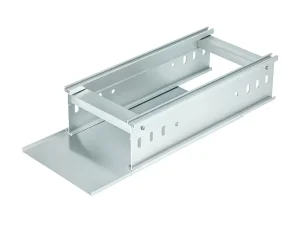
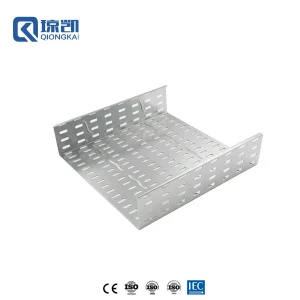
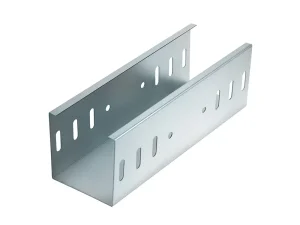
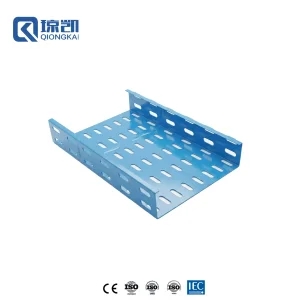
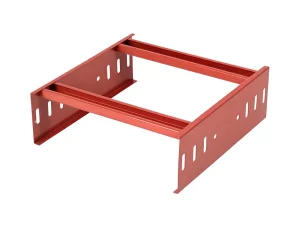
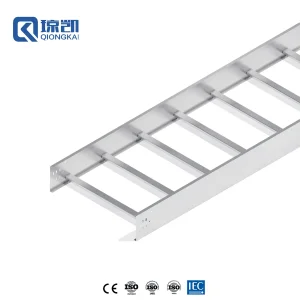
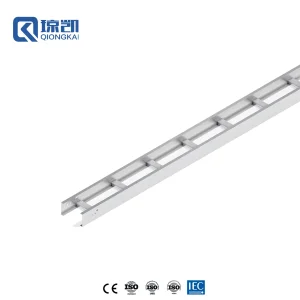
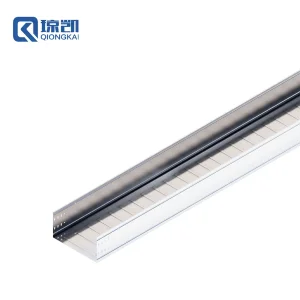
Explore heavy-duty ladder runs, customizable reinforcing ribs, and industrial trunking solutions designed for high-density power distribution.
Upload your Bill of Quantities (BOQ), route drawings, or specification schedule. Our application engineering team will deliver a comprehensive proposal covering tray profiles, strut supports, and certified load-deflection calculations within 24 hours.